

Fractured echoes of modernity orbit Francis Bacon, a luminary etched into the annals of British creativity alongside the sequestered spirits of Lucian Freud, Leon Kossof, and Frank Auerbach. Tethered by a shared temporal zenith—often dubbed the “London school”—this coterie breathed visceral vitality into figurative art, their canvases pulsating with frantic, unabashed brushwork.
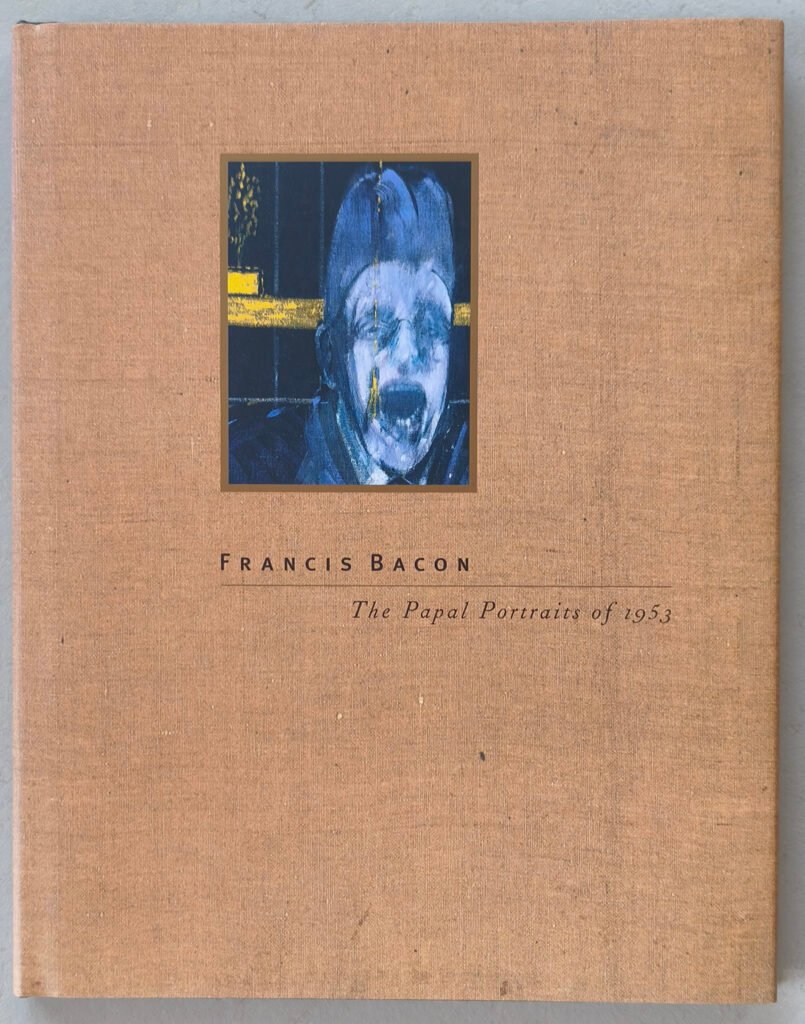
Within this pantheon of dissonance, *Study for Portrait VI* stands as a jagged monolith. It thrusts before the viewer a “screaming pope,” a grotesque metamorphosis where the rigid, sanctified armor of Catholicism dissolves into a psychic hemorrhage. Bacon’s obsession lacked theological marrow; rather, it was a parasitic fixation on the sepia ghost of Velázquez’s *Portrait of Pope Innocent X*. He didn’t merely mimic; he exhumed. By deconstructing a masterwork through the murky lens of reproduction, Bacon dismantled the fetishization of the original artifact. He presaged the voyeuristic scavenging of the Pop Art vanguard—a harbinger of the 1960s who whispered to the likes of Richard Prince and Cindy Sherman that imagery is merely raw, malleable ore.
The ecclesiastical silhouette first haunted his repertoire in 1946 with *Landscape with Pope/Dictator*, a chilling harbinger of looming autocracy. Yet, it was the effervescent frenzy of 1953 that birthed his magnum opus: *Study after Velázquez’s Portrait of Pope Innocent X*. Within a claustrophobic fortnight that summer, a fever dream possessed him. He churned out eight spectral portraits, a frantic alchemy of oil and intent intended to colonize the American psyche at his inaugural New York exhibition at Durlacher Bros. His work became a mirror that refused to reflect; it devoured.
www.ftn-books.com has many Bacon titles available and among them the San Diego publication on the Papal portraits of 1953.