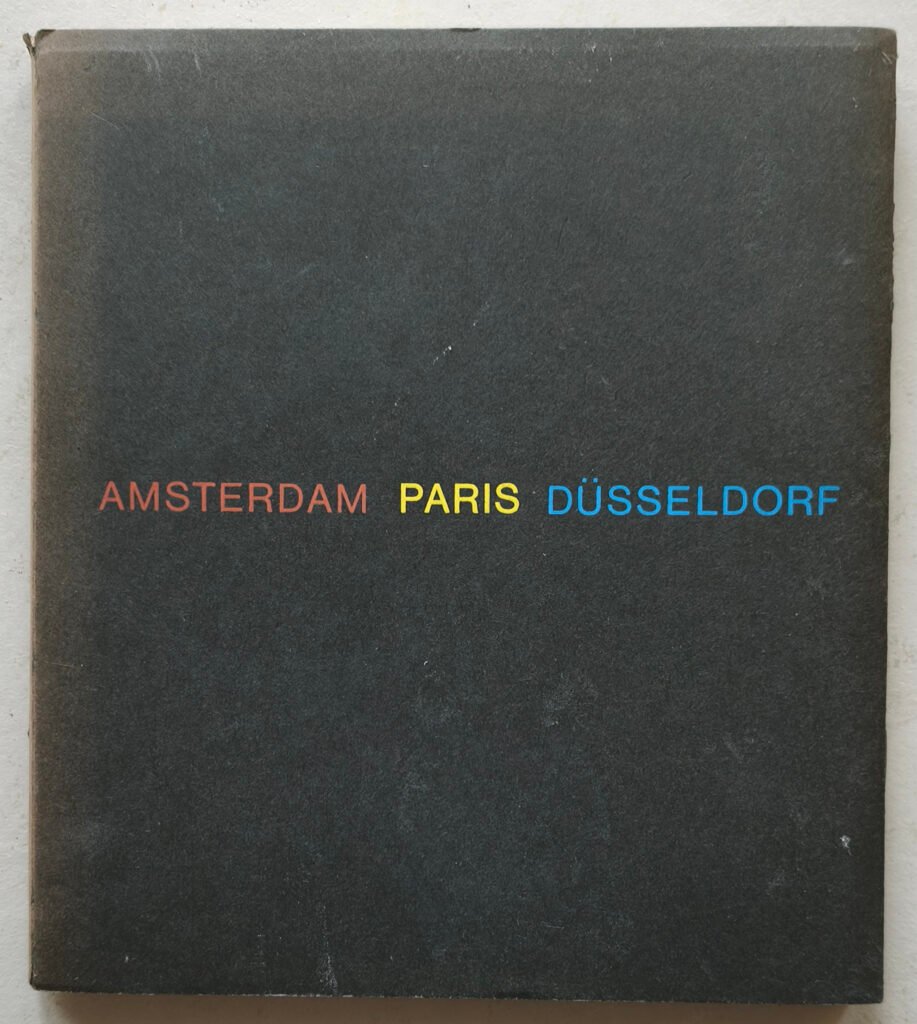


Amsterdam Paris Düsseldorf: The Guggenheim’s 1972 Experiment in European Discovery
In the fall of 1972, the Solomon R. Guggenheim Museum in New York did something unusual: it handed over curatorial control to three outsiders. The show was not one exhibit but three, chosen independently by Fritz Keers of Amsterdam’s Stedelijk Museum, Blaise Gautier of Paris’s Centre National d’Art Contemporain, and Jürgen Harten of Düsseldorf’s Städtische Kunsthalle. Artforum
Running from October 6 to November 26, 1972, the exhibition brought together the work of emerging artists from three of Europe’s most vital contemporary art scenes. The premise was simple: artists working abroad rarely reached American audiences unless they already had New York dealers or museum connections. This show aimed to give a group of foreign-based artists a real platform in New York. Internet ArchiveMullen Books
The results were remarkably prescient. The catalogue introduced then-little-known names like Joseph Beuys, Christian Boltanski, Dieter Roth, and Ben Vautier — artists who would go on to become towering figures in postwar art. Marcel Broodthaers, born in Brussels but working in Düsseldorf, showed a piece called My Collection, a tongue-in-cheek meditation on art-world documentation, following his acclaimed Eagle Museum at Documenta 5 that same year. Google BooksArtforum
What made the show unusual wasn’t just the artists — it was the structure. By handing selection entirely to the three European curators, the Guggenheim avoided imposing American taste, even though this meant some works arrived stripped of the cultural context that might have explained them. Beuys, for instance — already a professor at the Düsseldorf Academy since 1961 and a central Fluxus figure — came across differently to American eyes than he did at home. ArtforumArtforum
More than fifty years later, the exhibition reads as an early, clear-eyed snapshot of a generation of European artists on the verge of international significance — captured just before the rest of the world caught up.
www.ftn-books.com now has the catalog for this historical exhibition available.