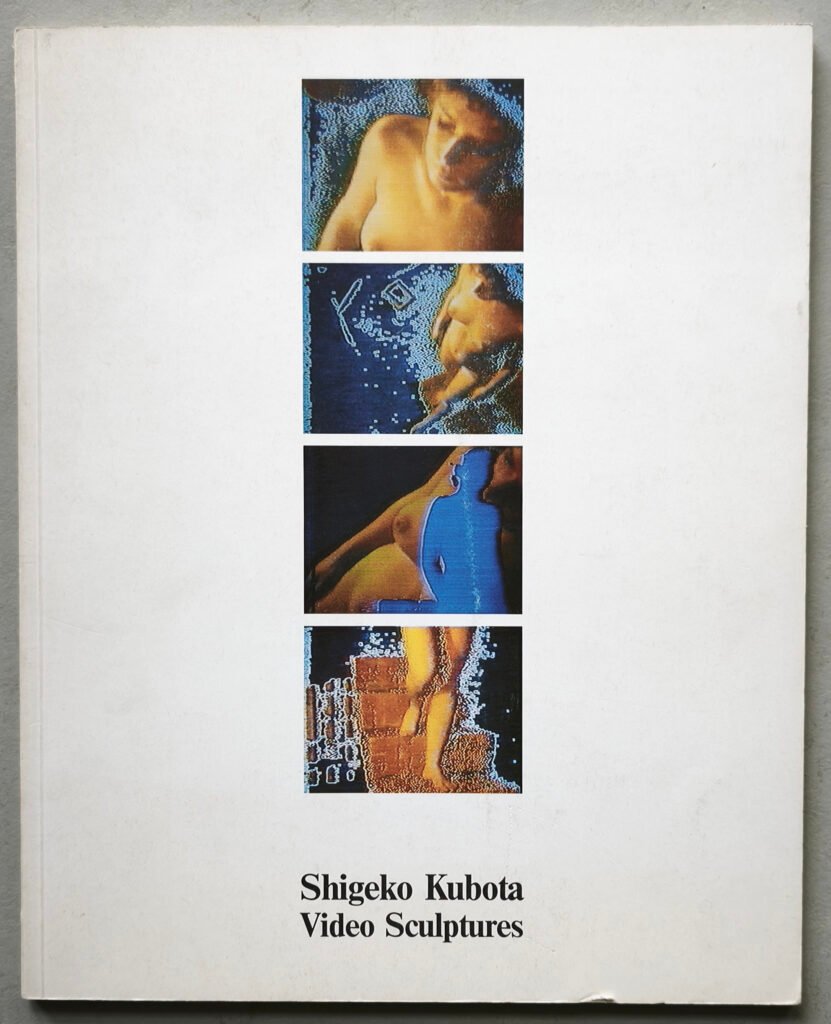


Shigeko Kubota, who was born in 1937 in Niigata, Japan, emerged as a seminal figure in the Japanese avant-garde. After completing her studies at the Tokyo University of Education in 1960, she aligned herself with radical collectives such as Zero Jigen, Hi Red Center, and Group Ongaku. These artists sought to challenge the post-WWII Japanese administration’s prioritization of economic expansion over human welfare, frequently integrating performance, music, and kinetic elements into their critiques. Their ethos mirrored that of the international Fluxus movement, led by figures like John Cage and George Maciunas; indeed, many Japanese contemporaries—such as Yoko Ono, Ay-O, Takako Saito, and Mieko Shiomi, the latter of whom emigrated to New York alongside Kubota in 1964—became central to the Fluxus circle.
Due to the pervasive marginalization of avant-garde works and the systemic prejudice against female artists within the Japanese cultural establishment, Kubota sought to advance her practice in New York. There, she was swiftly embraced by the Fluxus community. Her tireless dedication to the movement—spanning the coordination of mail art and events to her involvement in the “Fluxus dinner commune”—earned her the title “vice president of Fluxus” from Maciunas. Throughout this period, she engaged in the collective creation of affordable, multi-edition “multiples” and crafted personal artifacts, most notably *Flux Medicine* (c. 1966) and *Flux Napkins* (c. 1967).
Perhaps her most provocative and singular contribution was the 1965 performance *Vagina Painting*, unveiled during New York’s Perpetual Fluxfest. In a direct subversion of the “action painting” style championed by critic Harold Rosenberg—notoriously defined by a phallocentric, quintessentially masculine approach to the canvas—Kubota performed a radical act. By affixing a paintbrush to her undergarments and trailing red pigment across paper while squatting, she transformed the ritual of creation into a visceral, menstrual-coded spectacle, effectively feminizing the rigid tropes of Abstract Expressionism.
www.ftn-books.com has the Kunsthaus Zurich publication noew available.