

In Paradisum
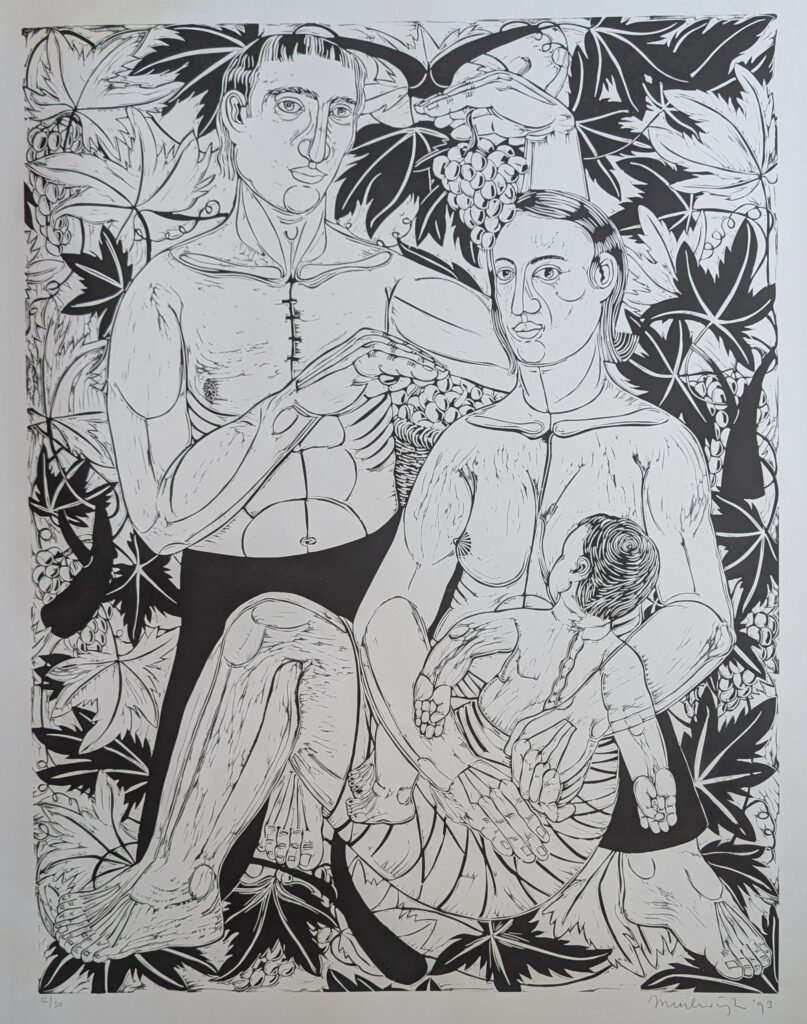
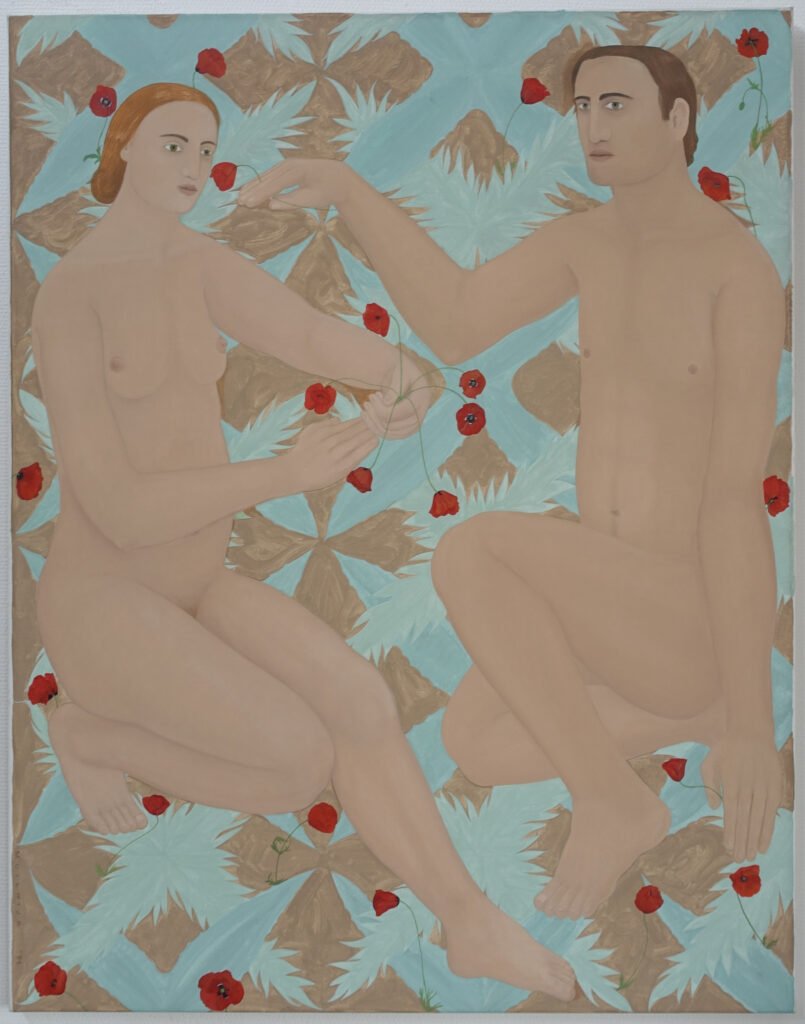
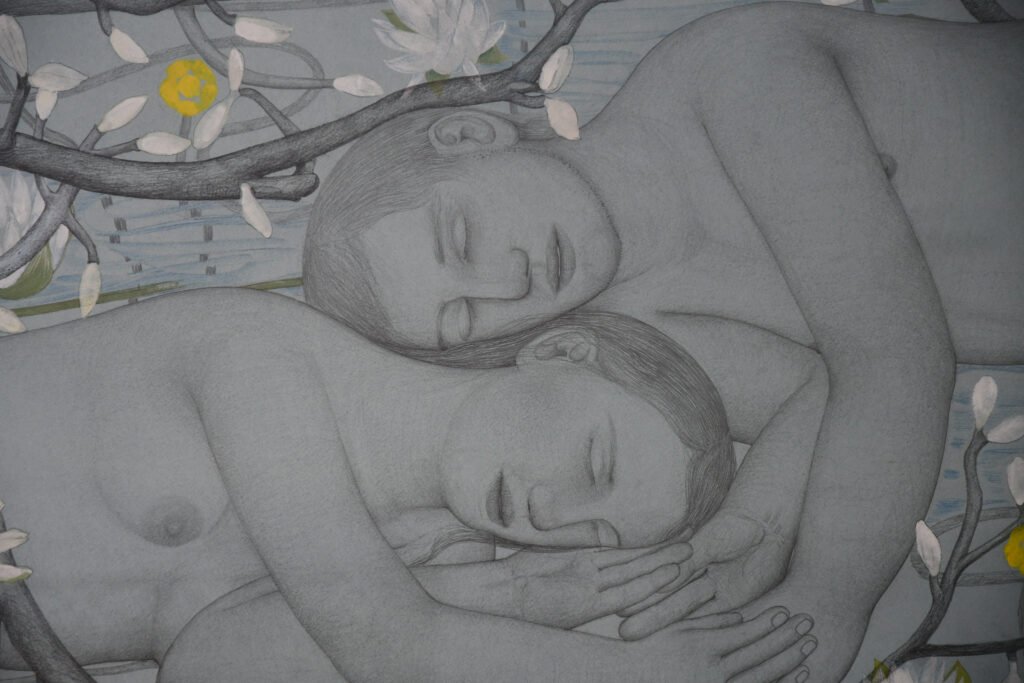
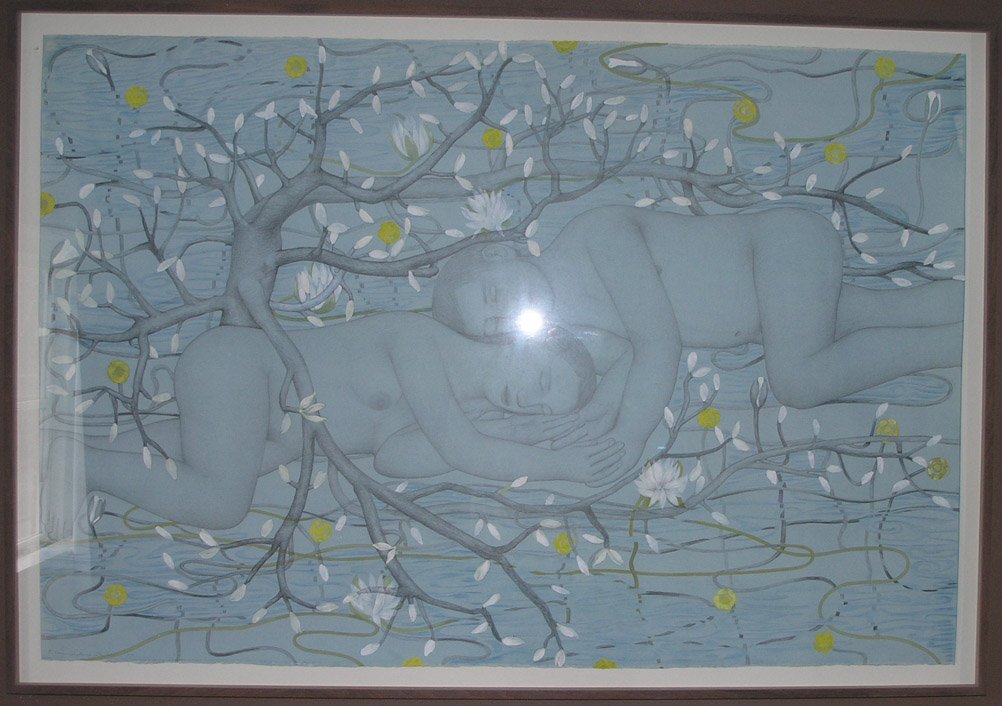
Since my early childhood, paradise has occupied my mind. Oh, how I would love to skip through paradise naked, without shame, in harmony with everything around me.
The foolish incident of the Fall first made me angry. I wasn’t angry at Eve or at Adam, but at the imperfection of paradise. Doubt about an almighty being who could not — or would not — have prevented this made me irritable. Wasn’t it supposed to be perfect?
From those questions I made paintings, drawings, and tapestries. Along the way, I let go of my indignation a little. The personal responsibility that arrived with the fruit of knowledge also has its good side. By eating that fruit, Eve gains a conscientious mind, and Adam, following in her footsteps, does too; that does make life more exciting.
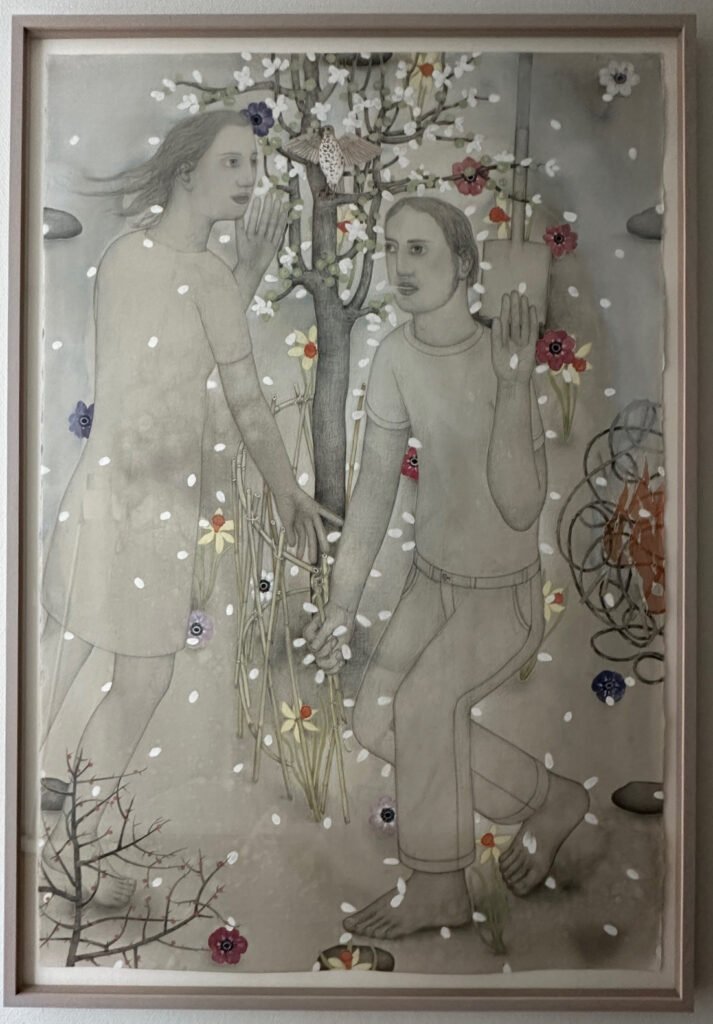
The conscienceless, uninhibited eroticism of the garden of earthly delights appealed to me for a time after that. In my most recent work, the garden of paradise is the image of our good origin, anchored in our nature, in our genes.
Sometimes, in the present, you can briefly touch that origin again; it stands out through its fragility, so easily disturbed once more — it is good, but not perfect. You encounter it unexpectedly in the wonder of life, but just as much in the calm spirit that holds no fear of death: the “in paradisum” of the funeral mass.
These ideas about the extremes of human existence — its origin and its end — are nourished by these fleeting, paradisiacal experiences in the present.
Look! In daily life, our paradisiacal origin presents itself unexpectedly; it feels like the calm of the soul.
Janpeter Muilwijk, May 2014
About Janpeter Muilwijk
Janpeter Muilwijk (b. 1960, Fontainebleau) is a Dutch visual artist who lives and works in Middelburg. He trained at the Christian Academy of Visual Arts in Kampen (painting and drawing, 1979–1984) and later studied architectural design at the Utrecht School of the Arts (1988–1990). Working across painting, drawing, and textile art, his pieces held by museums include works titled “Vriendentroost” and “Kyrië Eleison.” Museum Boijmans Van Beuningen
Muilwijk sets out to tell a story, drawing inspiration from his own home and garden, and many of his paintings carry Christian themes — though he deliberately gives them general titles so viewers can bring their own interpretation. A distinctive feature of his work is that the figures in his paintings show no explicit emotion, making it easy for any viewer to identify with them; he portrays universal feelings, choosing to set sincerity, childlike simplicity, and fragile happiness against the world’s hardships. Among his best-known projects is a large woven tapestry for the Nieuwe Kerk in Middelburg, designed during a residency in Italy and inspired by late-medieval and early-Renaissance church art, then produced on a computer-guided loom and hand-embroidered by 25 Middelburg residents.
His work has also taken a deeply personal turn: following the loss of his daughter Mattia to suicide, Muilwijk exhibited paintings with his wife, the artist Katja Bosch, reflecting on grief and compassion in an exhibition at the Dom Church in Utrecht.
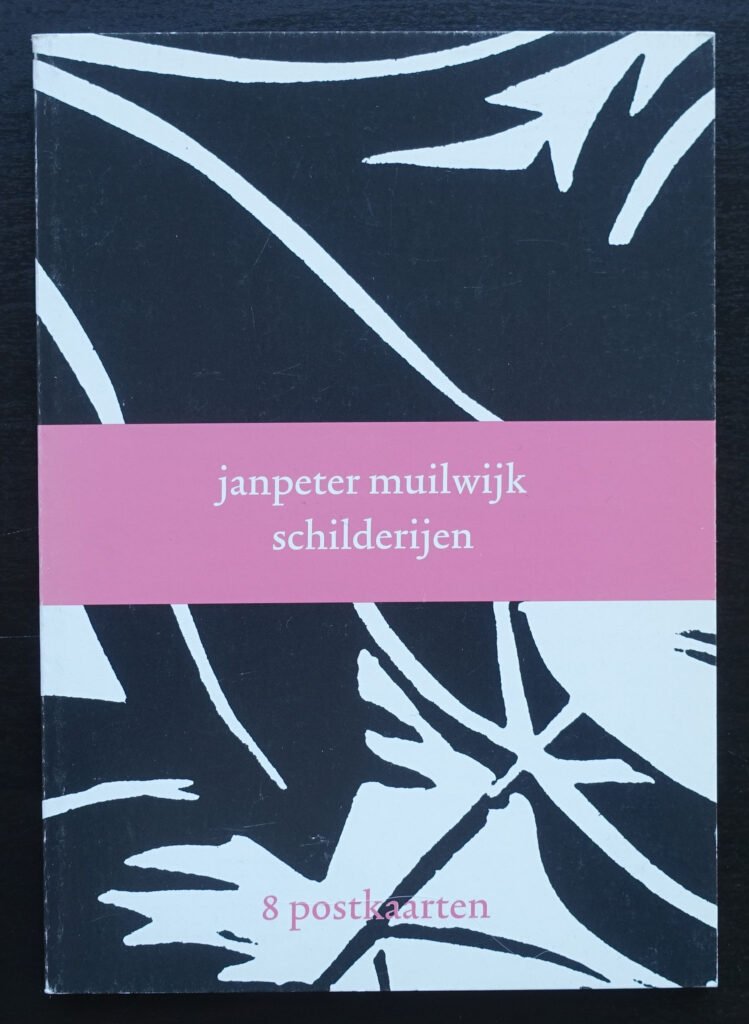
I have been admiring Muilwijk his works for over 20 years now and was lucky to add a few of his large works to our collection. But i also discovered some original rints and have added these to the collection of www.ftn-books.com . These are now for sale at www.ftn-books.com.