

Alberto Giacometti began his artistic life the way many do — inside the walls of a classroom, training in Geneva under the watchful structure of academic tradition. But it wasn’t long before Paris called, and once he arrived, the city reshaped everything about how he saw form and space.
In Paris, Giacometti turned away from the rigid rules he’d been taught. He found himself drawn instead to the fractured geometry of Cubism and the raw, primal power of non-Western art — the kind of work that didn’t ask permission from European tradition. For a time, this restlessness led him into the Surrealist circle, where dreamlike logic and the unconscious mind ruled the canvas.
That partnership didn’t last. By 1935, Giacometti broke from the Surrealists entirely. His crime, in their eyes, was returning to something they considered almost heretical: working directly from observation, from the model in front of him, rather than from the imagination alone. It cost him his place among them — but it set him on the path that would define his career.
Figures Born From Ruin
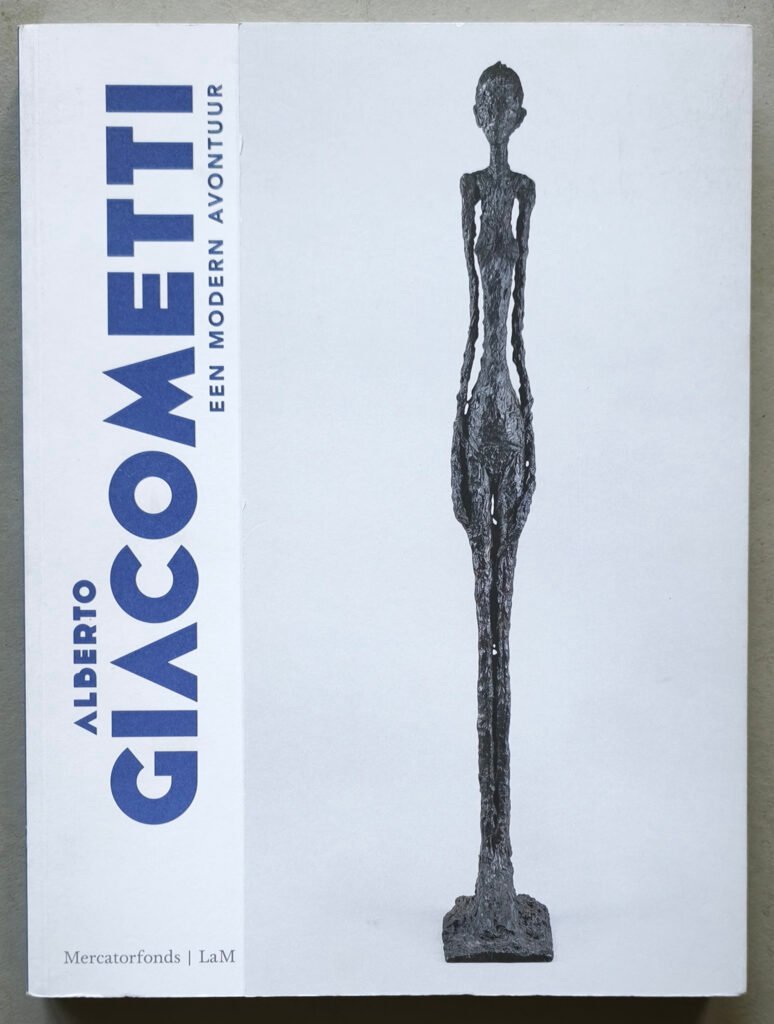
The Giacometti most people recognize today emerged after the Second World War — impossibly thin bronze figures, stretched almost to the point of vanishing. These elongated forms feel less like solid sculpture and more like something caught mid-disappearance: human shapes worn down to their essence, standing alone, fragile, and unmistakably haunted.
They weren’t decorative. They were a response. A world that had just lived through catastrophic violence needed images that could hold that weight, and Giacometti’s figures did exactly that — isolated, uncertain, barely tethered to the ground they stood on.
Chasing the Ungraspable
Giacometti’s obsession wasn’t limited to sculpture. His paintings and charcoal drawings — often reduced to grays and blacks, worked and reworked in restless strokes — pursued the same goal: capturing something that kept slipping away every time he got close to it.
He wasn’t trying to depict a person so much as the feeling of trying to see one — the endless, exhausting act of really looking. That struggle is the throughline of his entire body of work, and it’s why his sculptures still feel unsettling and alive decades later.
Giacometti never claimed to have captured the human condition. If anything, his life’s work was proof that he never stopped trying — and that the trying itself became the art.
www.ftn-books.com has a nice selection of publications on Giacometti available.