Posted on Leave a comment

Günther Förg – Moskau / Moscow. 1995

Schermafbeelding 2019-10-11 om 14.11.09

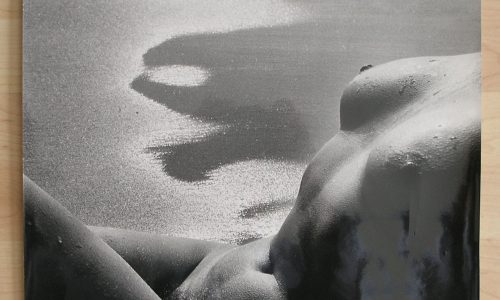
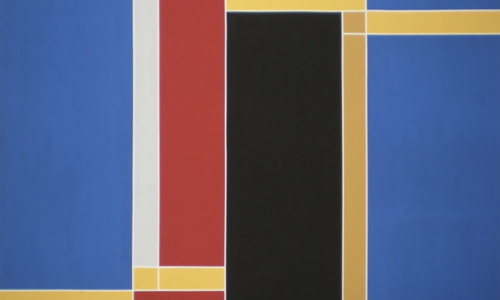
For many among us Günther Förg is the painter of lead surfaced paintings and one great print maker, but there is another quality in which he excels. Förg was a great photographer and made some high quality photo books on the almost forgotten ( Bauhaus )architecture of Tel Aviv and Moscow. The book on Tel Aviv i have sold a very long time ago, but was fortunate to find a Moscow copy with his photographs on a recent book market. This is a truly outstanding publication. Large sized , printed and published by Snoeck and of the highest print quality. The book shows the excellence of his photographs and makes you wonder why art lovers all over the world are not familiar with this part of Förg’s work.. The photographs look like still lives and do not only have an artistic quality but a historic quality too. Where the Tel Aviv book is of the highest quality, this Moscow book even looks better. It is a publication of a rare quality and a highly collectable photography/art book.


Posted on Leave a comment

Ernst Barlach (1870-1938)

Schermafbeelding 2019-06-22 om 14.35.12

Barlach died just before the outbreak of WWII.  Kathe Kollwitz was about the same age and both were heavily influenced by the events of WWI. This war made an impression on both artists and many of their statues and sculptures  reminders of this war.

Wood was the material with which Barlach preferred to work and it has taken a very long time that his works received the appreciation they rightfully deserved to get. In the Netherlands only one exhibition was held. It was held at the Boymans van Beuningen Museum in 1961. Personally i did not take notice of this exhibition until last week when i found the catalogue.  I discovered it at the local Bookmarket and thought it had a beautiful design….yes designed by Benno Wissing and the design of the catalogue emphasized the qualities of barlach’s sculptures. The catalogue is nowavailable at www.ftn-books.com and for those visiting the Hamburg region, There are 2 Barlach museums in the region. One in Wedel and one in Ratzeburg.

Posted on Leave a comment

Tomas Rajlich, Bulletin 134, 1983


The following blog has certainly to do with my personal fascination for the works of Tomas Rajlich. Rajlich has been a long time favorit of us and i was very happy that i finally could add the Art & Project Bulletin 134 from 1983 to our collection. Within the 4 pages the pages 2 and 3 are devoted to a beautiful golden composition with a fine mazed grid. This is a great composition and shows what Rajlich was doing at that time. Gold painted minimal compositions were painted and on it a grid in pencil was drawn. IN almost all cases the grid was 5 x 5 cm. squares in pencil. The Bulletin 134 is available at www.ftn-books.com

rajlich bulletin 134 b

Posted on Leave a comment

Albert Van Der Weide ( 1949 )

Schermafbeelding 2019-12-06 om 13.34.10

A good way to start the New Year.

ALLE MACHT AAN DE KUNST

A happy and healthy 2020

 The art item ” ALLE MACHT AAN DE KUNST ” ( all power to art ) is available at www.ftn-books.com

weide macht

Posted on Leave a comment

Roni Horn (1955)

Schermafbeelding 2019-09-10 om 14.42.43
An artist from my generation is Roni Horn and since the days i worked at the Gemeentemuseum i came across her works. This is not the easiest art on the planet, but it is fascinating and some wonderful books have been published with her works. Some of these are available at www.ftn-books.com. Here is a text i found recently in which is explained some of the qualities of her works.

Since the mid-1990s, Horn has been producing cast-glass sculptures. For these works, colored molten glass assumes the shape and qualities of a mold as it gradually anneals over three to four months. The sides and bottom of the resulting sculpture are left with the rough translucent impression of the mold in which it was cast. By stark contrast, the top surface is fire-polished and slightly bows like liquid under tension. The seductively glossy surface invites the viewer to gaze into the optically pristine interior of the sculpture, as if looking down on a body of water through an aqueous oculus. Exposed to the reflections from the sun or to the shadows of an overcast day, Horn’s glass sculpture relies upon natural elements like the weather to manifest her binary experimentations in color, weight and lightness, solidity and fluidity. The endless subtle shifts in the work’s appearance place it in an eternal state of mutability, as it refuses a fixed visual identity. Begetting solidity and singularity, the changing appearance of her sculptures is where one discovers meaning and connects her work to the concept of identity.For Horn, drawing is a primary activity that underpins her wider practice. Her intricate works on paper examine recurring themes of interpretation, mirroring and textual play, which coalesce to explore the materiality of color and the sculptural potential of drawing. Horn’s preoccupation with language also permeates these works; her scattered words read as a stream of consciousness spiralling across the paper. In her ‘Hack Wit’ series, Horn reconfigures idiomatic turns of phrase and proverbs to engender nonsensical, jumbled expressions. The themes of pairing and mirroring emerge as she intertwines not only the phrases themselves but also the paper they are inscribed on, so that her process reflects the content of the drawings. Words are her images and she paints them expressionistically, which – combined with her method – causes letters to appear indeterminate, as if they are being viewed underwater.

Notions of identity and mutability are also explored within Horn’s photography, which tends to consist of multiple pieces and installed as a surround which unfolds within the gallery space. Examples include her series ‘The Selected Gifts, (1974 – 2015),’ photographed with a deceptively affectless approach that belies sentimental value. Here, Horn’s collected treasures float against pristine white backdrops in the artist’s signature serial style, telling a story of the self as mediated through both objects and others – what the artist calls ‘a vicarious self-portrait.’ This series, alongside her other photographic projects, build upon her explorations into the effects of multiplicity on perception and memory, and the implications of repetition and doubling, which remain central to her work.


Posted on Leave a comment

Jacques Tardi (1946)

Schermafbeelding 2019-09-01 om 09.47.25

One of the iconic creators of great (french) comics is undoubtedly Jacques Tardi. Tardi managed to find the balance between classic comics/BD ( Bandes dessinee), graphic novel and Art. His series on Adele Blanc-Sec are among the very best in comic art from the last half century, but beside the series of ordinary BD’s he produced some great adaptations of “classic” french literature. Tardi successfully adapted novels by controversial writer Louis-Ferdinand Céline and crime novelist Léo Malet. In Malet’s case, Tardi adapted his detective hero Nestor Burma into a series of critically acclaimed graphic novels, though he also wrote and drew original stories of his own.

Schermafbeelding 2019-09-01 om 09.48.26

With a style of comic art, highly recognizable and very much a style of his own, Tardi crossed the border into the world of art and his pages of comics are now sold in galeries all over the world. www.ftn-books.com has some very nice Tardi publications available.

Posted on Leave a comment

Black Friday at FTN books

Not just a 3 days discount but a total of 11 days, a one period discount of 10% on all your FTN books purchases. Valid from the early hours  of Friday the 22nd of November until midnight on the 1st of December 2019. Use the special Black Friday 10% discount code:

                                                               B2019F


Posted on Leave a comment

Allessandro Mendini (continued)


I wrote two earlier blogs on Mendini. One in 2016 and one in February this year to commemorate his accomplishments after his death at the age of 87.

Last week i found one of his earliest dutch publications. An important one, because it preceded the commission of designing the Groninger Museum. Probably the exhibition was held to introduce Mendini to the dutch people of Groningen and prepare them for the adventurous building Mendini would design for the Groninger Museum.

This publication is from 1988 , published together with Politi editore  and it is filled with the typical Mendini designs of which elements would be used outside and within the Groninger Museum.  I love this book, which is now for sale at www.ftn-books.com

mendini groningen

Posted on Leave a comment

A tribute to Cor Rosbeek ( 1944-2019 )

Schermafbeelding 2019-07-16 om 14.29.57

Recently one of the driving forces in the dutch museum publications world died. I remember Cor Rosbeek as one of the most gifted of all printers in Europe. On those occasions that we met professionally he came up with practical solutions and had always in mind the quality of the finished product.

Schermafbeelding 2019-07-16 om 14.30.15

He made the impossible possible with a printing press and found solutions for the product that were thought to be impossible to realize. One of his best publications was the Diary of Anne Frank for which he made the facsimile reprint. Cor Rosbeek was a printing genius and realized many beautiful publications with the greatest of practically all (dutch) designers. His series of Rosbeek publications is known all over the world. In these publications everything comes together….great design, typography, layout, choice of papers and subject make these publications a monument for Cor Rosbeek. Some of these highly collectable publications are available at www.ftn-books.com


Posted on Leave a comment

Erté / Romain de Tirtoff (1892-1990)

Schermafbeelding 2019-07-12 om 14.10.22

It was at the time i was living in Paris, that i frequently walked the rue du Seine , it is the place where all the art galleries used to have their exhibitions. Among them there was one who was showing the most beautiful Erté drawings and gouaches. I wondered why a gallery in Paris had such a huge selection (they had a few hundred of these drawings in stock ) but later i realized that the reason probably was that many of the theaters in Paris commissioned Erté their costume designs for their plays and shows. If i had known at that time that Erte was going to be one of the most important Art Deco artists i should have borrowed some money and bought me some Erté’s .

Later i managed to buy 2 drawings at auction at a fair price and these are sold some 20 years ago, but the memory of these walks along the gallery window in the rue du Seine remains.  I should have kept these auction drawings too, but decided at that time to make some profit on them.

As it is …. there are only a few publications that rest me and all these are available at www.ftn-books.com