Posted on 1 Comment

Manolo Valdés (1942)

Manolo Valdés

One of the most internationally established contemporary Spanish painter, sculptor and draughtsman, Manolo Valdés was born in Valencia in 1942. He attended the Real Academia de Bellas Artes de San Carlos de Valencia and began his career in the 1960s as one of the founding members of Equipo Cronica, a group of artists who took inspiration from Pop Art to challenge the Spanish dictatorship of Franco and the History of Art itself. When the movement ended in 1981, Valdes continued his own artistic exploration centered on the appropriation and reinterpretation of masterpieces. He currently lives and work between Madrid, Spain and New York city, USA.

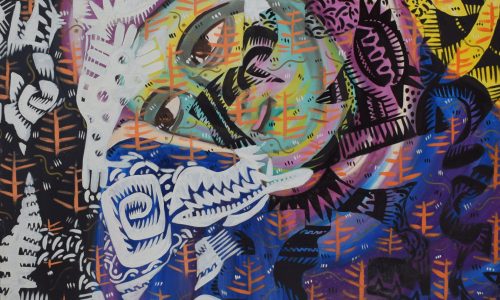
Manolo Valdés has developed an individual style that reviews History without detracting from the original subject. Quoting figures from well-known works of art by old masters such as Velázquez, Rembrandt, Rubens, and Fra Angelico, as well as twentieth-century masters such as Matisse, Picasso, and Lichtenstein, Valdés revitalizes these familiar images by taking them out of their original context. In both paintings and sculptures, he inflates the figure’s size, abstracting form and minimizing detail, while incorporating a lot of roughly applied paint and unusual materials. The timelessness of the image as the axis of the visual experience is the determining factor in his creations. In his works, image and matter are fused in a body of work that wanders between Pop Art and material art, between social and political commitment and a continuous search for reinvention.

www.ftn-books.com has the Beelden aan Zee catalogue now available.

Posted on 2 Comments

David Diao (1943)

David Diao

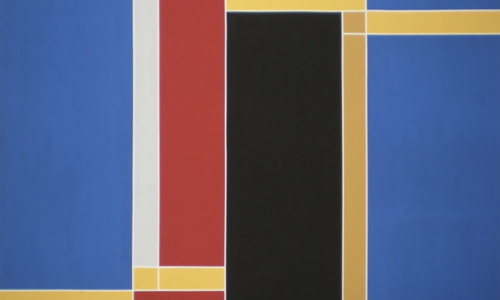
David Diao (1943, China) is one of the key figures in the recent history of conceptual painting. Entering the New York art world in the late 1960s and throughout the 1970s, Diao first engaged in the complex position of painting in the aftermath of the Abstract Expressionists and the formalist critical debates that followed them, successfully pushing painting into conceptual territory while allowing him to deal with aesthetics, history as well as personal narrative in his painting. Diao’s unique aesthetic sensibility has undergirded a long career that is now attracting renewed interest from major institutions, critics, and curators around the world. www.ftn-books has the important HET KRUITHUIS catalogue now available. This is the catalogue in which Diao was introduced to a European audience. Text by Kees Broos

Posted on Leave a comment

Mette Winckelmann ( 1971)

Mette Winckelmann

Artistic Statement: Conscious Abstraction!

In an abstract work, the materials step forward and become a significant part of the work itself. A good painting is conscious of its own physical properties and of the space around it, and inquires into its own existence.

Abstract painting has a central role in my artistic practice. I use abstraction in various media – such as fabric collages and flags – as a tool with which to dissolve and open up rigidly-defined categories and forms. My paintings and fabric collages have a special dialogue. Often the fabric collages may be recreated as paintings, or vice versa. In terms of content, I work to create meanings that deal with gender history – as indicated, for example, through the juxtaposition of works and materials.

The abstract paintings arise on the basis of systematic compositions, geometric divisions, forms and colours that mimic or utilise visual techniques and structures drawn from the craft traditions of various cultures. Several of the works contain for example references to Navajo rugs, Swedish rag rugs and patchwork quilts. The various references are combined in the painting, where they are absorbed in each other’s logic. In the abstract expression, the intention is thus not to find the universal form, but rather to seek to achieve a form that is constantly changing. When, in the individual works, I operate with several signals at once, the aim is to open up the work in both sensual and symbolic terms. My ambition is that the works should have a simultaneously tactile and spiritual quality. I work with their physicality. They refer to the body and to the physical conditions with which each individual is endowed.

In relation to media, I work a lot with textiles in various formats. The flag, as object, phenomenon and symbol for identification, is something that interests me. I use the authority and authenticity of the flag to deconstruct and reconstruct ideas and concepts about ourselves and others. In several works dealing with issues of identification, I am interested in the possibilities and limitations, as well as the hierarchies, that we ourselves create and pass on – particularly in relation to the position of women.

Besides the material itself, I often use the title of a work to clarify its statement, such as in the painting Bedcover for Sonia Delaunay, 2006. Delaunay sewed an abstract bedspread for her son with the title Blanket, 1911, which was originally considered to be a craftwork, but is today regarded as a work of art. For me, this bedspread stands as a symbol of the relationship between art and life which is essential in my artistic practice.

The Revolver Winckelmann publication is now available at www.ftn-books.com

Posted on Leave a comment

Aalf/ Alf Lechner (1925-2017)

Alf Lechner

Alf Lechner is one of the most important German sculptors.
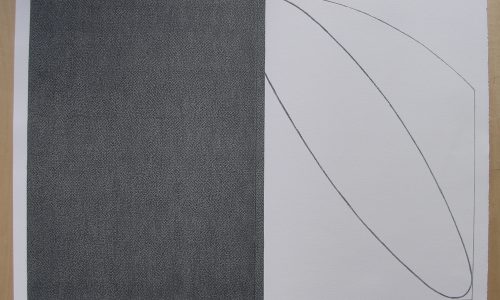
His material is massive steel. Since 1960 Lechner has been designing constructive and concrete sculptures, which gain their form through calculated dividing, cutting and splitting of cubes and globes. Clear, rational thoughts precede the technical work and can be understood in the actual produced works. Even though he achieves freer solutions in techniques like compressing, folding and bursting of steel, they are still results of a controlled action while being fully aware of the material along with decades of experience in the use of strength, energy and the consequential physical reactions.

Here, in his hometown Munich, there are several large-size sculpture in public spaces, like the collection of the Städtische Galerie im Lenbachhaus, the sculpture space at the Alte Pinakothek or the monumental stele at the Gasteig.
In 1995 Alf Lechner became a member of the Bayerische Akademie der Schönen Künste. Since 2001 he has been living and working together with his wife Camilla in Obereichstätt, where he turned an old ironworks and former stone pit into a spectacular sculpture park with living space, studios and exhibition halls. The Alf Lechner Foundation with its impressive Lechner Museum in Ingolstadt is the keeper of his extensive work.

www.ftn-books.com has now the 1968 galerie Heseler catalog available. The catalogue has an original silkscreened cover.

Posted on 1 Comment

Fons Brasser (continued)

Fosn Brasser

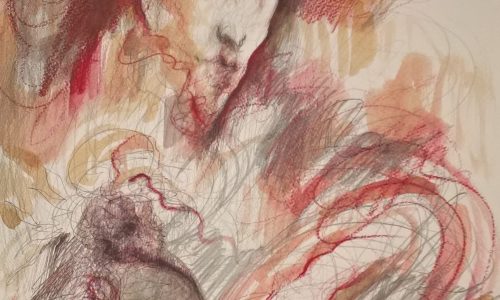
The last 2 years i acquired several works by Fons Brasser. Some I have kept in my personal collection, but now I have acquired 2 more works. One bleeding drawing and one zink object. To day I will focus on the drawing. The drawing is in pristine condition. framed behind passe partout by Brasser and signed, dated and titled in pencil. The pictures will tell the story but know that the drawing is now for sale at ftn art.

Posted on 1 Comment

Eileen Cowin (1947)

Eileen Cwin

Eileen Cowin’s earlier photographs seemed to belong to the genre of the domestic snapshot. They purported to be slice-of-life images of families at the dinner table, or couples conversing in the living room or the master bedroom. Just beneath the surface, however, was an element of artifice—a self-conscious pose or an odd disconnection between characters that subtly undermined the illusion of spontaneous intimacy.

In her new photographs, the theatrical element has been made explicit. Men in trench coats or nondescript suits and women in slinky red dresses posture against a deeply shadowed background, arranged in tableaux that seem derived from film or art history. Their gestures are broad and symbolic, the situations in which they find themselves suggest the conventions of film noir and their faces are frequently obscured by shadow, hair or hat, heightening the suggestion that they are meant to represent types rather than individuals.

Voyeurism is a recurring theme—several works feature figures peering from behind Venetian blinds. When the characters are not observing each other, they make it clear by their studied poses that they are aware they are being watched. At times, their deliberate, archetypal movements echo Kabuki theater. Like the film stills that these photographs imitate, Cowin’s images suggest freeze-frame shots from mysterious narratives. The work that offers the closest approximation of traditional narrative consists of four panels: in the first, a woman in a red silk shift peers through a Venetian blind; in the second, she stands with her back to us, holding a crumpled letter and staring at a telephone. The third image shows her again peering through the blind, this time in close-up, and the fourth presents what is apparently the object of vision: a man branded with the stripe pattern of the Venetian blind, rummaging through an unmade bed.

While Cowin’s earlier, domestic photographs focused on the terrors of familial intimacy, these new images crackle with sexual tension, even when the characters are all men. As in film noir, these tableaux suggest that the rituals of male bonding and competition are essentially a matter of pose. If women fit into this world at all, it is as glamorous and potentially dangerous objects of desire. Although Cowin inevitably celebrates such conventions, through her deliberately self-mocking artifice, she also challenges them. This is also true of the works that refer to art history. Cowin’s treatment of the odalisque as a television viewer, or her presentation of a veiled Magritte heroine before her painted representation, casts a sheen of absurdity over Western art’s tendency to objectify women. Cowin’s photographs are great fun, but they bear a hidden stinger.

gallery Min publication available at www.ftn-books.com

Posted on 1 Comment

Jo Ann Callis

Jo Ann Callis

Among the recently acquired gallery Min catalogues I personally find the one on Jo Ann Callis the most intriguing.therefore I decided to place the interview I found with her in this blog:

Jo Ann Callis is a photographer based in Los Angeles. After graduating from CalArts, she began teaching there in 1976 and is still a faculty member of the School of Art’s Program in Photography and Media. Her work has been exhibited internationally, including at the Museum of Modern Art, New York; Los Angeles County Museum of Art; Hammer Museum; the Museum of Contemporary Art, Los Angeles; and the San Francisco Museum of Modern Art. In 2009, the J. Paul Getty Museum presented a retrospective of her work in Los Angeles titled Woman Twirling. Callis has received three NEA Fellowships and a Guggenheim Fellowship.

In this interview, Jo Ann Callis opens up about how art kept her sane as a young mother in an unhappy marriage, the impact mentor Robert Heinecken had on her life and career, and her process when going on a photoshoot.

TGL: How was your childhood?

JC: I had a middle class upbringing in Cincinnati Ohio. My father graduated as an electrical engineer but later went into the furniture business and my mother was an elementary school teacher. My sister and I became the victims of sibling rivalry, and I developed a sense of competition because of it. Sometimes that can be beneficial because it can give one drive to succeed and a lot of times that can be uncomfortable and detrimental.

Art was in my life from age eight. I took art classes for kids on Saturdays at the art museum. Somebody said I was good and that is all I needed to hear. I found something I had talent for and which I loved so much. It gave me a passion for making things and studying art. I went to college for two years and then got married. A year later at 20 I gave birth to my son and we moved to Greater Los Angeles. I had another son two years later. At 22 I was ill prepared to take on my new roles in life and to be away from any family support. I was the mother of two sons when all I really intended was to be was an artist.

TGL: What was it like being a young mother in California? 

JC: I was a homemaker and mother of two with big responsibilities for such a young person, but I attended sculpture classes at night at a community college to keep my sanity. Art helped me get through those most difficult years. I was driven to find a way to emotionally survive and art did that for me since I was a young child.

TGL: Were you making art at the time? 

JC: Besides going to night school for art, I was making paper collages at home. That was the best I could do then. Making art at night school became my salvation, it was a place to feel whole and to have a little piece of life away from family a couple times a week, at least.

TGL: You got your degree from UCLA. When did you decide to go back to school? 

JC: In 1970 I decided I wanted and needed my degree. I was thinking about getting out of my marriage, but I didn’t even have a college diploma yet and wondered how I would support myself and the children. At UCLA, I finished my undergraduate degree and then did my graduate studies there too. In 1976, before I completed my 3rd year of grad school I began teaching part time at CalArts. It was crazy. I didn’t know what I was doing at all, but I had a job, even though I had only been using a camera for 3 years before I started teaching others. I was very nervous and insecure about that, even though I was 36 years old at that time.

TGL: You took classes with Robert Heinecken at UCLA. 

JC: He changed my life, because he supported and respected the work I was making. He is the one who recommended me to teach at CalArts. Without his encouragement, I don’t think I would have had the courage to go into photography. A few years later, he introduced me to my second husband, who recently passed away.

TGL: Was your husband a photographer too? 

JC: No, he was a wonderful artist will a huge imagination and a great sense of humor that he brought into his art.  He was playful and drew, painted, and made installations in the desert. His day job was on the Santa Monica Pier. He didn’t have a career in art, but he drew pictures until almost the day he died. Art sustained us both and it was a good marriage.

TGL: Your art is very surreal, but you are not a surrealist. How would you describe your process?

JC: When I made work, I started to think about ideas and how I could make pictures around those ideas or emotions. I wasn’t thinking that I was a Surrealist or how a Surrealist would do it. I was just following my intuition somewhat like free-association bringing me to something I could work on to express myself.  Perhaps that is why my photos can look surreal; they may not make sense logically, but I hoped there was an emotional intelligence in play.

TGL: Did you plan out your photoshoots or improvise? 

JC: I planned out my shoots, because I have to know what props I needed or what the model looked like and how to direct them to make the photo I had imagined. I would go to a location first just to become more familiar with where to set up my camera to make the picture I had in mind. When I converted my garage into a studio I started making all my photos in that space from then on.

TGL: How did you choose your models?

JC: They were mostly people I knew or friends of friends. I wanted them to look somewhat androgynous. I didn’t want bodies that were particularly one way or the other. They were not portraits of any individual person. They were not objects either because they were human beings that I hoped could stand-in for a person in general, not any one person. I love the relationships between the objects and what the objects conjure up in one’s mind. I enjoy taking the familiar and making it unfamiliar, showing it in a way that gives it a different importance.  

TGL: When did you get your first exhibition? 

JC: A friend of mine had scheduled a show at the “Woman’s Building” downtown. She couldn’t make the show for some reason and asked me if I wanted to use her space, which I did. That was my first exhibition in 1975. I also sent my work to competitions and got into many exhibitions that way.

TGL: You came up during a time when we didn’t talk about women artists the way we do now. How did you feel as a woman artist? 

JC: I just felt I was an artist and not a Woman artist with a capital “W.” It was the time of the Women’s Liberation Movement with the bra burning etc. right when I came into my own ideas on art-making. Feminism was very strong, and I got criticism because I often cropped out the heads of female models so we wouldn’t get involved in their identity. Critics saw it as treating women like objects. In a way I was, but not because I didn’t respect them. They were actors in a play. When you go to a play the curtain opens and you see the actors in the set. Everything is intentional; the setups in my photos are fabricated for that purpose. The pictures don’t look natural because they are metaphors for communicating a feeling, emotion or an unknown narrative. Just like in a play you never think the actors are living their lives on that stage, they are acting out some made-up drama.

TGL: Your work has a strong relationship to theater and mise en scene. Could you describe your creative process?

JC: First I think up some idea that excites and challenges me. I make sketches of how I want the photo to turn out. I organize what needs to be done to make that happen and shoot the picture.  

TGL: You are represented by ROSEGALLERY in Santa Monica, a gallery that specializes in contemporary photography. What is important for you in the relationship between an artist and gallerist? 

JC: I think it is trust, honesty, and respect for each other and what they each do that are the most important things in that close relationship. Each has an important role to play in getting one’s art out into the world for others to see and appreciate. It is essential that the gallery works at that goal, and it is important that the artist makes the art so each of them can survive. I adore Rose and her staff, I owe a lot of my success to them and their support of what I do besides their willingness to go the extra mile to make sure others can see it too.  

TGL: Who would you like to have dinner with that you don’t already know?

JC: I’d like to meet Georgio Morandi, a painter whose work I adore.

TGL: What advice would you like to give to The Genius List’s readers?

JC: Do what you are passionate about if you can while still paying the bills as you pursue your goals. I had no choice because making art was the only thing I really wanted to do. I thought teaching art was a way to satisfy that need to carry on in the only profession I was capable of doing well. It was worth the struggles because I have had a rich and fulfilling life so far.

The signed Jo Ann Callis catalog is still available at www.ftn-books.com

Posted on 1 Comment

Robert Dawson (1950)

Robert Dawson

Robert Dawson has long been interested in how photography can be used to understand our relationship with the environment and the commons. He is also interested in photography’s ability to shape public awareness and understanding of the place we call home.

Dawson was recently awarded the 2018-2019 Fulbright Global Scholar award by the U.S. Department of State. Dawson’s photographs have also been recognized by a Guggenheim Fellowship from the Guggenheim Foundation, an Artists Grant from the Graham Foundation and an Artists Grant from the Creative Work Fund. He has also received grant from a Visual Artists Fellowship from the National Endowment For the Arts, a Ruttenberg Fellowship from The Friends of Photography, a Photographer’s Work Grant from the Maine Photographic Workshops, a James D. Phelan Award through the San Francisco Foundation, and a Dorothea Lange-Paul Taylor Prize from the Center For Documentary Studies at Duke University. He served as a Panelist for the Visual Arts Fellowship in Photography for the National Endowment For the Arts in Washingto, D.C.

Mr. Dawson’s photographs have been widely exhibited and are in the permanent collections of many institutions including the Museum of Modern Art, New York; the National Museum of American Art, (Smithsonian Institution) Washington, DC; the Museum of Modern Art, San Francisco; the J. Paul Getty Museum, Los Angeles; the Center For Creative Photography, University of Arizona, Tucson; the Library of Congress, Washington, DC; the Bibliotheque Nationale, Paris: and the Carpenter Center For the Visual Arts at Harvard University.

www.ftn-books.com hast he gallery Min exhibition now available.

Posted on Leave a comment

Jack Welpott (1923-2007)

Jack Welpott

Internationally known photographer and educator, Jack Welpott was born in Kansas City, Kansas on April 27, 1923, but grew up in Bloomington, Indiana. After high school he enrolled in Indiana University, but was drafted into the U.S. Army Air Force in 1943. He served in the South Pacific as a radio intercept operator until 1946. After WW II, he returned to Indiana University on the G.I. Bill where he earned an M.F.A degree studying with Henry Holmes Smith. Jack and Jerry Uelsmann were the first M.F.A. graduates while Van Deren Coke was also a graduate student. During these years, he became acquainted with Harry Callahan, Aaron Siskind, and Minor White all of whom were established photographers and pioneers in American photographic education.

Jack was hired in 1959 by John Gutmann, to teach photography within the Art Department at San Francisco State College, now San Francisco State University. He taught there for the next thirty-three years. When he arrived in San Francisco the Beat Generation was winding down in North Beach, however, he took advantage of the local poetry, jazz, art and culture. He also played jazz piano, which became a lifelong avocation. Years later he said, “When I’m working behind a camera, I feel like I’m trying to achieve something like a jazz musician does.” He also soon became associated with the local photographic community which included Ansel Adams, Ruth Bernard, Oliver Gagliani and Dorothea Lange.

At that time there were almost no photography courses or graduate programs offered at the university level anywhere in the United States. Jack pioneered in creating both photography courses and a graduate program. He also taught one of the first history of photography courses at the college/university level. While providing a solid basis in photographic technique, Jack always encouraged an appreciation of the master photographers. Also, he integrated the ideas of Carl G. Jung, the Swiss psychoanalyst, into the reading of photographs, especially dreams, symbolism and the unconscious mind. Jack’s educational goal was to determine the needs of the student, provide constructive criticism and help them develop their own vision. A number of his students have become major contributors to photography: Judy Dater, Leland Rice, John Spence Weir, Michael Bishop, Harvey Himelfarb, and Catherine Wagner among numerous others.

www.ftn-books.com has now the gallery Min catalogue available

Posted on 1 Comment

Richard Misrach (1949)

Richard Misrach

For over 50 years, Misrach has photographed the dynamic landscape of the American West through an environmentally aware and politically astute lens. His visually seductive, large-scale color vistas powerfully document the devastating ecological effects of human intervention, industrial development, nuclear testing and petrochemical pollution on the natural world. His best known and ongoing epic series, Desert Cantos, comprises 40 distinct but related groups of pictures that explore the complex conjunction between mankind and nature. Otherworldly images of desert seas, rock formations, and clouds are juxtaposed with unsettling scenes of desert fires, nuclear test sites, and animal burial pits. Recent chapters capture the highly charged political climate following the 2016 US presidential election through photographs of spray-painted graffiti messages scrawled on abandoned buildings and remote rocky outcroppings in desolate areas of the Desert Southwest.

Other bodies of work include Golden Gate, a careful study of times of day, weather, and light around San Francisco’s famed bridge; On the Beach, aerial views of individuals and groups against a backdrop of water and sand; Notations, ravishing landscapes and seascapes in a reversed color spectrum; Destroy This Memory, a haunting document shot with a 4-megapixel pocket camera of graffiti found in the aftermath of Hurricane Katrina; and Petrochemical America, an in-depth examination of petrochemical pollution along the Mississippi River produced in collaboration with landscape architect Kate Orff.

www.ftn-books.com has now the gallery Min/Tokyo catalogue from 1988 available