Posted on Leave a comment

Jemima de Jonge (2001)

I had an appointment in THE HAGUE and half an hour left before my meeting, so I visited HEDEN and was impressed. A young dutch artist had transformed the complete gallery in a “dark” special place. I do not think it is there anymore but when there is chance to visit one of Jemima’s projects do not hesitate to visit it…..you will be impressed too…

Jemima de Jonge (2001) grew up in Rotterdam. In June 2023, she graduated with honors from her KABK (Royal Academy of Arts) in The Hague.
She uses films like the recent Uprooted to fuse drawing, sculpture, installation, and performance in her single gesture. It’s like a true interdisciplinary child of the time.
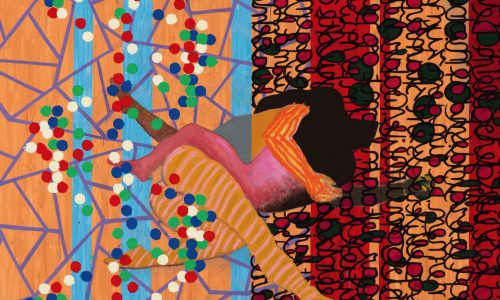
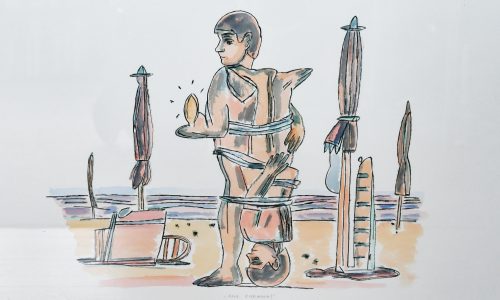
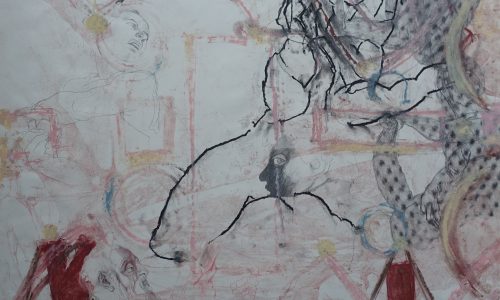
Jemima used her drawings from her early childhood to visualize her own thoughts and ideas. In them, (inner) adult tragedies and tensions sometimes collide with childish solutions. She plays with the contrast between rough sketches and clear details.
Jemima exhibits high awareness of her surroundings and uses it to manipulate space. It defines the boundaries between reality and imagination. At this boundary, viewers are drawn into her work through a variety of media and means. They create slightly bizarre experiences and stories with a unique sense of humor that focus on lonely characters.
Jemima de Jonge’s film developments, such as her short films Uprooted (2021) and Enter Amazons (2022), highlight how her drawings, sculptures, installations, and performances naturally blend into gesture. It shows.

www.ftn-books.com has the DE SPELONK publication now available.

Posted on 2 Comments

Jaap de Vries (1959-2014)

Jaap de Vries was a Dutch painter who alternately lived and worked in Breda and London. In addition to paintings and watercolours, he also made films, photographs and sculptures.

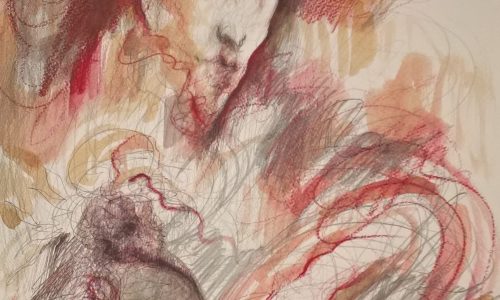
The human body and the landscape are a representation of his ideas about loneliness, violence and decay. His use of watercolour on aluminium creates an eerie and ethereal atmosphere in his work. Painting, for him, is about creating space for the shadows within us, for the world of desires tainted by fears.

He enjoys experimenting with various materials and continuously develops his own techniques. At times, he cuts with a stanley knife, while other times, De Vries wipes the pigment off the aluminium surface with a warm washcloth. Through my imperfect portraits, I create a metaphor for the real experience. It is the paint itself that inflicts wounds, apparently, its blood flowing ability capable of doing the same as real cutting, and a face is still able to speak and torture us with the question of what experience lies behind it, and apparently, paint alone can carry that power.

When he turned his attention from human anatomy to nature a few years ago, he was looking for a positive counterpart. His starting point was a boring patch of forest, with the intention of creating an intriguing image through the technique of depiction. “I wouldn’t want to walk through that forest,” a colleague said when he saw one of the paintings. This was an important statement for him: while he needed the drama of depiction in human anatomy to achieve his desired goal, in these paintings, he could display the violence of depiction through the depiction of a few innocent trees.

www.ftn-books.com has recently added some de Vries publications to its inventory.

Posted on 1 Comment

Anna Verweij-Verschuure (1935-1980)

After Anna Verweij stopped attending the art academy in the late fifties, she began to experiment with materials and techniques. In 1958, she decided to simply go by the name “Anna”. She used leftover materials to create jewelry and small wall hangings. Soon, she devoted herself entirely to textile, the material that would remain her faithful companion throughout her entire career. In the sixties, she delved into designing large, exuberantly colored wall hangings.

In the following decade, her textile work became increasingly detailed and acquired a more conceptual nature. During this period, the concept of textile as visual art was constantly under discussion. This material was still primarily associated with applied art. With her work, Anna gave an inspiring and relativizing twist to this discussion. For her, the boundary between the two “arts” was not a fixed concept.

My Place at the Table

One of Anna’s most notable works is My Place at the Table 2 (1972/73). A pristine white cotton tablecloth is laid over a wooden table, adorned with a refined black embroidered flower border. One of the narrow edges of the cloth culminates in a chaotic array of stitches. In an earlier work, Alice Writes to Alice (1971), Anna shows how a winding strip of fabric transforms into a mysterious script. With a light sense of humor, Anna comments on the contradictions in human behavior and the conflict between inner and outer appearances in pieces like this. Experimental use of flannel, jute, cotton, silk, and printers, in combination with plastic and foam rubber, is characteristic in these works. Her love for nature also makes frequent appearances in her oeuvre, for example in her design drawings of flower fields based on compositions by Piet Mondrian.

In the year of 1978, Anna fell gravely ill. In the final period of her life, transformations of shape take center stage. She creates silhouettes of female figures, modeled after her own body. An exemplary piece is The Leap (1979), which depicts a figure pole vaulting: a clear allusion to the transition between life and death. A large portion of her body of work was realized in the last two years of her life, with her most significant exhibitions also taking place during this time. In 1979, her solo exhibition opened at the Stedelijk Museum in Amsterdam, and in 1984, she was posthumously honored by Museum Boijmans Van Beuningen.

This catalog is now available at www.ftn-books.com

Posted on Leave a comment

Rolf Nesch (1893-1975)

Rolf Nesch, hailing from Oberesslingen, Germany and residing in Oslo, Norway until his demise on October 28, 1975, was a German-born Norwegian printmaker and painter. An early adopter of metal collage in printmaking, Nesch was a pioneer in his field.

Having received his education from art schools in Stuttgart and Dresden in Germany, Nesch was profoundly influenced by the Expressionist extraordinaire Ernst Ludwig Kirchner, with whom he studied in 1924. He was also greatly inspired by the works of renowned Norwegian artist Edvard Munch. In 1925, Nesch began his experimentation with unconventional printmaking and painting techniques. Fleeing Germany in 1933 to escape the persecution of the Nazi regime, he found a new home in Norway, where he had always been drawn to thanks to his admiration for Munch’s work.

During the 1930s, Nesch pioneered a technique of creating deeply embossed graphics by attaching strips of soldering wire onto the printing plate. This novel approach eventually led him to incorporate metal, wood, coloured glass, and stones into his work, creating mosaic constructions that were masterpieces in themselves. Nesch’s ground-breaking methods in printmaking not only caught international attention but also established his reputation worldwide, leading to his selection as Norway’s representative at the renowned Venice Biennale of 1962 and the São Paulo Biennale of 1973.

www.ftn-books.com has now publications available on Nesch.

Posted on Leave a comment

Tjibbe Hooghiemstra (1957)

Nothing is as it seems in the deceptive photographs of Tjibbe Hooghiemstra. The photographer explores the experience of space, constantly deceiving the viewer and inviting us to see spaces in a new way.

With his camera, Hooghiemstra zooms in extremely close or out immensely far. This takes us from the unfathomable depths of the universe to extreme close-ups of our Earth. We see water, air, atmosphere, and stars.

What appears far away is actually dizzyingly close, and close-ups prove to be disorientingly distant, while seascapes resemble the cosmos. Tjibbe plays with space. He photographs photographs, prints that have been photographed again, close-ups of paintings, and thus sketches his own timeless spaces. He handles the camera similar to the way he paints, directly and impulsively.

Tjibbe Hooghiemstra (Tytsjerk, 1957) studied at the Minerva Academy in Groningen and the Sint Lucas Academy in Ghent. He works alternately in the Netherlands and Ireland. His work is exhibited worldwide in galleries from New York to Tokyo and at international art fairs such as Art Basel, Fiac Paris, and Art Forum Berlin. In addition to the Fries Museum, his work is also included in the collections of the Stedelijk and Rijksmuseum.

www.ftn-books.com has several publications on Hooghiemstra.

Posted on 1 Comment

Hugo Kaagman (1955)

Hugo Kaagman can be considered an emblematic figure within the now not-so-short history of stencil art. Described as the Dutch Godfather of stencil graffiti, he has pioneered the use of the medium since the late 1970s, using the walls of Amsterdam to spread anti-establishment messages in a clear, iconic language imbued with humour.

Immersed in the Amsterdam underground scene, the first of Kaagman’s experiments with stencils were inspired by punk and reggae references. Soon though, he developed a personal language, irreverently mixing the most diverse visual and cultural influences. Very often, his work results in the juxtaposition of beautiful decorations with social critique. The possibility of endless repetition offered by the stencil has led him to develop his own recognizable style in various directions. He adopted motifs from his travels in Africa and the Middle East: among them the zebra design with which he decorated his house. From working illegally in a politically provocative way, he started receiving more and more commissions, while also exhibiting works on canvas in art galleries.

Since the 1990s he has developed his own very recognizable cipher – the Kaagware – a personal interpretation of Delftware, the traditional blue-and-white Dutch ceramic decorative style. From the early murals in Waterloo Square in Amsterdam to decorating the planes of British Airways, from illegal street spraycans to legal and established art, and from public space to art galleries, Kaagman’s artistic journey has anticipated and paved the path for a new generation of stencil artists.

www.ftn-books.com has the Kaagman Monogrpah now available.

Posted on 10 Comments

Ferdinand Pire Ferdinand (1943)

Ferdinand Pire, born in Brussels in 1943, hails from a line of illustrious painters. His father, Marcel, imparted his knowledge to him before he further honed his skills at the prestigious academies in Brussels and Cape Town. In his youth, Pire captured the beauty of landscapes and African culture in his paintings during his time in Congo and South Africa.

Upon his return to Europe, Pire devoted himself to mastering the chiaroscuro technique until 1980, heavily influenced by his stay in Italy. Following a period of Fauve art and contemporary intimacy, he delved into the world of glomyized art. His predecessor in Belgium, the renowned Floris Jespers who passed away in 1965, introduced Pire to this enigmatic and intricate technique. Pire was immediately drawn to it, fueled by curiosity at first, but then with immense passion. He embarked on a journey to uncover the secrets and complex alchemy behind the relatively unknown technique. Slowly but surely, he achieved complete mastery, and by 1987, he had reached the pinnacle of artistic excellence.

In 1989, a retrospective exhibition celebrating Pire’s thirty years of painting was held in his honor. And in April 1999, another retrospective showcasing a decade of varen églomisé paintings took place in the grandiose setting of Brussels City Hall, at the famous Grand-Place. The event was chaired by a prominent committee that came together to pay tribute to and support Pire’s remarkable achievements in art.

www.ftn-books.com has the Becker catalog now available.

Posted on Leave a comment

Miguel Angel Campano (1948)

Born in Madrid in 1948, he pursued studies in Architecture and Fine Arts in Madrid and Valencia. With dual residency in Paris and Soller (Mallorca), his artistic journey has been marked by a shift from automatism to geometric abstraction, heavily influenced by renowned artists from Cuenca – Gerardo Rueda and Gustavo Torner.

In the 1980s, his abstract style fractured into two distinct paths, veering between a bold simplification of form and an intense commitment to realism. Driven by a deep passion for the rich history of painting, he organizes his works into thematic series that pay homage to both modern masters like Delacroix and Cézanne, as well as classical traditions represented by the likes of Poussin. He also reinterprets the principles of cubism in his depictions of still lifes and Mallorcan landscapes.

In recent years, his work has undergone a significant transformation, shedding formal constraints and embracing a more muted palette. Rigorous and imaginative, his compositions embody a balance of mystery and dynamism, inviting the viewer to delve deeper into their enigmatic complexities.

www.ftn-books.com has the Guimoit catalog from 1988 now available.

Posted on Leave a comment

Aki Kuroda (1944)

Born in 1944, Aki Kuroda relocated from Kyoto to Paris in 1970 to pursue his artistic calling. Through his early works, he showcased a mature and sensitive perception, garnering praise from art critics and collectors alike. As his art gained recognition, Kuroda’s exhibitions spanned the continents, exhibiting his pieces in Europe, the United States of America, and even across the globe in Chicago, the South of France, and at the Yugoslaia Museum of Modern Art. In 1976, his skill and talent were acknowledged with the prestigious European Painting Prize Ostende Belgium.

Kuroda’s first solo exhibition was held in 1978 in Bermerhaven, Germany, and he continued to showcase his works at the esteemed Galerie Maeght in Paris. As his reputation grew, his masterful pieces were also exhibited at other prominent European galleries, starting from the year 1980.

From the very beginning of his career, Kuroda has experimented with a diverse range of art forms, spanning from traditional drawing and photography to more contemporary forms such as painting and sculptural work. He has also delved into the world of theatre and opera, designing set pieces that showcase his artistic brilliance. Apart from this, he has also dabbled in editing magazines, creating installation works, and even performing live art pieces.

Kuroda’s almost metaphysical approach has resulted in his involvement in a variety of projects, such as his collaboration with renowned architect Tadao Ando in creating a mural for a residential building in Osaka, Japan. He has also worked with the Contemporary Museum of Art in Strasbourg, France, and in the 1990s he created captivating stage sets for the Paris Opera Ballet. In addition, he has lent his artistic vision to various prestigious projects, promoting the intellectual and aesthetic rigor of theatrical endeavors, often collaborating with universities. In 2003, he worked with Richard Rogers to design a theatre and education center in his hometown of Kyoto, Japan. For this project, he created masterful sculptural walls and murals, along with painting the theatre’s safety curtains and mosaic floors.

www.ftn-books.com has now the Maeght Barcelona catalog from1993 available.

Posted on Leave a comment

K. Schippers (1936-2021)

In 1958, K. Schippers (pseudonym of Gerard Stigter, born in Amsterdam in 1936) entered the Dutch literature scene as an editor of an unconventional magazine. Barbarber presented everyday reality with an ironic aplomb that strongly contrasted with the main current at that time: the expressionism of the Vijftigers. This new method has produced numerous dry-comical classics, such as ‘The Car Owner’: “A man gets into a car / performs the necessary actions / for driving / and then / indeed / drives away”.

Modest poems, which is a characteristic feature of Schippers’ body of work. From his debut ‘De waarheid als De koe’ to his latest work ‘Tellen en wegen’ (2011), Schippers’ poems never revolve around the spirit of the poet. He observes and shares with his readers what he finds worthy. And that doesn’t have to be much. In fact, the smaller and more inconspicuous the observation, the better he likes it, even if it’s just the address of the Rijksmuseum, or the fact that everything has a color.

Schippers does not limit himself to traditional poetic forms; if a photograph is a more suitable illustration for the point he wants to make, then it becomes a photograph. If he wants to describe the path of a fly over a magazine, he draws a line through the letters. And if a poem doesn’t need words because it’s titled ‘Vlielandse zandplaten’ and therefore consists of “seawater, sand, and plants,” then the page remains empty.

Schippers enjoys writing about visual artists who have inspired him. He will never present someone else’s discovery as his own. He likes to share – for the essayistic part of his oeuvre, he received the P.C. Hooft Prize. Besides visual art, film is the most beloved medium. He collaborated on several films with Kees Hin, and it was also the subject of his essays and the novel ‘Waar was je nou’ (awarded the Libris Literature Prize).

Most likely, Marcel Duchamp is the most important artist for Schippers, not only because of his discovery of the ‘readymade’ – the ultimate tribute to the beauty of reality – but also because of his humor and sense of relativism. Because those are the other two characteristics that you immediately associate with the work of K. Schippers.

www.ftn-books.com has now the signed and numbered ZILAH publication by K. Schippers available