Posted on Leave a comment

Justin Bennett (1964)

Justin Bennett teaches in the Institute of Sonology of the Royal Conservatoire (KC) in the Hague. He is also a member of Jubilee, a platform for artistic research and production in Brussels.
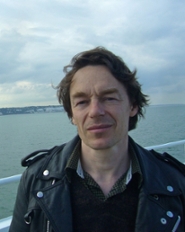
Justin Bennett- photo: M. Mizgiert

His widely ranging work is rooted both in the visual arts and in music. Bennett produces field recordings, drawings, performances, installations, audio walks, videos, and essays.

He studied sculpture, electronic music and video art and much of his work combines sound, image, space and storytelling. Bennett makes work for public spaces as well as art spaces and concert venues.

He collaborates with a wide range of other artists, including with BMB con., HC Gilje, Vermeir & Heiremans, Renate Zentschnig.

A recurrent theme in Bennett’s research is the public’s experience of architecture, urban development, and (un)built space. He employs sound to render it audible as well as palpable: in his work, careful listening provides a radically different way of seeing and experiencing. Bennett’s sound recording is comparable with shooting a video. He uses various microphones to change perspectives – like camera lenses. The microphones – the listener’s points-of-hearing – move through a city, a street, a windy Russian tundra, or the different-sounding spaces of a building.

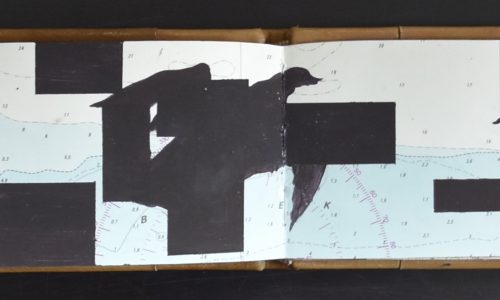
In many of Bennett’s works and installations, sound and voice-over are juxtaposed with video images, drawings, maps and diagrams. Thus, a reciprocity is created between various forms of expression: a drawing or a text can be a score; and sound and image become ways of drawing and writing.

In this way, Bennett’s work is also a research into sound and image as specific media, and an exploration of the ways in which they can be used and experienced. His way of working sparks unexpected complementarities, synaesthetics, collisions and manipulations of the mind.

www.ftn-books.com has theeNOISE MAP publication by Stroom now available.

Posted on Leave a comment

Richard Dinnis

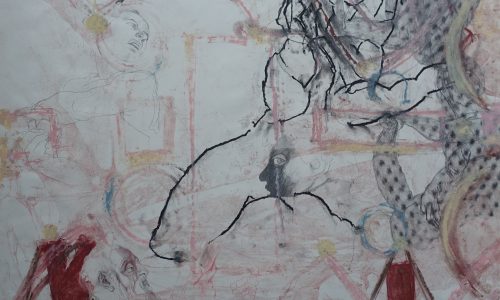
This book is about the little things that interest or amuse me. It looks at amongst other things gated communities, naval history, failure, contemporary business practice and trees. It is an attempt to explore, through drawing, the complexities of meaning that cloud and confuse even the smallest and simplest of things. It is also an attempt to present the world as I see it. An idiosyncratic world where observed physical realities mix with language, thought and humour. A world that is strange, tragic and infinitely complex and where beauty and humour lurk in unexpected places. A world in which weathermen plan to lure tiny Herons down to guard and enjoy tiny spoon ponds and where Hugh Grant and I sit together drawing animals, but not speaking – Richard Dinnis

Thge artist book A POSTCARD FROM THE MOUNTAIN….. is available at www.ftn-books.com

Posted on Leave a comment

Jamie Shovlin (1978)

Jamie Shovlin is interested in the tension between truth and fiction, reality and invention, history and memory. His work combines extraordinary facility as a draughtsman, printmaker, painter and writer with conceptual complexity and playfulness. His painstakingly researched and executed works merge inherently flawed systems, pseudo-scientific exactitude and doubtful philosophical propositions with the seemingly objective experience of the archive. Through his projects Shovlin questions how information becomes authoritative and explores the way that we map and classify the world in order to understand it.

Shovlin is perhaps best known for a series of ambitious projects, including Naomi V. Jelish (2001-2004) and Lustfaust: A Folk Anthology 1976-81 (2003-6), in which the artist constructed extensive and seemingly real archives, which were then revealed to be elaborate fictions. The Jelish archive consists of drawings, newspaper cuttings and other ephemera relating to a 13-year old prodigy who had disappeared with her family in mysterious circumstances, along with notes and inventories made by John Ivesmail, a ‘retired science teacher at Naomi’s school [who had] unearthed a collection of the teenager’s remarkable drawings’.

In The Evening Redness in the West, a wide variety of interrelated materials form a cohesive body of work woven around the disparity between reality and idealism whilst exploring the narratives and fictions that a nation projects into the world. In this three-part project, Shovlin posits a historical overview of the United States of America by filtering it through a variety of domestic and political media sources including his personal art historical canon and his parents’ record collection, which consists of predominantly American music from the 1960s and ’70s. Taking as its starting point a number of carefully chosen events from recent American history, the work is a subjective exploration of American history, politics and culture and charts an era of dramatic change in both American and global politics, spanning from the depression of the 1930s to the present day. Jamie Shovlin studied at the Royal College of Art and lives and works in London. Recent solo exhibitions include Tate Britain, London (2006), City Gallery, Leicester; Artsway; Talbot Rice Art Gallery, Edinburgh and Hatton Gallery, Newcastle (2006/07); the Contemporary Art Museum in Rome, Grand Union, Birmingham (2010), and Ibid Projects, London (2011).

www.ftn-books.com has the “Various Arrangements ” book now available.

Posted on Leave a comment

George Meertens (1957)

the following text is published by DE PONT on the occasion of the Meertens SUBLACUS 3exhibition. The catalog is now available at www.ftn-books.com.

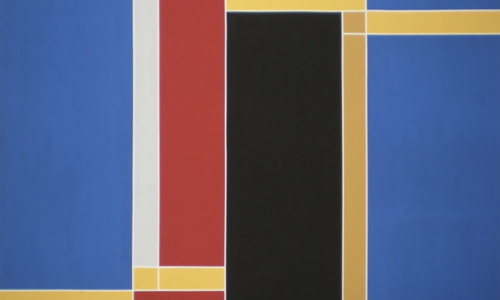
‘Listen, O my son (…) and incline the ear of thy heart,’ begins the prologue to The Rule of St. Benedict, written by Benedict of Nursia (480-547) and used by monasteries to this day. These words are greatly cherished by Meertens. In his manner of painting, by dismissing any preconceived image and by responding to what occurs during the painterly process, he wishes to put into practice this appeal to listen. Sublacus is the term by which he sums up that approach. Consisting of the Latin words sub (under) and lacus (lake), it refers to the site at which Benedict found solitude as a hermit. Seeking the most profound point, the abbot chose a cave at the lower end of the lake as a place for contemplation and introspection. As Meertens sees it, the studio can also be regarded as the Sublacus, as the place where an artist tries to cast aside all certainty and does what the painting-in-the-making demands of him. Painting thus becomes a form of focus, involvement and surrender.

The paintings of Meertens have taken shape layer by layer. They are abstract, lyrical fields of color which occasionally have connotations of landscape. Sometimes the works are dark and stirring, other times peaceful and light, often hushed and withdrawn. Only after prolonged observation do they reveal themselves. That’s when we notice the marks left by instruments used to apply the paint, but also those made by scraping and wiping paint away. There are deliberate changes, but also unanticipated effects. On looking closely we see a sparkle in the specks of color and are struck by the way in which colors blend with each other or, by contrast, maintain their distinct qualities. Here and there, scratches made by the palette knife come into view as ‘scars’ that show the vulnerability of the painting’s ‘skin’. And throughout all of this, the transparency of layers remains as they come to an understanding with each other, as it were, and become part of an underlying structure.

Contrary to the wrought quality of the paintings, there is an almost ‘casual’ sense in the drawings produced as series. They seem to have come about naturally, like the humming of a spontaneous melody. The patterns are extremely simple and follow the impulse of a moment. Here painting is reduced to a straightforward act. Yet this simplicity and directness, so characteristic of the works on paper, have not failed to affect the paintings. In the most recent ones, we can discern a development toward greater clarity and precision, in which the number of steps has been reduced to a minimum.

Throughout his quest for images that tell about an inner experience, Meertens has gradually come closer to painting itself. References to visible reality have disappeared entirely. Instead, the paintings convey the story of their own development, and they reveal their nature in the colors and actions through which they have taken shape. The approach to the image has, in fact, become the image itself.

Posted on Leave a comment

Ko Aarts (1961)

The world is big, the universe infinite, the earth crowded with tiny people. We are all living in our own little universe. With our own experiences, our own thoughts and feelings. We all look at the world from a different point of view. No perception is equal. No experience is the same. We might look at the same, but we all see different things. That is our Private Universe.

This how the virtual exhibition of his PRIVATE UNIVERSE exhibition starts at his home page.

For the catalogue please visit www.ftn-books.com and to visit the exhibition click the link.

https://www.koaarts.com/

Posted on Leave a comment

Wouter van Riessen (1967)

The following text comes from the Wouter van Riessen site:

For as long as I can remember, I have been intrigued by self-portraits. What is a self-portrait? A portrait of yourself. But what is that really: a self? Many things come to mind. My particular interest is in the self as a collection of inner voices and moods; in who you are beyond the data that defines your identity. In recent paintings and photographs, I explore the role that the imagination plays in this through art that touches me. From the poems of Baudelaire and the sunflower paintings of Van Gogh, new images arise. They reflect my inner world and are, in this respect, self-portraits.

I like to work with puppets. A puppet is brought to life by the gaze of the person looking at it. Your imagination allows a puppet to return your gaze, and establish a connection. As you look more closely, the puppet becomes increasingly alive, and the intangible relationships between matter and spirit and the inner world versus the outer world rise to the surface. Many of my paintings depict puppeteers. The self-portrait then springs from the relationship between the puppets and the puppet master. One of my paintings shows a man who, with apparent resignation, allows his face to be measured up by two Mr Punch puppets. One holds a ruler up in front of the man’s right eye. This can be read as a (self) critique of the omnipresent tendency to view everything from the perspective of measurable data. This way of looking at things pushes questions that refer to meaning into the background. I believe that visual art plays a crucial role, reaching beyond the bounds of data to recall the elusiveness of reality.

Several years ago, I began researching the power of the imagination based on the three versions of Fifteen Sunflowers in a Vase painted by Vincent van Gogh in 1888 and 1889. The poses and expressions of Van Gogh’s sunflowers have an almost human quality. Yet, when looked at individually, they are sometimes barely recognisable as flowers. In which sense, they are ideal prompts for associative games. When I started to copy Van Gogh’s flowers, I continually saw new things: a jellyfish floating gently upwards; twin sisters with their cheeks pressed together; the head of a bat. The expression of the bouquet as a whole is also quite fascinating; in the version I know best – the one in the Van Gogh Museum – I see a mixture of shock and surprise. That Fifteen Sunflowers in a Vase is such a familiar image is, I feel, a great advantage: it means that everyone can see the origin of my flowers and will be inspired to bring my bouquets to life as well.

For me, the work of the nineteenth-century poet Charles Baudelaire has the power to evoke intimate memories and atmospheres; uncommon feelings of love and transience, connection, and abandonment. To give form to such moods, I use props from childhood: marionettes. Just like Baudelaire’s poems, marionettes are charged with symbolic meaning and are able to convey deep emotions. I buy wooden puppets on the Internet, and rework them with a chisel, sandpaper and acrylic paste until they look just as I want. Then I stage them in tableaux, which I photograph. My images often diverge considerably from what Baudelaire expresses in his poems; my emphasis differs from his. I identify with the characters in another way. In one of the prose poems (Les Veuves), he describes a widow’s son as impetuous, selfish, devoid of gentleness and patience. I saw the child quite differently: stricken by fate, conjoined to his mother. Taking this image as my starting point, I then worked towards a photographic work. I step into the world of Baudelaire and look around freely.

www.ftn-books.com has several van Riessen items available:

Posted on Leave a comment

Stefan Szczesny (1951)

Stefan Szczesny (born on the 9th of April 1951 in Munich) is an European and international painter, draughtsman and sculptor. After studying successively in Paris and at the Villa Romana in Florence, he came back to Germany where he organized the first exhibition “Rundschau Deutschland” in Munich and Cologne in 1981 and founded, with other figurative artists, the “Neue Wilde” movement which marks the return of figurative art inspired mostly by “The Fauves”. In 1994, Szczcesny moved to New York and then founded the Szczcesny Factory in 1996. In the middle of the 1990’s, he relocated his Studio on the Mustique Island. The Caribbean and tropical environment incarnates for the artist the continuity of the Mediterranean spirit and “way of life” and inspires his work which becomes even more opulent, sensual, colorful and radiant. Travelling all around the world, taking part to numerous and famous exhibitions, Stefan Szczesny moved in 2001 to Saint-Tropez where he lives and works in his Atelier.

www.ftn-books.com has Galerie Hans Barlach catalog available on this artist.

Posted on Leave a comment

Roos Theuws (1957)

Roos Theuws

All through her oeuvre, Roos Theuws (1957, the Netherlands) has been dissecting her medium, slowly, radically, and on a razor’s edge. Light and sound are physical phenomenon, their coherence a product of interpretation.  Her awareness of this fact is beautifully exploited in both her photography and video installations, causing the image in front of the viewer to fall into irreconcilable pieces, so that we too can’t help but share her awareness.

Theuws teaches at the Gerrit Rietveld Academy in Amsterdam. Her work has been shown at, among others, the Tokyo Biennial in Japan, The Kitchen in New York, US, the Kölnischer Kunstverein in Germany and Museum Boijmans Van Beuningen and Stedelijk Museum Amsterdam in the Netherlands. Her work is held in various public and private collections, such as Huis Marseille in Amsterdam and Stedelijk Museum Amsterdam.

www.ftn-books.com has a few Theus publications available

Posted on Leave a comment

Martin Kippenberger(1953-1997)

Martin Kippenberger

Martin Kippenberger was one of the most influential German artists of his generation. Emerging alongside Albert Oehlen and Günther Förg, Kippenberger’s work often featured caustic commentary on the art world and reactionary takes on iconic art-historical tropes. “My style is where you see the individual and where a personality is communicated through actions, decisions, single objects and facts, where the whole draws together to form a history,” he once explained. Born on February 25, 1953 in Dortmund, Germany, he attended the Hochschule für Bildende Kunst where he was influenced by the work of Sigmar Polke. After graduating, he became a member of the burgeoning Cologne art scene and developed a reputation for his politically charged and provocative work. Though he employed a number of artistic disciplines, many of Kippenberger’s best-known works are paintings, including his series of self-portraits from 1988. Kippenberger’s life was cut short at the age of 44 on March 7, 1997 from liver cancer in Vienna, Austria. Posthumously, the artist has been subject of several exhibitions including the large-scale show “Martin Kippenberger: The Problem of Perspective” held at The Museum of Modern Art in New York in 2009. Today, his works are held in the collections of the Tate Gallery in London, the Hirshhorn Museum and Sculpture Garden in Washington, D.C., and the Migros Museum in Zurich, among others.

www.ftn-books.com has one collectable invitation currently available ( sorry….it is now sold, but here are the pictures)