Posted on Leave a comment

Toto Frima (1953)

Toto Frima rose to prominence in the 1980s with her self-portraits captured on a Polaroid camera (SX70) using a remote shutter release. These photographic pieces swiftly enchanted the entire continent of Europe with their small, often suggestive nature. One of the key factors in her success was the way her works perfectly mirrored the socio-cultural developments of the time: women were able to work without competing against men, technology was seen as subservient to the message being conveyed, and the focus was on the individual “I.”

In the early 1990s, Toto Frima once again drew public attention with her new 50×60 Polaroid works. As the larger equipment required shooting sessions to take place in a studio rather than on location, the intimacy of the previous works was lost. However, the theme remained the same. Toto portrayed herself in various ways, assuming different roles or incorporating diverse objects. Yet, in all cases, she continually referred to her own identity, which could also represent someone else. In 1990, the Rheinsische Landes Museum Bonn (Germany) dedicated a major exhibition to her, and a book of her 50×60 works was published.

This was followed by a period of silence, during which Toto completely disappeared from the public eye. For several years, she felt no specific urge to point the camera at herself. Instead, she embarked on a personal development that she did not document through photos. She distanced herself not only from her own work, but also from the entire realm of photography and the artistic environment, becoming a mere spectator. However, the desire to create eventually resurfaced, growing so strong that only new self-portraits could satisfy it. And so, Toto returned in 1988 with new SX70 photos, and in 1999, she worked in Prague with the 50×60 camera.

Her latest works reflect an evolution. They are stripped of extravagance and instead draw attention to the act of “watching” and “looking,” rather than being the object of attention. The voyeuristic elements have been deliberately eliminated.

www.ftn-books.com has 1 Frima title now available.

Posted on Leave a comment

Paul Robeson (1898-1976)

Paul Robeson, born in 1898 in Princeton, New Jersey, was the son of a Presbyterian minister who had escaped slavery and a mother from a distinguished Philadelphia family. He received a full scholarship to Rutgers University at the age of seventeen, and in just four years he accomplished a remarkable feat by receiving twelve major letters and being named valedictorian of his class. After graduating, he continued his education at Columbia University Law School, but faced racial struggles in his career as a lawyer that ultimately ended it. However, he soon found success in the world of public speaking and acting.

In the mid-1920s, Robeson became well-known for his lead roles in Eugene O’Neill’s plays “All God’s Chillun Got Wings” (1924) and “The Emperor Jones” (1925). Throughout the 1920s and 1930s, he garnered widespread acclaim as an actor and singer, captivating audiences with his signature song “Ol’ Man River.” He also achieved the longest-running Shakespeare play in Broadway history with his portrayal of “Othello,” which ran for nearly 300 performances and is still regarded as one of the greatest American productions of Shakespeare’s work. As his fame grew in the United States, he also gained international recognition and admiration. Speaking fifteen languages, he traveled the world to promote social justice through benefit performances. He strongly believed that public figures have a responsibility to advocate for justice and peace, making him unlike any other performer of his time.

The WEST museum devoted an exhibition to Robeson in 2023. The museum publication for visitors is now available at www.ftn-books.com

Posted on Leave a comment

Klaus Heider (1936-2013)

Klaus Heider, born in Göppingen in 1936, embarked on his artistic career in the mid-1960s, delving into the realm of printmaking under the tutelage of Manfred Henninger at the Staatliche Akademie für bildende Künste, Stuttgart. Subsequently, he honed his skills in Printmaking under Friedrich Stabenau at the esteemed Hochschule für Bildende Künste, Berlin, from 1960 to 1963.

In 1982, Heider was bestowed with the prestigious Villa Massimo Prize, granting him the opportunity to spend a year in Rome. The following year, he received a grant from the renowned Cité Internationale des Arts, Paris. Since 1983, Heider has held the esteemed position of Professor of Painting at the acclaimed Hochschule für Gestaltung, Wirtschaft und Technik in Pforzheim. He currently resides in Bad Boll.

Heider’s early works as a print-maker in the 1960s were defined by perspective lines and chiaroscuro, skillfully evoking a sense of three-dimensional structure. Drawing inspiration from photographs, he often incorporated elements of collage, décollage, and frottage in his creations. The use of light and transparency has remained a prominent aspect of Heider’s work throughout his career.
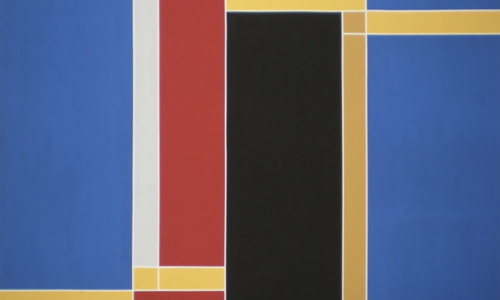
In the 1970s, Heider delved into the realm of sculpture, crafting mesmerizing glass spaces in the landscape. Preceded by preliminarily works done in print and drawing, these objects allowed for a new perspective on size, spatial relations, and the character of their surroundings. As the 1980s dawned, Heider began experimenting with incorporating colored linear elements into his work. Starting with painted lines, he later progressed to using neon tubes that extended beyond the boundaries of the picture and into the surrounding space.

Heider’s repertoire also features a fusion of words and images in multiple books and works on paper, each bearing a title of significant meaning.

www.ftn-books.com has several titles on Heider now available.

Posted on Leave a comment

Robert Schad (1953)

Since the early 1970s, Schad has been working with raw steel as the material for his sculptures. Using solid rods of square steel, he forges and welds simple, highly minimalist, or even whimsically shaped figures and installations. By consistently incorporating proportions found in the human body and nature, his creations take on an organic form that, despite the chosen material, can seem weightless. A distinctive aspect of his work is its integration into the surrounding environment. Whether interacting with architecture or nature, it always maintains an exciting balance.

Schad lives and works in Larians-et-Munans, in the Haute-Saône department of France. In addition to his studio, Schad has had his own sculpture park since 2004. In 2010, he was awarded the Goslar Kaiser Ring and his work was exhibited at the Mönchehaus Museum Goslar in Goslar.

At this moment an important Schad exhibition is being held at the Coppejans gallery.

www.ftn-books.com has several Schad items now available,

Posted on Leave a comment

Jeroen van Bergen (1979)

To fully comprehend something, it is often helpful to trace its origins and tell its story. Jeroen van Bergen captures the genesis of architecture through his work. In his creation myth, the fundamental principle of architecture is the smallest room – the foundation and origin of the entire concept. He draws upon the dimensions and shape of this tiny yet habitable unit, the building block of cities and the world, from the building standards for WCs in the Netherlands. This module serves as the cornerstone of his artistic explorations. […]

In his earlier pieces, Van Bergen constructed a street, a tunnel passage, a cart, a bathing cubicle, and a shower room, all based on the “principle” of the WC module on a 1:1 scale. These works were not merely scale models, but rather simplified replicas showcasing the functionality of the smallest possible form of architecture. In recent years, Van Bergen has continued to utilize the module as a guiding principle, scaling down his creations and predominantly relying on scale models. His aim is to decipher the message conveyed by the mass reproduction and combination of the “smallest room” in the larger context of architecture. These various versions are created on both a building level, with diverse variations ranging from individual homes to blocks of houses and high-rise buildings, and a city level, featuring streets, rows of buildings, and advanced city models. On the city level, Van Bergen experiments with both horizontal and vertical stacks, resulting in captivating and diverse outcomes. The works featuring low stacks of “smallest rooms” evoke thoughts of sprawling, chaotic shantytowns that often pop up around modern mega-cities, traditional desert cities like those of M’Zab in Algeria, or even pre-Columbian settlements.

www.ftn-books.com has one Jeroen van Bergen title available.

Posted on Leave a comment

David Batchelor (1955)

Witness the creations of David Batchelor. The acclaimed artist’s work revolves around the vibrancy of color, a playful exploration of the endless shades that surround us, coupled with a thought-provoking examination of our perception and reaction to color in this era of advanced technology.

Within his London studio lies a treasure trove of fluorescent plastic objects, amassed from cities around the globe. From clothes pegs and fly-swatters to buckets and children’s toys, these everyday items are combined with light-industrial materials such as steel shelving, neon tubing, and acrylics to create extraordinary installations that elevate the mundane and celebrate the gaudy and kitsch. Yet despite their seemingly ordinary origins, Batchelor’s creations are undeniably mesmerizing and beautiful.

Born in Dundee in 1955, David Batchelor currently resides and works in London. In 2013, his two-dimensional work was showcased in a major solo exhibition, Flatlands, at Fruitmarket Gallery in Edinburgh, which then traveled to Spike Island in Bristol. Batchelor was also part of the landmark group exhibition, Adventures of the Black Square: Abstract Art and Society 1915 – 2015, at Whitechapel Gallery in London. His Monochrome Archive (1997-2015) was also on display at Whitechapel Gallery until May 2015. In 2019, Batchelor’s sculptures and paintings were showcased in My Own Private Bauhaus, a solo exhibition presented by Ingleby during the Edinburgh Art Festival.

Aside from his exhibitions, David Batchelor has also left his mark on the public realm with several major temporary and permanent artworks. These include a commission for the British Council headquarters in Hong Kong, Spectrum on the Hill in Seoul, South Korea, a 10-meter high light installation at Archway Tube Station in London, and a dynamic chromatic clock titled Sixty Minute Spectrum installed as the roof of Hayward Gallery in London.

www.ftn-books.com has 1 Batchelor title now available. The very thick and heavy FOUND MONOCHROMES book.

Posted on Leave a comment

Jon Marten (1934)

Jon Marten is a painter/graphic artist. After completing his education (1955-1958, St. Joost in Breda and Eyckacademie in Maastricht), he primarily worked on leaded glass assignments until 1960. Later on, he stopped accepting commissions and moved to Amsterdam where he settled. In the 1980s, Jon Marten was part of the ‘IJmuider Kring’, alongside artists such as Jaap Mooij, Theo Kuypers, Gérard van den Eerenbeemt, Pieter Defesche, and Lei Molin. The landscape serves as a major source of inspiration for Jon Marten’s work. His work represents a different world; a different reality. He describes his work as a vigorous attack on unknown forces in nature. ‘I try to let these inner fragments run freely. They guide me towards one of the slides stored within me. That’s how it usually goes.’ Jon Marten spent a lot of time in the Dominican Republic and regularly exhibited in the Caribbean region.

www.ftn-books.com has t the Keerder Kunstkamer publication ao now available.

Posted on Leave a comment

Eelco Adward Schut (1967)

Not much info found as the artist he trulky is. Makes beautiful ,excellent and appealing photographs and has publsihed two novels at this time.

Born in 1967, Eelco Adward Schut holds a degree in psychology from the University of Groningen and has also completed a course at the Fotoacademie in Amsterdam. He is known for his eloquent columns, thought-provoking essays, and captivating stories.

www.ftn-books.com has now the IN HET VOORBIJGAAN publication available.

Posted on Leave a comment

Marcel Odenbach ( 1953)

In his artistry, Marcel Odenbach (hailing from Cologne in 1953) tackles the repression, examination, and exploitation of bygone eras. Along with his extensive exploration of postwar German history and the aftermath of National Socialism, his oeuvre also delves into the subject of colonialism and its repercussions. By merging video and television footage, archival material, and self-produced imagery, he constructs intricate narratives that unveil hidden historical layers that continue to echo, even today, as often silenced remnants of the past. A significant motif in his work is not only his own biography, but also the biographies of others.

www.ftn-books.com has currently one Odenbach title available.

OLYMPUS DIGITAL CAMERA
Posted on Leave a comment

Dominique Stroobant (1947)

As a creator, Dominique Stroobant possesses the ability to transmute the queries arising from his inquisitiveness into visions and concepts, which are then manifested into tangible forms. His sculptures emerge from the depths of a fertile imagination, akin to a quarry, fashioned from the traditional deposits of cultural and technological history.

Stroobant’s inquiries and their corresponding solutions could potentially categorize his multifaceted endeavors as those of a sculptor, mason, photographer, draughtsman, scientist, engineer, or even a mediator—assuming such labels were not hindered by his inspiring rebellious nature. His passion is driven by the interplay between order and chaos, a quest for structure within apparent disorder, and the euphoria of originality.

www.ftn-books.com has the Kunstcentrum Badhuis publication from 1980 now available.