Posted on Leave a comment

Seamus Nicolson (1971)

Here is what Nicoslson says on his site about himself.

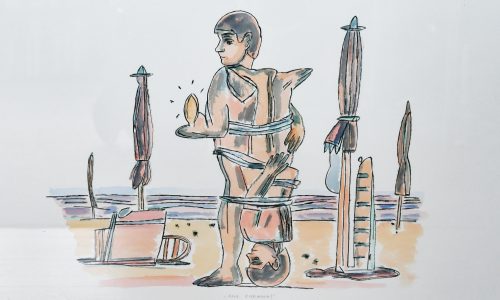
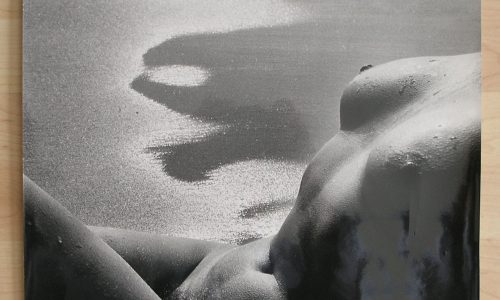
I feel that I am still trying to paint but with another medium. The way I conceive and construct images, is more informed by art history and cinematography, than the traditions of documentary photography. The creative act can be encapsulated in the decisive moment, but it can can also occur when an event is seen, re-imagined and re-made.

I prefer to work in the directorial mode, constructing images that are drawn from my immediate surroundings, using the visual language of tableaux and Old Master painting. The characters depicted are from the locale where the images are made. My recent work explores a more abstract territory, using landscape to reflect psychological space. All my work is a celebration of the everyday, and an investigation into that paradoxical moment when our surroundings can seem familiar, and yet uncertain and mysterious. The photographic fragment and what it can suggest to the viewer is more intriguing to me than more direct and explicit means of visual communication.

Primarily, I make work for the gallery wall, but I also work commercially shooting editorial portraiture and fashion. I am interested in the potential for cross-over between the different areas of photographic practice: Fine Art, Fashion, Portraiture and Documentary. These genres mainly operate separately with distinct and different visual codes that are intended for different audiences. There needs to be more dialogue between these areas, if the medium is to evolve further and truly reflect the experience of life in an increasingly complex and inter-connected digital world.

I have exhibited extensively nationally and abroad and have works in private and public collections such as the Arts Council, the Tate and Government Art Collection. As well as the editorial portrait and fashion work, I have also created two advertising campaigns for Vivienne Westwood.”

www.ftn-books.com has the Bommel van Dam catalog available..

Posted on Leave a comment

Anke Roder (1964)

Anke Roeder (1964) studied at the Academies in Maastricht and ‘s-Hertogenbosch. After setting up studios in ‘s-Hertogenbosch, on the river Heerewaarden and in Rotterdam, he has been living and working in Sandewehr, North Groningen since 2009. The Wadden Sea environment, the impression of light and travel, and the colors of the large artist’s garden around her home resonate in her abstract landscapes. In addition to oil and encaustic paintings, she also creates works on paper. She has exhibited at numerous national and international trade fairs including PAN Amsterdam, Kunstrei, Art Rotterdam, Art The Hague, Art Ghent, List Berlin, FIAC Paris, and the London Art Fair. Her work has been exhibited in Denmark at the Ribe Museum, Stedelijk Museum Schiedam, Belvedere Heerenveen Museum, Van Bommel van Dam Venlo Museum, Isselstein Museum, Kranenburg-Bergen Museum, and Ketelfactory Schiedam. Masu. Her works are collected all over the world. Since 2015 she has been regularly writing articles about contemporary art.

Recently www.ftn-books.com acquired a small collection of books on Anke Roder.

Posted on Leave a comment

Fred Pollack (1943)

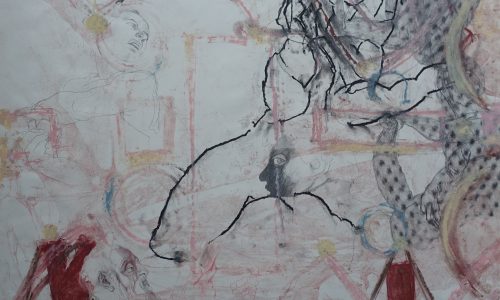
Fred Pollack’s paintings are generally the result of an intuitive painting process of formation and destruction. He incorporates geometric and anthropomorphic forms as well as abstract and figurative elements into compositions that subordinate the colors black, gray, and white. The edges of shapes and surfaces are often cut off, giving the impression that his works are part of a larger cosmic system. Pollack’s paintings find visual meaning in jarring combinations of unequal size, sometimes appearing abstract and sometimes suggesting representation. Although formally associated with postwar abstract art and neo-figurative art, his work appears to draw on the Surrealist tradition in its strange play with darkness and dreams. Pollack rarely gives titles to his paintings so as not to influence the viewer. u201cI want the viewer to feel the same freedom when exploring composition as I do when I paint,u201d he explains.

www.ftn-books.com has the Willy Schoots publication now available.

Posted on Leave a comment

Ma Hui

Ma Hui is a Chinese-born artist living in Amsterdam, known for his knowledge and expression using ink on paper. As a first-generation immigrant, Mahoi feels a strong connection to her homeland. She expresses her emotions through her ink strokes, drawing inspiration from her memories of her childhood and her personal connection with her hometown.

Ma Hui was born in Chengde, Hebei Province in 1958 into a family of high-ranking party officials. Her wide range of works embodies her two very different cultural identities in different ways. Her love for ink (ink and water on paper) stems from her childhood, spent on the banks of the Yellow River in Ningxia Hui Autonomous Region.
Ma Hui studied at the School of Fine Arts at Xi’an University, after which she painted the cultural life of ethnic minorities in Tibet. In 1987 she moved to Europe and continued her art studies in Switzerland and the Netherlands.
During her stay in Ningxia Hui Autonomous Region, the symbiosis of yellow earth and flowing water evoked lasting emotions in her that literally shaped her artistic career, which spanned four decades on two continents. Both cultures resonate in ink, an ancient Chinese figurative art form that Ma Hui brilliantly transforms, resulting in giant jets of ink and water on rice paper. Ma Hui’s work is considered a pioneer of abstract ink and is part of a new advancement in modern Chinese culture. In 2006, she received the prestigious Emstel Prize from the Cobra Museum in the Netherlands for a wall-sized ink installation on canvas titled “Yellow River.” function.

www.ftn-books.com has the Dancing in 3D book by Ma Hui now available.

Posted on Leave a comment

Jan Ros (1961)

Architecture and the urban environment are recurring themes in Jan Roth’s art. The most important objects in his paintings are houses, villas, interiors, office buildings and highways. Ross paints images of gray houses and somewhat dilapidated gas stations on highways in a way that invites the viewer to look at these everyday objects and situations anew. It has a high affinity with photographers whose subjects are modern urban landscapes. The picture looks like a still image. But Ross’ job is about more than just capturing a scene. In Jan Roth’s paintings, speed and stillness seem to blend effortlessly.

www.ftn-books.com has the CONTEMPO catalog now available.

Posted on Leave a comment

Tony Scherman (1950)

Scherman’s upbringing was diverse, as he was born in Toronto in 1950 but spent his formative years in Paris, Europe, and later in London starting from 1955. It is worth noting that his father, Paul, pursued a successful career as a conductor and violinist across Canada, Europe, and England. After earning his MA from the Royal College of Art in London in 1974, Scherman decided to return to Toronto in 1976. Throughout his career, he has showcased his artwork in over 100 individual exhibitions, spanning across Canada, the United States, Europe, Beijing, and Hong Kong. In fact, his 2001-2002 solo exhibition, titled Chasing Napoleon, was displayed in several American university museums. Accompanying this exhibition was a book published by Cameron & Hollis in the UK in 1999, which was globally distributed by D.A.P. in North America and Thames and Hudson elsewhere. Additionally, Scherman’s artistic talent has been recognized through his participation in various group exhibitions worldwide. One notable example includes his involvement in The Human Clay, an exhibition curated by artist R.B. Kitaj at London’s Hayward Gallery in 1976. Kitaj’s selections for this groundbreaking exhibition showcased works by renowned artists such as Frank Auerbach, Francis Bacon, Lucian Freud, and Leon Kossoff. The exhibition successfully toured public galleries in the UK and Belgium. In 2012, Scherman’s painting titled Macbeth Witch #1 was chosen to represent the year 1994 in the Spotlight on 40 exhibition, held in Ottawa to commemorate the 40th anniversary of the Canada Council Art Bank.

www.ftn-books.com has currently the Barbara Farber publication available.

Posted on Leave a comment

Jan Radersma (1948)

No matter how long the journey, it starts with the first step. Visual For his artist Jan Radersma, his first steps were taken in Indonesia, and he regularly incorporates these steps into his work. Jan Radersma does this both literally and figuratively. In his work, he regularly returns to where he started, repeatedly returning to decisions he made early in the creative process. This creates layered paintings and works on paper that evidence a continuous series of movements and reflections until a stage is reached where each addition of more of the artwork detracts from the overall picture. Landscape is not a specific theme in Radersma’s work, but emerges gradually. “As we walk, all kinds of things appear. Then we see a certain light or a special color.” The shapes and compositions in the landscape are balanced on the border between abstraction and representation. It is converted into a work. Rather than staying on the safe side, Radersma pushes the perimeter into a very thin transition area. This creates works where landscapes and abstract forms sit side by side.

www.ftn-books.com has recently added multiple titles on Radersma.

Posted on Leave a comment

Paul Rebeyrolle (1926-2005)

Paul Rebeyrolle, a French artist, dedicated the majority of his career to highlighting philosophical and political issues through expressive and emotionally charged works. He was born in Eymoutiers, France in November 1926, and passed away in February 2005 in Boudreville, Côte-d’Or. Struggling with tuberculosis of the bones since the age of five, Rebeyrolle was left immobilized. During this time, he found solace in drawing, while his parents and teachers taught him how to read and write. It wasn’t until the mid-1930s that he regained the ability to walk after a long period of convalescence. In 1937, his family relocated to Limoges, where Rebeyrolle began his secondary education, with a focus on a baccalaureate in Philosophy.

At the age of 18, Rebeyrolle made his way to Paris, eagerly boarding “the first train of the Liberation,” having long known his desire to become a painter. Throughout the 1940s, he immersed himself in the world of painting through various exhibitions, such as witnessing the works of Soutine at the Galerie de France and Picasso at the Salon d’Automne. However, the reopening of the Louvre proved to be the most pivotal experience for him. Exploring the museum’s rooms, he discovered the masterpieces of Rubens, Rembrandt, and Titian. Intrigued by this encounter, Rebeyrolle embarked on a journey to Spain and Italy in 1950 to further indulge in the exploration of outstanding artworks. Additionally, he actively participated in group exhibitions and achieved recognition as a Young Painter during this time.

Upon returning to Paris, Rebeyrolle’s artistic career took off as he began holding solo shows. It was during this period that his involvement with the Communist Party emerged, motivated by the uncertainties of the Cold War and propelled by propaganda. However, after the events in Hungary in 1956, he decided to disassociate himself from the party, symbolizing this departure through his painting titled “Hope to see you soon.”

In the ensuing years, Rebeyrolle’s artistic endeavors gravitated towards abstract painting and socialist realism. His canvases featured figurative representations, often brimming with violence, and populated by nude figures. Simultaneously, he also delved into the abstractions of natural motifs, influenced by his passion for fly-fishing.

In 1963, after experiencing some success, Rebeyrolle chose to leave Paris and settle in the countryside, where he continued to live and work. Despite his move, he continued to exhibit in Paris, most notably at the Maeght Gallery.

www.ftn-books.com has several Rebeyrolle publications available

Posted on Leave a comment

Cees Andriessen (1940-2023)

One of the highlights from last auction for me was the set of 16 small collectable books by Cees Andriessen. Simple , highly appealing prints which reminded me of the best works by Willem Hussem. In the coming months all 16 items will become available at www.ftn-books.com

Andriessen’s illustrious 50-year career cemented his position as one of the leading graphic artists in the Netherlands. In 1986, he was the first recipient of the Gelderland Graphics Prize, recognized for his poetic expressiveness and exceptional craftsmanship. Apart from his visual art, Andriessen had a deep love for letters and poetry. Through his foundation, De Witte Mier, he published books that combined his visual work with literature.

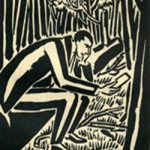
Andriessen’s oeuvre mainly consists of relief prints, particularly linocuts and woodcuts, which he printed himself. His graphics are the result of omission and removal. His day in the studio would begin with filling a sheet of paper with notes to process all his ideas. He would then paint over unnecessary pieces with white tempera, leaving only the essential parts behind. The result is abstract, with open space reigning supreme.

Posted on Leave a comment

K. Schippers (1936-2021)

In 1958, K. Schippers (pseudonym of Gerard Stigter, born in Amsterdam in 1936) entered the Dutch literature scene as an editor of an unconventional magazine. Barbarber presented everyday reality with an ironic aplomb that strongly contrasted with the main current at that time: the expressionism of the Vijftigers. This new method has produced numerous dry-comical classics, such as ‘The Car Owner’: “A man gets into a car / performs the necessary actions / for driving / and then / indeed / drives away”.

Modest poems, which is a characteristic feature of Schippers’ body of work. From his debut ‘De waarheid als De koe’ to his latest work ‘Tellen en wegen’ (2011), Schippers’ poems never revolve around the spirit of the poet. He observes and shares with his readers what he finds worthy. And that doesn’t have to be much. In fact, the smaller and more inconspicuous the observation, the better he likes it, even if it’s just the address of the Rijksmuseum, or the fact that everything has a color.

Schippers does not limit himself to traditional poetic forms; if a photograph is a more suitable illustration for the point he wants to make, then it becomes a photograph. If he wants to describe the path of a fly over a magazine, he draws a line through the letters. And if a poem doesn’t need words because it’s titled ‘Vlielandse zandplaten’ and therefore consists of “seawater, sand, and plants,” then the page remains empty.

Schippers enjoys writing about visual artists who have inspired him. He will never present someone else’s discovery as his own. He likes to share – for the essayistic part of his oeuvre, he received the P.C. Hooft Prize. Besides visual art, film is the most beloved medium. He collaborated on several films with Kees Hin, and it was also the subject of his essays and the novel ‘Waar was je nou’ (awarded the Libris Literature Prize).

Most likely, Marcel Duchamp is the most important artist for Schippers, not only because of his discovery of the ‘readymade’ – the ultimate tribute to the beauty of reality – but also because of his humor and sense of relativism. Because those are the other two characteristics that you immediately associate with the work of K. Schippers.

www.ftn-books.com has now the signed and numbered ZILAH publication by K. Schippers available