

Allan Kaprow dismantled the ivory tower of static aesthetics, catalyzing a seismic shift through the epochal emergence of ‘Happenings’ and ‘Environments.’ He treated the canvas not as a sanctuary, but as a restless, site-specific beast that perpetually evaded the suffocating grip of the marketplace. His 1959 debut, *18 Happenings in 6 parts*, functioned less like a static portrait and more like a fever dream intricately woven from orchestrated spontaneity; here, the spectator transformed into a marrow-deep accomplice. To Kaprow, art was a permeable membrane, a gossamer scrim blurred by the relentless humidity of existence. He famously posited that life’s chaotic vibrancy rendered traditional art trivial.
Within the labyrinth of his philosophy, the act of ‘reinvention’ served as the bedrock. Forget the ossified tradition of the museum—that mausoleum of fixed icons. Kaprow discarded the mandate of permanence, favoring a metamorphosis that acted like a chrysalis shedding its shell with every iteration. His works refused to be embalmed in amber; they were kinetic, shivering with the intent to mutate each time they were resurrected. Whereas the contemporary world clung to the iron-clad sanctity of the finished object, Kaprow championed a radical instability, an ongoing dialogue where the original was merely a specter of its future manifestations.
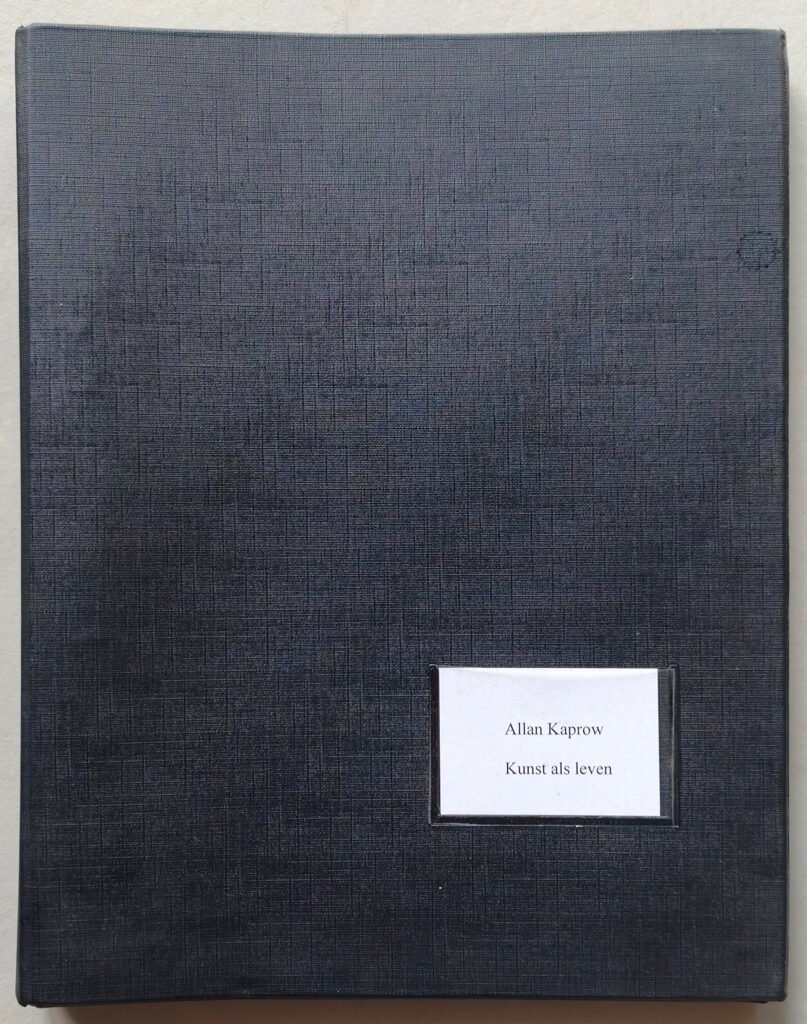
www.ftn-books.com recently added the KUNST ALS LEVEN publication by the van Abbemuseum from 2004 to its collection.