

The Man Who Turned Wrecked Cars Into Art
One night in 1962, John Chamberlain stumbled into his studio, thoroughly drunk, and squared off against a sculpture that refused to behave. It hung on the wall, a mass of compressed car metal that wouldn’t come together the way he wanted. So Chamberlain did what any big, hot-tempered man might do after a few drinks too many — he grabbed a sledgehammer and threw it at the thing. The hammer tore through the metal and lodged there, with only three inches of the handle sticking out. The impact set off a satisfying chorus of clinks and chinks as the pieces settled into place. Just like that, the sculpture was finished. He called it Dolores James, and today it hangs in the Guggenheim Museum on Fifth Avenue.
It’s the kind of story that sounds too good to be true — a swaggering, Hemingway-style legend built for a sculptor who made his name smashing Cadillacs into modern art. But knowing Chamberlain, it probably happened exactly like that.
He died at 84, having spent his life as a big man with a bigger temper — “ornery,” as his fellow Americans might put it. He wasn’t much for grand pronouncements about art, but his instincts were shaped early, during a formative year at Black Mountain College in North Carolina in 1955–56. There, poets like Robert Creeley, Charles Olson, and Robert Duncan rubbed shoulders with painters such as Jackson Pollock, Robert Motherwell, and Philip Guston — and, by extension, with the young sculptor finding his footing among them. Creeley once compared the feeling of that kind of art-making to losing control of a car mid-spin: you don’t think about steering back onto the road, you simply do it, or you go over the cliff.
Chamberlain’s own road started in Rochester, Indiana, though he was raised in Chicago by his grandmother after his parents split up. At sixteen he lied about his age to join the Navy, serving across the Mediterranean and the Pacific. After the war, the GI Bill sent him toward an unlikely career: hairdressing. He later joked it was good for attracting women — though apparently not good enough, since he soon abandoned it for art school instead.
He enrolled at the Art Institute of Chicago in 1951 but clashed with his instructors and left. Then came Black Mountain. Sometime after, while staying with painter Larry Rivers in Southampton, New York, Chamberlain pulled the bumpers off an abandoned, rusted-out Ford, ran a truck over them, and twisted the wreckage into a single, unified shape. It was the beginning of everything.
What followed was a body of work that looked like abstract expressionism made three-dimensional — inspired first by sculptor David Smith, whose example taught Chamberlain how to bend and weld scrap metal into forms that were somehow both chaotic and perfectly balanced. Donald Judd, never shy with a critique, described Chamberlain’s palette — largely lifted from spray-painted car finishes — as evoking the cheap, sugary glamour of Detroit’s budget elegance. Chamberlain himself preferred a blunter definition of sculpture: if it lands on your foot, it breaks it.
He didn’t stop at metal. Paper, foam rubber, plexiglass, photography, film — he moved through mediums the way he moved through states, bouncing between Connecticut, California, New Mexico, Florida (where he picked up both a yacht and a houseboat), and eventually back to New York. His work appeared at the Venice Biennale in 1964 and at Documenta in Kassel in 1982, and he racked up well over a hundred solo shows in his lifetime. The Guggenheim gave him a retrospective in 1971 and had another planned for the year of his death; the Museum of Contemporary Art in Los Angeles honored him in 1986. Awards and medals piled up from institutions across the country.
Chamberlain married four times and divorced twice. He’s survived by his fourth wife, Prudence, and two sons, Angus and Duncan, from his second marriage to Elaine, who died in 1973. A third son, Jesse, died in 1999.
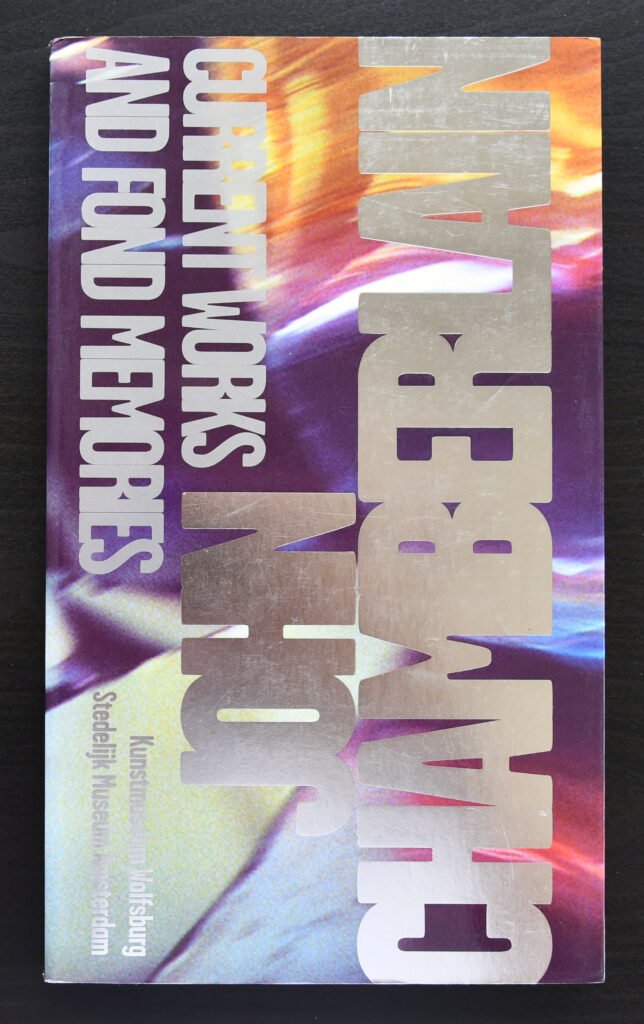
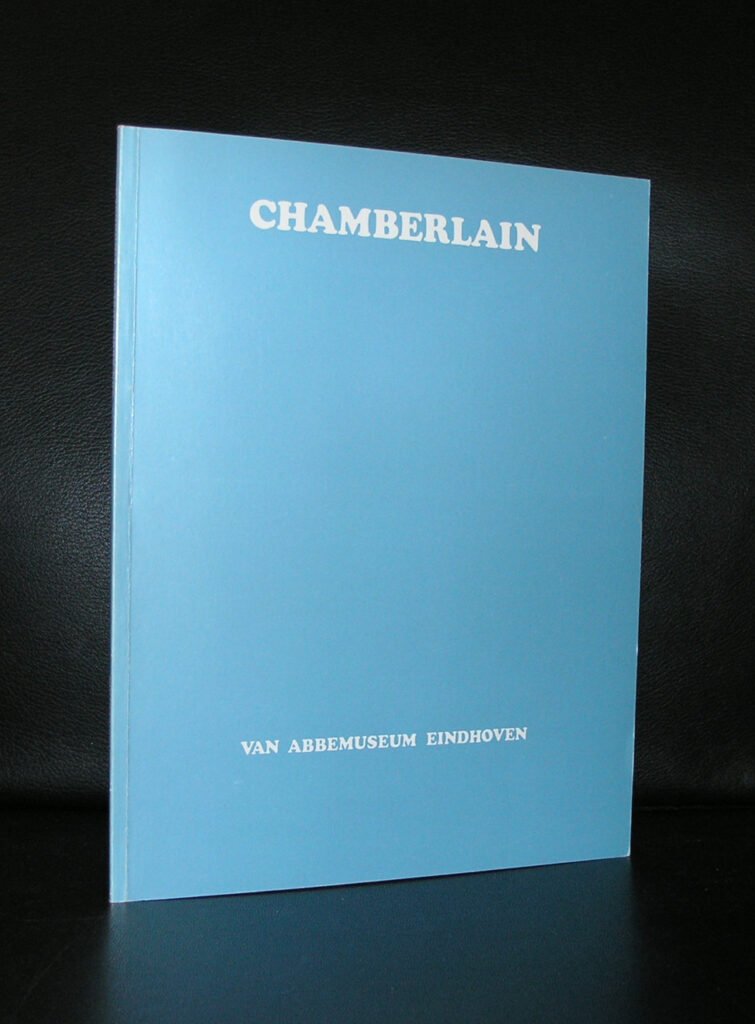
www.ftn-books.com has a nice selection of titles on Chamberlan available.