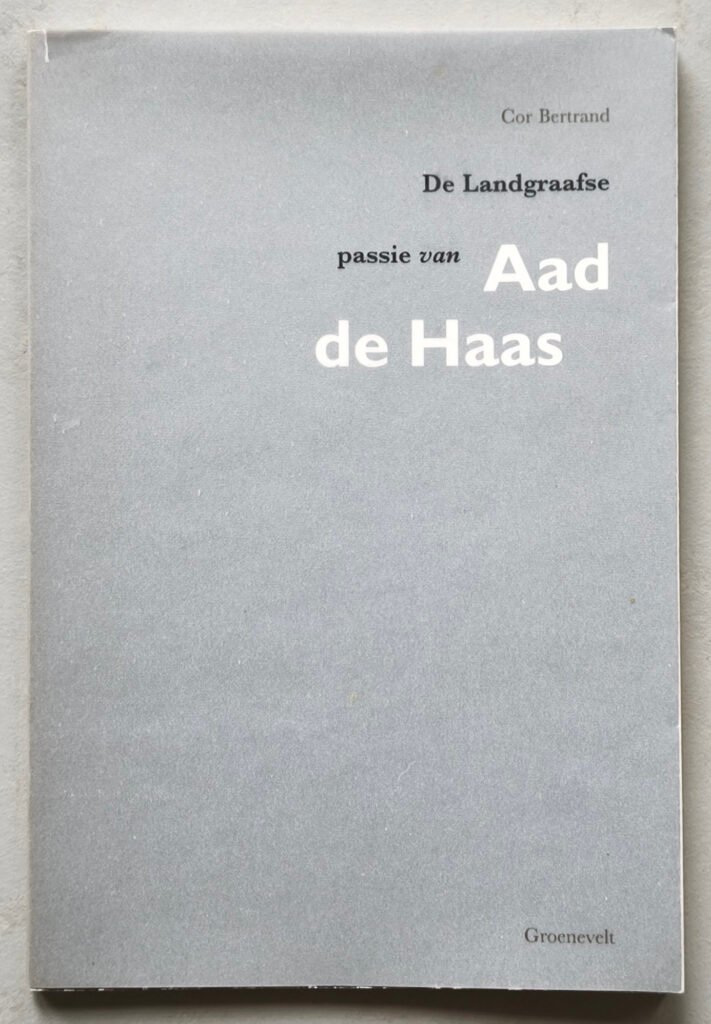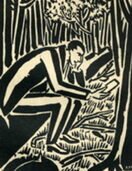


Aad de Haas remains a monumental specter within the cultural firmament—an essential pillar for both the Limburgian spirit and the broader Dutch heritage. During the harrowing zenith of the Second World War, his creative output was branded ‘entartet’ by the occupying forces, a cynical dismissal that consigned him to the cold silence of a prison cell. He eventually engineered a clandestine escape to South Limburg in 1944, planting roots where he would blossom as a kinetic force of societal conscience.
His aesthetic vocabulary leaned heavily into the numinous, swathed in religious fervor. Yet, in the fractured landscape of the post-war era, De Haas stood as a monolithic outlier. He eschewed the vapid sirens of shifting art-fads, choosing instead to inhabit a singular, expressionist domain—a sanctuary of his own making. This steadfast refusal to conform was never a mere affectation of style; it was a visceral manifestation of his existence. Creation was, for him, as vital as respiration, a relentless crusade fueled by an internal rhythm that sought to construct beauty for its own sake, untethered from the gaze of critics.
He moved through the world with a provocative edge, a flinty defiance that knit together his stubborn autonomy and his quiet, fierce activism.
When death claimed him at the premature age of fifty-one, he bequeathed a sprawling, labyrinthine inheritance of techniques and motifs. His portfolio serves as a profound cartography of the human condition, mapping the recurring topographies of suffering, theological yearning, coercive power, and carnal temptation. These are not merely artistic themes; they are autobiographical jagged edges. In the final estimation, the legacy of De Haas functions with the unrelenting sharpness of a mirror held against the throat of society, his art breathing with the uncompromising integrity of a man who refused to avert his eyes.
www.ftn-books.com has several Aad de Haas titles available.