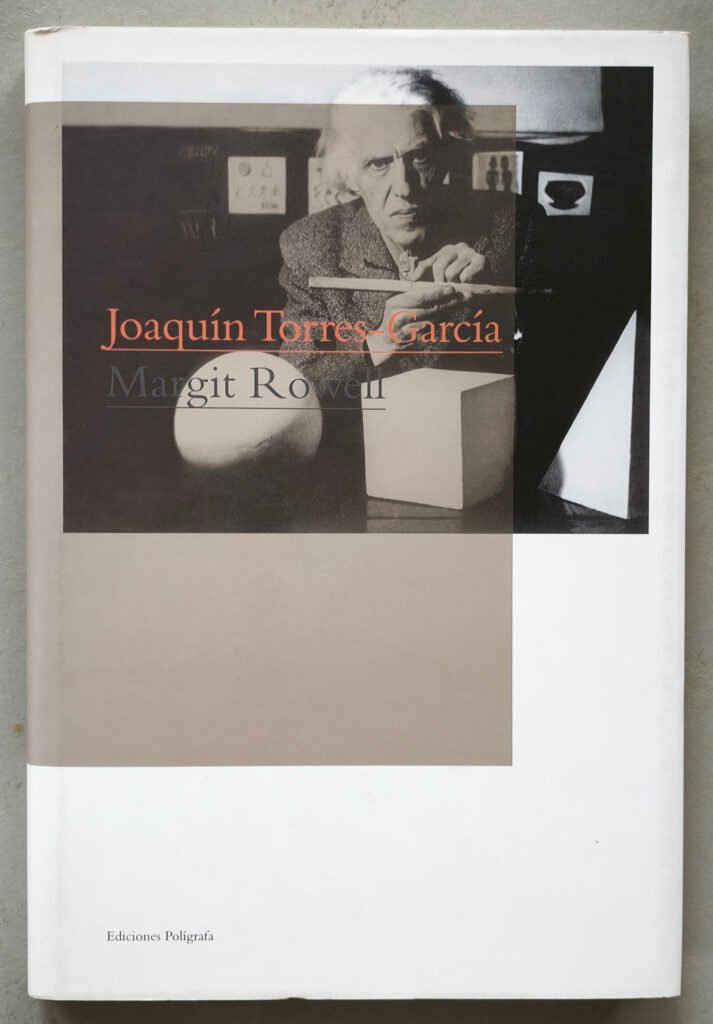


On July 28, 1874, Joaquín Torres-García arrived in the world in Montevideo, Uruguay, born to a Catalan father and a local mother. Despite being widely recognized as the preeminent figure of Latin American Constructivism, the artist resided in Europe and the United States for the majority of his life—a span of more than four decades. Economic pressures prompted his father to relocate the household to his native Catalonia in 1891, specifically to Mataró. There, Torres-García received his foundational training in drawing at the city’s municipal arts school and sharpened his painting skills under the tutelage of Josep Vinardell, focusing primarily on oil-based studies of interiors, still lifes, and landscapes. By 1892, the family had moved to Barcelona, providing the young artist opportunities to attend the Academia de bellas artes, followed by the more selective Academia Baixas. During this formative period, he became a regular at Els Quatre Gats, a legendary café that acted as a hub for the era’s luminaries, including Pablo Picasso. He also forged a professional relationship with Antoni Gaudí, collaborating with him between 1903 and 1907 on major projects like the Palma de Mallorca cathedral’s stained glass and the Sagrada Família.
His pivot toward the aesthetic principles of Constructivism began with his development of wooden toys in 1918—an offshoot of his pedagogical work—which utilized basic geometric forms to create intricate structures. He continued this design work even after moving to New York in 1920, with production commencing in 1922 upon his return to the European continent. After establishing himself in Paris in 1926, he began moving toward his signature Constructivist style in 1929, spurred in part by his frustration with the Salon d’automne. His later works are defined by a nuanced equilibrium between organic shapes and plastic structures, frequently incorporating symbols reminiscent of South American indigenous history. Following his 1929 introduction to Piet Mondrian, the two partnered with Michel Seuphor to establish the Cercle et Carré collective. This group aimed to counteract the prevailing Surrealist influence by providing a dedicated space for abstract thinkers, officially launching in 1930 through a specialized journal and a large-scale exhibition at Paris’s Galerie 23. However, following friction with Seuphor, Torres-García eventually withdrew from the group later that year.
Following a brief tenure in Madrid, during which he focused on teaching, lecturing, and exhibiting his work, Torres-García migrated back to Uruguay in the spring of 1934. Upon his arrival, he established the Asociación de Arte Constructivo and inaugurated the publication *Circulo y cuadrado*, a periodical instrumental in familiarizing the local artistic community with European avant-garde currents, specifically Constructivism, Neoplasticism, and Cubism. His prolific writings on aesthetic theory—most notably his 1935 manifesto *Escuela del sur*, which challenged colonial artistic hierarchies by prioritizing a Latin American perspective over the traditional Eurocentric model—garnered him a significant following throughout the region.
Throughout his career, Torres-García’s work was the subject of numerous solo exhibitions, hosted by institutions ranging from the Museo de Arte Moderno in Madrid (1933) and the Musée National d’Art Moderne in Paris (1955) to the Museo de Bellas Artes in Caracas (1980, 1997) and dedicated spaces at the São Paulo Biennial in 1959 and 1991. The artist passed away on August 8, 1949, in Montevideo.
www.ftn-books.com has several Torres-Garcia titles available.