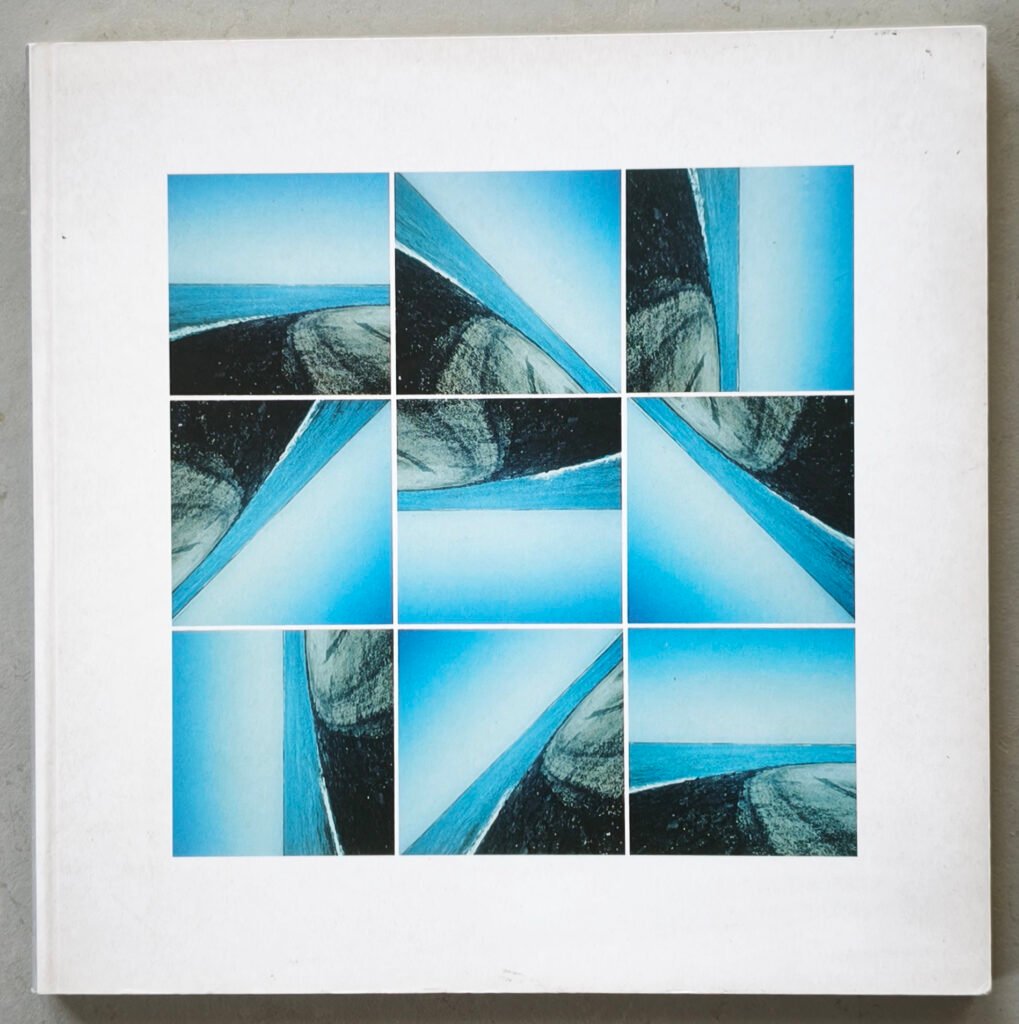


Ger Dekkers (1929-2020) stands as a seminal architect of Dutch landscape photography, a visionary who dismantled the pastoral myth to expose the skeletal grid of civilization. He famously posited that his true subject was the “cultural colonization of the landscape,” treating the quintessential Dutch polder—with its regimented dikes and surgical tree-rows—as a laboratory of human imposition. His lens acted as a scalpel, peeling back the verdant facade to reveal the stark, geometric heartbeat beneath.
While his pulse beat in synchronicity with the avant-garde tremors of his era—navigating the cerebral waters of Land Art, conceptualism, and fundamentalist rigor—Dekkers remained an unclassifiable nomad. The conceptual zephyrs drifting from America found in him a receptive harbor, yet he transmuted these external currents into an idiom uniquely his own. As his career deepened, he fixated upon reclaimed territories, those desolate, nascent Edens where the void meets the rigid diktat of human engineering.
He dubbed these visual inventories “landscape observations.” His methodology was akin to an obsessive cartographer; he would plant his tripod like an anchor, then execute minute lateral deviations. By slicing a single vista into rhythmic sequences, he rendered the horizon a recurring motif, a monotonous chant that highlighted the severe, clinical straightness of the ditches and furrows.
Born amidst the ancient geography of Twente, Dekkers honed his ocular discipline at the AKI in Enschede. Following an initial incarnation as a graphic designer—a discipline that bled into his photographic precision—he pivoted toward the autonomous; he became an alchemist of abstraction. His work, now ensconced within the hallowed corridors of the Stedelijk, the Kröller-Müller, and the Nederlands Fotomuseum, serves as a poignant testament to a man who saw nature not as wild, but as a masterpiece of human geometry.
www.ftn-books.com has a nice selection of Dekekrs publications available.