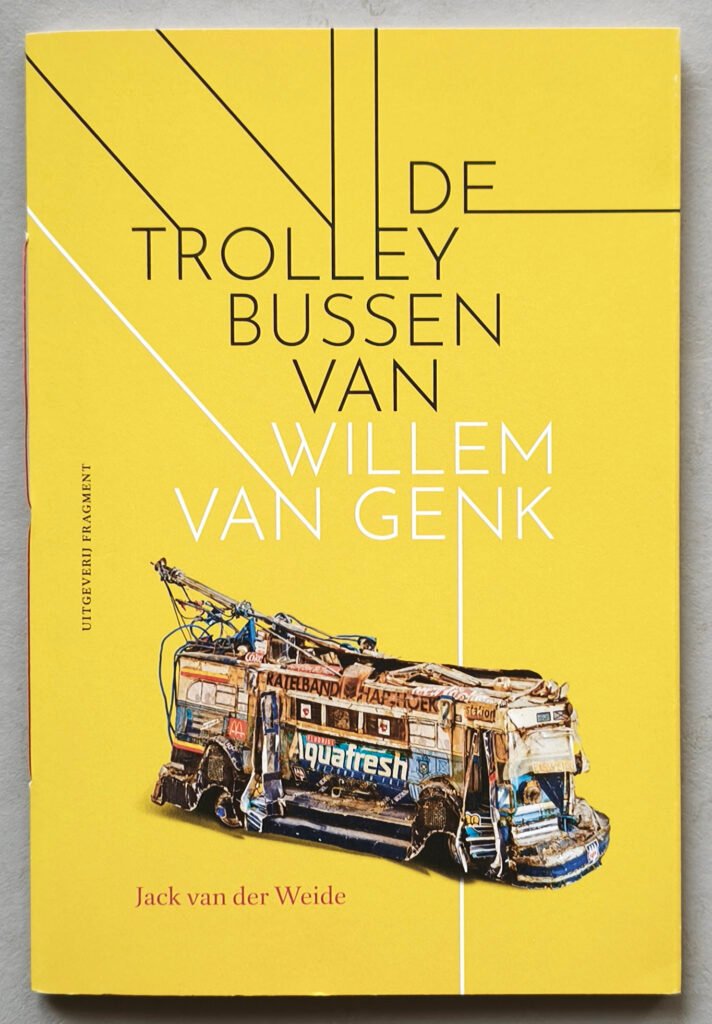


Emerging as a cartographer of industrial whimsy, Van Genk inaugurated his trolleybus epoch during the amber-hued eighties. Each vessel stands as an intricate sedimentary formation—a bricolage wrought from fastidiously chosen components. Across their fundamental architecture, he grafted an array of quasi-mechanical appendages; gargantuan headlamps loom like cyclopean eyes, while cerulean beacons and vitreous window trims shimmer under the weight of their own artifice. Chaotic nerve-endings of tangled wiring snake toward enigmatic, tactile switches, suggesting a subterranean intelligence. Occasionally, these coaches appear shackled, their power-collecting antennae tethered to low-slung bumpers by iron-wrought chains, though more frequently, they dangle in liberated, frantic suspension.

Human silhouettes are ghosts within the machine, rarely surfacing to claim these hollow conduits. Instead, the glass acts as a mnemonic substrate, plastered with relentless advertisements and typographic fever dreams that dilate until they lose all semantic clarity. These vehicles exude an aesthetic of “over-engineered solitude.” Wheels, swollen to hubristic, gargantuan proportions, dominate the silhouette, claustrophobically compressing the fenestration into mere apertures. Ultimately, the tectonic geometry of plugs, conduits, and mechanical frippery eclipses the utility of the bus, transmuting the conveyance into an inscrutable monument of restless assemblage.
www.ftn-books.com has now the Fragment published DE TROLLEYBUSSEN VAN WILLEM VAN GENK available. Edition of only 100 copies.