www.ftn-books.com has recently added the inviatation for the children book on Paul Poiret.
The youthful Paul Poiret envisions a future as a fashion designer. By day, he delivers umbrellas to fashion houses; at night, he sketches fashion designs in his room and brings them to life with scraps of umbrella fabric. On his travels, he discovers a colorful world around the Mediterranean and everything falls into place. Fueled by inspiration, he creates new and exotic fashion designs. The umbrella delivery boy transforms into the King of Fashion.
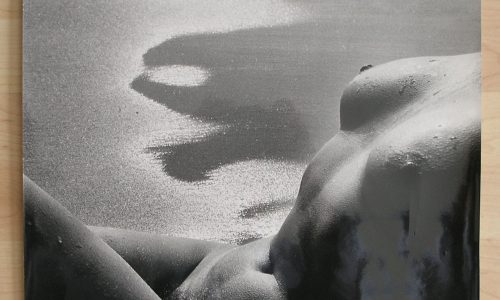
Renowned American photographer Peter Hujar (1934-1987) began his career in the 1950s as a commercial photographer but eventually became a part of the group of artists, poets, and musicians who formed New York’s underground art scene in the 1970s and 80s. His portraits of the often extravagant individuals who were a part of the extreme art and nightlife world in Manhattan, as well as his photos of animals and landscapes, are characterized by a meticulous approach and simple composition. The Hague’s Fotomuseum, in collaboration with The Morgan Library & Museum in New York and Fundación MAPFRE in Madrid, presents a large retrospective of over one hundred vintage photographic works created by Peter Hujar from the mid-1950s until his untimely death in 1987.
According to Nan Goldin, Peter Hujar should have enjoyed the same fame as his younger colleague and style companion, Robert Mapplethorpe (1946-1989). However, Mapplethorpe was fixated on outer beauty, fame, sensation, shock, and self-promotion, while Hujar was more focused on character, experience, and the mental universe of his subjects, whom he often photographed in intimate situations. Mapplethorpe’s commercial instincts were much stronger than Hujar’s. Many testimonies describe Hujar as a difficult man, and renowned photography critic Vince Aletti – also one of his closest friends – said, “He could never sell himself”. Despite his aversion to commercialism and frequent conflicts with major galleries, Hujar continued to fight for wider recognition of his work throughout his life.
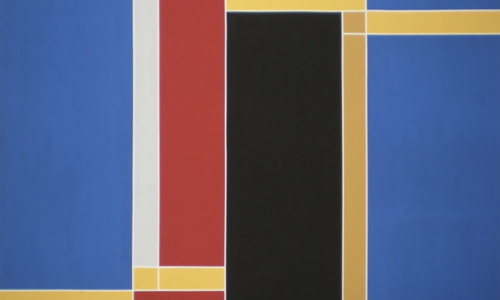
Upon initial observation, the artistic creations of Masha Trebukova (*1962) may seem purely obscure – vibrant forms of varying hues and contours on canvas. They fluidly merge with each other or clash in vigorous opposition, twirling and collapsing at their peak. It is as though cosmic powers are locked in a fierce struggle on the painted surface, yet a sense of familiar reality does emanate from this non-figurative battleground. The color blue – situated either at the summit or the base of the painting – can inexplicably transform into an inviting pool of water or boundless skies, while shimmering silver-pink openings take on the quality of atmospheric matter pierced by light. At times, these forms adopt a three-dimensional quality comparable to a solid mass (as opposed to their previous resemblance to landscapes), further emphasizing the illusion of depth. In the same vein, luminaries such as Willem de Kooning and Nicolas de Stael toiled at the threshold of abstraction and reality during the mid-1900s.
Trebukova charts her own path towards resolving the eternal quandary of painting – the interplay between surface and profundity. She introduces novel materials to the longstanding practice of oil painting. Pieces of dyed gauze, coarse jute, leather, or sheer interfacing fabric, when applied to the canvas, open up fresh avenues for tackling this ageless issue. The underlying layer of color seeps through the painted gauze, engendering a sense of depth, yet perpendicular brushstrokes, reminiscent of Cezanne’s technique, reintroduce distant images to the flatness of the foreground, causing the surface to rupture into boundless space, and abstraction to “become” reality.
The concept central to her printmaking practice is identical. First, she prepares cardboard sheets with a mixture of glue and sand, utilizing these structures to create monotypes. Sometimes, she cleverly assembles multiple pieces, culminating in polypthychs measure up to 2 by 3 meters. Be it on paper or canvas, Masha’s primary focus is to tackle artistic obstacles, including achieving a harmonious color palette, exploring the interplay between form and structure, and evoking tension and allure in the elements. Nevertheless, a sense of reality inevitably emerges, defying logical calculations and seeping out from the depths of the subconscious, stemming from the profound connection between the artist and her surroundings. This fusion of rationality and spontaneity is not easily attained, but rather a product of refined and skillful techniques.
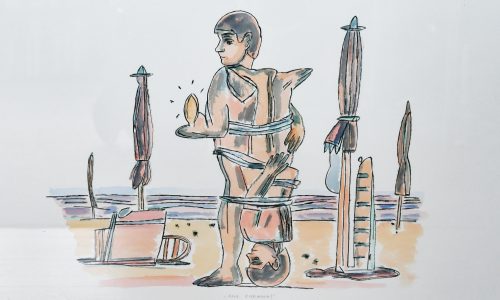
Just to help the growing number of Joost Swarte collectors worldwide. Here is the special designed cover for the Boekenbijlage , The Vrij Nederland magazine published in 1987.
Renowned British artist Helen Dowling (born in 1982) masterfully employs a plethora of images sourced from various outlets – be it her own captured visuals, downloaded content, or filmed footage – to construct video pieces that leave a haunting effect on the viewer, taking them on a surreal journey that portrays a disconcerting view of existence. Concurrently, her works draw inspiration from philosophy and poetry, borrowing from the likes of acclaimed poet Kate Tempest and feminist thinker Hélène Cixous, while exploring universal themes of the landscape and humanity’s profound impact on nature. GEM’s contemporary art museum presents Stranger on Display, Dowling’s debut solo exhibition in a museum setting, featuring an amalgamation of several films and sculptures to create a one-of-a-kind site-specific installation.
From celestial bodies to wandering individuals, the imagery unfurls in a seemingly haphazard sequence, weaving narratives with no linear structure. Dowling seamlessly blends her own footage with preexisting material, including digitized images from magazines and stock videos. During the editing process, she expertly manipulates elements such as color, movement, rhythm, and sound, crafting an associative visual tale with multiple layers of significance.
In the exhibition, Dowling will showcase a mix of fresh and existing works, collectively filling up the entirety of GEM’s exhibition space. In this alternate universe, the boundaries between reality and artificiality are blurred. Some elements might be identifiable – a piece of land, a starry night, a young woman, a car window – yet, the artist skillfully reaches towards abstraction, akin to a painter’s canvas coming to life. Rendered even more immersive through her evocative soundscapes, Dowling’s works offer a truly mesmerizing experience.
www.ftn-books.com has the invitation for her GEM exhibition now available.
Isabella Rozendaal, born in Amsterdam in 1983, is a documentary photographer driven by the tension of contrasting elements. Her aim is to capture images that are both humorous and tragic, beautiful and horrible, or sweet and provoking. The medium she has always chosen for her work is the photo book, with several publications to her name since graduating from the prestigious Royal Academy of Arts in 2007. Through her books, she explores a broad spectrum of cultural phenomena. Although her style may come across as bold and candid, she always strives to tell a nuanced story.
As Isabella worked on her current project, titled Isabella Hunts, she found herself drawn to writing as well. This project delves into the world of hunting cultures around the globe, taking her on many journeys and immersing her in a world often shrouded in secrecy. In order to shed light on the complex nature of this controversial world, she channels her interest into writing magazine articles and plans to ultimately publish a written book on the subject. Recently, she acquired a second bachelor’s degree in English language, culture, and linguistics from the prestigious University of Amsterdam. Her passions include animals, travel, food, American culture, and old-time country music.
“One can often laugh at gruesome things.” With this statement, Aaron van Erp (1978) characterizes his paintings, which, with their often brutal subjects and bizarre titles, still manage to evoke a smile. Since graduating in 2001 from the Academy of Art and Design in ‘s-Hertogenbosch, Aaron van Erp has had a flourishing career. His paintings, with their alienating depictions, have been included in various collections nationally and internationally, including the prestigious Saatchi Collection. Aaron van Erp opens his first solo museum exhibition at the Gemeentemuseum Den Haag, showcasing paintings and drawings from his Academy days to the present, with a focus on his most recent work.
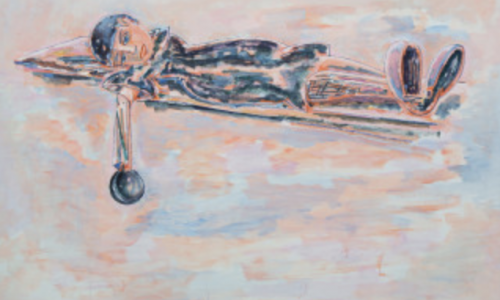
Jars of Peanut Butter In his paintings, Van Erp often incorporates recognizable objects from our everyday world: shopping carts, meatballs, jars of peanut butter, Edah bags, and washing machines. He places these objects in desolate, desert-like landscapes or large, empty interior spaces. His colorful depictions sometimes reference famous paintings from the past (The Meatball Eaters, 2000) or evoke associations with societal themes such as terrorism, problems in the healthcare system, or child abuse. For example, the painting The Toddler Tamer (2006), in which a shadowy figure maintains order with a whip, immediately brings to mind images of child abuse. However, the work, despite its sadistic undertones, is also humorous due to the way it is painted. The green boots of the tamer, the title, the use of color, and the absurd environment all serve to put the intensity of the depiction into perspective.
The connection between Henri Matisse and his son was multifaceted, fraught with intricate complexities that both hindered and propelled their relationship. A captivating joint biography delves into the intricate dynamics between renowned Post-Impressionist painter Henri Matisse and his son Pierre, a prominent art dealer. Drawing from Pierre’s previously unpublished records and a plethora of correspondence between father and son, this enthralling work paints a vivid picture of art in the twentieth century. Obtain this captivating piece of literature at www.ftn-books.com.
Bierenbroodspot, born in Amsterdam, first honed her artistic skills under the tutelage of her illustrious uncle, Leo Gestel, a prominent figure in the Dutch modernist movement. She further pursued her studies at the prestigious National Academy of Art in Amsterdam. Drawing inspiration from archaeological realms, Bierenbroodspot weaves her paintings, sculptures, and wall-rubbings, infused with her unique and deeply personal take on modernity – both thematically and stylistically. In a manner reminiscent of the great painters of the Golden Age, she spends a quarter of every year traversing the awe-inspiring archaeological trails of the Middle East. Throughout her life, Bierenbroodspot has resided and created among the remnants of three renowned Caravan Cities: Petra, Palmyra, and Baalbeck. A multifaceted artist in her own right, Gerti Bierenbroodspot is widely recognized as a prominent figure in the Dutch art scene, excelling in the mediums of painting, sculpture, writing, and poetry.
It has been about 3 years ago that i dedicated a blog to the first packaging of the Haarlem based FRIETHOES. Now i found that they make another sort of French Fries called FRANSE FRIETJES. For this packaging Swarte made a differenrt packaging. This i gladly share with all Swarte collectors. The original is of course available at www.ftn-books.com together with many other collectable Swarte items.
Artist/ Author: Oliver Boberg
Title : Memorial
Publisher: Oliver Boberg
Measurements: Frame measures 51 x 42 cm. original C print is 35 x 25 cm.
Condition: mint
signed by Oliver Boberg in pen and numbered 14/20 from an edition of 20