Posted on 4 Comments

Dom Hans van der Laan (1904-1991)

Dom Hans van der Laan

Hans van der Laan was born in Leiden on 29 December 1904 as the ninth child of architect Leonard van der Laan (1864-1942) and Anna Stadhouder (1871-1941). His paternal grandfather (1871-1941) had been a gardener at the royal gardens in The Hague, his maternal grandfather a tailor in Leiden. In 1891 his father settled his architect’s office in Leiden. He married in 1893 and founded a family of eleven children, six boys and five girls. Of the boys, Jan, the eldest (1896-1986), Hans and the youngest, Nico (1908-1986) became also architect after studying at the ‘Technische Hogeschool’ of Delft. Hans began his study in 1923, two years after he finished his secondary school. The year 1921 he passed in a sanatorium and the year 1922 he was employed at the office of his father, who had entered shortly before a partnership with his eldest son Jan.

During those two years Hans spent much time on his growing interest in architecture by reading. For instance, H.P. Berlage’s book: ‘Schoonheid in samenleving’ (‘Beauty in society’) opened for him a world that evidently was absent in Delft. Architectural education in those days was generally confined to nineteenth-century neoclassicism and all teachers originated from before the first world-war. Henri Evers, the architect of the Rotterdam town hall, set the tone in Delft. But in 1924 M. Granpré Molière (1883-1972) was appointed to be professor for the first two years of study. In him the young student found a true master. But after a few months, in the autumn of 1925 he received teachings from professor Van der Steur, with whom he directly came in conflict. Students in their third year of study had to make their own designs, but those of Hans van der Laan were all rejected. In the same autumn he founded, together with some fellow-students, a study-group, the ‘Bouwkundige Studiekring’ BSK (‘Architectural Study Circle’), aiming to discover themselves the very basics of architecture, which they missed in regular teaching. During a year Hans guided this group, assembling at professor Granpré Molière’s house. The papers of Le Corbusier and those of ‘De Stijl’-group were discussed, as well as the just published book of Jacques Maritain: ‘Art et scholastique’. The last lecture given by Hans in the BSK was about the Domtoren in Utrecht and implied a serious trial to fully investigate the ins and outs of its measures. the rest of the biography is to be found at : https://domhansvanderlaan.nl/nl/biografie/

www.ftn-books.com has the Rosbeek special and Praktijk invitation now available.

Posted on 3 Comments

Audrey Hepburn (1929-1993)

Audrey Hepburn

Why a blog on Audrey Hepburn. The major reason is that I now have the Givenchy catalogues from the Nederlands Kostuummuseum now available ( www.ftn-books.com) the second that I can offer Adieu Audrey a beautiful Schirmer Art Books publication which contains many of the legendary photos. Hepburn visited the Haags Gemeentemuseum in 1988 to open the the Hubert de Givenchy exhibition curated by Ietse Mey and on that occasion I saw her…. never met but came very close to see her and I was impressed with her classic appearance. Of course wearing Givenchy….

Posted on 8 Comments

Sonja Henie and Niels Onstad art centre

The Henie Onstad Kunstsenter is an art museum located at Høvikodden in Bærum municipality in Viken county, Norway. It is situated on a headland jutting into the Oslofjord, approximately 10 kilometres (6.2 mi) southwest of Oslo. It was founded in 1968 by Sonja Henie and her husband Niels Onstad as a way of displaying their collection of contemporary art.

The Art Centre is visited by around 100,000 people each year, and organizes exhibitions and performances.

The first time I heard about the importance of this collection was when I visited the book depot at the Gemeentemuseum and saw a large remainder of books of the 1963 Henie – Onstad exhibition. In retrospect this was a highly important exhibition which had many of the future modern masters in it. Appel, Dubuffet, Picasso, Manessier to name a few.

Henie and Onstad founded the” henie onstad foundation” and gave their large art collection with many modern masters to this foundation. This large gift was the beginning of the HENIE ONSTED KUNSTSENTER and when visiting Norwayand absolute must visit for all.

www.ftn-books.com has the 1970 Sonja Henie bilder catalogue now available.

Posted on 2 Comments

Frank van Hemert ( continued)

Und die Frauen warten

I have waited a few weeks before showing this other addition to our collection by Frank van Hemert.

Another impressive painting by van Hemert . As I said….the story continues….

for more information and Frank van Hemert publications . Visit www.ftn-books.com

Posted on 2 Comments

Lisette Verkerk (1973)

Lisette Verkerk

This is something i did not expect…..

Looking for information on Lisette Verkerk I found that she is living in Peru together with husband and dogs. She left the Netherlands in 2010 and started a new life and studio in Peru in Urubamba.

At one time at the KUNST RAI I met Lisette and bought one of the latex multiples which was at that time for sale. The artwork is lost…it dried out and eventually crumbled when I tried to hang it again. Still the “embryo” water color I still have is in splendid condition , but not hanging on the wall. A recent purchase of the book ( now available at www.ftn-books.com) reminded me of the latex multiple ( with needle). When reading and leafing through the book I immediately recognized why I was attracted to her work. It makes me curious about the works she is making now.

Posted on 1 Comment

Karel de Nerée tot Babberich (1880-1909)

Carel de Neree tot Babberich

was a Dutch symbolist artist who worked in the decadent and symbolist style of Aubrey Beardsley and Jan Toorop.

De Nerée was born in Zevenaar (The Netherlands) on Huize Babberich, the son of Frederick Nerée tot Babberich (1851–1882) and Constance van Houten (1858–1930).

De Nerée began drawing and writing in 1898. De Nerée’s literary writing and art work was very much inspired by decadent and symbolist authors such as Charles Baudelaire, Paul Verlaine or Gabriele d’Annunzio, and artists as de Feure, Goya, Johan Thorn Prikker, and Jan Toorop. He more and more focused on his art. Only posthumously, in 1916, two poems were publiced in a French periodical.

In 1901, the Nerée worked in Madrid for Foreign Affairs He caught TBC, a disease that would determine his further life. In Madrid De Nerée was visited by his friend Henri van Booven, the future biographer of Louis Couperus, who later gave a thinly veiled report of this visit in his novel Een liefde in Spanje (‘A Love in Spain’, 1928). De Nerée also inspired Van Booven to write his volume of (prose) poems Witte Nachten (‘White Nights’, 1901) and the novel Tropenwee (‘Tropical Agony’, 1904), the latter being a Conrad-like report of his traumatic visit to the Belgian Congo.[1] In his turn Van Booven gave De Nerée The Early Work (1899) by Aubrey Beardsley. This was obviously great influence[2] on De Nerée’s style of drawing. Later, around 1904-1905, he developed his own unique style. The themes, usually ‘femmes fatales’ or clownesque figures, gold nuances and symbolism of these works often recall associations with the best wor He is one of the few ‘decadent’ Dutch representatives[3] of the European symbolist movement.[citation needed]

During his life he did not exhibit; he was a well-known society figure but few knew his art work which he mostly kept to himself. Only after his death was his work exhibited. He did sell some work during his life though. Due to his poor health, drawing and painting became ever more difficult after 1906-1907. The little known works from his later period are characterized by their colors and sometimes almost modernist compositions. He died on 19 October 1909 at 29 years of age, in the southern German town of Todtmoos. He was buried in Clarens, near Montreux.

The nature of his work, the Beardsley-replication and the somewhat’decadent’ character, set de Nerée naturally in a somewhat isolated position in art history. During the twentieth century, however his work was exhibited several times and “the Dutch Aubrey Beardsley” has received a welldeserved small but firm place in European art history around 1900.

www.ftn-books.com has some nice de Neree tot Babberich titles available.

Posted on 8 Comments

Eugène Roy Witten (1920-2204)

Eugene Roy Witten

Vision Fugitive

This title was assigned by Galerie Romanet in Paris to describe the hundreds of abstract and subtle paintings Witten created from the 1970s through the 1990s. Witten considered these to be the fruition of his goals, his Ultima. After the previous effects on him of the Asian and Italian styles, these subtle and exciting patterns exclude any clear reference to real objects. In the words of Paris-Presse art critic René Barotte, these works express l’esprit de finesse et le grand équilibre of E.R.Witten. The result is a body of dramatic yet thoughtful works of illusion and suggestion – visions that are mingled and fleeting (the French meaning of “fugitive”). Witten’s visions fugitives are also redolent with nature, despite their mostly non-representational aspect. Barotte wrote: Cet artiste ne saurait se passer de la nature. Ses compositions raffinées et à la fois audacieuses sont un marriage heureux de l’abstrait et du figurative. The visions fugitives are refined and audacious: a happy marriage of the abstract and the figurative.
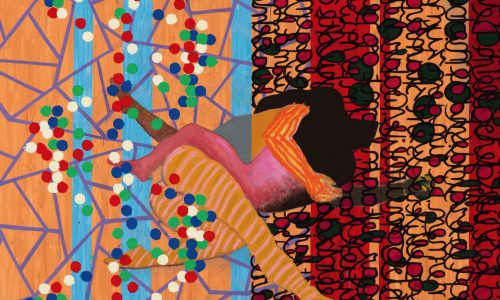
www.ftn-books.com has now the 1977 galerie Romanet catalogue available

Posted on 4 Comments

BEWTH (1967-2003)

BEWTH stands for Bewegingstheater. The group existed from 1967 until 2003 and at one time I witnessed a special p[performance they made in the entrance hall and rooms of the Haags Gemeentemuseum. Because of their movements in the building itself they made the spectator aware of the beauty of the architecture and made you discover the surroundings once again. Transforming the building into a large stage on and in which they performed. The catalogue which is now for sale at www.ftn-books.com is for their performance at the BEELDEN AAN ZEE museum. The same idea …using the building and the sculptures as a stage. Fascinating and unfortunate they stopped their performances in 2003.

https://youtu.be/W9vUdimrpXs\
Posted on 3 Comments

Klaus Mettig (1950)

Klaus Mettig

German photographer Klaus Mettig–who was born in Brandenburg in 1950–has traveled continually since 1973, making photographs that convey an indeterminate sense of time, place and culture. Portraits of people, landscapes and cityscapes tell a story, but one that is difficult to pin down. “Trust You Equal Love (Lions)” (2004), is a black-and-white portrait of two men walking down an anonymous urban street in front of a giant skull graffitied on a wall. It is uncertain if the subject of the photograph is the people or the background. Mettig also often collaborates with his longtime partner, Katharina Sieverding. “Motorkamera I-VIII” (1973-74), consists of 386 black-and-white photo-booth images of the couple in drag, with Mettig becoming progressively femme and Sieverding progressively butch. In Don’t Be Left Behind, Mettig continues in this vein, exploring several Asian cities through panoramas and portraits.

……… But the van Abbemuseum book from 1982 contains over 300 prints of German television. What makes this stand out is that Mettig invented the “screenprint” for television making this project original and far ahead of its time. The book is available at www.ftn-books.com

Posted on 3 Comments

Gerard Fromanger (1939-2021)

Gerard Fromanger

Gérard Fromanger was born in 1939. His father, from an artistic family, was an amateur painter. The child, from a very young age, paints and draws. Fromanger will only make brief studies (Grande-Chaumiere, Beaux-Arts, Paris). He follows courses organized by the city of Paris. He becomes friends with the sculptor César, with Jacques Prévert and with the Giacometti brothers.
In his first period, the artist produces several figurative compositions ranging from gray to clear-obscure earth tones. He draws and becomes interested in lithography. Quickly, Fromanger changes his style; practicing painting with contrasting flat tints. He participates in the adventure of the Nouvelle Figuration (New Figuration) and imposes himself in the 60’s as one of the personalities of the Parisian artistic scene.
The artist participates from 1964, and for a long time afterwards, in the collective exhibitions (Salon de Mai, Salon de la Jeune Peinture, Salon Grands and Jeunes d’Aujourd’hui, etc.) in which he obtains important prizes. Some solo exhibitions are organized in his name (Grenoble, Namur, Paris, Sienne, etc.). In 1968, where the general ambiance is the contestation of the social issue of the student generation, Fromanger co-founds the Atelier of Beaux-Arts that will produce thousands of posters. He shoots film tracts with Jean-Luc Godard.
The artist has the habit of producing in series. He produces the sculptures ‘environmental’, creates costumes and sets for the ballet. Fromanger progressively moves away from the sociological topics that for a long time motivate his pictorial activity in aid of a creation specifically plastic or intended to be so. From a not long ago military pictorial activity, the artist passes onto an individual and hedonistic conception; there are from now on the pleasure of shadows, forms and colors. He divides his time between Sienne and Paris.

www.ftn-books.com has some Fromanger titles now available.