Posted on 4 Comments

The Human Figures in Gerritsen’s Paintings

Gerritsen’s artistic focus primarily revolves around human figures, each captured with a plethora of emotions conveyed through their expressions and posture. Each subject appears to be embroiled in some captivating narrative. His paintings often invoke a sense of discomfort upon closer inspection, as they challenge and question our societal norms.

The characters portrayed in Gerritsen’s works often belong to the outskirts of society; from criminals to vulnerable individuals such as traumatized children, harassed women, and psychiatric patients. Secluded from the rest of the world, they hold a deeper meaning that is not always easily comprehensible. Gerritsen’s paintings immediately captivate the viewer with their vibrant and bold colors. Unlike the photographs that served as his inspiration, he strived to avoid the chilling atmosphere that they often portrayed. As Gerritsen himself stated, “A good painting must entice with its beauty and aesthetics, but it must also leave an indelible mark on the mind.”

Every composition, regardless of how stark or minimalistic it may seem, holds multiple layers of significance that can be linked to contentious aspects of our daily lives, no matter where we reside in the world.

In one of his most colorful paintings, “England, London,” a group of people confront the viewer, exuding an air of agitation. It is unclear if they are part of a demonstration or fleeing from some impending danger. This artwork was inspired by a photograph Gerritsen came across in a newspaper, depicting a group of people being evacuated after the 2005 attack on the London Underground.

Another painting captures a man sitting on a bench, adorned in a bright red jacket with his tie flapping in the wind. At first glance, he appears to be peacefully asleep. Yet, upon closer inspection, his pale face suggests that he may actually be deceased. Gerritsen himself remarked on this artwork, stating “I intentionally left it ambiguous whether he is dead or sleeping. If I were to provide a definitive answer, I would restrict my creative process.”

After receiving an education from trade school, Gerritsen pursued his passion to become a confectioner. However, his innate talent for drawing led him to enroll in the art academy in Arnhem after completing his military training. Over the course of eighteen months, he honed his skills and developed an extensive body of work including drawings, paintings, objects, installations, and performances. This impressive collection revolves around his captivation with human expression and its profound impact.

Drawing inspiration from art history, visual media, scientific discoveries, and his surroundings, Gerritsen’s first exhibition in 1972 in Arnhem was an instant sell-out. Despite his success in the art world, he decided to put aside his paintbrush and pursue a career as a creative therapist, a venture driven by his insatiable curiosity. However, in the early 1980s, he reignited his passion for painting and picked up his paintbrush once again.

www.ftn-books.com has several publications on Gerritsen available.

Posted on 4 Comments

Shirin Neshat’s Impact on Contemporary Art

Profile view of a woman with styled hair and elaborate eyeliner, wearing a black top and dangling earrings, against a plain white background.

Shirin Neshat is an artist and filmmaker from Iran, now residing in the bustling metropolis of New York City. In 2022, Neshat’s riveting body of work was featured in a comprehensive installation, aptly titled “Land of Dreams,” at The Museum of Contemporary Art Toronto in Toronto, with further exhibitions at SITE Santa Fe in New Mexico. In 2019, a retrospective exhibition entitled “Shirin Neshat: I Will Greet the Sun Again” was held at The Broad in Los Angeles, followed by a tour to The Modern Art Museum of Fort Worth. Her solo shows have graced prestigious institutions worldwide, including ARoS Aarhus Art Museum in Copenhagen, Musée de l’Eysée in Lausanne, Switzerland, and National Gallery of Victoria in Melbourne, Australia. Other significant venues include Glenstone Museum in Potomac, Maryland, Kunstraum Dornbirn in Dornbirn, Austria, Kunsthalle Tübingen in Tübingen, Germany, and Museo Correr in Venice, Italy. She has also had the honor of exhibiting at the Hirshhorn Museum and Sculpture Garden in Washington D.C., Stedelijk Museum in Amsterdam, Serpentine Gallery in London, Hamburger Bahnhof in Berlin, and the Musée d’art contemporain de Montréal. One of Neshat’s most celebrated retrospectives was featured at the esteemed Detroit Institute of Arts in 2013. Throughout her illustrious career, she has been awarded the prestigious Golden Lion Award at the 48th Biennale di Venezia (1999), the Hiroshima Freedom Prize (2005), the Dorothy and Lillian Gish Prize (2006), and the Praemium Imperiale Prize (2017). In 2009, Neshat made her directorial debut with the captivating feature film “Women Without Men,” which received the Silver Lion Award for “Best Director” at the 66th Venice International Film Festival.

www.ftn-books.com has several Neshat publications now available.

Posted on 2 Comments

Exploring The Universal Photographer: A Conceptual Art Journey: Geene & de Nooy

A woman and a man take a photo of a sculpture of a chicken in a studio setting with storage drawers in the background.

Anne Geene & Arjan de Nooy loosely base The Universal Photographer on Gustave Flaubert’s unfinished novel Bouvard et Pécuchet from 1881. In this work, two middle-aged men study a wide range of fields, from chemistry and psychology to religion and agriculture. Like these characters, U. had a tendency to study, copy, collect, combine, and investigate – and like them, he lacked common sense. This resulted in unusual methods, peculiar preferences, and naive solutions to self-created problems.

The systematic documentation employed by Anne Geene & Arjan de Nooy is reminiscent of the work of Christian Boltanski, such as his Archives du Cœur, a continuously growing archive of heartbeats from people all over the world. Similar to Mariken Wessels, who had a solo exhibition at the Hague Photo Museum last year, Geene & De Nooy create a fictional story based on their own and found photos. The work also invites a comparison to Hans Eijkelboom through the use of photography as a conceptual medium and, not least, the incorporation of dry humor.

www.ftn-books.com has now the invitation for thier exhibition at the Gemeentemuseum Den Haag available.

A collection of small photographs depicting various cloud formations in shades of blue, arranged in a grid format within a card.

Posted on 5 Comments

Karl Hugo Schmolz: From Architecture to Everyday Life Photography…and Walde Huth

A black and white photograph of a woman standing outdoors, holding a camera and smiling. She is wearing a simple outfit and has short hair, with trees in the background.

As a young man, Karl Hugo Schmolz was introduced to the world of photography, a passion shared by his father Hugo Schmolz, a renowned architectural photographer. By the young age of 15, Karl began accompanying his father on photo shoots.

Under the tutelage of his father, Karl learned the craft and captured stunning shots for prominent architects such as Adolf Abel, Bruno Paul, and Rudolf Schwarz.

When his father passed away, Karl seamlessly continued the family legacy, taking over the Fotowerstatte Hugo Schmolz without any interruption.

However, when World War II broke out, Karl was forced to put aside his photography career and enlist in the German army. Yet, after the war, he documented the cold and devastating aftermath of his country using a large format camera.

One could say that Karl’s most famous work was the combination of his own photos with those taken by his father during the 1920s and 1930s.

His photographic collection includes a wide range of subjects, as Karl was proficient in all kinds of photography, from architecture to design. He even captured everyday life in Germany, while still staying true to his roots as an architectural photographer through the use of clean contrasts and precise framing.

Karl’s talents extended beyond architecture, as he also excelled in interior design and home decor photography.

After marrying fellow photographer Walde Huth, the two combined their last names and created Schmolz + Huth, specializing in fashion photography and portraits.

Karl’s last project was documenting the Museum Ludwig in Cologne, a task he was unfortunately unable to complete due to his untimely passing.

In his works, Karl often used myths as a guide, creating an overall atmosphere that gave life to his own unique reality. In paintings like Eros & Psyche XI and XIII, the deep shades of red and purple support the sensuality evoked by the myth.

on Walde Huth:

Conceived in Stuttgart during the year 1923 and raised in Esslingen, Walde Huth immersed herself in the study of photography from 1940 to 1943 under the tutelage of Professor Walter Hege at the esteemed School of Applied Art in Weimar. Subsequently, she sought employment at the colour photography development department of Agfa/Wolfen, where she spent her days until the conclusion of the Second World War in 1945. Post war, she ventured into the realm of freelance photography, exploring the genres of portrait, theatre, and art.

In 1953, Walde Huth established her own studio in Stuttgart, managing a team of eight skilled individuals. Her stint with Esslinger Wolle furnished her with priceless experience which would pave the way for her unparalleled success with fashion houses such as Christian Dior, Jacques Fath, Givenchy, and Maggy Rouff, immortalizing the iconic “New Look” to global recognition.

The span of the 1950s to 1980s witnessed the birth of a distinctive aesthetic, characteristic of the products of Western Germany. The methodical orchestration, refined techniques, and logical execution were the hallmarks of Walde Huth’s illustrious career.

Following the closure of her studio, which she shared with her late spouse, in 1986, Walde Huth dedicated herself to pursuing freelance projects with renewed vigor. Her masterful works grace the collections of prestigious international museums, immortalizing her legacy. On the eleventh of November, 2011, at the venerable age of 88, the world bid farewell to Walde Huth – a visionary, effortlessly elegant, with a keen eye and wit, a beacon of inspiration and a trailblazer in the realm of German photography.

www.ftn-books.com has the Fotomuseum Den Haag invitation Night awakens now available.

A black and white photograph of a corner building featuring illuminated signs reading 'WORMLAND' and 'WETTLASS,' displaying men's suits in large storefront windows.

Posted on 5 Comments

Exploring Jan van Munster’s Energy Art

A blurred figure in a black outfit gestures toward a tall, conical sculpture or pedestal in a minimalist black and white setting.

Jan van Munster (1939-2024) was a graduate of the Rotterdam Academy of Fine Arts and the Institute for Crafts Education in Amsterdam, later known as the Gerrit Rietveld Academy.

His recurring theme was energy; temperature, magnetism, radioactivity, and electricity served as the point of departure for numerous works that aimed to reveal the invisible. His creations can be found in various locations both nationally and internationally and are included in (inter)national collections.

Jan van Munster was the founder and creator of the concept behind the IK Foundation.

“… He crafts sculptures and spatial installations that manifest contrasts, such as light and darkness, attraction and repulsion, and warmth and cold. On his ice sculptures, the humidity in the room becomes visible through the freezing of water particles in the air onto the cooled, copper parts of the object. The industrial-looking compressors provide the perfect contrast to the layers of sparkling, white ice crystals. As Paul Klee famously stated, ‘Art does not represent the visible, it makes visible.’

www.ftn-books.com is proud to have a large collection of van Munster publications available.
A person standing in a gallery, gazing at a vertical, illuminated line on a white wall, surrounded by a minimalist environment with concrete and smooth flooring.
Posted on 4 Comments

Marthe Wéry: From Classic Techniques to Abstract Innovations

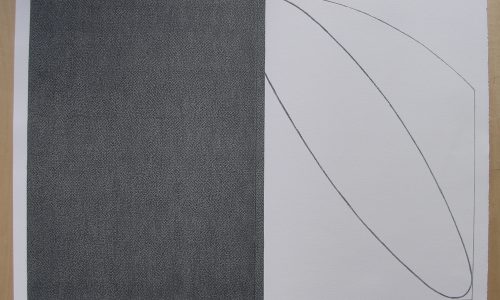
Marthe Wéry attained a mastery of drawing and painting from live models in Paris. She delved into both ancient and modern classics, while also being influenced by the French art of the 1950s. This led her to employ a more schematic style, reducing her compositions to essential lines. Upon returning to Belgium, Wéry was drawn to the expressionist sculptor Oscar Jespers (1887-1970). His home had become a cosmopolitan meeting place, with studios and exhibition spaces. It was here that Wéry was able to break free from the legacy of art history. Her early semi-figurative language evolved into geometrically abstract plane division. Forms were deconstructed, while colors took on a more emotional aspect. Wéry’s work straddles the line between logic and sentiment.

In the mid-1960s, Wéry was admitted into the studio of Sir William Hayter (1901-1988) in Paris. This renowned artist was associated with both surrealists and abstract expressionists, and was best known for his innovative printing and engraving techniques. Wéry later taught printmaking in Brussels and mentored numerous younger artists. Her thorough study of the building blocks of painting – support, paint, color, and line – culminated in geometric compositions heavily influenced by constructivism.

By the late 1960s, Wéry had become familiar with the work of Polish artist Władysław Strzemiński, who had collaborated with Kazimir Malevich. His ideas and Wéry’s were closely related. He posited that every square centimeter within a construction holds the same value, that the surface of a painting is homogeneous, and that the tension of the form must be evenly distributed. He also proposed the use of white space as the standard for presenting art in the most neutral way possible. Under the influence of Strzemiński, Wéry began to focus on the structure of the entire painting surface.

Throughout the 1970s, Wéry focused on refining the relationship between support and representation. By 1975, she had made the transition from canvas to paper. The desire for more ephemeral materials also manifested in other approaches. Through delicate folds, Wéry explored the sculptural potential of paper. The symbiosis between color and texture was achieved when Wéry embedded pigment into the mass of the support. Lines gave way to paper ridges. Support and color merged together. The rigid line definitively gave way to the emotive power of color. Wéry created monochrome canvases, with the dialogue between her artworks and the surrounding architecture becoming increasingly important.

Meanwhile, Wéry achieved international recognition. In 1982, she represented Belgium at the Venice Biennale with 93 canvases of fixed width and variable height. The verticality and luminosity of the red paintings lent a particular depth to the white exhibition space. After thorough research into the color red, Wéry also explored blue, yellow, and green. Her color investigation was showcased in meticulously arranged presentations in a diverse range of spaces, from galleries to abbeys. In the 1990s, Wéry continued to let colors “mature,” as seen in the irregularities caused by pigment crystallization or a grainy paint structure. She also continued to experiment with the physical presentation of her work in dialogue with the exhibition space.

I personally am very fond of her work and after meeting with i must say she was one of the friendliest artists i have ever met .

www.ftn-books.com has some important publications on Marthe Wéry.


Posted on 4 Comments

The Impact of Müller-Brockmann on Modern Design

A man in a suit gestures while holding papers, with abstract art displayed in the background.

Müller-Brockmann is widely regarded as one of the most revered graphic designers in the history of our profession. His creations are studied, taught and published to this day, serving as the pinnacle of Swiss graphic design (also known as the international style). Strongly influenced by the Bauhaus and constructivism movements, typography and geometry dominate his work. Anchored by a rigid grid system that has become his signature style, his compositions exude an economically and rationally precise aesthetic.

Despite his lasting influence in the field, Müller-Brockmann remains somewhat enigmatic. The only complete monograph about him was published by Lars Müller shortly before his passing. The book features an introduction by none other than Paul Rand himself (a testament to his impact!). In it, Lars Müller attempts to uncover what spurred Brockmann’s transition from illustration to a more constructivist approach in his graphic designs.

At the time, Brockmann was greatly inspired by Hungarian photographer Moholy-Nagy’s work and Jan Tschichold’s manifesto, “Die neue Typographie.” This modernist manifesto advocated for the use of bar typefaces (referred to as grotesk in German). These principles greatly influenced Brockmann throughout his career.

These guidelines can be summed up as strict adherence to composition grids, objective imagery to minimize emotional influence, and emphasis on rhythm, harmony, and geometric compositions backed by mathematical precision. One notable example is Brockmann’s approach to concert posters, viewing music as an abstract art and infusing that into his designs. In fact, Lars Müller describes his Beethoven poster from 1955 as the ultimate expression of “musicality in design.”

The principles outlined above can be encapsulated as the utilization of stringent composition grids, objective photographs to convey information devoid of emotions, and the incorporation of rhythm, harmony, and mathematical and geometric arrangements. As an illustration, at the time, Brockmann perceived music as an abstract art form, hence he approached his concert posters through an abstract lens. Critically acclaimed publisher Lars Müller hailed Brockmann’s Beethoven poster (1955) as the epitome of “musicality in design”.

Brockmann articulates his stylistic approach with utmost lucidity: “In my work encompassing posters, advertisements, brochures, and exhibitions, subjectivity is eliminated in favor of a geometric grid that dictates the positioning of words and images. The grid serves as an organizational system that enhances the readability of the message, resulting in a more impactful outcome at a minimal cost. A random organization may seem like an easier, quicker, and more efficient solution, but it fails to achieve the same level of uniformity across international borders (thus, the birth of the international style!), which proves to be advantageous in advertising, as demonstrated by IBM’s success. By communicating information as objectively as possible, the message is conveyed without unnecessary superlatives or emotional subjectivity.”

www.ftn-books.com has the Zurich invitation for his exhibition now available.

Posted on 5 Comments

Remy Jungerman: A Fusion of Modernism and Surinamese Heritage

Black and white portrait of a man with glasses and a beard, wearing a suit jacket and a patterned pocket square, standing against an abstract background.

The work of Surinamese-Dutch artist Remy Jungerman (b. 1959, Moengo, Suriname) is a convergence of diverse forms of cultural expression encountered during his travels and impressions acquired from the different places he has lived in. Upon first glance, his creations seem to adhere to the Modernism style of artists such as Piet Mondrian and Malevich, but simultaneously, it takes inspiration from the rituals of Winti and the distinctive designs of the Maroon peoples of Suriname. This results in a captivating tension between the universal visual language of Modernism and the potent spiritual influence of Voodoo and Winti. From April 11, 2015 to August 16, 2015, Gemeentemuseum Den Haag’s Projects Gallery featured Jungerman’s new pieces specially created for the exhibit, including a series of panels bearing the title Crossing the Water, which marks the first time he has displayed this type of work in the Netherlands.

Hailing from a small Maroon community in Moengo, Suriname, Jungerman pursued mechanical engineering in Paramaribo before eventually attending the renowned Gerrit Rietveld Academy in Amsterdam. However, his oeuvre should not be perceived solely as a representation of a Surinamese artist and his connection with the Netherlands. Jungerman is intrigued by the global voyage of patterns and designs, moving beyond geographic boundaries.

www.ftn-books.com has now the Gemeentemuseum Den Haag invitation available.

A collage featuring a grid of nine abstract compositions with various patterns and colors, including red, black, white, and plaid elements.

Posted on 5 Comments

The Intricate Art of Alex Dordoy: Symbolism and Sentimentality

A man in a blue plaid shirt stands beside a large, horned skull display in a museum, examining it curiously.

Distinguished as both a painter and sculptor, Alex Dordoy delves into the intricacies of artificiality, sentimentality, and the impact of technology on image-making. In his renderings of otherworldly landscapes, Dordoy draws inspiration from the elegant aesthetics of Art Nouveau advertisements and designs, infusing them with symbolic significance. Using Photoshop, the artist expertly manipulates his source images before committing them to canvas, imbuing them with a tangible presence. By altering and rearranging the original compositions, their previous connotations are stripped away and replaced with vivid, frozen moments captured before our very eyes. The essence of romanticism and nostalgia still linger, set against the artist’s meticulous and graphic brushstrokes.

Bright, vibrant tones are often used in Dordoy’s multiple versions of the same image, evoking a sense of time passing under the influence of an artificial light source. While signs of civilization are prominent in many of his pieces, the figure itself is noticeably absent. This lack of a protagonist or sympathetic figure implicates the viewer as an active participant in the narrative. With this adaptation, enigmatic complexity and linguistic dynamism converge to create a wholly original conception. Keep these concepts in mind as you embark on your own journey of rewriting, reframing, and revitalizing written content.

www.ftn-books.com has the Gemeentemuseum invitation for his exhibition now available.

An abstract composition featuring a blend of vibrant colors and geometric patterns, evoking a sense of artificiality and nostalgia. Elements suggestive of urban landscapes and technology are interspersed with a soft gradient, creating an otherworldly atmosphere.
Posted on 4 Comments

The Art of Paul Kooiker: Transforming Photography into Visual Narratives

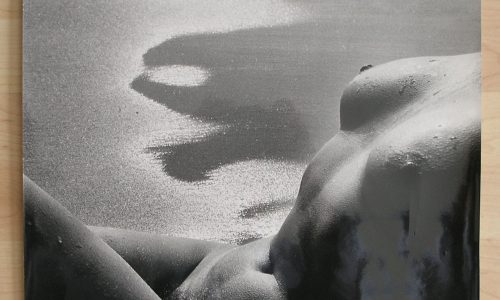
I was preparing a little text on the invitation i have available on the Paul Kooiker exhibition at the Fotomuseum Den Haag and noticed the similarities between the classic Jessurun de Mesquita print and the photograph of Kooiker.

For Paul Kooiker (1964), the pursuit does not lie in creating the perfect photograph. The value lies not in his individual images, which may at times be overexposed, blurred, or grainy, but in what he does with them afterwards – the selecting and editing process. In the initial phase of his workflow, he intentionally takes on the role of a “bad” photographer, only to then transform into a visual artist, working with the exploratory material often consisting of hundreds of photos. Based on this, he then assembles a collection through spatial installations and photobooks that appears either found or entirely retrieved from an old suitcase that has been sitting in an attic for decades. The apparentness of such a “found collection,” which Kooiker manages to make persuasive through his precise attention to a consistent form and style, contrasts starkly with the content of his series, which can often be described as enigmatic and somewhat unsettling.

Paul Kooiker studied at the School of Photography in The Hague and the Rijksakademie van beeldende kunsten in Amsterdam. In 1996, he won the Prix de Rome, and in 2009, he received the A. Roland Holst Prize for his body of work. Alongside numerous exhibitions both nationally and internationally, Kooiker also dedicates a great deal of attention to publishing his photography. In the final room of the Photography Museum, he displays a multitude of his art books that have been published since 1999, often in collaboration with publisher Willem van Zoetendaal.

May of these are available at www.ftn-books.com