Posted on Leave a comment

Jeff Wall (continued)

Revered as a leading contemporary Canadian photographer, Jeff Wall’s work delves into the complexities of images, representation, and memory. His larger-than-life photographs embody the visual style of advertisement, employing backlit transparencies and grandeur in their presentation. Known to recreate everyday moments, fiction, and art history in a “cinematographic” manner, he aptly dubs his work as “near documentary”. With a deep-rooted connection to his personal experiences, Wall explains, “[Near documentary] signifies that my pictures are inspired by my own encounters, and that I strive to capture those moments with utmost precision and accuracy.”

Having been born on September 29, 1946 in Vancouver, Canada, Wall attained his MA from the University of British Columbia in 1970. Dedicating his time to academia in the following decade, he pursued further education under the tutelage of renowned British historian T.J. Clark at the Courtauld Institute of Art in London. His background as a Conceptual artist and art historian paved the way for his exploration of diverse subjects, including Hokusai, Édouard Manet, and even novels like The Invisible Man. Garnering immense recognition, a print of his piece Dead Troops Talk (1993) shattered auction records at Christie’s in 2012 and was then the third highest-selling photograph ever.

Presently, his works are housed in the esteemed collections of Tate Gallery in London, the Art Institute of Chicago, the Hammer Museum in Los Angeles, and the Kunstmuseum Basel, to name a few. Holding steadfast to his roots, Wall continues to reside and create in his hometown of Vancouver, Canada.

www.ftn-books.com has some interesting Wall titles available.

OLYMPUS DIGITAL CAMERA

Posted on Leave a comment

Charlotte Schleiffert (continued)

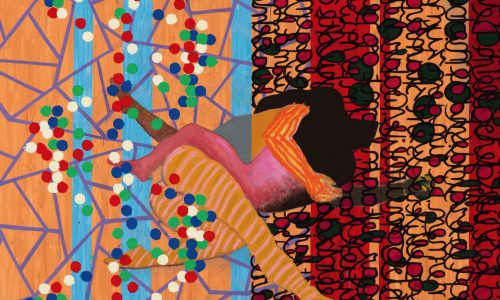
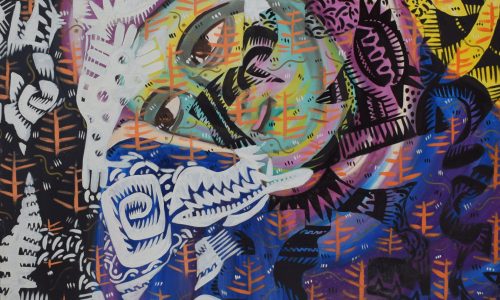
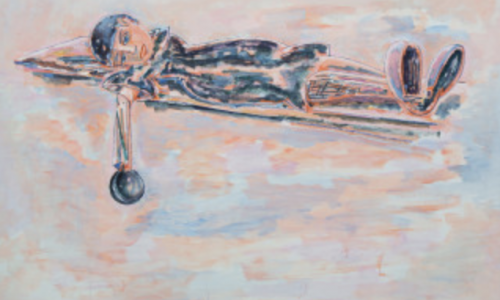
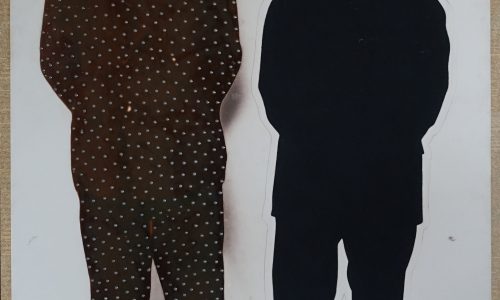
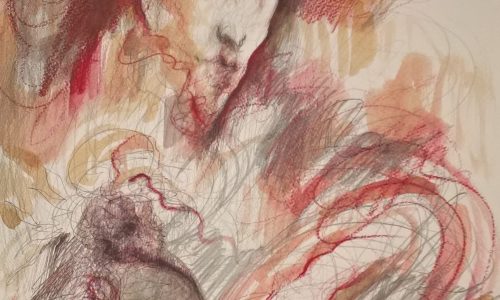
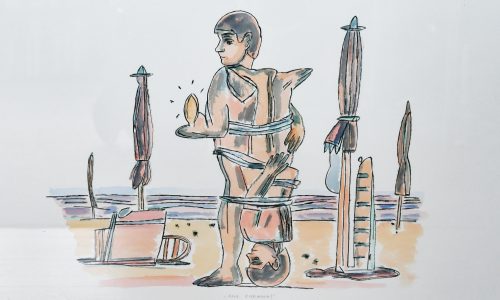
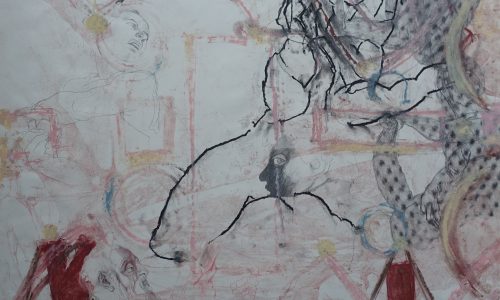
At the spot where one would typically expect a human head, there is instead a skull of an animal or an exotic mask. The attire is equally diverse, ranging from traditional clothing of far-off lands to futuristic uniforms, fur coats, and sharply tailored suits. Cowboy boots, pink pumps, or sandals on their feet and an assortment of objects in hand: spears, guns, a stylish handbag, or a falcon. It’s often impossible for the viewer to discern whether the figure is male or female.

Schleiffert predominantly depicts these figures on a large scale, making them larger than life. Her choice of materials is varied, from chalk to paint and from faux fur to aluminum foil. Schleiffert works with compositions of imagery, using collages as a starting point for her drawings and paintings. Redrawing is important to Schleiffert because, in her own words, it allows her to avoid creating everything from imagination.

Themes of oppression, freedom, power, and gender play a central role in Schleiffert’s body of work. By combining different styles, eras, and locations, her work raises questions about tolerance in life: her potential figures display a longing for what should be possible. Schleiffert says, “My figures are not always content with their lives and dream of an alternative.”

In addition to drawings and paintings, Schleiffert also creates installations and sculptures. She studied at the Academy of Arts and Design in ‘s-Hertogenbosch (1985-1990) and at De Ateliers (1990-1992). In 1999, Schleiffert won the Prix de Rome. Her work has been exhibited at places such as Heden (The Hague), Museum Het Domein (Sittard), and CBK Drenthe (Assen).

www.ftn-books.com has some Schleiffert publications available.
Posted on Leave a comment

Per Kirkeby (continued)

Per Kirkeby, a Danish creative, took inspiration from geology and natural surroundings, greatly influencing his paintings and brick sculptures. His devotion to the conceptual understanding of structures led him to work within specific parameters, containing the urgency of mark making. “A structure-less painting holds no significance to me. Structure reflects your level of responsibility towards the work,” he explained. “You can’t simply let it float around in pretty colors. It needs a core.”

Born on September 1, 1938, in Copenhagen, Denmark, Kirkeby pursued a degree in geology from the University of Copenhagen. However, he continued to cultivate his artistic practice, producing paintings, sculptures, films, and prints. In the 1960s, his performance art brought collaborations with Fluxus artists such as Joseph Beuys, Nam June Paik, and Charlotte Moorman. Tragically, in 2013, Kirkeby suffered a severe brain injury from a fall and was unable to paint before his passing on May 9, 2018, in his hometown of Copenhagen, Denmark.

Today, Kirkeby’s creations are held in esteemed collections, including the Art Institute of Chicago, The Museum of Modern Art in New York, the Tate Gallery in London, and the Louisiana Museum of Modern Art in Humlebæk, Denmark.

www. ftn-books.com has some nice Kirkeby titles available.

Posted on Leave a comment

James Lee Byars (continued)

As an artist, the late James Lee Byars was known for his unique approach that encompassed performance, sculpture, and installation, delving into themes such as memory, absence, and mystery. In a surprising turn of events, Byars achieved a significant moment in his career in 1958 when he convinced a curator at the Museum of Modern Art, despite showing up unannounced, to allow him to showcase his work in the museum’s stairwell. This event is now recognized as Byars’ first museum exhibition. In 2014, “James Lee Byars: 1/2 an Autobiography” was held at MoMA PS1, featuring a comprehensive collection of the artist’s work. Even as his health deteriorated from cancer, Byars continued to produce impactful pieces, such as his renowned performance work, The Death of James Lee Byars (1994). Alongside his exhibitions, Byars also published books and materials that encompassed his artistic endeavors.

www.ftn-books.com has some nice Lee Byars publications available

Posted on Leave a comment

Richard Deacon (continued)

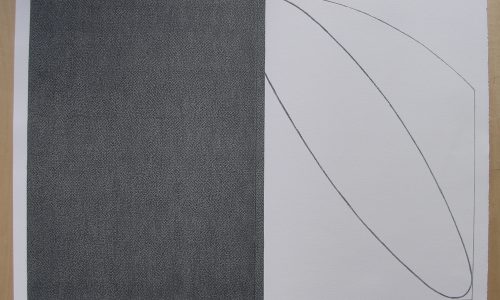
Richard Deacon is a leading figure in British sculpture, renowned for his voluptuous and abstract forms since the 1980s. His extensive influence is reflected in the prominent public commissions of his works across the world. Deacon’s ingenuity lies in his insatiable desire for material, as he deftly transitions between laminated wood, stainless steel, corrugated iron, polycarbonate, marble, clay, vinyl, foam, and leather. As he eloquently puts it, “changing materials from one work to the next is a way of beginning again each time (and thus of finishing what had gone before)”.

Deacon himself identifies as a “fabricator”, highlighting the underlying construction of his completed pieces. Although his works are often cast, modeled, or carved by hand, the logic of their fabrication is laid bare. Sinuous curves may be bound by glue oozing between layers of wood, or screws and rivets may protrude from sheets of steel, exposing their inner workings. This transparency serves to underscore the interactive nature of the artistic process, as a constant dialogue between the artist and his chosen medium transforms the mundane into the metaphorical.

The concept of “fabrication” also conveys a sense of inventiveness, of creating something false rather than true. This clever play on words is evident in Deacon’s titles, which often juxtapose unexpected ideas or imbue new meaning in familiar phrases or cliches. Some noteworthy examples include Let’s not be Stupid (1991), No Stone Unturned (1999), Water Under the Bridge (2008), and Shiver My Timbers (2016).

www.ftn-books.com has several Deacon titles available.
Posted on Leave a comment

Robert Smithson (continued)

Despite his untimely death at the young age of 35, Robert Smithson’s short career has served as a major source of inspiration for countless young artists, particularly among the emerging talents of the 1960s. Not only was he a prodigious artist, but also a formidable writer and critic, his interests spanning from Catholicism to mineralogy to science fiction.

While his early pieces consisted of paintings and collages, Smithson’s focus soon shifted towards sculpture as he responded to the Minimalism and Conceptualism movements of the early 1960s. This led him to extend his work beyond the confines of galleries and into the vast landscape. In 1970, he created his famous Earthwork, also known as Land art, in the form of a spiral jetty made of rocks and situated in the colorful waters of the shore of the Great Salt Lake in Utah.

However, tragedy struck in 1973 when Smithson died in an aircraft accident while surveying the site for another Earthwork project in Texas. Despite his short life, he has left an indelible mark on the art world, particularly with his groundbreaking Earthwork creations.

Between 1959 and 1962, Arman developed his signature style through two new concepts: accumulation and poubelle. The accumulation involved collecting ordinary, identical objects and encasing them in large quantities in polyester or plexiglass. The poubelle, or trash can, consisted of scattered consumer materials that Arman used to fill galleries alongside fellow artists such as Yves Klein.

In October 1960, Arman played a significant role in the formation of the Nouveau Réalisme art movement, along with Yves Klein, Daniel Spoerri, Jean Tinguely, and later César, Niki de Saint Phalle, Christo and others.

A year later, Arman made his debut in the United States, his second home. He split his time between living in New York and Nice, eventually settling in Vence in 1967.

www.ftn-books.com has some important Smithson publications available.

Posted on Leave a comment

Arman (continued)

Arman was a French-American artist and sculptor, known for his assemblages. He had a preference for using prefabricated materials. In 1957, he made the decision – following in the footsteps of ‘Vincent’ (van Gogh) – to no longer go by the name of Armand Pierre Fernandez, but simply as Arman.

After studying philosophy and mathematics, he attended the École nationale d’arts décoratifs in Nice in 1946. It was during this time that he met Yves Klein and Claude Pascal. Upon completing his studies, he enrolled as a student at the École du Louvre in Paris. From 1953, he worked as a painter and was interested in abstraction, influenced by the painters Poliakoff and De Staël.

Between 1959 and 1962, Arman developed his recognizable style with two new concepts: accumulation and the poubelle. Accumulation consisted of a collection of ordinary, identical objects encased in polyester or plexiglas. The garbage can was a collection of scattered consumables, which he used to fill galleries such as Yves Klein’s. In October 1960, he was closely involved in the establishment of the artists’ group Nouveau Réalisme, with the likes of Yves Klein, Daniel Spoerri, Jean Tinguely, and later, César, Niki de Saint Phalle, Christo, and others.

A year later, Arman made his debut in the United States, his second home. He alternated living between New York and Nice, and eventually settled in Vence in 1967.

www.ftn-books.com has a few SArman titles available

Posted on Leave a comment

Kho Liang Ie (continued)

Born in 1927 in Magelang and passing away on January 1st, 1975 in Amsterdam, Kho Liang le was the child of Chinese parents and a Dutch industrial designer. He is renowned for his design of the interior of Schiphol Airport. After arriving in the Netherlands in approximately 1949, he was educated at the Rietveld Academy, where he studied interior design and design. In 1958, he was appointed as Artifort’s aesthetic advisor and designer, shifting the company’s focus towards the top of the international market due to his contributions. Kho Liang le attracted foreign designers such as Pierre Paulin and Geoffrey Harcourt. His influence is still evident to this day. As an interior designer, Kho Liang le gained recognition for his work on the Schiphol Airport design in the 1960s. His creations exude purity, warmth, and a sense of liberty.

www.ftn-books.com has some Kho Liang Ie items available.

Posted on Leave a comment

Marjolein Bastin (continued)

We are relocating!
In the coming weeks we will be occupied with packing and moving our internet store inventory. The entire collection needs to be transferred from Leidschendam to Oegstgeest, and this will take some time.
If all goes according to plan, we will be fully operational again on November 21st, but until then, it may happen that we are unable to immediately assist you with your order. We ask for your understanding, but as soon as possible, your order will be fulfilled with the utmost speed.

Marjolein Bastin-uit den Bogaard (1943) is a Dutch illustrator and artist, renowned for her depictions of nature, including animals and plants. She studied at the Academy of Fine Arts in Arnhem, where she met her husband Gaston Bastin. From 1960-1965, she worked for various advertising agencies and publishers. Marjolein and Gaston Bastin have a daughter, Sanna, born in 1973, and a son, Mischa, born in 1974. She has two granddaughters: Merel and Roos. Marjolein Bastin has lived in various places, such as Missouri, the Cayman Islands, the Veluwe, Ameland, and Switzerland, all of which have been sources of inspiration for her work. She currently resides in Wekerom.

Since 1974, Marjolein Bastin has been working for the weekly magazine Libelle, where she had her own nature page from 1980 onwards, accompanied by her character ‘Vera de Muis.’ She also creates watercolors. Her drawings appear in books and on various products, such as calendars, agendas, cards, pottery, and embroidery kits, among others, for the American company Hallmark. She has also contributed to various nature books. In 1993, her beautiful drawing of lungwort graced the cover of a thesis by her namesake, Marjolein Drent.

She has created drawings of ducklings for the ild care foundation (‘i love ducklings’), which launched a new campaign in 2011. The foundation hopes to gain more recognition with her support.

Her original works have been exhibited, among others, at the Nature Center Ameland and the Noord Brabants Museum in Den Bosch. For the artist, the exhibition was a moment of recognition. ‘The pinnacle of my work. Very touching and unexpected.www.ftn-books.com has a large selection of books by Marjolein Bastin.

Posted on Leave a comment

Inez van Lamsweerde (continued)

We are relocating!
In the coming weeks we will be occupied with packing and moving our internet store inventory. The entire collection needs to be transferred from Leidschendam to Oegstgeest, and this will take some time.
If all goes according to plan, we will be fully operational again on November 21st, but until then, it may happen that we are unable to immediately assist you with your order. We ask for your understanding, but as soon as possible, your order will be fulfilled with the utmost speed.

Inez van Lamsweerde, born on September 25, 1963 in Amsterdam, is a Dutch art photographer, renowned for her digitally manipulated photos. Together with her husband Vinoodh Matadin, she creates numerous art pieces that blend fashion photography and art. The two met at the Akademie Vogue, where they both studied clothing design. However, after two years, Inez van Lamsweerde left the school to pursue further studies at the Rietveld Academie, focusing on photography. But she still had a passion for fashion and incorporated it into her photography. Her photos are razor-sharp and can be described as perfect. Every aspect of the photo is precisely crafted and carefully thought out. Inez van Lamsweerde’s current photos include a combination of fashion and art photography. She works with many well-known brands and photographs models in the traditional style seen in fashion magazines, which is the fashion photography element. However, the use of light and contours in her work makes it appreciated by lovers of art photography as well.

www.ftn-books.com has some Inez van Lamsweerde items available.