Posted on Leave a comment

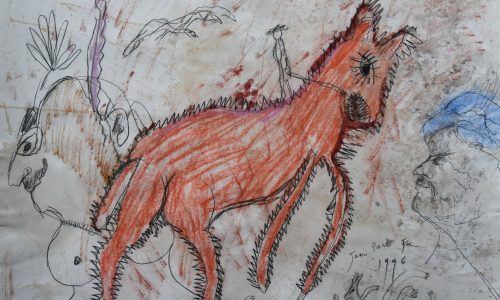
Pat Andrea (1942)

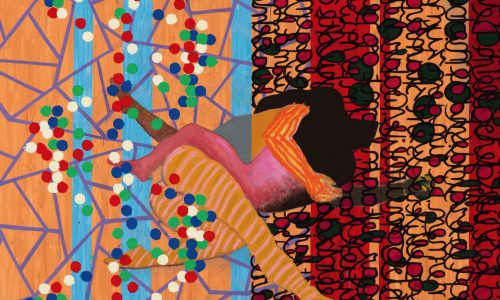
A human wordsmith, Pat Andrea (1942) is an internationally acclaimed master painter and one of the most prominent figures in European realism and new figurative iconography.

In his 40-year career, his work has been showcased in hundreds of exhibitions, including five retrospectives. It has been featured in some of the most prestigious museum collections in the world, such as MOMA (New York), Centre Georges-Pompidou (Paris), Museo Nacional de Bellas Artes (Buenos Aires), and the Stedelijk Museum (Amsterdam).

Born in The Hague in 1942, Andrea studied at the city’s Royal Academy of Art under Co Westerik. He co-founded the ABN Group with Walter Nobbe and Peter Blokhuis, known as the New Hague School, and held his first solo exhibition in 1965. In 1979, he was selected by art critic Jean Clair to participate in Nouvelle Subjectivité at the Palace of Fine Arts in Brussels, alongside artists like David Hockney, RB Kitaj, and Sam Szafran. Andrea served as a professor at the École Nationale Supérieure des Beaux-arts in Paris from 1998 to 2007, and currently resides and works in Buenos Aires and Paris.

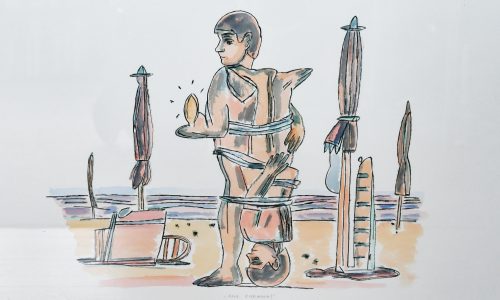
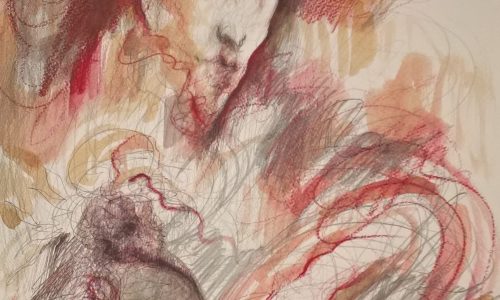
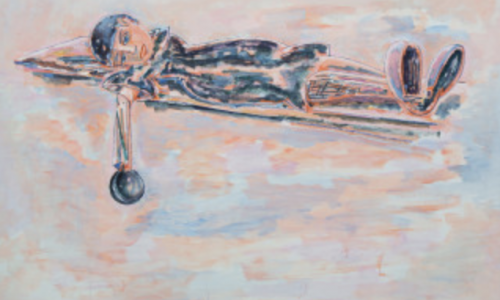
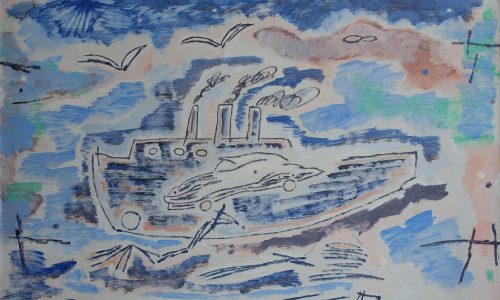
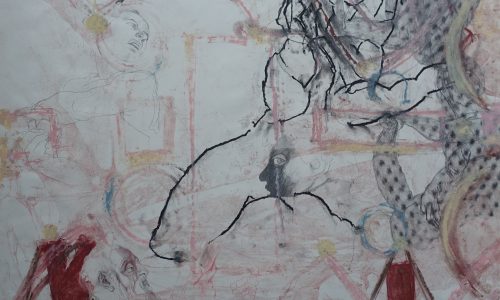
In his paintings, classical quality meets grim neo-expressionism as sexuality, fear, and desire seamlessly intertwine to produce images that are both playful and intensely disturbing. One-act dramas of everyday human emotions, Andrea’s creations delve into eroticism and violence through raw yet delicate depictions of men and women.

www.ftn-books.com has several Pat Andrea publications now available.

Posted on Leave a comment

Richard Paul Lohse (continued)

Born in Zürich in 1902, Richard Paul Lohse had a dream of becoming a painter. However, due to difficult economic circumstances, his wish to study in Paris was not fulfilled. Instead, in 1918 he joined the advertising agency Max Dalang and trained to become an advertising artist. Despite being self-taught, Lohse’s work displayed expressiveness and late cubist elements, especially in his still life paintings.

In the 1930s, his career as a graphic artist and book designer earned him recognition as one of the pioneers of modern Swiss graphic design. In his paintings, he experimented with curved and diagonal constructions. In 1937, Lohse and Leo Leuppi founded Allianz, an association for Swiss modern artists. The following year, he assisted with the organization of the “Twentieth Century German Art” exhibition in London, alongside his brief wife, Irmgard Burchard.

Lohse’s strong political beliefs led him to join the resistance movement, where he met and eventually married Ida Alis Dürner. It was not until 1943 that Lohse made a breakthrough in his painting, standardizing his pictorial methods and developing modular and serial systems. His book “New Design in Exhibitions” was published in 1953, and he became co-editor of Neue Grafik/New Graphic Design in 1958. His systematic and constructive art, as well as his graphic design, gained worldwide recognition through important exhibitions and publications. Lohse passed away in Zürich in 1988, leaving behind a legacy of enigmatic complexity and linguistic dynamism in his works.

www.ftn-books.com has many Lohse titles available.

all the above are available at www.ftn-books.com

Posted on Leave a comment

Henk Tas (1949)

The Rotterdam-based artist Henk Tas (1949) blends various images from popular visual culture, mass media, and advertising in his photographic works. Through vibrant photography, sometimes combined with other techniques, he crafts his ‘magic photos’ which have been acquired by museums such as Boijmans, Centre Pompidou, and others. In fact, Tas would have preferred to become a rockstar, being a visual artist was his second choice. As a result, his work is always bursting with rock & roll vibes and a hefty dose of glamour. The objects he photographs, often rendered unrecognizable, serve as vehicles for emotions in his eyes.

Beside some original works, www.ftn-books.com has some Henk Tas titles available.

Posted on Leave a comment

Georges Seurat (1859-1891)

Alongside Paul Signac, he focused on the theoretical principles of color interaction. His technique of portraying light through the use of small brushstrokes of contrasting colors became known as divisionism. A less accurate term is Pointillism, as this refers more to the application technique. He tested his theory that the small dots would mix together in the viewer’s eye at a distance for the first time in his large canvas La baignade à Asnières (1883-1884; National Gallery, London), although the colors themselves were still mixed.

In subsequent works, including the large canvas Dimanche d’été à la Grande Jatte (1886; Art Institute of Chicago in Chicago), he placed unmixed colors next to each other, a method that is characteristic of neo-impressionism, of which he was a prominent representative.

In addition to a number of large pieces, Seurat also painted landscapes, genre scenes, and portraits. His design is balanced, taut, and geometric in structure. Not only in technical terms but also in atmosphere, Seurat’s style differs from impressionism, among other things because he soon ceased to pay attention to natural light and created most of his large works in his studio.

In his later large-scale works, he primarily focused on capturing movement, as seen in Le chahut (1889-1890; Kröller-Müller Museum in Otterlo) and Le cirque (1891; unfinished; Musée d’Orsay in Paris).

www.ftn-books.com has some Seurat titles available

Posted on Leave a comment

Lee Friedlander (1934)

Lee Friedlander is a groundbreaking American photographer renowned for his pioneering portrayals of urban streets. His street photography often captures unposed portraits of individuals, striking signs, and subtle reflections of himself in storefront windows, showcasing the unexpected interplay of light and subject matter within the bustling cityscape. In his own words, “I’m not a calculated photographer. You don’t have to search for photos. The material is abundant. You go out and the photos are staring at you.” Born on July 14, 1934 in Aberdeen, WA, Friedlander honed his skills at the Art Center College of Design in Pasadena before relocating to New York in 1956. Influenced by the artistry of Eugène Atget and Walker Evans, he strived to view the world from an outsider’s perspective, spontaneously responding to the endless potential of images surrounding him. Along with Diane Arbus and Garry Winogrand, Friedlander was featured in the groundbreaking exhibition “New Documents” at The Museum of Modern Art in 1967, curated by John Szarkowski. He later gained critical acclaim with the publication of his acclaimed photography book, The American Monument, in 1976. In more recent years, Friedlander released America by Car in 2010, a book accompanied by an exhibition at the Whitney Museum, showcasing a series of photos captured on road trips from the driver’s seat of rental cars. The influential artist continues to reside and create in New York, NY. Today, his compelling photographs are held in prestigious collections such as the Art Institute of Chicago, The Metropolitan Museum of Art in New York, the Los Angeles County Museum of Art, and the Victoria and Albert Museum in London, among others.

www.ftn-books.com has the much sought after MARIA publication now available.

Posted on Leave a comment

Barney de Krijger (1947)

Barney de Krijger special publication is now available at www.ftn-books.com

It is the AMAZONAS p portfolio, containing 4 large woodblock prints.

The provenance is the ANY ART collection . Koos made this now available for sale:

edition of only 15 copies, all woodblock prints signed, dated, numbered. This is copy no. 2/15. Published in 1990

Posted on Leave a comment

Ian Wilson (1940-2020)

Wilson, born in Durban, South Africa in 1940, migrated to the United States at the tender age of twenty. Early on, his creations were influenced by Constructivism and the emerging Minimalism movement, eventually culminating in the creation of “Circle on the Floor” and “Circle on the Wall” in 1968. These two pieces, composed of simple geometric shapes, were meant to be reproduced in an infinite number of ways using chalk and instructions provided by Wilson. His work engaged in a conversation with other Conceptual artists of the time, including Art & Language, Robert Barry, Joseph Kosuth, and Lawrence Weiner. “Circle on the Floor” and “Circle on the Wall” marked the end of Wilson’s physical creations as he shifted his focus to his series “Discussions” in 1968-86/1999-2020.

This series, which began with Wilson uttering a single word – “time” – was a bold statement on verbal communication. In a 2002 interview with Oscar van den Boogaard, Wilson explained, “My aim was to insert the word ‘time’ into every conversation I had, with anyone, anywhere. It was not about the word itself, but rather the effect it had on the verbal exchange.” As the series evolved, the “Discussions” were held in various institutional art spaces, inviting participants to join Wilson in exploring the concept of “oral communication.” Inspired by Plato’s Parmenides dialogues, the discussions delved into topics of “the known and unknown” and “awareness of the Absolute.” Wilson’s unique approach to art and communication continues to intrigue and inspire audiences to this day.

www.ftn-books.com has some titles with or on Ian Wilson available.

Posted on Leave a comment

Victor Vasarely (1906-1997)

It was the early 70s when I stumbled upon a small art dealer in the bustling Hoogstraat of The Hague. There, in the window display, I spotted two silk-screen prints by none other than Vasarely himself. At first glance, I was in awe of their beauty, but the fact that they were part of a limited edition of 100 numbered and signed copies made me lose interest. You see, back then, I had never heard of art being published in such a manner. Nowadays, however, it has become a common practice. Artists now make a living off of these exclusive editions and individuals have the opportunity to acquire an original piece of art at an affordable price. Looking back, I regret not purchasing those prints at the time, but as the saying goes, “time flies and memories fade.”

Over the next three decades, Vasarely’s works seemed to have faded from the public eye. But in present times, his works have resurfaced and are highly sought after, rightfully so. Many consider him to be one of the leading artists of the Geometric Abstract art and Optical art movements. His unique perspective and approach to Modern Art has resulted in numerous beautiful and impressive works that can now be found in the most prestigious museums around the globe.

If you ever find yourself in Budapest, I highly recommend paying a visit to the Vasarely Museum located on the outskirts of the city (just a half-hour tram ride away). While it may not be your typical modern-day museum, the collection of Vasarely’s works housed within its walls is nothing short of fantastic. It’s a true feast for the eyes, featuring some of the best OP ART pieces you will ever see gathered in one place. Fun fact: you may even come across one of the Kriwin catalogues on display, as shown below.

And just when you thought it couldn’t get any better, allow me to share a little secret with you. The Vasarely catalogue published by the Stedelijk Museum features an original relief print in black and white on the back cover (shown above). Now, that’s certainly something to marvel at.

www.ftn-books.com has several Vasarely titles available.
Posted on Leave a comment

Picasso and Guernica

Personally i am not a great fan of Picasso. I understand his importance for Modern Art, but somehow he never appealed to me very much. One exception . In 1937 Picasso painted GUERNICA. The first time i saw this extremely large painting was in 1977 when i visited New York with my father. It was breathtaking!

So much to see in this painting. I shows the city of Guernica while it was bombarded by the Condor legion of the Luftwaffe. Pure panic and chaos on every painted part of the painting. This is a painting you must see in reality, because the sheer size is breathtaking already. It was one memory i brought home with me.

About 12 years ago the Gemeentemuseum Den Haag had the studies for Guernica in a special show and even on these much smaller studies you can see the struggle of the painter and the power of the subject.

A few years ago we went to the Reina Sofia Museum in Madrid and saw this masterpiece again. The same experience…still breathtaking.

www.ftn-books.com has several titles on Picasso’ Guernica available.

Posted on Leave a comment

Marthe Wéry ( continued)

Many years in the past, back in 1986, I had the pleasure of meeting one of the most amicable artists I have ever encountered – Marthe Wery. Her very first exhibition was held in the renowned Gemeentemuseum. Years later in 2011, the same museum hosted a retrospective of her work. But it was the 1986 exhibition that left a lasting impression on me – introducing me to a “minimalist” artist whom I had the opportunity to meet in person and whose work I greatly admired. It wasn’t the easiest kind of art to appreciate, but it was the first time I was truly captivated by an artist’s installation that transformed an entire room into a masterpiece. One room featured towering blue panels while the other was lined with bold red ones. We discussed these striking pieces and she even signed the catalogue I purchased. The catalogue itself had a deep green cover, one of the most beautifully designed ones I had ever sold during my time as a bookseller for the Gemeentemuseum. The fold-out pages mirrored the panels within the exhibition, and the print quality was exceptional.

Marthe Wery and Walter Leblanc are two of my most beloved Belgian artists. Belgium has produced countless renowned names in the art world over the last five decades – Cordier, Magritte, Delvaux, Bury, Verheyen, Peirre – and I personally believe that Marthe Wery’s name deserves a spot on that list. She was a highly original artist and a kind woman who created incredibly impressive works of art.

In the past 10 years www.ftn-books.com has collected some nice and important Marthe Wery titles.