Posted on Leave a comment

Willem Sandberg must have admired Matisse

As a curator, Sandberg held a deep admiration for Matisse as an artist, and it can be assumed that Sandberg, as an artist himself, must have drawn inspiration from the older master. This is evident in Sandberg’s famous paper cuttings, which were created during a period when he was battling an illness. Matisse himself referred to this technique as “painting with scissors.” Could it be possible that Matisse’s cut-outs were the source of inspiration for Sandberg’s use of modeled torn papers in his book designs? These torn pieces of paper, combined with carefully crafted layouts, resulted in highly personal and iconic publications by Sandberg. While there are certainly differences between the two artists’ works, they both existed during the same artistic period, making it plausible that Matisse’s technique influenced Sandberg’s use of paper.

However, the survival of these two types of artworks has been vastly different. Sandberg’s paper publications, printed on paper, have easily lasted for 50 years or more. On the other hand, Matisse’s fragile cut-outs require restoration in order to preserve them for future generations. In the past 10 years, two significant restoration projects have been undertaken. One of these projects was the restoration of Matisse’s large cut-out composition “La Perruche et la Sirène,” from the collection of the Stedelijk Museum Amsterdam. The other was a project at the Beyeler Museum, in which visitors were able to witness the progress of restoring a large canvas titled “Acanthes.” These restored works are now on display at their respective museums, showcasing the true splendor of Matisse’s art.

These accomplishments serve as a testament to why Matisse is widely regarded as one of the greatest artists of the last century. To learn more about these two remarkable artists, visit www.ftn-books.com for a selection of publications. www.ftn-books.com recently added the Picasso Matisse publication from the Stedelijk MUseum to its collection

Posted on Leave a comment

Franz Ackermann (1963)

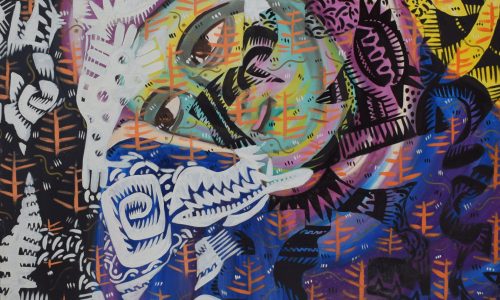
Hailing from the year 1963 in Germany, Franz Ackermann currently resides and operates within the bustling cities of Berlin and Miami. His creative pursuits are fueled by the concept of travel as an immersive encounter, coupled with themes of displacement and observation. Through his vibrant and dynamic works, Ackermann skillfully interweaves bursts of saturated colors with layers of overlapping forms, which seamlessly meld with fragments of imagery captured from the multifaceted and ever-changing urban landscape. Delving deeper into the complexities of globalization and the impact of tourism on our society, Ackermann’s artistic explorations continue to evolve and captivate audiences worldwide.

www.ftn-books.com has the Stedelijk Museum catalog now available.

Posted on Leave a comment

Stedelijk Museum Classics

About a month ago i took a small stack of books published in the late 40″s/50′ and was struck by the classic beauty of these designs. Timeless and still contemporary. From Left to right:

Sandberg, Sandberg, Sandebrg and Aldo van Eyck

All titles are now available at www.ftn-books.com

Posted on Leave a comment

FTN books has moved to Oegstgeest

It took us over 3 months to move my inventory to Oegstgeest, but finally, today, i can say that we have moved the complete collection of Flight To Neverland books & collectibles. Some 280 boxes with books and 10 drawers of an architect cabinet filled with posters have now found a new location in Oegstgeest. We did not plan to move for another 5 years or so, because we thoroughly enjoyed our old home, but the opportunity to buy the new location was a once-in-a-lifetime opportunity. A home which will suit us for the coming years. So now it is business as usual and to celebrate this i offer you a discount code until the 6th of January 2025.

Use: MoveOegstgeest

to get an immediate 10% discount at checkout.

Thank you all for your patience and our best regards from OEGSTGEEST

Posted on Leave a comment

Merry Christmas and discount code

No written blog today, but just the 1945 Saul Steinberg Xmas card and a discount code to wish you a Merry Christmas.

This code is valid for only 3 days and gives a 10% discount on all items.

XmasFTN10

Posted on Leave a comment

Jeff Wall (continued)

Revered as a leading contemporary Canadian photographer, Jeff Wall’s work delves into the complexities of images, representation, and memory. His larger-than-life photographs embody the visual style of advertisement, employing backlit transparencies and grandeur in their presentation. Known to recreate everyday moments, fiction, and art history in a “cinematographic” manner, he aptly dubs his work as “near documentary”. With a deep-rooted connection to his personal experiences, Wall explains, “[Near documentary] signifies that my pictures are inspired by my own encounters, and that I strive to capture those moments with utmost precision and accuracy.”

Having been born on September 29, 1946 in Vancouver, Canada, Wall attained his MA from the University of British Columbia in 1970. Dedicating his time to academia in the following decade, he pursued further education under the tutelage of renowned British historian T.J. Clark at the Courtauld Institute of Art in London. His background as a Conceptual artist and art historian paved the way for his exploration of diverse subjects, including Hokusai, Édouard Manet, and even novels like The Invisible Man. Garnering immense recognition, a print of his piece Dead Troops Talk (1993) shattered auction records at Christie’s in 2012 and was then the third highest-selling photograph ever.

Presently, his works are housed in the esteemed collections of Tate Gallery in London, the Art Institute of Chicago, the Hammer Museum in Los Angeles, and the Kunstmuseum Basel, to name a few. Holding steadfast to his roots, Wall continues to reside and create in his hometown of Vancouver, Canada.

www.ftn-books.com has some interesting Wall titles available.

OLYMPUS DIGITAL CAMERA

Posted on Leave a comment

Charlotte Schleiffert (continued)

At the spot where one would typically expect a human head, there is instead a skull of an animal or an exotic mask. The attire is equally diverse, ranging from traditional clothing of far-off lands to futuristic uniforms, fur coats, and sharply tailored suits. Cowboy boots, pink pumps, or sandals on their feet and an assortment of objects in hand: spears, guns, a stylish handbag, or a falcon. It’s often impossible for the viewer to discern whether the figure is male or female.

Schleiffert predominantly depicts these figures on a large scale, making them larger than life. Her choice of materials is varied, from chalk to paint and from faux fur to aluminum foil. Schleiffert works with compositions of imagery, using collages as a starting point for her drawings and paintings. Redrawing is important to Schleiffert because, in her own words, it allows her to avoid creating everything from imagination.

Themes of oppression, freedom, power, and gender play a central role in Schleiffert’s body of work. By combining different styles, eras, and locations, her work raises questions about tolerance in life: her potential figures display a longing for what should be possible. Schleiffert says, “My figures are not always content with their lives and dream of an alternative.”

In addition to drawings and paintings, Schleiffert also creates installations and sculptures. She studied at the Academy of Arts and Design in ‘s-Hertogenbosch (1985-1990) and at De Ateliers (1990-1992). In 1999, Schleiffert won the Prix de Rome. Her work has been exhibited at places such as Heden (The Hague), Museum Het Domein (Sittard), and CBK Drenthe (Assen).

www.ftn-books.com has some Schleiffert publications available.

Posted on Leave a comment

Per Kirkeby (continued)

Per Kirkeby, a Danish creative, took inspiration from geology and natural surroundings, greatly influencing his paintings and brick sculptures. His devotion to the conceptual understanding of structures led him to work within specific parameters, containing the urgency of mark making. “A structure-less painting holds no significance to me. Structure reflects your level of responsibility towards the work,” he explained. “You can’t simply let it float around in pretty colors. It needs a core.”

Born on September 1, 1938, in Copenhagen, Denmark, Kirkeby pursued a degree in geology from the University of Copenhagen. However, he continued to cultivate his artistic practice, producing paintings, sculptures, films, and prints. In the 1960s, his performance art brought collaborations with Fluxus artists such as Joseph Beuys, Nam June Paik, and Charlotte Moorman. Tragically, in 2013, Kirkeby suffered a severe brain injury from a fall and was unable to paint before his passing on May 9, 2018, in his hometown of Copenhagen, Denmark.

Today, Kirkeby’s creations are held in esteemed collections, including the Art Institute of Chicago, The Museum of Modern Art in New York, the Tate Gallery in London, and the Louisiana Museum of Modern Art in Humlebæk, Denmark.

www. ftn-books.com has some nice Kirkeby titles available.

Posted on Leave a comment

James Lee Byars (continued)

As an artist, the late James Lee Byars was known for his unique approach that encompassed performance, sculpture, and installation, delving into themes such as memory, absence, and mystery. In a surprising turn of events, Byars achieved a significant moment in his career in 1958 when he convinced a curator at the Museum of Modern Art, despite showing up unannounced, to allow him to showcase his work in the museum’s stairwell. This event is now recognized as Byars’ first museum exhibition. In 2014, “James Lee Byars: 1/2 an Autobiography” was held at MoMA PS1, featuring a comprehensive collection of the artist’s work. Even as his health deteriorated from cancer, Byars continued to produce impactful pieces, such as his renowned performance work, The Death of James Lee Byars (1994). Alongside his exhibitions, Byars also published books and materials that encompassed his artistic endeavors.

www.ftn-books.com has some nice Lee Byars publications available

Posted on Leave a comment

Richard Deacon (continued)

Richard Deacon is a leading figure in British sculpture, renowned for his voluptuous and abstract forms since the 1980s. His extensive influence is reflected in the prominent public commissions of his works across the world. Deacon’s ingenuity lies in his insatiable desire for material, as he deftly transitions between laminated wood, stainless steel, corrugated iron, polycarbonate, marble, clay, vinyl, foam, and leather. As he eloquently puts it, “changing materials from one work to the next is a way of beginning again each time (and thus of finishing what had gone before)”.

Deacon himself identifies as a “fabricator”, highlighting the underlying construction of his completed pieces. Although his works are often cast, modeled, or carved by hand, the logic of their fabrication is laid bare. Sinuous curves may be bound by glue oozing between layers of wood, or screws and rivets may protrude from sheets of steel, exposing their inner workings. This transparency serves to underscore the interactive nature of the artistic process, as a constant dialogue between the artist and his chosen medium transforms the mundane into the metaphorical.

The concept of “fabrication” also conveys a sense of inventiveness, of creating something false rather than true. This clever play on words is evident in Deacon’s titles, which often juxtapose unexpected ideas or imbue new meaning in familiar phrases or cliches. Some noteworthy examples include Let’s not be Stupid (1991), No Stone Unturned (1999), Water Under the Bridge (2008), and Shiver My Timbers (2016).

www.ftn-books.com has several Deacon titles available.