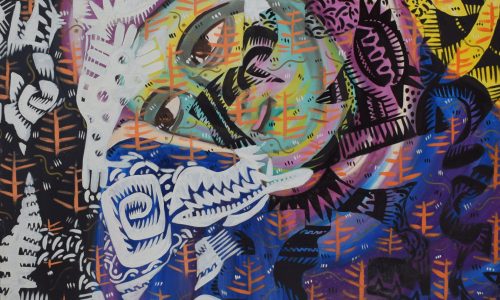
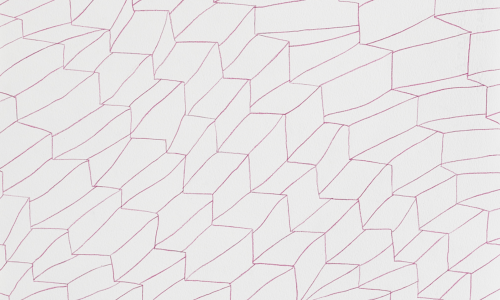
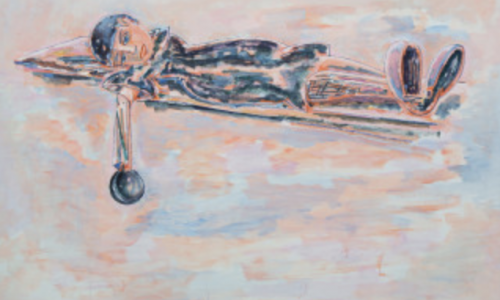
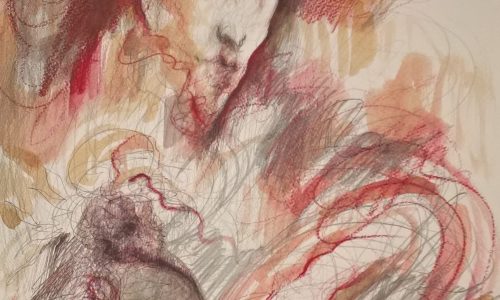
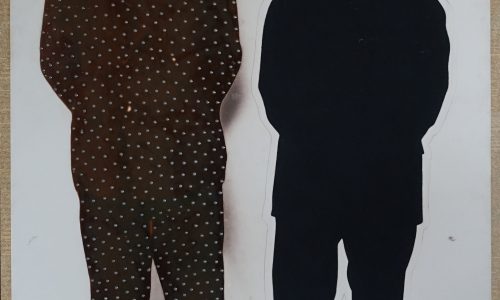
Hugo Tieleman, through his paintings, delves into the dichotomy between nature and the influence of man. “The tragedy of the landscape, that is the essence of my work,” he proclaims. Art critic Micha Andriessen describes his colorful paintings as depictions of displaced and overgrown scenes of decay. Through the use of sometimes venomous hues, Tieleman showcases how humanity leaves its mark on nature. With references to traditional painting, vanitas, and the landscapes and ruins of Romanticism, Hugo Tieleman examines our altered perception of nature, the landscape, and the world around us.
www.ftn-books.com has the Livingstone gallery invitation now available.
Deviled eggs, a deceased mosquito, the taut bud of a peony, or toes tucked into sandals: Ina van Zyl presents delicate, still-life-esque paintings of everyday objects that are often overlooked. However, when Van Zyl depicts them, they demand our undivided attention. Subtly captured on the canvas as images, one can sense that they are not solely about beauty or ugliness. In fact, they offer a glimpse into the world beyond them. Each piece, whether it be a portrait or self-portrait, is an attempt to grasp this world.
Born in Ceres, South Africa in 1971, Van Zyl grew up in South Africa and studied visual art at the University of Stellenbosch. She initially had a passion for drawing comic strips, but later turned to painting when she came to the Netherlands in the mid 1990s to attend De Ateliers. Instead of creating narrative scenes, like in comics, Van Zyl found herself drawn to singular objects and honed in on them. These objects have an independent presence on the canvas, appearing larger than life and expertly framed, detached from their contexts.
Van Zyl’s fascination with a subject – whether it be a seemingly insignificant everyday item, a landscape, or a portrait – often stems from the contradictory emotions it evokes. She is attracted to the combination of power and fragility in a budding flower, or to the deep black hue of an almost ripe plum. Her works are rather sensuous, painted meticulously with precision. However, as viewers, we can pick up on the underlying tension that symbolizes something greater. Van Zyl infuses each painting with emotions and memories that can evoke a universal feeling or a sense of longing and discomfort. This is often hinted at in her titles. For example, “Mort” for the dead mosquito, where the delicate insignificance of the insect takes on a grand significance. And “Little Orgasm” for the tenderly depicted tiny carnation, which inevitably evokes thoughts of sexuality and puberty.
In her work, Van Zyl often incorporates recurring themes of strength and vulnerability, life and death, and longing and fear. One such theme is the use of protea, South Africa’s national flower, which serves as a powerful symbol of the country’s tumultuous history. In some pieces, such as Proteus Erectus (2010), the protea stands proudly upright, evoking images of male genitalia and suggesting aggression. Yet in others, like Skaamrosie Teen Skemer (2009), shame and discomfort are conveyed as the flower hangs downward. This symbol of national pride also becomes a witness to the injustices of apartheid and racism in South Africa.
Despite her unconventional use of narrative, each of Van Zyl’s paintings conveys a deep sense of history and emotion. Portraits, such as Anton (2021), are particularly notable for their intense exploration of identity and relationships. In this piece, Van Zyl’s friend is depicted in a confrontational manner, bursting off the canvas and gazing both inwardly and outwardly. The emotional detachment of the artist is evident in her use of a diverse color palette, which conveys both contrast and balance through shades of purple, green, blue, and orange. This amalgamation of discordant elements results in a striking abstract portrait that simultaneously captures the essence of the subject and conveys a sense of weight and complexity. In her succinct yet enigmatic body of work, Van Zyl skillfully blends the personal and the abstract, creating an intriguing leitmotif that leaves a lasting impression on the viewer.
www.ftn-books.com has almost all van Zyl titles avcailable
The series of paintings and works on paper, titled Eros & Psyche, was created during the period of 2017-2021 and is based on the eponymous myth from classical antiquity, written by Lucius Apuleius in the second century AD as part of his Metamorphoses.
The myth of ‘Eros & Psyche’ pertains to the removal of obstacles in the way of love between Psyche (the embodiment of the soul) and Eros (love, sexual desire, and longing for beauty) and their ultimate union. Psyche falls in love with Eros, as foretold by an oracle, but due to the interference of Aphrodite – the goddess of love who is envious of Psyche’s beauty, but also the mother of Eros – she is no longer able to meet him.
The myth describes Psyche’s quest for Eros, as she longs to be reunited with him and after many trials, she succeeds.
In the works, the myth serves as a guide, providing the overall atmosphere from which the pieces originate and ultimately depict their own reality. The deep red and reddish-purple in the paintings Eros & Psyche XI and XIII enhance the sensual and erotic world invoked by the myth.
www.ftn-books.com has the invitation for this BOuwman exhibition now available.
The concept of destruction preceding creation is given tangible form in the work of artist Ton van Kints (The Hague, 1955). His pieces are marked by traces of a working method that could be seen as both destructive and constructive. Van Kints saws wooden panels into simple, loose pieces and then reassembles them into a self-made puzzle, forming a cohesive whole. The complexity of the composition is always tempered by the readability of the process. His enigmatic titles often allude to the event that has taken place under his hands, shaping the narrative of the finished piece.
The material largely determines the appearance of Van Kints’ work. He respects how the material behaves, but also subjects it to his own scenario. He speaks of his pieces as if they were characters, co-actors in his artistic process. They are directed by the artist himself. It is a process of fitting, measuring, and rearranging.
This led to the creation of a large group of circular reliefs, collectively known as ‘koekoeksnesten’ (cuckoo nests). These works are interrelated, each with their own distinctive character. Van Kints’ most recent pieces are created by mounting two or more pieces together. He treats these “leftovers” in the same way he previously rearranged sawn-off segments. The underlying logic of Van Kints’ art – the dialogue with things – remains unchanged. The reliefs have become thicker, stacked and covered with a layer of epoxy. This glossy layer unifies the pieces, but hints of the earlier work remain visible. This is the “dialogica” of Van Kints.
Van Kints studied at the Royal Academy of Art in The Hague (MO-B Drawing 1974-1979) and the Pratt Graphic Center in New York (1981-82). He has been a teacher at the departments of Photography and Fine Arts at the KABK in The Hague since 1990.
www.ftn-books.com has a fine selction of van Kints publications available.
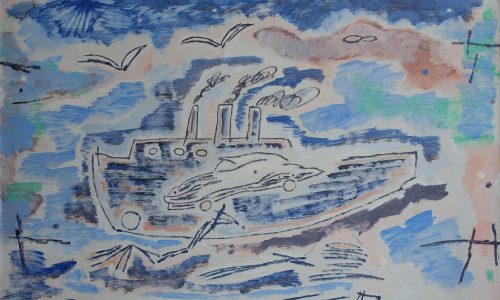
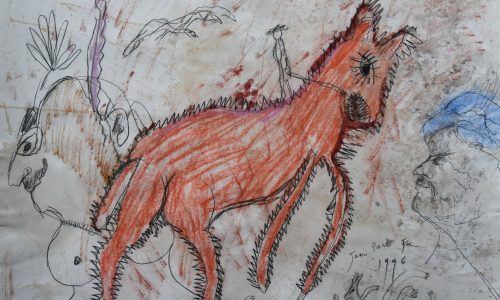
Outsider artists are “different,” often without formal art education and operating outside of the mainstream art world. Some of these artists have a psychological or intellectual impairment. What defines outsider artists is their inner drive to create without concern for commercial objectives or knowledge of established art movements. Their work is captivating, diverse, and unadulterated. There is also a growing interest in outsider art within the traditional art world.
www.ftn-books.com has several outsider / Art brut publications available.
With the human body and its visible suffering at the core of her oeuvre, De Bruyckere’s art continually strives to restore our sensitivity towards the timeless and universal aspect of human existence. In today’s world, we are bombarded by images of suffering to such an extent that we have become desensitized to it. However, through her work, De Bruyckere draws our attention towards this suffering and allows us to interpret and make sense of it in our own way. In doing so, she deftly navigates the boundaries of visual representation of physical and emotional pain.
De Bruyckere habiliments her sculptures using wax, resin, rope, and weathered leather or fabric, intertwining separate wax casts to form cohesive bodies. Her focus solely lies on bodies; faces concealed behind tresses of hair or garments, with heads often amiss. Employing unique pigments, she transforms wax into sallow skin with faint glimmers of blood vessels and bruises. Crimson blotches and simulated “wounds” create the illusion of a tormented body, evoking religious connotations, particularly the symbolism surrounding martyrs like St. Sebastian – an influential figure to Cripplewood. Apart from these religious elements, classical mythology also plays a crucial role in De Bruyckere’s compositions, with Ovid’s Metamorphoses serving as a continuous wellspring of inspiration.
Horses also hold significance as a symbol in her oeuvre, functioning predominantly as a metaphor to convey deep human emotions pertaining to death and mortality.
In addition to her sculptural works, the upcoming exhibition will also showcase drawings and early textile pieces. De Bruyckere utilizes her drawings, often composed in a blend of watercolor and gouache on upcycled paper or cardboard, as exploratory studies delving into the themes of her sculptures. In this regard, her inspiration often emanates from the movements of dancers. The process of developing ideas with dancers in the studio holds great importance for her and has resulted in an array of wax sculptures, as well as various series of drawings. These series are not mere preparatory studies, but rather function as standalone works of art, emphasizing the recurring themes that define her entire body of work. De Bruyckere’s sketches, drawings, watercolors, and sculptures are all intertwined, collectively forming a cohesive “body of work.”
The works of Mark Bradford, born in 1961 in Los Angeles, California, USA, delves deep into the complexities of socio-political issues, often mirroring the lived realities of Black Americans and drawing inspiration from his own upbringing in the city of angels. His unique style of abstract composition is masterfully crafted using everyday materials and found objects, such as posters and newspaper clippings, many of which are sourced from his hometown. This exhibition draws a striking parallel between the journeys depicted in Bradford’s pieces and the history of the Hamburger Bahnhof, which was originally a 19th-century train station symbolizing both arrival and departure – key themes that resonate throughout Bradford’s collection.
One of the standout works in this exhibition is the grandiose hanging sculpture titled “Spoiled Foot”, which was originally created for the US Pavilion at the 2017 Venice Biennale. Also showcased are the multimedia installation “Pinocchio Is On Fire” (2010/2015) that boldly confronts the AIDS crisis of the 1980s, and the walkable floor painting “Float” (2019/2024), adapted specifically for this exhibition. Visitors are invited to physically engage with these pieces, becoming aware of their own movement within the space and reflecting on the unwavering strength of marginalized communities in the face of systemic violence and oppression.
Mark Bradford, a graduate of the California Institute of the Arts, has garnered significant acclaim through major solo exhibitions at renowned institutions such as Tate, the Whitney Museum of American Art, and the Los Angeles County Museum of Art. In 2017, he was chosen as the official representative for the United States at the Venice Biennale. Beyond his impressive artistic prowess, Bradford is also a co-founder of “Art + Practice,” a non-profit organization based in Los Angeles dedicated to supporting foster youth and promoting access to contemporary art.
Charles Avery has devoted himself to an unparalleled project of constructing a world, through his depiction of a make-believe island. “The Islanders” presents a meticulous portrayal of the inhabitants, landscape, and civilization of this fictional island, conveyed through extensive drawings, writings, objects, architecture, and design.
Throughout the course of this twenty-year undertaking, Avery has precisely calibrated his imaginary world around the focal point of “The Island” – the hub of his created universe, amidst a multitude of other constituents in the form of an archipelago. The entrance to this island is the town of Onomatopoeia, a city with a rich texture, exhibiting the characteristics of an ever-evolving urban landscape. Originally serving as a launching pad for pioneering settlers, this town underwent a rapid metamorphosis, transitioning from a colonial outpost to a booming metropolis, bustling with life and prosperity, then succumbing to the depths of a depression-stricken slum, before finally rejuvenating itself as a hub of cultural and tourist attraction. The culture and fabric of the Island, continuously shaped by Avery, are further illuminated with each of his subsequent works.
The essence of Avery’s imaginary Island is deeply intertwined with the disciplines and concepts of mathematics, philosophy, economics, and anthropology, drawing inspiration from a diverse range of literary and comedic sources. Key elements from his drawings are masterfully brought to life in the form of his sculptures and installations. Embedded within many of his works is the central motif of the horizon line, a continuum that holds a magnetic allure for the Islanders. To them, it represents a paradox – something tangible yet made up of nothing – drawing them towards an intangible enigma. As Avery himself puts it, the Island is “both a playground for the imagination and a sincere attempt to align the viewer’s experience with that of the artist.”
Ivan Cazzola, an Italian photographer, has dedicated countless years to his craft, capturing the essence of fashion and beauty for prestigious publications in Milan, London, Paris, and New York. Beyond his mastery in photography, Ivan’s artistic abilities extend to documentary filmmaking and directing various media projects, each imbued with his unique perspective and flair.
Constantly navigating between the glamour of fashion and the allure of natural surroundings, Ivan finds inspiration in the intimate and autobiographical realms of his own neighborhood. From photographing models and artists to capturing the raw beauty of rock bands, cinema stars, and even more unconventional subjects such as prostitutes and gypsies – to Ivan, each moment is an opportunity to capture the essence of the present.
In recent months, Ivan has found himself immersed in his latest venture: directing his first film. In addition, he has also curated a new exhibition, showcasing his most captivating shots from both American and European cities and landscapes. With Ivan’s keen eye and incomparable skill, his work is a testament to the raw, enigmatic beauty that surrounds us all.
www.ftn-books.com has the Deininger gallery invitation now available.
The approach of Michael Johansson (1975) involves collecting, organizing, stacking, and puzzling. He gathers everyday objects and gives them a new form and context in his sculptures and installations. Scouring flea markets and thrift stores, he collects old televisions, transistor radios, VCRs, and other equipment and items. He then arranges them by color and brings them all together into one new object. His artworks are often described as ‘real life Tetris’. He constructs these sculptures not only for museum exhibitions all over the world, but also in public spaces, such as alleys and doorways.
Johansson is inspired by the coincidences in daily life, such as the same colors and patterns in objects, two people passing each other dressed in the same clothes, or a parking garage full of red cars. During his visits to flea markets, he is fascinated by the possibility of encountering double or almost identical objects. The same principle is at the core of his artistic practice: the desire to combine something recognizable and then create something unique from it.
Artist/ Author: Oliver Boberg
Title : Memorial
Publisher: Oliver Boberg
Measurements: Frame measures 51 x 42 cm. original C print is 35 x 25 cm.
Condition: mint
signed by Oliver Boberg in pen and numbered 14/20 from an edition of 20