Posted on 5 Comments

Hans van Bentem: Master of Installation Art

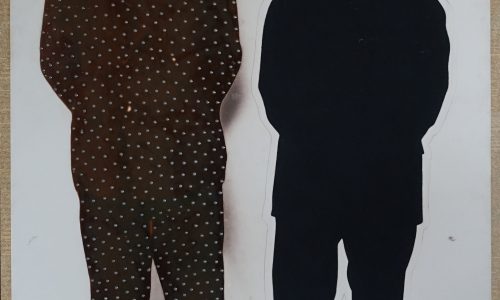
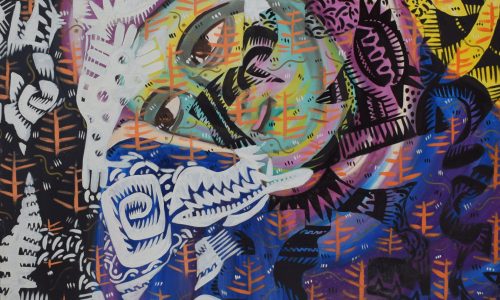
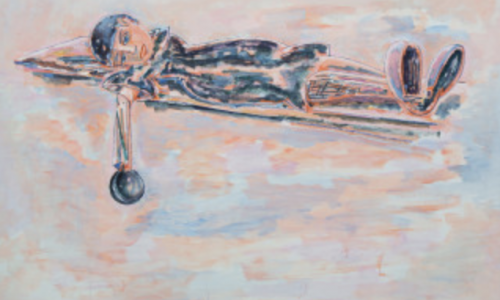
Hans van Bentem (born in 1965 in the Netherlands) has often created grand monumental works, demonstrating a preference for installation art. This form allows for the integration of multiple materials and objects, resulting in an even more complex interplay. Within this interplay, a seemingly random game is played, utilizing associations and attributes with both loaded and unburdened connotations. In addition, the artist does not shy away from incorporating elements of comic culture and ethnography into a single piece, seamlessly blending aspects of high and low cultures from various time periods and geographical areas. As a result, his work takes on the appearance of a bizarre synthesis.

THE GROTESQUE
Due to strict travel restrictions during the pandemic, Van Bentem has been unable to return to his beloved studio in China, where a series of porcelain works still await completion. Instead, during the lockdowns, he has turned to local opportunities and worked at Trapman’s studio on a new series of ceramic sculptures, first showcased at MPV Gallery in Oisterwijk. In these pieces, Van Bentem plays with the notions of attraction and repulsion, eroticism and ridicule, beauty and banality, brute force and delicate strings, all presented in exquisitely crafted glazed earthenware and blown glass, resting on elegant veneered wooden pedestals.

www.ftn-books.com has several van Bentem pubpications now available.

Posted on 6,481 Comments

Conrad Felixmüller: A Journey Through Expressionism

Conrad Felixmüller, a renowned German Expressionist painter and printmaker, is renowned for his vibrant and graphic landscape and portrait pieces. During the 1930s, his art took on a more poised color scheme and focused on realistic, genre-style representation – a significant contrast from his earlier, socio-critical work. Hailing from Dresden, Germany, he commenced his studies under Carl Bantzer at the prestigious Dresden Academy of Art and later worked at Ludwig Meidner’s studio. In 1917, Felixmüller established the influential monthly periodical MENSCHEN, which championed progressive art and literature. A few years later, he co-founded the German Expressionist group, Dresden Secession, alongside Otto Schubert and Otto Dix, who was once his student. Around the same period, he published his autobiography “Mein Werden” and his musings on artistic design, “Künstlerische Gestaltung.” However, the advent of Nazism saw his paintings on display in notorious exhibitions such as “Reflections of Decay” in 1933 and “Degenerate Art” in 1937, which resulted in the confiscation of his works from public collections. He later taught drawing and painting at Martin-Luther-Universität in Halle from 1949 to 1961 before retiring in Berlin. The artist breathed his last on March 24, 1977, in Berlin, Germany. Felixmüller’s masterpieces can be found in renowned collections such as the Art Institute of Chicago, the National Gallery of Art in Washington, D.C., The Museum of Modern Art in New York, the Courtauld Institute of Art in London, the Von der Heydt-Museum in Wuppertal, and the Los Angeles County Museum of Art.

www.ftn-books.com has several Felixmuller titles available.

Posted on 17 Comments

Nelly Rudin: The Evolution of Minimalist Art

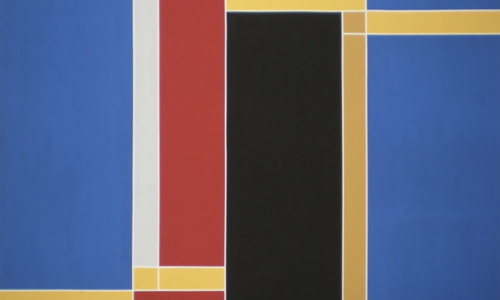
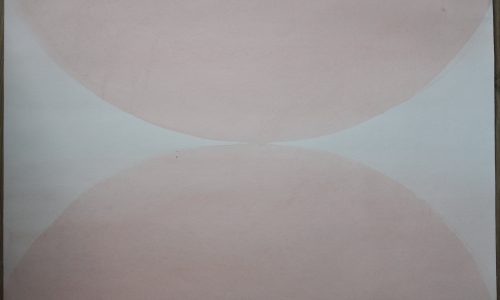
Upon graduating from the Kunstgewerbeschule in Basel, Switzerland, in 1928, Nelly Rudin (1928-2013) embarked upon a prosperous career as a graphic designer. In 1964, however, she forwent her profession to dedicate herself wholly to the realm of visual art. In accordance with the dictum of restraint, a principle ingrained during her time as a graphic designer, she principally explored fundamental shapes such as squares, triangles, and circles, along with their varying partitions. In 1974, this culminated in the manifestation of her “assembled canvases,” consisting of vertical intersections and diagonal constructions with a vacant, white area at its center. Two years later, Rudin upheaved this emphasis and divulged from the two-dimensional plane, ushering in her era of “aluminum frame objects.” As per the artist’s perspective, these square framing formations, projected outward from the wall like reliefs, effectively frame the vacant wall as if it were a painting: “Where an image typically occurs, there lies emptiness, and where the frame stands, there resides the picture.” In 1977, Nelly Rudin began exploring this theme in painting, bestowing preeminence upon the painting’s outermost margins: either the sides of the picture (exemplified in “Nr. 320” and “Nr. 373”), or its edges (“Nr. 489”). This she combined with exaggerated stretcher frames, designed to impart a sense of voluminosity upon her works, at times utilizing varying degrees of thickness within a single piece, challenging our accustomed perspectives. In 1981, this focus transitioned to objects fashioned from acrylic glass (“Nr. 19” and “Nr. 22”), taking advantage of its transparency to create novel perceptual effects. As Rudin perceptively states, “Paint applied to the edges can traverse the glass and unexpectedly materialize on formerly unmarked edges.” Rudin’s oeuvre as a whole is characterized by this concept of “migration” – a gradual expansion – as she consistently revamps her paramount themes, continually blurring the dichotomy between painting and sculpture to reveal fresh nuances.

The artist’s emphasis on peripheral regions produced a notable novel subject to the lexicon of Concrete Art. Following the artist’s passing, her creations and documents have been maintained by the Nelly Rudin Foundation, established in her previous abode and workspace located in the town of Uitikon near Zurich.

www.ftn-books.com has the nice Bottrop poster for sale

Posted on 2 Comments

Discovering Roger Nellens: A Unique Belgian Artist

Roger Nellens, a Belgian painter, was born in Liège in 1937 and passed away in Knokke-Heist in 2021. He was self-taught and made his debut in painting in 1960. Influenced by Permeke at first, he began painting trains and signals under the guidance of P. Delvaux. From 1969, his “Imaginary Machines” were born. The press states, “R.N., along with artists such as Picabia, Duchamp, Ernst, and Tinguely, pursue the delusions of machines. What was meant to assist us has now overshadowed mankind,” and “at R.N.’s hand, the aggression of machines is lost; he illustrates their poetic dimension and thus established a wholly unique iconography.” Nellens’ work can be found at the Museum of Ostend and Le Tropoliain in the Gribaumont metro station of Brussels. He is referenced in the Lexicon of West Flemish Visual Artists I, BAS I, and Two Centuries of Belgian Artist Signatures.

www,ftn-books.com has several Nellens titles now available.

Posted on 6 Comments

The Artistic Journey of Hans Platschek

Hans Platschek, born in Berlin in 1923, relocated with his family to South America in 1939. He commenced his studies at the Montevideo Art Academy, where he rose to the position of chairman of the Uruguayan Art Students Association. The artist also co-established an institution dedicated to modern art and served as a publisher for the esteemed cultural publication, “Clima”. His initial solo exhibitions were held in Montevideo in 1948, with his first lectures taking place at the University of Santiago de Chile in 1951. Over the following few years until 1953, Platschek resided in both Montevideo and Buenos Aires. After returning to Germany in 1953, he encountered the likes of Max Ernst, Raoul Hausmann, Tristan Tzara, Hans Arp, and Asger Jorn in Paris. Subsequently, he relocated to Munich in 1955. The Munich Galerie van der Loo commenced showcasing his creations in 1957, regularly collaborating with the artist for the ensuing years. His participation in the XXIV. Venice Biennale in 1958 led Platschek and Jorn to produce a brochure for the eminent “Situationist International” movement. In the years that followed, Hans Platschek presented his oeuvre at various acclaimed international exhibitions, such as documenta II., where he received numerous accolades. In 1963, he was appointed to a guest lectureship at the prestigious Ulm School of Design. Platschek changed residences multiple times in the ensuing years, first to Rome, then to London, before ultimately settling in Hamburg. During this period, he authored numerous books related to art and its associated endeavors. In 1989, in honor of his 75th birthday, Galerie Gabriele von Loeper in Hamburg and Galerie van der Loo in Munich held individual exhibitions to showcase his work. In 1999, the Kunsthalle in Emden, a renowned museum in the East Friesland region of Germany, organized a major retrospective of Hans Platschek’s oeuvre. The artist passed away in Hamburg in 2000.

www.ftn-books.com has several Platschek titles available.

Posted on 11 Comments

After-Images in Roland Schimmel’s Abstract Works

In his collection, Dutch artist Roland Schimmel presents a focus on optical anomalies produced by the human body’s response to certain visual input. Through paintings and animations created over the past two decades, he allows space for after-images, giving them a significant role. Schimmel’s perspective on the origin of this natural phenomenon is poignant: “I consider after-images as a reflection of my body’s yearning for its roots in light.”

Sophie Tates and Andreas Broeckmann elaborated on his work (in: cat. Deep Screen, Art in Digital Culture, Stedelijk Museum, Amsterdam 2008; text abbreviated by MK):
Schimmel meticulously crafts his abstract paintings (airbrush on canvas) and animations (computer-generated), emphasizing form and color in a way that evokes after-images, with dark and colorful dots punctuating the image, and vibrant hues in the background that often appear indistinct.
The visual impact is mesmerizing: the afterimage on the retina gliding over his artwork, not simply a representation, but an experience beyond the work itself. For a fleeting moment, the line between reality and projection blurs, and this perception is fleeting, as the image inevitably fades after a few seconds.
This body of work delves into the boundary between what is real and what is perceived. A quick glimpse at his art, a momentary closing of the eyes, and the complementary colors emerge on the retina, offering a glimpse into the untapped possibilities underlying every uttered word, every action, every choice: the complementary forms of existence itself.

www.ftn-books.com has one Schimmel title now available.

OLYMPUS DIGITAL CAMERA
Posted on 21,405 Comments

The Sculptural Language of Harald Klingelhöller (1954)

From the mid-1980s onward, Harald Klingelhöller has placed a significant emphasis on the intersection of sculpture and language within his works. Utilizing a diverse array of materials, ranging from fragile paper and cardboard to sturdy steel and granite, his creations establish a formal and conceptual dialogue between elements of narration and the visual arts. The poetic and metaphorical linguistic constructions that precede his sculptural works serve as more than just titles; they are intricately woven into the varying forms of his sculptures. In essence, his sculptures can be seen as three-dimensional interpretations of both written and spoken language, utilizing intonation, repetition, variation, and the linear flow of letters. The words and titles used in his works are drawn from a multitude of sources, including the press, poems, and medical or legal texts. He describes himself as a “linguistic flaneur.”

Klingelhöller has had several solo exhibitions dedicated to his works, such as “Schneefall erzählt” at Skulpturenhalle, Thomas Schütte Stiftung, Neuss-Düsseldorf, Germany in 2021; “Roads after the rain (double, star-shaped) (Strassen nach dem Regen (zweifach, sternför mig))” at Galerie Jocelyn Wolff, Romainville, France in 2021; “Resembling something not occurred (Kette)” at Jeffrey Starck, N.Y., USA in 2016; “Wo jeder Gegenstand, Seine eigenen Worte, So trägt, Wie jede Blum, ihren eigenen Duft, (Kette)” at Tucci Russo, Torre Pelice, Turin, Italy in 2015; “Harald Klingelhöller” at Skulpturenpark Waldfrieden, Cragg-Foundation, Wuppertal, Germany in 2014; “The Sea at Ebb Tide Dreamed” at Museu Serralves, Porto, Portugal in 2007; “…Wie Landschaften auf Worte reagieren…” at Städtische Galerie, Karlsruhe, Germany in 2005; “Alle Metaphern werden wahr – Skulpturen 1986-1997” at Städtische Galerie im Lenbachhaus, München, Germany in 1997-1998; and exhibitions at Art Gallery of York University, Toronto, Canada in 1996, Whitechapel Art Gallery, London, United Kingdom in 1990, and Stedelijk Van Abbemuseum, Eindhoven.

www.ftn-books.com has several Klingelhöller titles available.

Posted on 23 Comments

The Complexities of the Female Form in Lisa’s Art

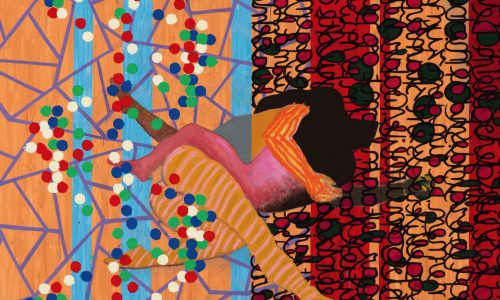
Lisa, a native of Belgium, currently resides in Milan, Italy. Her artistic efforts span across multiple disciplines and have been showcased in esteemed festivals and galleries across the globe. She holds a Master of Fine Art degree from the esteemed Royal College of Art in London. In her artistry, she delves into the complexities of the female form and the portrayal of the self. Drawing inspiration from personal experiences, her work frequently touches upon themes of human vulnerabilities and uncertainties. She weaves a dreamlike and vibrant canvas, shedding light on the facade of reality, and crafting a realm where everything is not as it seems.

www.ftn-books.com has one inviation now available.

Posted on 5 Comments

Jef Diederen: Life and Abstract Art Journey

Jef Diederen (Heerlen, 25 augustus 1920 – Amsterdam, 26 maart 2009) was a Dutch painter and graphic artist. Diederen was part of the so-called Amsterdam Limburgers. His later painting is classified as abstract art. From 1939 to 1943, he attended the Middelbare Kunstnijverheidsschool in Maastricht, where he met Pieter Defesche and Ger Lataster. He continued his education at the Rijksacademie voor Beeldende Kunsten in Amsterdam in 1943, but left a year later and returned in 1947. He participated in the group exhibition Amsterdamse schilders van Nu in 1948 and completed his studies in 1951. In Amsterdam, he met Karel Appel and Corneille as his classmates, in addition to Lataster. Until 1955, he mostly painted landscape gouaches and drawings. These are predominantly realistic landscapes from his native region of South Limburg. Afterwards, he developed himself – like Ger Lataster – in an abstract direction, although the landscape remained a great source of inspiration for him. The dimensions of his oil paintings were often idiosyncratic and therefore stood out. He also combined canvases of various sizes with each other. The art of Jef Diederen is lyrical-abstract with a friendly and gentle appearance, despite the strong colors. France has been an important source of inspiration for him. As an independent artist, he never actively sought to align himself with groups or movements. In addition to his many paintings and works on paper, he also carried out various commissions for murals and stained glass windows. He also taught at the Kunstacademie van Den Bosch.

www.ftn-books.com has many Diederen titles available

Posted on 2 Comments

Emo Verkerk: Emotional Art Revealed

How much Emo Verkerk can a human being endure? We ponder in excess and perhaps even beyond what we thought. This question can be answered because the responses to the retrospective exhibition “Graag of Niet” at the Gemeentemuseum Den Haag (opened on November 15th) have been overwhelming from both the audience, fellow artists, and the press. And as the gallery representing Emo, we are eager to capitalize on this (though it may not display proper modesty). We cordially invite you to the opening on December 13th of a small yet refined presentation featuring several works centered around Belle van Zuylen. Paintings from the powdered-wig era. Belle dressed for a ball in The Hague, caught in Scheveningen under the full moon. And somewhere a horse appears, though I have not found it yet. But Belle has. Come see for yourself and perhaps discover who lies behind the powder and the wig.

Such a retrospective exhibition stirs up much emotion and proves that Emo has long awaited this significant showcase. And now it seems as if an unknown talent has emerged from the depths of faraway Den Helder; with so much astonishment and admiration, the works are (re)discovered. Of course, this is nonsense. Those who have been following the work of this idiosyncratic image-maker for years are familiar with the scope of his talent. As with much good art, his oeuvre demands to be conquered by its viewers. And that is not always easy with such contrariness. Moving against the current suits the character of Verkerk, who cleverly takes advantage of it. Each artwork is its own universe in which it is pulled and pushed until the construction stands, only to almost fall again at the same moment. Not a hackneyed style, but an unequivocal ode to imagination and painting, where the outcome is never certain.

www.ftn-books.com has several Verkerk items for sale.