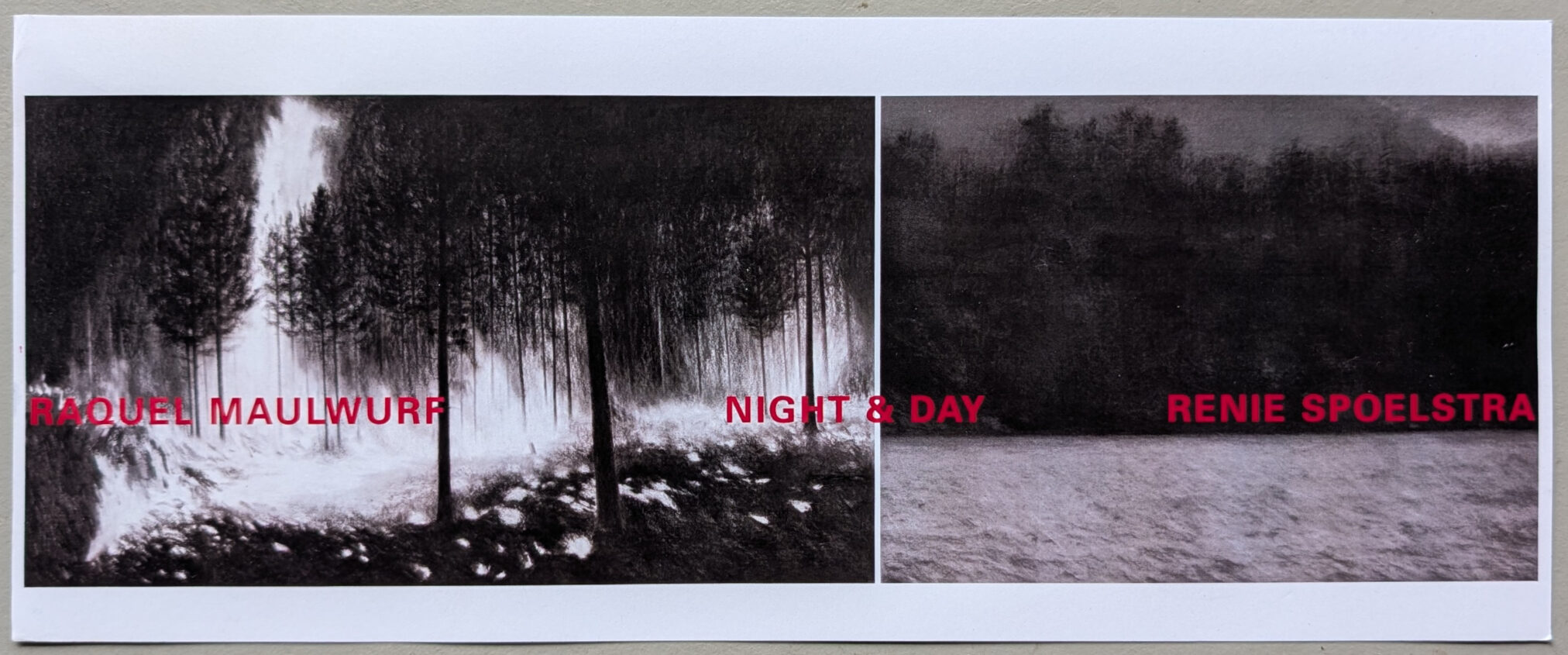
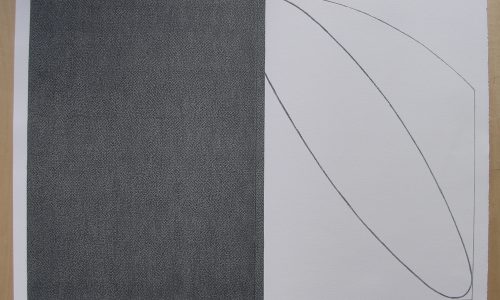
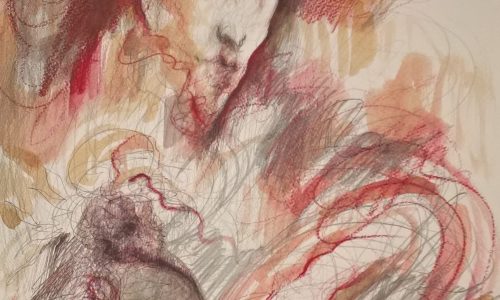
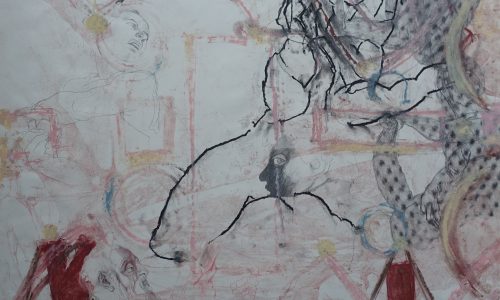
To achieve smooth surfaces, she utilizes black rectangular sponges. For strokes and variations in texture, she employs an American goose feather. In a plastic container, there is pure powdered charcoal that she applies with a ball of cotton, “to imbue shadows too intricate to be sketched.”
The process involves carefully building up layers, until a soft and velvety texture is achieved, drawing the viewer in.
At the end of each day, the artist is covered in charcoal. In her creations, no blank spaces remain untouched. “Even if I wanted to, the paper inevitably becomes smudged with everything. Ultimately, I find myself removing elements I initially included. I always begin with the absence of light, but the true essence of the drawing takes shape through erasure.”
www.ftn-books.com has the Nederlandsche Bank invitation for the exhibition which was held together with Raquel Maulwurf , now available.
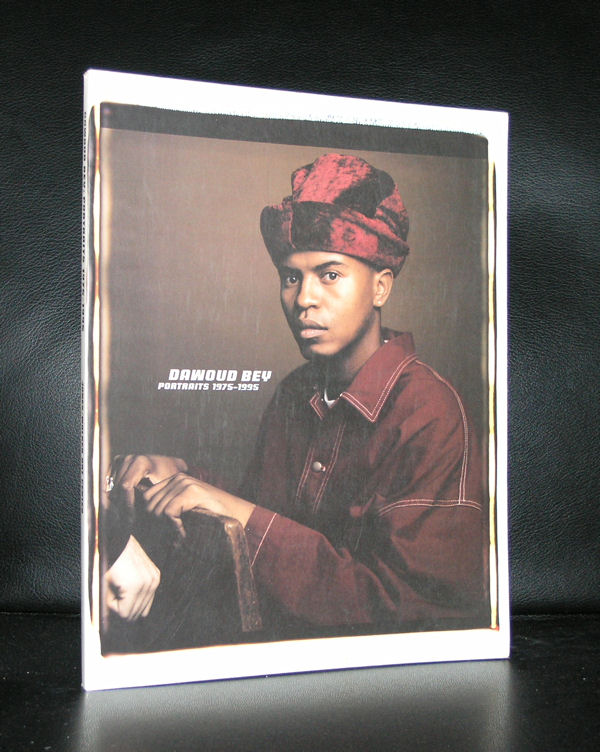
Groundbreaking American artist and MacArthur Fellow Dawoud Bey examines the Black past and present. His photographs and film installations engage the oft disappeared histories of the Black presence in America. Bey began his career as a photographer in 1975 with a series of photographs, “Harlem, U.S.A,,” that were exhibited to critical acclaim in his first one-person exhibition at the Studio Museum in Harlem in 1979. His work has since been the subject of numerous major museum and gallery exhibitions throughout the United States and Europe, with works held in numerous public collections.
Recent solo museum exhibitions include Street Portraits at the Denver Art Museum (November 2024), the first standalone museum show dedicated to this iconic series. Elegy (2023–2024), an exhibition of the artist’s history-based photographs and film works, debuted at the Virginia Museum of Fine Arts and will travel to the New Orleans Museum of Art later this year. Dawoud Bey: An American Project (2020–2022), organized by the San Francisco Museum of Modern Art and the Whitney Museum of American Art, toured to the High Museum of Art and the Museum of Fine Arts, Houston. Additionally, his work was featured in the two-person exhibition Dawoud Bey and Carrie Mae Weems: In Dialogue, organized by the Grand Rapids Art Museum, which traveled to the Seattle Art Museum, Tampa Museum of Art, and The Getty Center.
Bey’s conceptual and material evolution is, in part, a desire to find other ways of making his work within the context of his community and museum-based projects. Bey has pioneered programs that redefine how artists engage with institutions, while striving to make those spaces more accessible to the communities they serve. Class Pictures (2002-2006) expands upon a series of portraits the artist first created during a residency in 1992 at the Addison Gallery of American Art at Phillips Andover. In this series Bey collaborated with young people and institutions throughout the United States. These striking, large-scale color portraits of students depict teenagers from a range of economic, social, and ethnic backgrounds, creating a diverse collection of portraits of a generation that challenge teenage stereotypes.
Bey’s journey of growth and transformation encompasses both conceptual and tangible aspects, driven by his desire to explore alternative methods of creating within his community and museum-based endeavors. With his pioneering efforts, Bey has redefined the relationship between artists and institutions, striving to make these spaces more accessible to the diverse communities they serve. One of his notable accomplishments is the Class Pictures series (2002-2006), which builds upon a previous project of portraits created during his residency in 1992 at the Addison Gallery of American Art at Phillips Andover. In this series, Bey collaborated with young individuals and various institutions across the United States, resulting in striking and large-scale color portraits that depict teenagers from a wide range of economic, social, and ethnic backgrounds. These portraits challenge traditional stereotypes of teenagers, creating a diverse and captivating collection capturing the essence of a generation.
In a thought-provoking statement, David Hammons once remarked, “outrageously magical things happen when you mess around with a symbol.” For the last half a century, Hammons has been busy creating a vocabulary of symbols based on everyday life, and tinkering with them through the medium of prints, drawings, performances, videos, sculptures made from found objects, and paintings. The results of his explorations have been nothing short of astounding, and each one has possessed a unique kind of enchantment, achieved through the metamorphosis of commonplace objects into allegories depicting the outsider’s experience in today’s world, be it an artist, a foreigner, a madman, or most persistently, a person of color.
Born in 1943 in Springfield, Illinois, Hammons moved to Los Angeles in 1963 to pursue an education in art. He attended Los Angeles City College and the Los Angeles Trade and Technical College before enrolling in night classes at Otis Art Institute, under the guidance of renowned realist artist and activist, Charles White. Even though he completed his art education at Chouinard Art Institute in 1968, Hammons always held a deep admiration for White’s work and the way he approached his art.
While he did not choose to work in a conventional realistic style, Hammons translated White’s socially conscious, hand-drawn realism into a contemporary form of realism, using found objects and materials. Starting from the late 1960s, he began incorporating his own body into his artwork, greasing it, pressing it onto paper, and sprinkling it with pigment and graphite to create what he called “Body Prints.” These figures resembled X-rays and were adorned with intricate details of skin, hair, clothing, and body parts achieved through the process of one-to-one transfer.
Upon his relocation to New York in 1974, Hammons embarked on a lifelong journey of crafting sculptures from the rich remnants of urban African American life. These included hair collected from barbershop floors, chicken bones, bottle caps, and empty liquor bottles. His public installations, like Higher Goals (1983; 1986) – a collection of towering basketball hoops adorned with metal bottle caps cleverly shaped to resemble cowrie shells, and In the Hood (1993) – a small sculpture made from a hood cut from a used sweatshirt and mounted on the wall like an African mask, have become iconic pieces of American Conceptual art. However, beyond their artistic value, they serve as poignant critiques of the stereotypes and struggles associated with growing up as an African American in the United States. These range from the often unattainable dream of becoming a sports hero, to the constant threat faced when simply wearing everyday attire perceived as threatening.
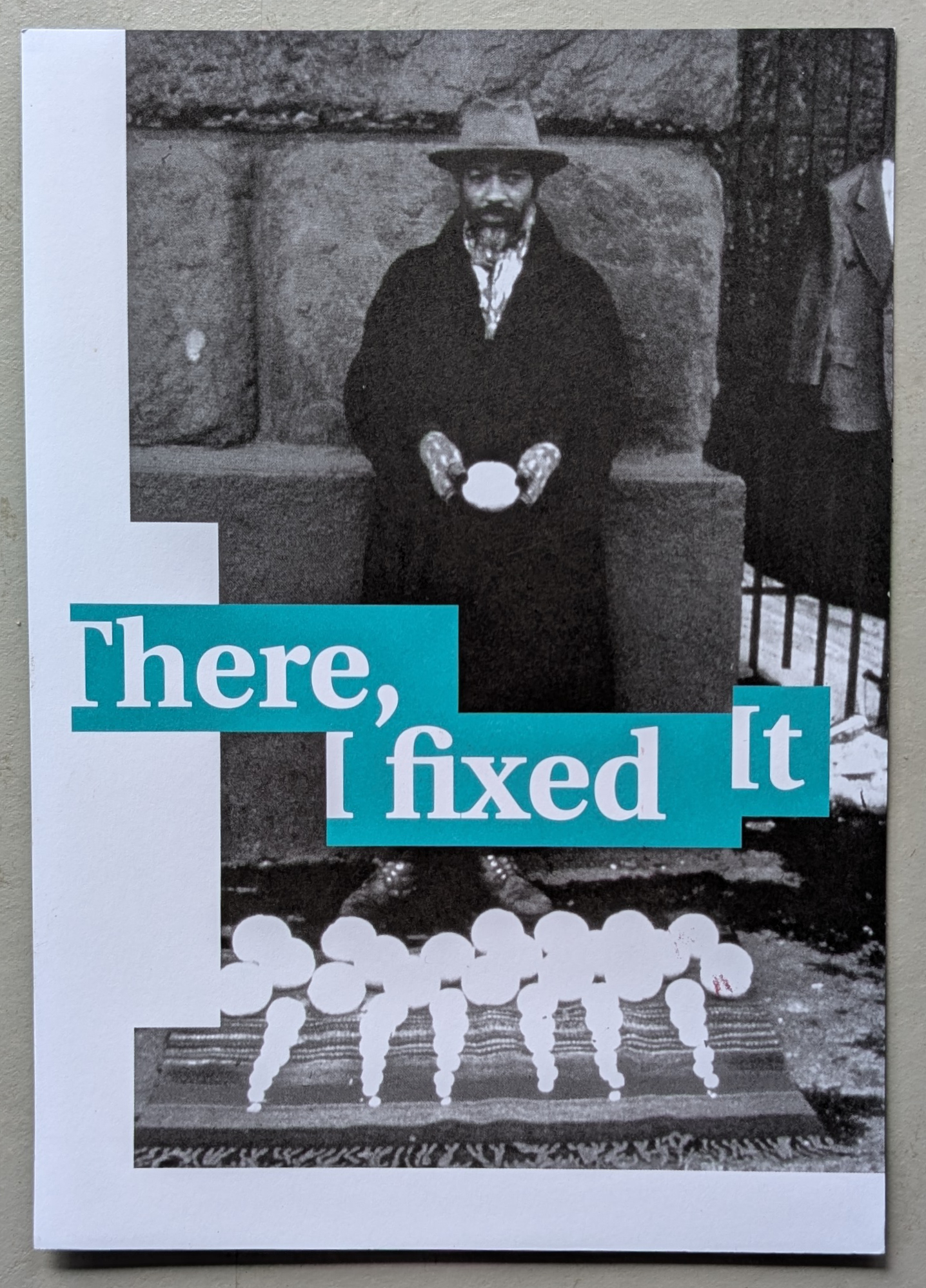
From his groundbreaking act of selling snowballs of various sizes on a New York City sidewalk in Bliz-aard Ball Sale (1983), to his recent paintings, where the surface is concealed by tarpaulins, burlap, or old furniture, such as Untitled, Hammons’ work has sparked an ongoing discourse surrounding the role of the artist and the significance of art outside the luxurious confines of a museum or gallery. Resistant to exhibiting his own work, Hammons maintains his position as a cultural outlier, while continuously creating pieces that solidify his status as one of the most relevant and influential contemporary American artists.
www.ftn-books.com has the THRE , I FIXED IT invitation noe available. The photograph is made by Dawoud Bey
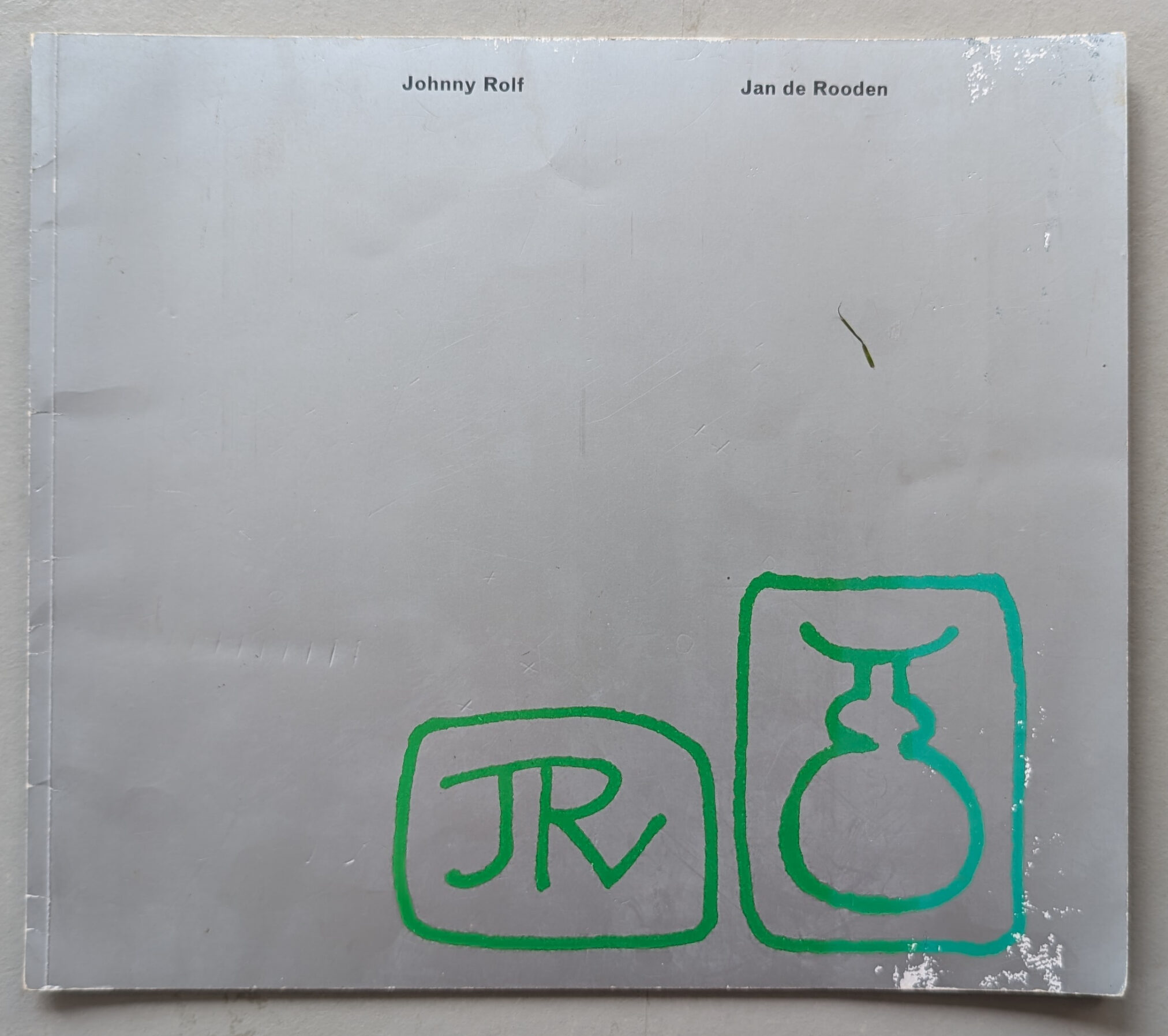
Johnny Rolf, born in 1936, is a Dutch ceramicist, draughtsperson, and sculptor. Rolf initially worked as a secretary, but after marrying fellow artist Jan de Rooden, she found a newfound interest in ceramics and established a small studio in her parents’ home. Rolf quickly proved that she was unafraid to explore new territories in the world of ceramics. Her works featured unique forms, setting her apart from her colleagues. Guided by her imagination and emotions, Rolf’s works were heavily influenced by the numerous travels she embarked on with her husband. These travels also exposed her to various pottery traditions from around the world. Rolf works with a variety of clay, often incorporating coarse or fine chamotte. Additionally, she employs subtle shades of engobes for the decoration of her pieces. While her earlier works focused on pottery, Rolf’s focus gradually shifted towards sculptures and other three-dimensional objects. In addition to ceramics, Johnny Rolf has been creating gouaches since 1971.
www.ftn-books.com has some publications on Rolf & de Rooden available.
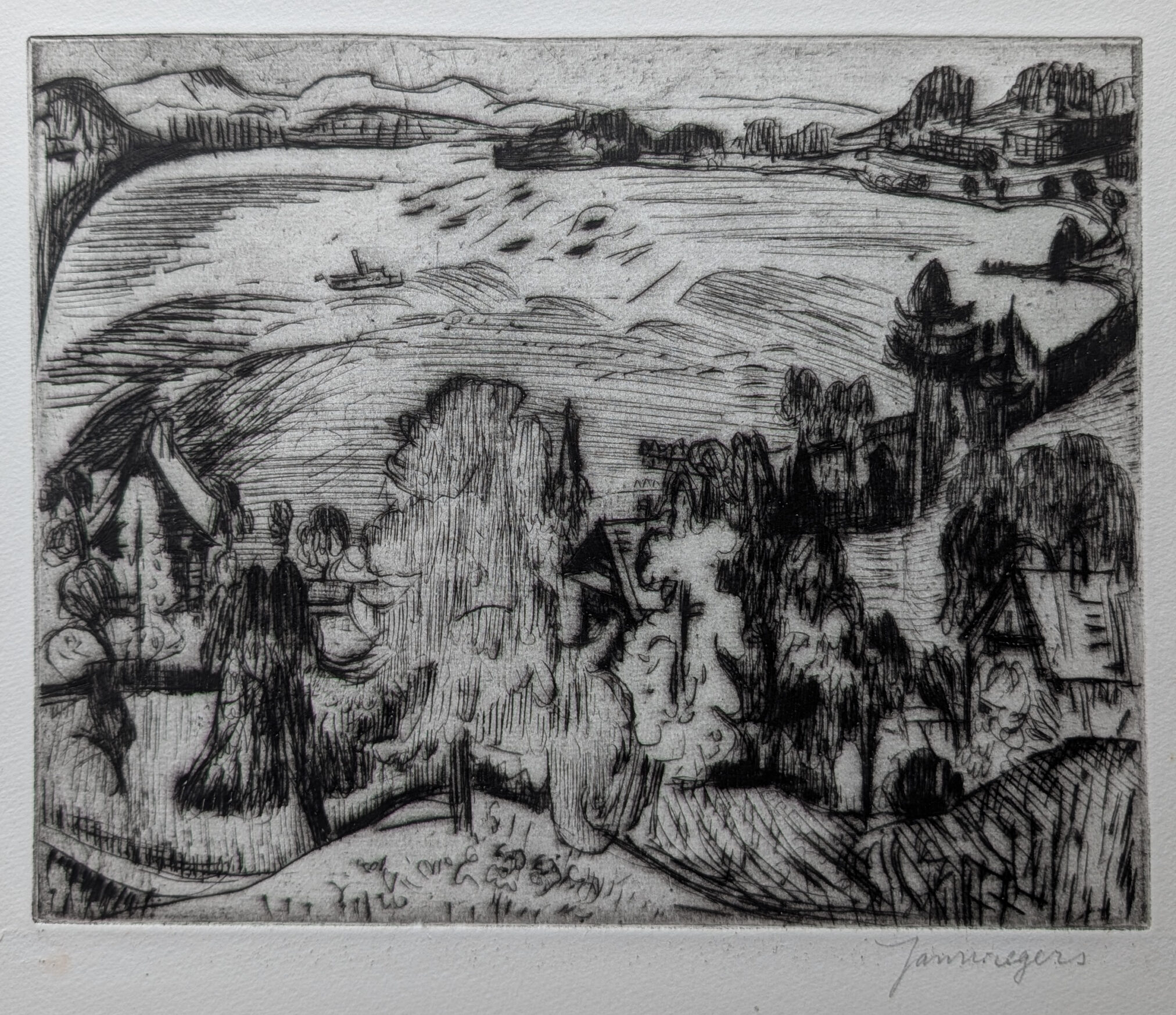
At the young age of thirteen, Jan Wiegers was enrolled as a student in the three-year introductory course at Minerva. Due to health reasons, he had to cancel his sculpting lessons and shifted his focus to painting. After completing his studies, he traveled to Germany in 1911 to work and in 1912, he attended the Sonderbund exhibition in Cologne, a prominent international display. He returned to the Netherlands in 1914 and continued his education at the Minerva Academy. He also took classes at academies in Rotterdam and The Hague. In 1918, Wiegers was one of the founders of De Ploeg.
In 1922, Wiegers received invitations to exhibit his work in Paris and Antwerp. In 1923, he became the chairman of De Ploeg and later served as vice secretary. He was highly active in the organization. In 1930, he resigned for a year due to a conflict. Together with Van der Zee, he proposed the international exhibition in Groningen in 1933 and played a crucial role as the secretary in preparations. He also exhibited his work in Budapest in 1933. In 1934, Wiegers moved to Amsterdam, but he remained a member of De Ploeg. After World War II, he participated in De Ploeg exhibitions until 1948.
Even before 1920, Wiegers experimented with various modern styles. It is likely that the seed of Kirchner fell on a plowed field. At his first Ploeg exhibition after returning to the Netherlands, Wiegers made a large submission and amazed the critics. Under his influence, the Ploeg members developed a collective style that lasted until around 1927. According to Hofsteenge, this period is generally considered the most significant for De Ploeg.
www.ftnbooks.com has several Wiegers originals and publications available.
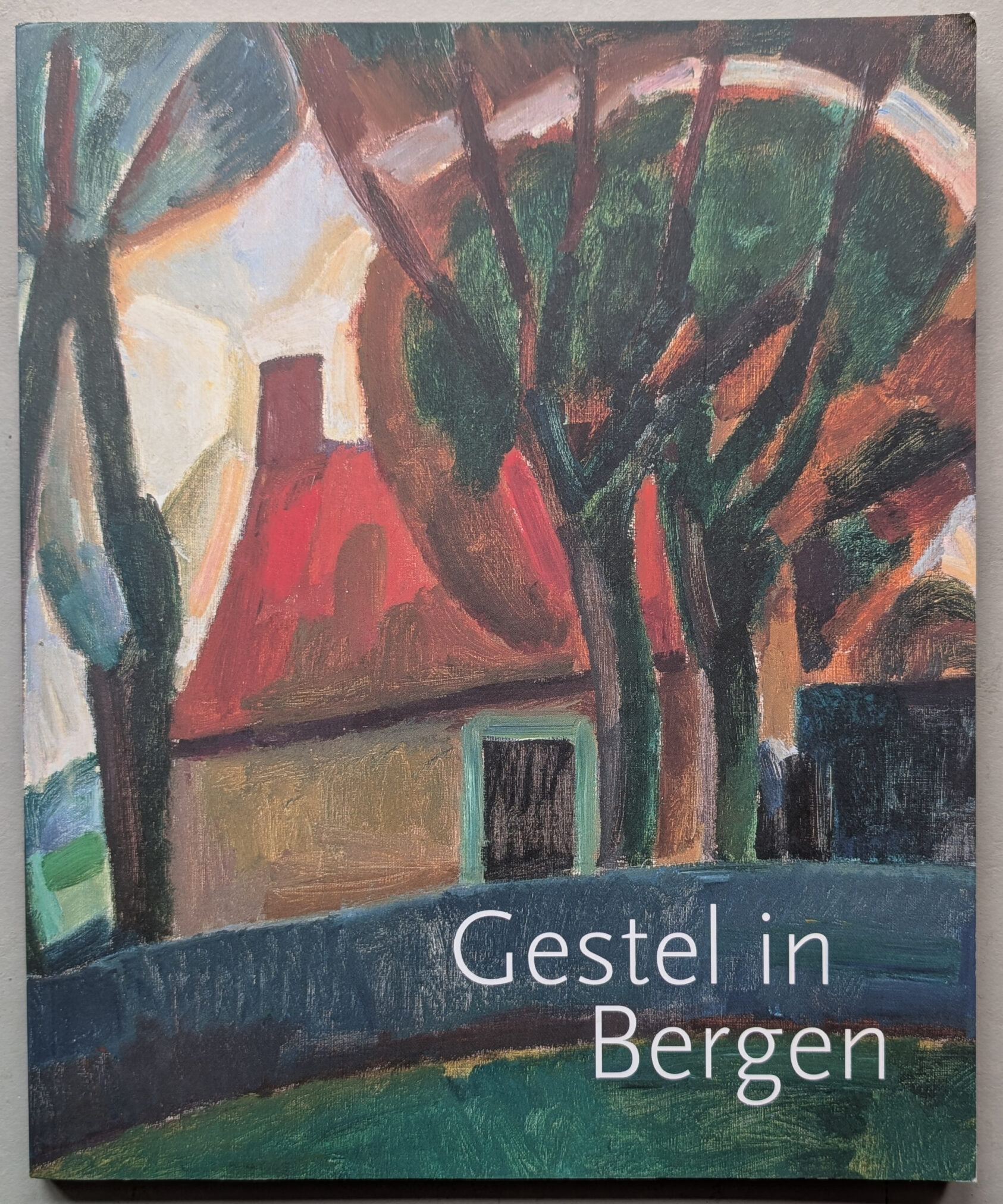
Several avant-garde artists departed from Amsterdam to Bergen at the beginning of the previous century, enticed by the magical sea light and each other’s company. Among them were painters such as Arnout Colnot, Dirk Filarski, Leo Gestel, and Matthieu Wiegman. While in Amsterdam, the studio of Leo Gestel, the famous Jan Steenzolder, served as a meeting point for artists, in Bergen, the home and later the Kunstzaal of collector and art patron Piet Boendermaker (1877 – 1947) became a significant hotspot. That same Kunstzaal would later become the studio of multitalented artist Lucebert: the Lucebert House, now an artist-in-residence. The studio home of Charley Toorop, De Vlerken, was also an important meeting place for artists; her evenings with friends were beautifully captured by her daughter-in-law and photographer Eva Besnyö. Her son, Edgar Fernhout, also chose to live in De Vlerken after the passing of his mother, drawn to the captivating nature and light in Bergen.
the book on Gestel his presence in bergen is now available at www.ftn-books.com
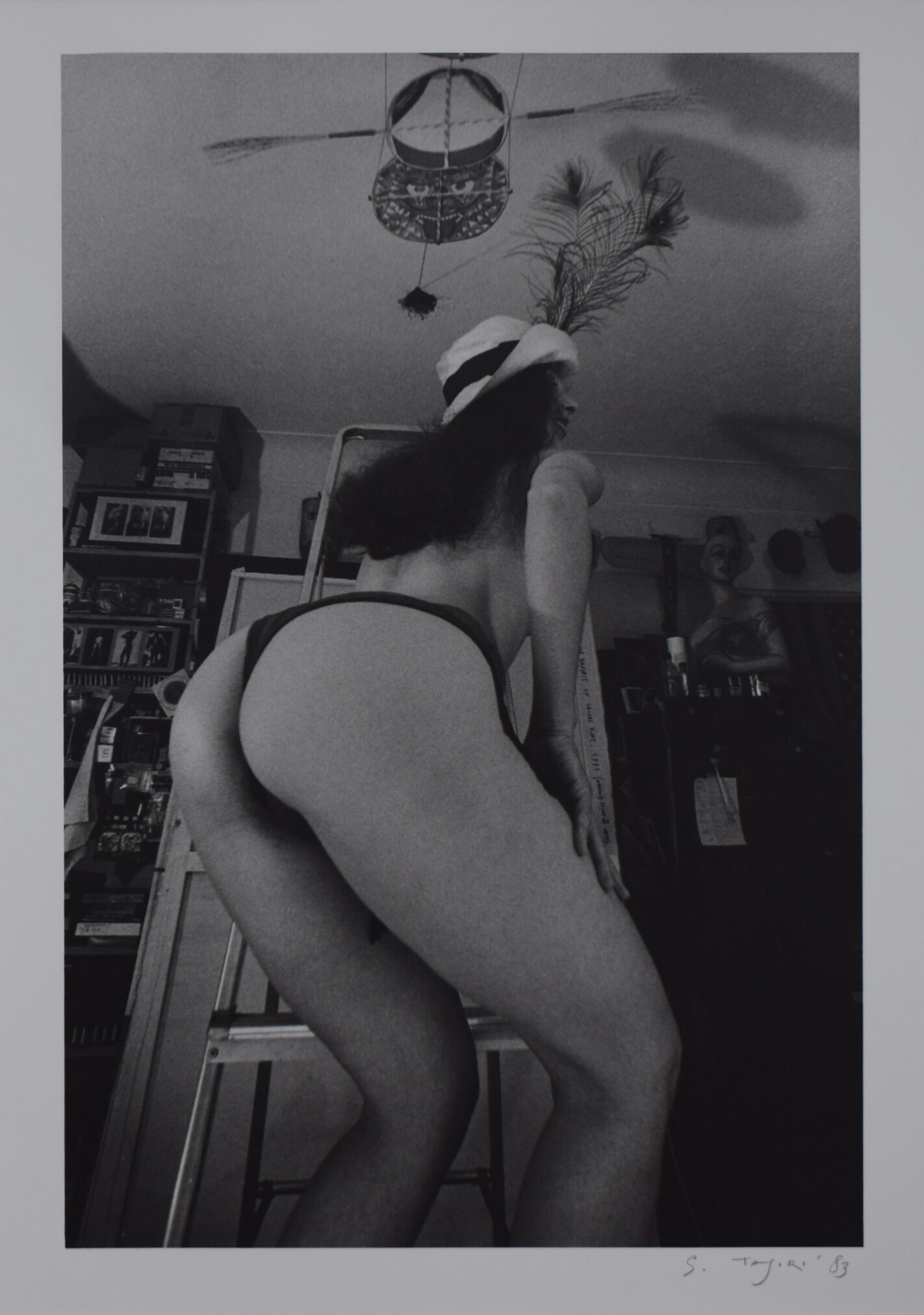
Shinkichi Tajiri was born in Los Angeles on 7 December 1923, the son of Japanese parents. He was primarily a sculptor, but also delved into photography, creating award-winning films, videos, and panoramic photos. His life and work were a fusion of Asian, American, and European influences.
Following World War II, he studied at the Art Institute of Chicago from 1947-1948 before moving to Paris. There, he trained with the sculptor Zadkine and later with the painter Léger. Tajiri was one of the first artists to embrace junk sculpture, which gained him recognition amongst the Dutch CoBrA artists living in Paris. He was invited to participate in the inaugural and second International Exhibition of Experimental Art (CoBrA) at the Stedelijk Museum, Amsterdam in 1949 and the Museé des Beaux Arts, Liège in 1951, respectively.
In 1956, Tajiri settled in Amsterdam and in 1962, he and his wife Ferdi and their two daughters moved to Kasteel Scheres in Baarlo near Venlo.
In the Netherlands, Tajiri was celebrated for his artistic versatility. He represented the country at Documenta II (1959), Documenta III (1964), Documenta IV (1968), and the 31st Venice Biennale (1962).
In 1969, Tajiri was named a professor at the Hochschule der Künste in Berlin at the request of its art students. He taught there until 1989.
During his time in Berlin, Tajiri experimented with a variety of mediums, including his own off-set printing press (X-Press), almost forgotten photographic techniques like the Daguerreotype, and computer-generated drawings on the Commodore Amiga.
Following Tajiri’s passing, the renewed Rijksmuseum (2013), Amsterdam acquired the sculpture Made in USA and Ferdi’s Wombtomb. These pieces are now on permanent display in the museum’s 20th-century collection.
www.ftnart.com has now the CHRISTINA photo by Tajiri for sale.
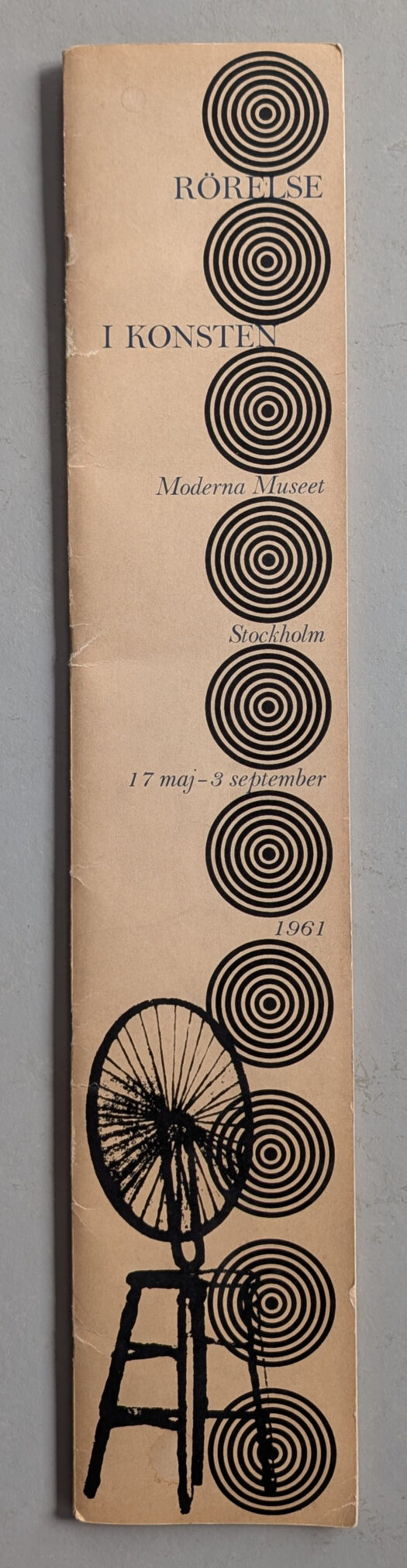
In its 64th year, we commemorate the groundbreaking Rörelse i konsten (Movement in art) exhibition, first showcased at the Stedelijk Museum in Amsterdam and later at Moderna Museet and Louisiana, near Copenhagen. To honor this milestone, we have curated a small yet compelling display of artworks, documentation materials, and related texts from the exhibition.
At its core, Rörelse i konsten was defined by performances and happenings, which formed the central pillar of the exhibition. On June 18, as part of the conference “An Experimental Conference on Art and Science to Challenge the Mid-Summer Sun,” Otto Piene will recreate the monumental performance piece, “Proliferation of the Sun.”
The driving force behind the exhibition in 1961 was Pontus Hultén, Director of Moderna Museet, who collaborated closely with Daniel Spoerri and Carlo Derkert. Their vision was to showcase movement as a revolutionary force in 20th-century art, tracing its history from futurism to contemporary artists pioneering new art forms. Hultén believed that kinetic art, with its temporal aspect, represented a complete departure from the traditional, sacrosanct values of art, summed up as “definitive beauty and eternal order.” As such, motion became a powerful metaphor for ultimate freedom and anarchy.
The arrival of Rörelse i konsten in the Swedish art world and media sparked intense debate and discussion. While some critics praised it with enthusiasm, others were quick to make cynical remarks, joking that the museum had opened a branch for Gröna Lund amusement park. A few artists even publicly denounced the exhibition, with young Öyvind Fahlström voicing his admiration, while Sven Erixson expressed fury, leading to a rift between him and his once-close friend, Bror Hjorth, who passionately defended the exhibition. Regardless, one thing was undeniable – Rörelse i konsten left a lasting imprint, unlike anything before it.
More depressing is the fact that it was a very male affair. Of the exhibition’s 233 works by 83 artists, only eight were made by women. Cecilia Widenheim writes about this in “Framtiden som vi minns den” (The future as we remember it), published in the catalogue Jean Tinguely, The Future As We Remember It (Henie Onstad Art Centre 2009) and asks rhetorically “Is it the case that only male artists, with the exception of Niki de Saint Phalle, are attracted by the theme of motion? Or was the field quite simply so dominated by male theorists, technicians, critics and artists that women artists were not allowed in?”
At any rate, the idea of movement came to be central to the Pontus Hultén’s entire working life. Already before Rörelse i konsten, he was involved in the Le Mouvement exhibition at Gallerie Denise René in Paris, and, for instance, published texts about Jean Tinguely, who he also staged an exhibition with at Galerie Samlaren in Stockholm in 1955. His subsequent history is full of related projects and, in 1968, he mounted the historically encyclopaedic exhibition The Machine. As seen at the end of the mechanical age at MoMA in New York. In it he went more deeply into humankind’s relationship with technology, emphasizing the artist’s role – in an age of mass production, consumption, and depletion of the world’s resources – in taking back the initiative from the machine. The mechanically mobile Study Gallery set up at Moderna Museet when Hultén donated his collection in 2005 can be seen as a logical endpoint to his work.
Rörelse i konsten holds immense significance for the annals of art history and the collection at Moderna Museet. Not only do the showcased works reside here, but several others have also found their place in other corners of the museum. One such example is Alexander Calder’s imposing outdoor creation, The Four Elements, and the museum’s renowned replica of Marcel Duchamp’s The Large Glass, displayed in a surrealistic setting a few halls away alongside Man Ray’s dangling mobile. These pieces of art are not mere trophies put on display; rather, their concepts and ideas deserve contemplation in the context of our modern world. Rörelse i konsten elicits musings about the potential of art, the role and freedom of the artist, the criticisms of consumption and civilization, the efficacy of cooperation and collective work, and more. Further recommended reading includes Cecilia Widenheim’s writing, the contributions of Hans Hayden and Marianne Hultman in Moderna Museet’s The History Book, and the book on E.A.T and Billy Klüver, Teknologi för livet. Om Experiments in Art and Technology.
The commemorative display will continue to be on exhibit in the collection until November, after which the limelight will shift to the 50-year-old Rörelse i konsten at The National Museum of Science and Technology, where it will be juxtaposed with the work of another notable figure, Christopher Polhem. This encounter will delve into the relationship between humankind and mechanics, from absolute devotion to profound pessimism.
www.ftn-books.com is fortunate to have both publications ( STOCKHOLM and AMSTERDAM ) available.
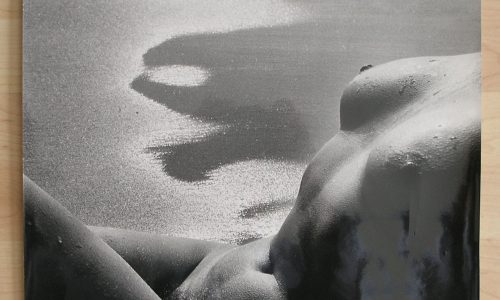
Zwartjes’ photography played a crucial role in his artistic process, manifesting itself in his profound films. These photographs served as studies, a byproduct of cinematic moments, and at times, stand-alone depictions. The artist’s multifaceted approach aimed at satisfying his relentless need to portray his distinct interpretation of the world. As a photographer, Zwartjes stands shoulder to shoulder with pioneering individuals like Gerard Fieret and Ed van der Elsken, renowned for elevating Dutch photography to the realm of fine art. Embodying idiosyncrasies that yielded remarkable results, Zwartjes paved the way for future generations of artists like Arno Nollen, Hester Scheurwater, and Paul Kooiker, whose exploration of the human psyche often involves capturing images of the female form.
In 1968, Zwartjes became one of the trailblazers in the Dutch art scene, utilizing film as a medium. Initially, he used it to document his performances, but eventually, it became an independent form of expression. He single-handedly managed everything, from the camera work and sound to editing and film development. Working with an editing technique that involved manipulating the camera to determine the sequence of shots, the artist expertly crafted the narrative of his films. His actresses, including the likes of Willeke van Ammelrooy, Moniek Toebosch, and his wife Trix Zwartjes, are often portrayed as being caught in a web of sexually-charged power dynamics. Hysteria, psychosis, and cruelty act as recurring but subtle themes in his work, merely serving as the impetus for the stunning images he produces.
Frans Zwartjes paid little heed to traditional film-making conventions such as linear storytelling or coherent plotlines. Yet, each of his scenes alludes to the possibility of a narrative. His cinematic universe is a bizarre, yet undeniably convincing one. Form takes precedence over substance, evoking a surreal effect that is both captivating and disorienting. Fascinated by the powerful, non-verbal potential of images, Zwartjes’ films leave a lasting impact on all those who encounter them.
The art of photography has taken Eddy Posthuma de Boer to over 85 countries: he has been witness to historical events and come face to face with the greats of the world. Throughout his career, he has predominantly been on the road for his work as a photojournalist. Alongside his journalistic photography, he has also always produced personal work, which he has compiled into dozens of photo books.
The humanist photography movement, which emerged in Europe shortly after World War II, has had a significant impact on Posthuma de Boer’s work. This socially documentary movement was characterized by capturing the human experience, documenting the traditions and customs that connect us as humans, and having a sincere belief in societal progress. Eva Besnyö (1910-2003) – a major source of inspiration and a ‘photography mother’ to Postuma de Boer – is considered part of this movement, along with Henri Cartier-Bresson (1908-2004) and Robert Doisneau (1912-1994).
But Eddy Posthuma de Boer also displays another side of the post-war period: the rise of youth culture with jazz and rock ‘n’ roll music, and the widespread social unrest of the late 1960s and 1970s. In this regard, the photographer aligns himself with illustrious contemporaries and fellow professionals such as Ed van der Elsken (1925-1990) and Johan van der Keuken (1938-2001): the generation of existentialism that placed their individual view of the world at the heart of their work and no longer believed in the myth of progress. As such, Posthuma de Boer’s optimistic worldview does have a raw edge to it.
www.ftn-books.com has several publications on Posthuma de Boer available.
Artist/ Author: Oliver Boberg
Title : Memorial
Publisher: Oliver Boberg
Measurements: Frame measures 51 x 42 cm. original C print is 35 x 25 cm.
Condition: mint
signed by Oliver Boberg in pen and numbered 14/20 from an edition of 20