Posted on 6 Comments

Exploring Lode Laperre’s Unique Artistic Vision

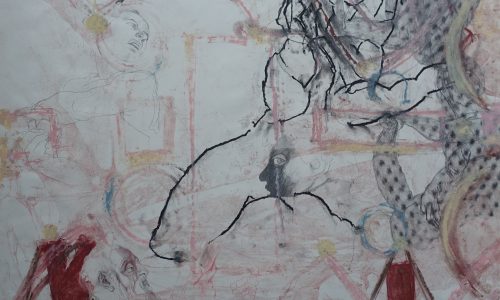
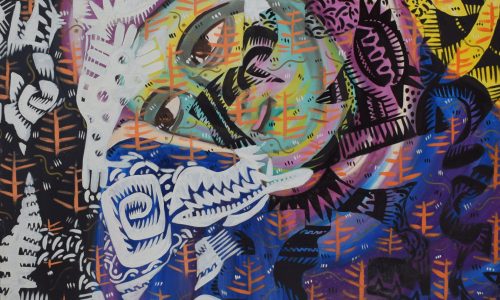
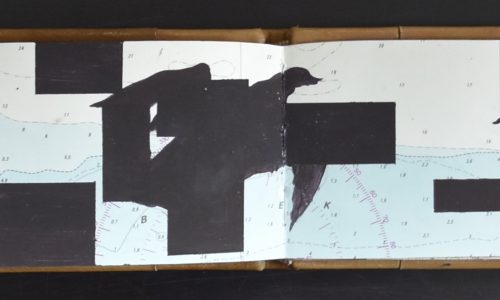
After completing his studies in plastic arts in the late 80s at the Saint-Thomas Institute in Brussels as a laureate, Lode Laperre developed his own distinctive visual language. This was a gradual process, resulting in a unique style that remains recognizable despite the differences in time. Laperre explores the potential of acrylic paint on canvas in his own way, also playing with the drying process to achieve various textures.

“The fusion of thought and action occurs on the stage of the canvas for Lode Laperre, with acrylic paint as the language. Porous, lyrical abstract images are formed, in which movement and counter-movement, spots, splatters, and drippings always lead to a harmonious and surprising visual connection.Through the principles of induction and deduction – erasing, scratching, cutting, covering, and adding – the work is built up layer by layer, steadily.”

During the period of 1990-1995, Lode Laperre’s young work received several awards. This includes the National Prize for Painting at Kulturama as a laureate (1990) and a first remarkable solo exhibition in Tournai, 1992. The challenges in painting have since led to various exhibitions, both individually and as a group.

Since the late 90s, a distinct oriental-occidental hybrid visual language has emerged. This influence came from various travels in Asia and resulted in exhibitions in Taiwan and Thailand.

In addition to his paintings, Lode Laperre’s artistic scope also extends to drawings and sculptural work. Through the “Coprolites” series, excretions from painting sessions are reincarnated as painted plastics. These fossilized waste products – whether presented as installations or not – demonstrate the artist’s love for exploration. This is also evident in his ink wash drawings on paper, which fall within the same artistic pursuit.

www.ftn-books.com has several Laperre titles now available.

Posted on 2 Comments

LGBTQI+ Arts: Becoming Christine Unveiled

Becoming Christine stands as a pivotal showcase of the enigmatic complexity of Christine Beynon, alongside visual artist Amanda Dunsmore. This sublime exhibit comprises of framed ‘selfie’s’, an immersive narrated audio installation, and a grandiose filmed video portrait.

The Galway Arts Centre was honored to host Christine Beynon in 2017, captured in stunning photographs by the talented Paul McCarthy.

In 2012, Amanda Dunsmore was commissioned to collaborate with esteemed members of the Galway County LGBTQI+ community in Ireland. This memorable endeavor gave rise to the deep bond between Dunsmore and Christine, ultimately leading to their artistic collaboration and subsequent nationwide exhibition tour. By means of Dunsmore’s groundbreaking social art practice and the compelling narration of Christine’s life story, Becoming Christine takes great strides in representing the trans community and contributing to the larger societal narrative of Ireland’s LGBTQI+ community.

The illustrious exhibition of Becoming Christine, showcasing the fusion of portraiture and artistry, pays homage not only to an individual’s journey of self-discovery, but also reflects the momentous socio-political transformations that have transpired in Ireland and England over the course of the last six decades. Christine’s vulnerability and bravery in sharing her personal journey is a vital contribution to the ever-evolving inclusive culture of Ireland.

Commissioned by Galway County Council’s Percent for Art initiative in 2012, with generous support from Arts Council Ireland through a Major Project Award in 2016, this landmark exhibition of Becoming Christine continues to inspire and provoke thought.

www.ftn-books.com has now the publication on this very special exhibition available.

Posted on 10 Comments

Mastering Color and Form: Trevor Sutton’s Art Techniques

Trevor Sutton, a resident and laborer in the bustling city of London, pursued the realm of art in the revolutionary 1960’s, successfully attaining a post-graduate diploma in 1972. Despite the ever-changing landscape of art, Sutton remained firmly rooted in non-figurative expression, both in his paintings and prints. Undoubtedly, his talents have taken him to many corners of the world, including recent residencies in France and Ireland. While his artwork has been exhibited globally, his strongest connections exterior to the UK lie with Japan, Austria, Denmark, and The Netherlands.

Upon entering Sutton’s studio, one will immediately notice an alluring systematic beauty and meticulous order that permeates the working environment. This same aesthetic extends to his artworks, with the restraints of a ritualistic and organized process intertwined with the sensuality of oil paint. In 2007, Sutton eloquently described a moment in his studio:

“As the light fades, minimalist harmonies fill the air. Floating white vapors, a pink and silver-grey horizon. The sound of the breeze. These moments become embedded in my paintings: the sound of perception, the essence of thought, painting as a snapshot of time.”

Sutton’s preferred canvas of choice is board, a deviation from his earlier works on canvas in the 1970’s. Throughout his illustrious career, he has also taken a keen interest in “shaped paintings,” often featuring circular formats in addition to the more traditional rectangle or square. In the 1980’s, Sutton embarked on a journey of multi-part units of painted shapes, the most notable of which were first exhibited at the renowned Lisson Gallery in 1981.

As the 90’s rolled in, Sutton’s paintings began to showcase remote and evocative abstract spaces, inviting viewers to immerse themselves in their own musings. These intangible worlds were captured in layers of semi-transparent oil-based glazes, each revealing a visual history of color and brushstrokes. This painstaking process adds a physical and atmospheric quality to the works, without explicitly providing specific pictorial or geographical details.

Beginning in 2008, the artistry of his canvases evolved, incorporating hand-collaged elements alongside direct manipulation of the surface. Alongside this, the grid resurfaced as a crucial structural component in his work. However, in his latest releases, he has dispensed with collage and returned to painting directly on the surface. These new pieces are fueled by a seemingly illogical interpretation of existence, one that is eventually restructured by the grid’s hierarchy. While the paintings retain a clear history of movement and marking, their physicality is governed and contained by the grid. His color choices are instinctive and responsive, encouraging fluid patterns and rhythms that evoke a kind of visual symphony.

www.ftn-books.com has the Irish paintings publication now available.

Posted on 26 Comments

Discover Tim’s Unique Artistic Journey

Tim has fabricated a diverse professional practice that is rooted in the overlapping realms of artistry, science, and literature.

Leicester Polytechnic was Tim’s alma mater, where he studied painting, and Chelsea College of Art and Design, where he focused on printmaking and obtained an MA in 1992. In 1998, he completed his PhD at Chelsea and was the recipient of an Arts and Humanities Research Council Fellowship from 2004 to 2008. His creations have been displayed extensively in public spaces, such as the Science Museum in London; Centre d’Art Contemporain Genève; Fundação Calouste Gulbenkian in Lisbon; and PS1 in New York. He has also showcased his work at Galerie Olivier Houg in Lyon; Houldsworth in London; Rubicon Gallery in Dublin; and Briggs Robinson in New York. Additionally, his pieces can be found in various private and public collections.

www.ftn-books.com has the ENDLESSNESS book now available. ( ed. of only 350 cps)

Posted on 11 Comments

Jack Vettriano: The Scottish Painter Who Broke Auction Records

Vettriano, originally known as Jack Hoggan, was born on 17 November 1951 in Methil, Fife. Despite initially pursuing a career in mining engineering after leaving school at 15, his passion for painting was ignited when his girlfriend gifted him a box of watercolours for his 21st birthday.

As a self-taught artist, Vettriano honed his skills by emulating the works of old masters, impressionists, surrealists, and a myriad of Scottish artists. He found inspiration at Kirkcaldy Galleries, where he dedicatedly studied paintings by renowned artists like Samuel Peploe and William McTaggart, often wary of arousing suspicion from the gallery staff.

However, it wasn’t until 1998 when Vettriano gained recognition with his submission of two paintings to the Royal Scottish Academy’s annual show, both of which were sold on the first day. This success encouraged him to pursue a full-time career as an artist.

Over the years, Vettriano’s paintings have garnered international acclaim, leading to exhibitions in cities like Edinburgh, London, Hong Kong, Johannesburg, and New York. Among his most celebrated works is the 1992 painting “The Singing Butler,” which depicts an elegant couple dancing on a windy beach accompanied by their butler and maid.

In 2004, this iconic painting was sold at auction for a record-breaking £744,800, making it the highest-selling Scottish painting of its time and the most expensive painting ever sold in Scotland.

www.ftn-books.com has now the Fallen Angels book available.

Posted on 2 Comments

Schjerfbeck: A Pioneer of Finnish Impressionism

At the age of eleven, Schjerfbeck begins her artistic journey at the Finnish Art Society’s drawing school. However, her ambitions to dedicate her life to art receive little financial or emotional support from her family due to her gender. Despite this, she manages to convince one of her teachers to financially back her, giving her the opportunity to attend a private academy in 1877 where she learns French oil painting techniques. Even at a young age, Schjerfbeck achieves success and recognition. A study trip to Paris allows her to discover the works of Impressionist artists such as Eduard Manet and Berthe Morisot. She also travels to Florence, St. Petersburg, Vienna, and Great Britain.

Recognition comes for the 27-year-old artist at the Exposition universelle in Paris in 1889, where she receives a bronze medal for her painting “Le Convalescent” that exudes Impressionist influences. At this point, Schjerfbeck’s own artistic identity is already evident. It is more internationally-oriented than that of fellow Finnish artist Akseli Gallen-Kallela, who focuses on portraying typical Finnish scenes. Struggling with health problems, Schjerfbeck is forced to permanently return to Finland at the age of 28, where she moves in with her mother in Hyvinkää, an isolated district. Domestic scenes with women and children reading or embroidering take center stage during this period. By eliminating more and more details from her paintings, she reaches a greater depth and approaches an abstraction that is ahead of her time. After working in relative obscurity, Schjerfbeck experiences her second breakthrough in 1917 with her first solo exhibition at the art dealer Gösta Stenman in Helsinki.

Throughout her entire career, Schjerfbeck has created self-portraits. As she ages, she becomes more isolated; the only model readily available is herself. Her later portraits reveal a confronting self-analysis. In the period 1939 – 1945, the final years of her life, she creates her most impressive series of portraits, in which she candidly captures her own physical decline. Her facial features become increasingly hollowed out until only a mere shadow of a skull remains. This uncompromising portrait series holds a particularly mesmerizing quality.

www.ftn-books.com has finally acquired the catalog which was published with the Gemeentemuseum Den Haag exhibition and it is now available.

Posted on 2 Comments

Exploring Steinlen’s Influence on Montmartre’s Avant-Garde

Théophile-Alexandre Steinlen (1859-1923) Poster for The Black Cat’s Tour (1896) Steinlen abandoned his studies in philosophy in his hometown of Lausanne to work as a textile designer in Mulhouse. The socially conscious, gentle artist moved to Paris in 1881 with his wife, settling in the hilltop district of Montmartre, which was on the cusp of becoming the epicenter of the French avant-garde. There, he befriended painter Adolphe Willette, who introduced him to the artistic circles surrounding Le Chat Noir cabaret. In the early 1890s, Steinlen continued to paint traditional subjects such as landscapes, floral still lifes, and nudes, which were first exhibited at the Salon des Indépendants. His later work showed increasing characteristics of social realism. Steinlen became a sought-after illustrator for legendary magazines like Le Rire and Gil Bas. Some of his illustrations were published under pseudonyms to avoid political controversy. In 1881, Rudolphe Salis opened the Le Chat Noir cabaret on Boulevard Rochechouart (later moving to Rue de Laval). It quickly became a legendary haven for the performing arts, with Steinlen at its center. He designed sets, contributed to popular shadow plays, and most notably, created the famous poster that was plastered all over Paris. The cat in red and black, the colors of anarchism, became the symbol of the Montmartre art district. The text “Montjoie Montmartre” (Montmartre my joy) served as an aureole behind its mystical head. The law on freedom of the press and advances in printing technology allowed Salis to also publish a magazine. The publication, Le Chat Noir, was a huge success, even beyond French borders, which reflected positively on Steinlen as its main illustrator. The cat always played a major role in Steinlen’s work. He, like most of his colleagues, had a fondness for the feral cats on the rooftops of Montmartre and took in many, much to the chagrin of his wife.

www.ftn-books.com has several titles on Steinlen available.

Posted on 2 Comments

Terry Frost: A Pioneer of British Abstract Art

Terry Frost served as a vanguard in the advancement of British Abstract art during the mid-20th century. His intricate nested forms and vibrant palettes of tonal blues, lavenders, oranges, and pinks cemented his noteworthy position in the country’s abstract movement. Frost’s journey into painting began as a prisoner of war, alongside the artist Adrian Heath, who instilled a passion for art within him. His pursuit of abstraction blossomed under the guidance of esteemed artists Victor Pasmore, Ben Nicholson, and William Coldstream while attending the Camberwell College of Arts. He further refined his techniques while showcasing his work with the esteemed St. Ives Society of Artists. Frost’s aesthetic, influenced by the coastal landscapes of his home in Cornwall, harmoniously blends sharp and defined geometric planes with fluid and expressive brushstrokes, along with embellished pointillism. His artworks gained widespread recognition during his lifetime, with exhibitions at renowned institutions such as the Hermitage Museum, the ICA London, the Brooklyn Museum, the Tate St. Ives, and the British Council in New York.

www.ftn-books.com hast he Frost leporello from 1994 available.

Posted on 7 Comments

The Transformative Power of Véronique Bourgoin’s Art

Residing in Montreuil, a suburb of Paris, Véronique Bourgoin’s artistic repertoire encompasses a diverse range of mediums, including painting, ceramics, photography, installations, videos, performance, and artist books. Within the myriad of her creations, she delves into the intricacies and complexities of constructing “contemporary paradises.” Her fascination lies in exploring the physical, chemical, and psychological “baths of elements” that ignite the transformative power of perception and creativity. In her artistic journey, she shines a spotlight on the captivating and often dramatic effects that seemingly mundane contexts can evoke.

www.ftn-books.com has the WILLIE OU PAS WILLIE book now available.

Posted on 13 Comments

Exploring Anze’s Artistic Take on Contemporary Photography

Anze’s repertoire encompasses both the artistic and technological dimensions that define contemporary photography. On the surface, the images exude a captivating visual charm that boldly embraces the digital medium, brimming with vibrant hues and textures. But beyond the lens lies a deeper conceptual framework that guides the entire body of work. The presence of the 50Hz frequency, a symbol of Tokyo’s electric infrastructure, goes beyond a mere geographical marker. It also alludes to the lasting impact of a past disaster, though no longer at the forefront of everyday life. Thus, the project leans more towards conceptual art rather than conforming to traditional photography norms.

www,ftn-books.com has now the UNZEE invitation from 2015 available.