Posted on 3 Comments

The Visual Poetry of Mat van der Heijden’s Work

A man stands against a plain wall, with his left arm extended and a serious expression on his face.

Human Language and Imagery: The Hallmarks of Mat van der Heijden’s Work
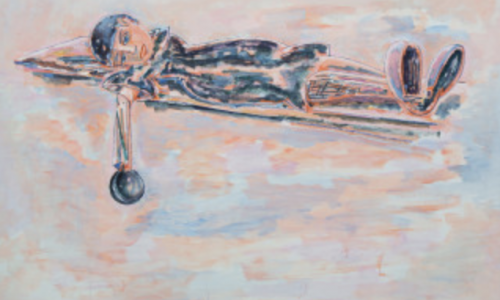
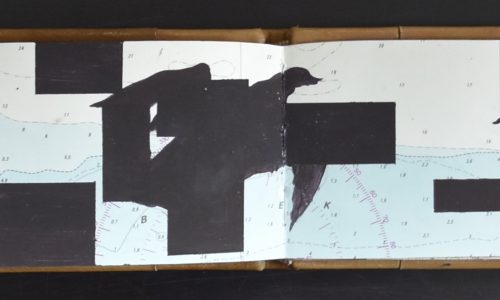
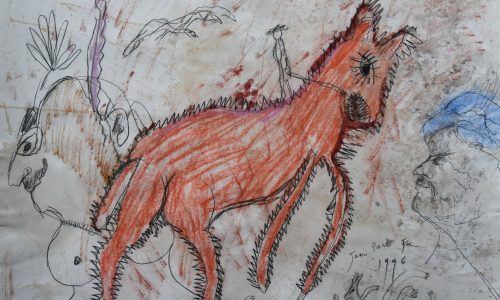
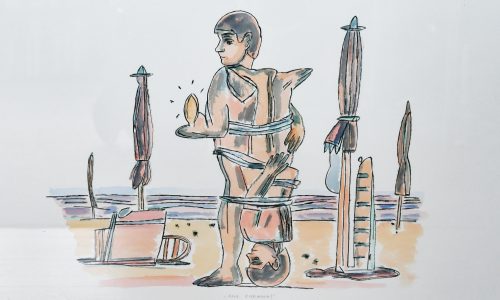
Mat van der Heijden (1964) seamlessly weaves together text and image in his creations. Known for his unique blend of recognizable figures and geometric patterns, he also incorporates letters and words in seemingly arbitrary fashion across his drawings and paintings. Take a moment to delve deeper into his visual language and you will uncover the idiosyncratic way in which he unravels the world around him in layers, and translates it using a diverse array of materials. Once challenged, these layers coalesce, impressing with their unconventional use of materials, and his language blossoms into poetic reflections.

Despite working in series, the artist continuously embraces the opportunity to experiment with different images and materials, ensuring that his work never ceases to surprise. His perspective on the world is also captured in his weekly blog named “Bits”. For over three years now, the renowned arts and culture magazine “Zuiderlucht” has published “Bits” in its monthly issue.

www.ftn-books.com has now the vander Heijden invitation for his Ramakers exhibition available.

An art studio featuring various artworks by Mat van der Heijden, showcasing a mix of geometric patterns and recognizable figures. Pieces are displayed on the walls and floor, surrounded by an inviting atmosphere.

Posted on 4 Comments

Exploring Julie Cockburn’s Unique Artistic Techniques

An artist sits at a wooden table in a bright, modern workspace, engaged in creative activities surrounded by colorful threads and art supplies. Natural light comes through large windows, illuminating a vase of pink flowers on the table.

Julie Cockburn (1966) defines her work through its intricate artistry, transforming everyday and discovered objects into masterly creations. By manipulating objects and images found in her surroundings – including sculptures made of ceramic, paintings, photographs, printed paper, and books – Cockburn, who resides and creates in the UK, evokes a sense of novelty and spontaneity.

Cockburn pursued her education at Central St Martins School of Art and Design and Chelsea School of Art in London. Through the fusion of used items and artistic labor, she challenges the ubiquitous and mass-produced with her crafted pieces, imbuing her intellectually and physically worn objects with significance. Skillful techniques, such as childlike embroidered patterns adorning found photos and printed images, invite viewers on a journey of sculpting and creation. Cockburn’s work defies the conventional ways of seeing and interpreting, as evidenced by her playful visual exploration of the materials she employs.

Posted on 9 Comments

The Art of Riette Wanders: Chaos and Structure in Drawings

A woman standing beside an abstract black and white artwork featuring chaotic lines and patterns on a white wall.

Riette Wanders pursues both elusive and conflicting imagery. She predominantly uses charcoal on paper, her drawings resembling a notated structure imbued with raw, vibrant, and yet delicate lines. Wanders’ vocabulary is diverse and expansive. Black and white photographs, chance discoveries, and especially music serve as sources that are pertinent to Wanders’ oeuvre.

www.ftn-books.com has now the TORCH invitation for her exhibition available.

Posted on 5 Comments

Exploring Bownik’s Disassembly: Art and Nature Intertwined

A man with long, dark hair and a beard gazes intently at the camera, standing in front of a chalkboard filled with scribbles and diagrams.

The piece “Disassembly” (2014) comprises of captivating depictions of plants and flowers, evoking a sense of 19th century taxonomy and botanical drawings, as well as classical still life paintings. However, the significance of these photographs extends far beyond mere scientific illustrations or aesthetic appreciation. Bownik breaks apart his subjects, only to meticulously reconstruct them, utilizing scientific techniques and incorporating unconventional materials like plastic cords and pushpins. The final result is a stunning amalgamation of the beautiful and the enigmatic, highlighting both society’s obsession with conventional beauty standards and the incessant desire to unravel the mysteries of nature. This thought-provoking artwork also begs the question: what is the relationship between photography and mortality?

www.ftn-books.com has the invitations for this DISASSENBLY series available.

Posted on 5 Comments

James Brown: A Journey through Abstract Art

A thoughtful older man with gray hair and a mustache rests his chin on his hand, sitting in front of abstract artwork.

James Brown was born in 1951 in the bustling city of Los Angeles, California. His artistic journey began with studying painting and printmaking at Immaculate Heart College in Hollywood, after which he pursued higher education at the prestigious École des Beaux-Arts in Paris, graduating in 1974. The years that followed were spent living and creating in the magnificent city of Paris.

In 1978, Brown’s talent was recognized with his first solo exhibition at the esteemed Gemeentemuseum in Arnheim, Netherlands, as well as a solo show at the renowned Christiane and Eric Germain Gallery in Paris. The following year saw Brown relocate to the artistic hub of New York City, where he joined forces with fellow creatives of the budding Neo-Expressionism movement, including Jean-Michel Basquiat, Keith Haring, and Julian Schnabel. His works were showcased at the esteemed Shafrazi Gallery and Leo Castelli Gallery in New York, as well as the Lucio Amelio Gallery in Naples.

Although best known for his abstract paintings, Brown’s artistic pursuits were far from limited. He explored and experimented with various techniques, including ceramics, bronze, textiles, and printmaking. In 1995, he moved to Mexico with his young family, continuing to create and inspire in his new environment.

In the year 2000, Brown and his wife Alexandra established Carpe Diem Press in Oaxaca, collaborating with renowned artists and writers to produce limited-edition artist books and prints. His works have been showcased in numerous American and European museums, including the Museum of Contemporary Art in Oaxaca and the Anahuacalli Museum in Mexico City. They are also featured in esteemed private and public collections worldwide, including the Museum of Modern Art, The Metropolitan Museum, and the Whitney Museum in New York, the Centre Georges Pompidou in Paris, the Kolumba Museum in Cologne, the Contemporary Art Centre of Malaga in Spain, and the Tamayo Museum in Mexico City. Sadly, Brown passed away in February 2020, leaving behind a legacy that continues to inspire and awe.

www.ftn-books.com has several James Brown publications now available.
Posted on Leave a comment

Pierre Huyghe: Bridging Life and Technology in Art

A smiling older man with glasses and a beard, wearing a casual t-shirt.

For Pierre Huyghe, the act of exhibiting represents a profound interaction with a sentient environment that gives rise to novel prospects of interdependence between unfolding events and constituent elements. The exhibition itself is a being whose manifestation is inseparable from the time and space in which it appears.

His pieces are conceptualized as works of speculative fiction, often serving as a bridge between diverse forms of intelligent life, encompassing both biological and technological entities, as well as tangible but inert matter, all of which possess the capacity to learn, adapt, and evolve. They are permeable, contingent, and at times, indifferent to those who view them.

Pierre Huyghe, who was born in 1962 in Paris and currently resides and works in Santiago, Chile, is a renowned artist known for his international presence and participation in various exhibitions around the globe.

Some of his recent exhibitions include “Liminal” at Leeum Museum of Art in Seoul, South Korea (2025); “Liminal” at Palazzo Grassi-Punta della Dogana, Pinault Collection in Venice, Italy (2024); “Chimeras” at EMMA Espoo Museum of Modern Art in Finland (2023); “Pierre Huyghe” at Pinault Collection, Bourse de Commerce in Paris (2023); “Variants” at Kistefos Museum in Jevnaker (2022); “After UUmwelt” at Luma Foundation in Arles (2021); “UUmwelt” at Serpentine Gallery in London (2018); and “The Roof Garden” at Metropolitan Museum in New York (2015). Additionally, from 2012 to 2014, a major retrospective of Huyghe’s work traveled from the Centre Pompidou in France to the Ludwig Museum in Germany and the Los Angeles County Museum of Art in the United States.

Huyghe has been the recipient of numerous prestigious awards, including the Nasher Sculpture Prize (2017); the Kurt Schwitters Prize (2015); the Roswitha Haftmann Preis Award (2013); the Contemporary Artist Award from the Smithsonian American Museum (2010); the Hugo Bozz Prize at the Guggenheim Museum in New York (2002); and an artist residency at the DAAD in Berlin (1999-2000), among others.

www.ftn-books.com has several Huyghe publicatrions at this moment available.

Posted on 4 Comments

The Power Dynamics in Gillian Wearing’s Art

A contemporary artwork featuring a woman capturing a selfie, with an expression that blends self-awareness and introspection. The background showcases a cluttered room, including a green mask on the wall.

Gillian Wearing, a contemporary artist hailing from Britain, delves into power dynamics and voyeurism in everyday life through her conceptual photographs and videos. Rather than focusing on aesthetics, Wearing captures the self-awareness of her subjects using prosthetic masks, voice dubbing, and altered photographs in portraits of individuals and groups. Her thought-provoking works are in conversation with fellow artist Cindy Sherman, as well as early 20th century Surrealist works by Claude Cahun. Notable series in Wearing’s portfolio include “Signs that Say What You Want Them To Say” and “Not Signs that Say What Someone Else Wants You To Say” (1992-1993). In this project, Wearing approached strangers and asked them to write down their thoughts, then photographed them holding the sign. Speaking about the series, she states, “As an artist, it’s always crucial to find a distinct language, which is why the Signs intrigued me. They felt fresh. Little did I know they would have such a large impact, from advertising to people designing signs for their Facebook pages.” Born in 1963 in Birmingham, United Kingdom, she relocated to London in 1983 to study at Chelsea School of Art and later Goldsmiths College, where she became part of the Young British Artists movement alongside Damien Hirst. In 1997, Wearing received the prestigious Turner Prize for her work “60 Minutes Silence” (1996). She currently resides and works in London, UK. The Museum of Modern Art in New York, the Tate Gallery in London, the Hammer Museum in Los Angeles, and the Hirshhorn Museum and Sculpture Garden in Washington, D.C. are among the institutions that house Wearing’s works.

www.ftn-books.com has several Gillian Wearing publications available.

Posted on 3 Comments

The Art of Storytelling in Marcel van Eeden’s Work

A middle-aged man with glasses stands against a black-and-white backdrop of urban architecture, wearing a black sweater and blue jeans.

Marcel van Eeden (Den Haag, 1965) creates graphic narratives. He draws from existing imagery found in magazines, newspapers, and books. However, all the visual material he uses as a starting point predates his own existence.
This choice reflects Van Eeden’s fascination with non-being: the period preceding his own existence. By employing existing images and literally taking them into his own hands, he seeks to grasp what he himself has not experienced.

Since 2005, Van Eeden has been working in series. Cat. 2.8: Desserts (2015), a series of lithographs of desserts, serves as an example of this. Undeniably not photographs, yet the glaze glistens and the fat quivers. Van Eeden’s handwriting is realistic, but his ‘translations’ of images allow them to become part of a different story. They have begun a new and unique chapter. Typography is also an important element in Van Eeden’s work. It serves as a preview of a particular aspect of the graphic narrative, but also exists as a striking image on its own. With the images he finds and uses as a starting point for his drawings, Van Eeden claims to build a story. He combines images from various sources and times with a fictitious storyline.

With the images he finds and uses as a starting point for his drawings, Van Eeden claims to build a story. He combines images from various sources and times with a fictitious storyline. As a result, certain characters frequently reappear in his oeuvre: archaeologist Oswald Sollmann, botanist K.M. Wiegand, and psychiatrist Matheus Boryna.

A colorful invitation card for a launch party at GEM Museum for Contemporary Art, featuring a drawing of a surprised woman and graphic elements in vibrant shades.

The desire to become a writer has always been ingrained within me. […] It is possible, it seems, to construct a story using photos found in magazines. In this scenario, history becomes a vast container full of Lego blocks. Each individual block representing a historic fact or photo that may have no apparent connection, but when pieced together, form a narrative that is not entirely true.

Van Eeden received his education at the Royal Academy of Art in The Hague (1989-1993). Exhibitions featuring his work have taken place at prestigious venues such as Albertina (Vienna), Drawing Room (London), Martin-Gropius-Bau (Berlin), and GEM (The Hague).

www.ftn-books.com has several van Eeden pub;ications available.

Posted on Leave a comment

Hans van Bentem: Master of Installation Art

Hans van Bentem (born in 1965 in the Netherlands) has often created grand monumental works, demonstrating a preference for installation art. This form allows for the integration of multiple materials and objects, resulting in an even more complex interplay. Within this interplay, a seemingly random game is played, utilizing associations and attributes with both loaded and unburdened connotations. In addition, the artist does not shy away from incorporating elements of comic culture and ethnography into a single piece, seamlessly blending aspects of high and low cultures from various time periods and geographical areas. As a result, his work takes on the appearance of a bizarre synthesis.

THE GROTESQUE
Due to strict travel restrictions during the pandemic, Van Bentem has been unable to return to his beloved studio in China, where a series of porcelain works still await completion. Instead, during the lockdowns, he has turned to local opportunities and worked at Trapman’s studio on a new series of ceramic sculptures, first showcased at MPV Gallery in Oisterwijk. In these pieces, Van Bentem plays with the notions of attraction and repulsion, eroticism and ridicule, beauty and banality, brute force and delicate strings, all presented in exquisitely crafted glazed earthenware and blown glass, resting on elegant veneered wooden pedestals.

www.ftn-books.com has several van Bentem pubpications now available.
Posted on 3 Comments

Conrad Felixmüller: A Journey Through Expressionism

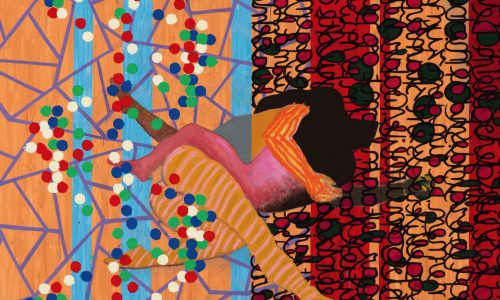
Conrad Felixmüller, a renowned German Expressionist painter and printmaker, is renowned for his vibrant and graphic landscape and portrait pieces. During the 1930s, his art took on a more poised color scheme and focused on realistic, genre-style representation – a significant contrast from his earlier, socio-critical work. Hailing from Dresden, Germany, he commenced his studies under Carl Bantzer at the prestigious Dresden Academy of Art and later worked at Ludwig Meidner’s studio. In 1917, Felixmüller established the influential monthly periodical MENSCHEN, which championed progressive art and literature. A few years later, he co-founded the German Expressionist group, Dresden Secession, alongside Otto Schubert and Otto Dix, who was once his student. Around the same period, he published his autobiography “Mein Werden” and his musings on artistic design, “Künstlerische Gestaltung.” However, the advent of Nazism saw his paintings on display in notorious exhibitions such as “Reflections of Decay” in 1933 and “Degenerate Art” in 1937, which resulted in the confiscation of his works from public collections. He later taught drawing and painting at Martin-Luther-Universität in Halle from 1949 to 1961 before retiring in Berlin. The artist breathed his last on March 24, 1977, in Berlin, Germany. Felixmüller’s masterpieces can be found in renowned collections such as the Art Institute of Chicago, the National Gallery of Art in Washington, D.C., The Museum of Modern Art in New York, the Courtauld Institute of Art in London, the Von der Heydt-Museum in Wuppertal, and the Los Angeles County Museum of Art.
www.ftn-books.com has several Felixmuller titles available.