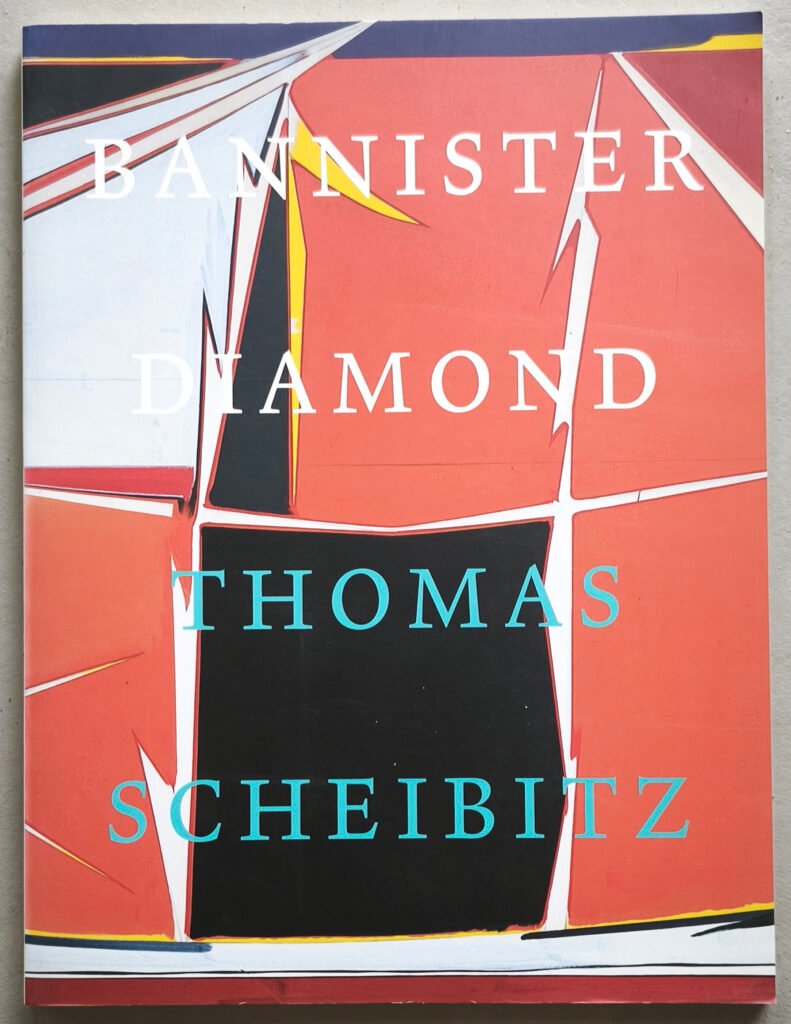


Thomas Scheibitz (born 1968) is one of the most important German painters and sculptors of his generation. Since the early 1990s, he’s developed a thoughtful, idea-driven approach to painting and sculpture that draws on art history. At the core of this Berlin-based artist’s work is an attempt to find a new relationship between realistic depiction (“figuration”) and abstraction. He doesn’t just push the boundaries of what paint and sculpture can do—he also questions whether the old divide between “realistic” and “abstract” art still makes sense today.
Scheibitz’s work starts with a huge, ever-growing collection of images—like a visual scrapbook of the modern world. It includes reproductions of famous artworks, pictures from fashion magazines, music culture, and pop culture, plus his own photographs and more. He picks pieces from this collection based on how they look or what they remind him of, not their original meaning. His subjects range widely: houses and buildings, landscapes, letters, playing cards, portraits, still lifes.
He then puts these images through a back-and-forth process—sketching, photographing, and reworking them—until any trace of their original meaning or source is stripped away. He calls the result “the edge of an invention.” The final images don’t copy anything real, but they’re not purely abstract or symbolic either. They become their own strange kind of thing: part figure, part shape; part object, part symbol. Scheibitz has found a space almost nobody knew existed—somewhere between “made-up composition” and “barely recognizable hints of reality,” between realism and abstraction.
He applies this same approach to blurring the line between painting and sculpture. His paintings often feel like physical objects, while his sculptures often feel like images. In both cases, he’s mixing 2D and 3D together, aiming to create something in between a picture and a thing.
His work often features recurring shapes—some organic-looking, some more geometric and structured—that can look like a code or system of symbols you can’t quite crack. The work seems to create order, then undoes that order at the same time. This isn’t just about making things look mysterious—it reflects his real interest in systems humans use to understand the world, like the alphabet, the periodic table, or math symbols. Fittingly, he often titles his works after scientists, musicians, writers, places, or events tied to these various systems of knowledge.
Scheibitz’s work feels mysterious and has a strong pull on viewers. Even though there’s clearly “subject matter” in the paintings, they refuse to tell a story. Long converging lines and shifting colors suggest depth and space, but then flatten out again. His style combines precise, controlled painting with loose, expressive brushwork, plus graphic and sculptural elements. In some ways, his art is like walking a tightrope—balancing between realism and invention, meaning and meaninglessness, the present moment and something timeless.
www.ftn-books.com recently added the Stedelijk Museum catalog from 2001 to its inventory.