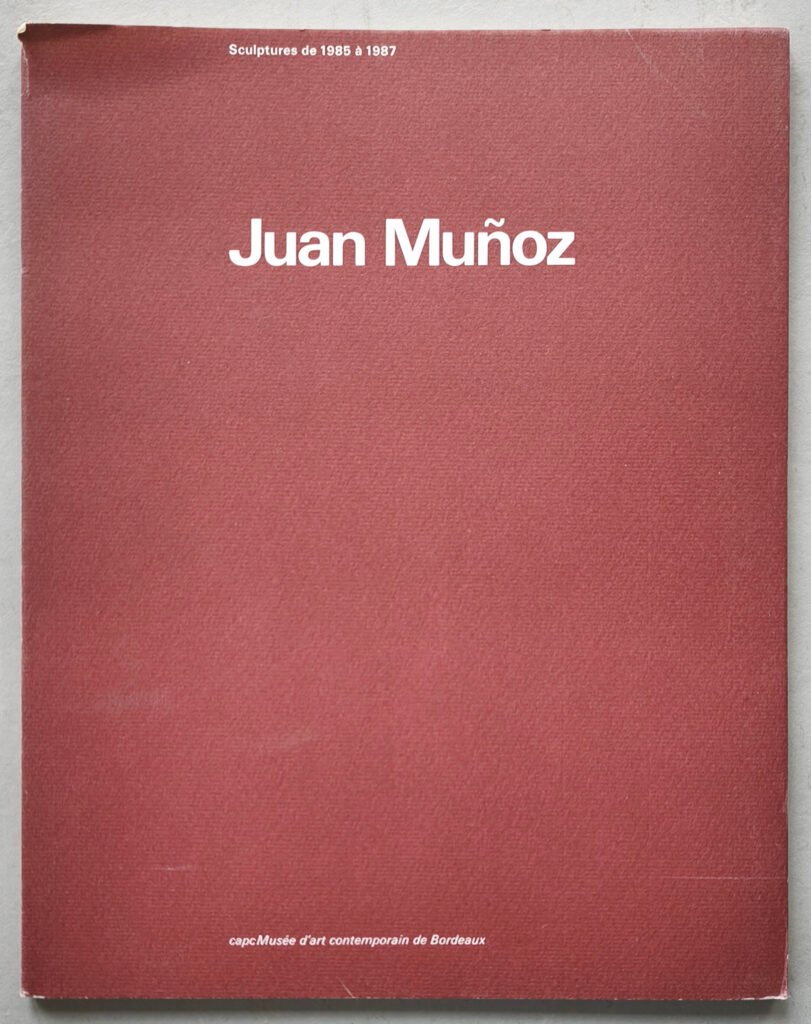


A pivotal figure in the international art scene throughout the 1980s and 1990s, Juan Muñoz (1953–2001) established a reputation for highly creative works that bridged the gap between viewer, installation, and the surrounding architecture. His portfolio evolved from singular architectural motifs hinting at humanity to expansive, immersive installations featuring groups of figures. His career, cut short by his death at forty-eight, comprised a diverse range of disciplines—encompassing sound pieces, prose, drawings, and curatorial ventures—that probed the deep philosophical and storytelling potential of creative expression.
Born in Madrid, Muñoz began his academic journey in architecture at the Polytechnic University; however, he soon departed Francoist Spain for London in 1970. His subsequent education spanned several institutions, including London’s Central School of Art and Design, the Croydon College of Design and Technology—where he concentrated on printmaking—and New York’s Pratt Graphics Center. These international residencies significantly shaped his artistic trajectory. In London, his early focus on performance art evolved as he engaged with contemporary sculptors like Bill Woodrow and Richard Deacon, who were actively challenging sculptural norms. Following a move to New York in 1981, bolstered by a Fulbright Fellowship, Muñoz pivoted toward sculpture, drawing inspiration from figures such as Barnett Newman, Philip Guston, Robert Smithson, and Robert Morris. After forging a bond with curator Carmen Giménez, who facilitated an introduction to sculptor Richard Serra, Muñoz moved back to Spain. There, he temporarily shifted his focus to curation, partnering with Giménez to organize “Correspondences: 5 Architects, 5 Sculptors,” an exhibition at Madrid’s Palacio de las Alhajas that notably featured pieces by Serra.
www.ftn-books.com has multiple publications on Munoz now available.