

Singular Forms (Sometimes Repeated): When Less Became Everything
Walk into a room with one white canvas, a stack of metal boxes, and a single fluorescent tube leaning against a wall, and you might wonder what there is to see. That question — and the surprising range of answers artists gave to it — is the subject of “Singular Forms (Sometimes Repeated): Art from 1951 to the Present,” one of the Solomon R. Guggenheim Museum’s most ambitious surveys of Minimalism and its aftermath.
A Show Built From the Museum’s Own Walls
Unlike many blockbuster exhibitions that rely on loans from around the world, this exhibition was drawn largely from the Guggenheim Museum’s permanent collection , making it as much a portrait of the museum’s own collecting history as it is a survey of a movement. It ran at the Solomon R. Guggenheim Museum in New York from March 5 to May 19, 2004 , filling the building’s famous spiral ramps with decades of reduction, repetition, and restraint.
Starting With a Blank(ish) Canvas
The exhibition’s premise is deceptively simple: strip art down to its essentials, and see where that leads. It opens with Robert Rauschenberg’s White Painting from 1951, a stark monochrome canvas that set the tone for everything to follow . From that single, radical gesture, the show traces two intertwined threads running through the second half of the twentieth century — the drive to eliminate anything extraneous in pursuit of pure, essential form, and a parallel fascination with how we actually perceive art
From there, a prologue of monochrome paintings by Ellsworth Kelly, Frank Stella, and Ad Reinhardt sets up the main event: the Minimalist and Conceptual art of the 1960s and ’70s, represented by Carl Andre, Dan Flavin, Donald Judd, Sol LeWitt, Agnes Martin, and Lawrence Weiner, among others .
Beyond the Grid: Postminimalism and What Came After
Minimalism wasn’t a dead end — it was a launching pad. The exhibition tracks how Postminimalist artists took the movement’s spare formal vocabulary and used it to explore process, the dematerialization of the art object, performance, and the physical properties of light , with rooms devoted to figures Bruce Nauman, Richard Serra, James Turrell, and Richard Long.
The story doesn’t stop there. A later generation — Robert Gober, Felix Gonzalez-Torres, and Roni Horn among them — picked the style back up decades later, using Minimalism’s clean, self-contained forms to smuggle in urgent cultural and political content that the movement’s original austerity had deliberately avoided.
A Visitor’s-Eye View
Reviews from the time back up the sense that this was an unusually cohesive show. One visitor who caught it alongside that year’s Whitney Biennial noted that, compared to the Biennial’s sprawling and uneven selection, the Guggenheim’s Singular Forms exhibition felt much more consistent — a quality he attributed to Minimalism and Postminimalism being more narrowly defined territory to begin with . Moving up the museum’s ramps, he found himself struck by how rich and varied minimalism’s history turned out to be, both in the range of forms and the materials artists brought to it. Alongside expected names like Serra, Stella, and Judd, he singled out Karin Sander’s high-polish wall section and chicken egg as unexpected highlights, and pointed to a couple of early Brice Marden paintings as personal favorites .
Why It Still Matters
Two decades on, “Singular Forms” remains a useful lens for thinking about Minimalism — not as a single, monolithic style, but as a set of ideas that different artists picked up, argued with, and reshaped across fifty years. By anchoring the whole story to one museum’s collection, the show made a quiet argument of its own: that the Guggenheim had, without much fanfare, assembled one of the deepest holdings of minimalist art anywhere — one substantial enough to tell this entire history using almost nothing but its own walls.
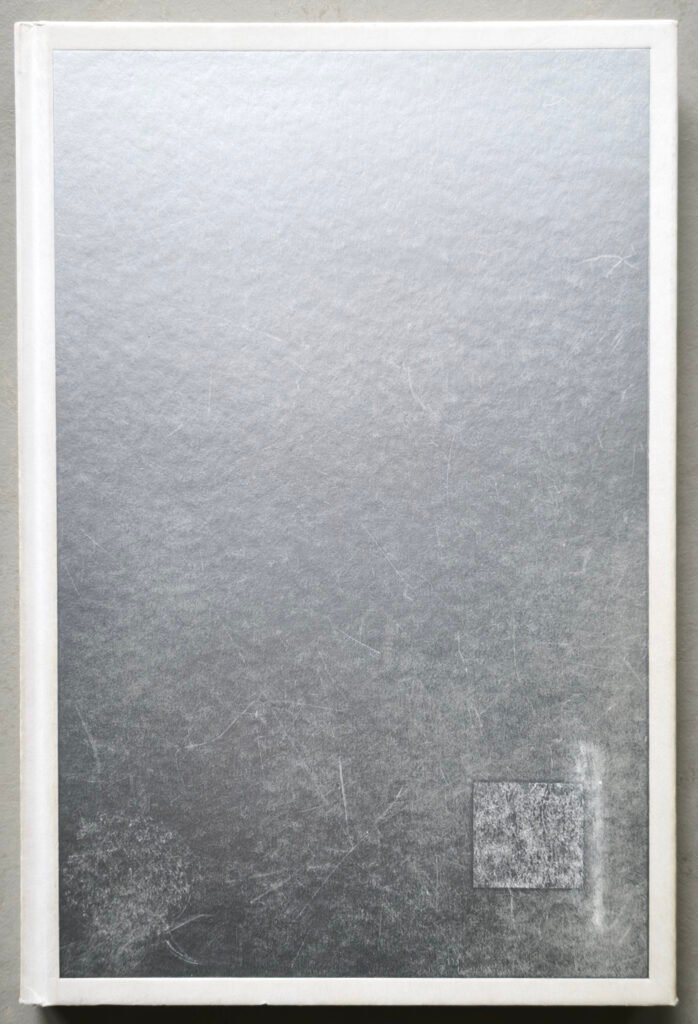
the catalog of the exhibition is now available at www.ftn-books.com