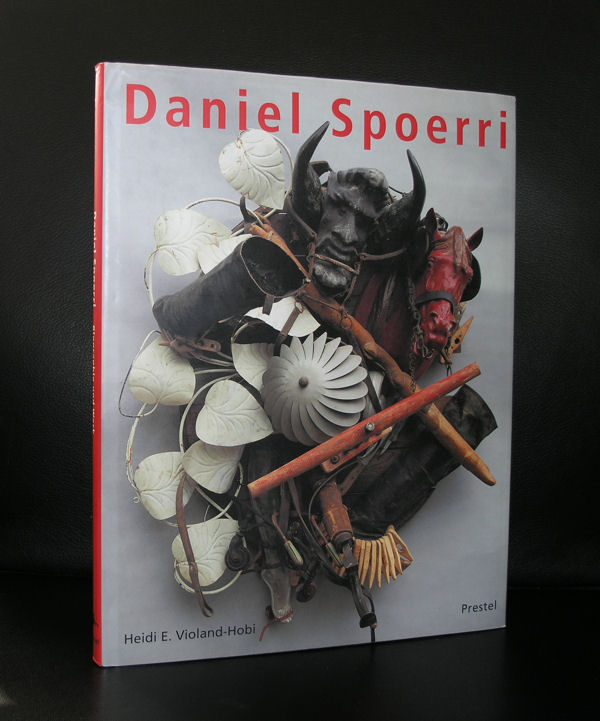
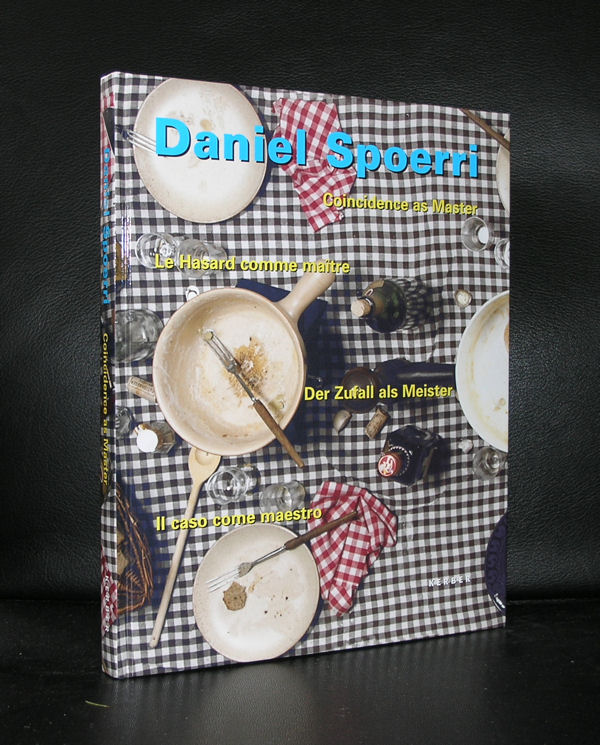
Daniel Spoerri (1930-2017) was a man of many artistic talents: dancer, choreographer, playwright, restaurateur, gallery owner, and artist.
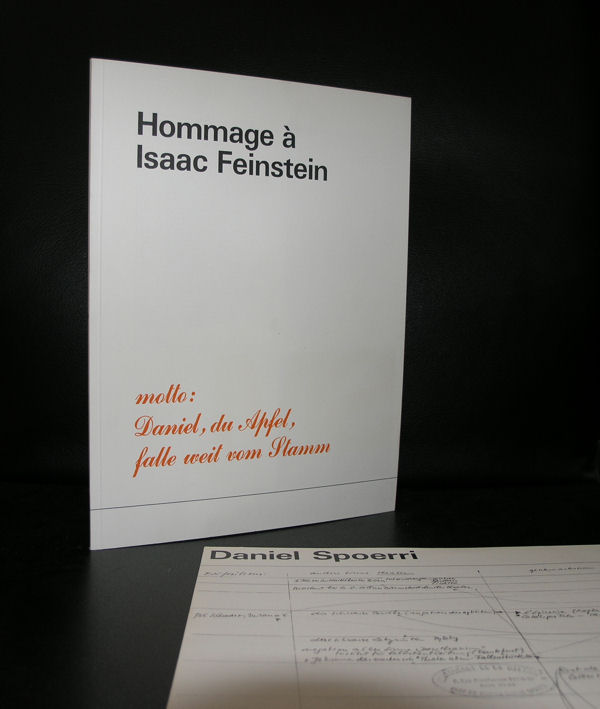
Born Daniel Isaac Feinstein in Romania, he was the son of missionary Isaac Feinstein and Lydia Spoerri. Daniel’s father, who had converted to Christianity, was also an active evangelist. In 1941, he was captured by the Nazis, sent to a concentration camp, and killed. In 1942, Daniel and his siblings fled to Switzerland with their mother, who held a Swiss passport.
In Switzerland, he met Max Pfister-Terpis, who encouraged him to pursue a career in dance, as well as Jean Tinguely and Eva Aeppli. After a successful career as a solo dancer and director of avant-garde plays by Eugène Ionesco, Pablo Picasso, and Jean Tardieu, he also tried his hand at film directing, working as an assistant director to Gustav Rudolf llner in Darmstadt.
Upon moving to Paris in 1959, he formed relationships with numerous artists working in the city, including Pol Bury, Jesús Rafael Soto, Marcel Duchamp, Man Ray, and Robert Filliou. He also took a studio in the Impasse Ronsin, a well-known artist colony where Constantin Brancusi, Max Ernst, Niki de Saint Phalle, and Jean Tinguely also had studios.
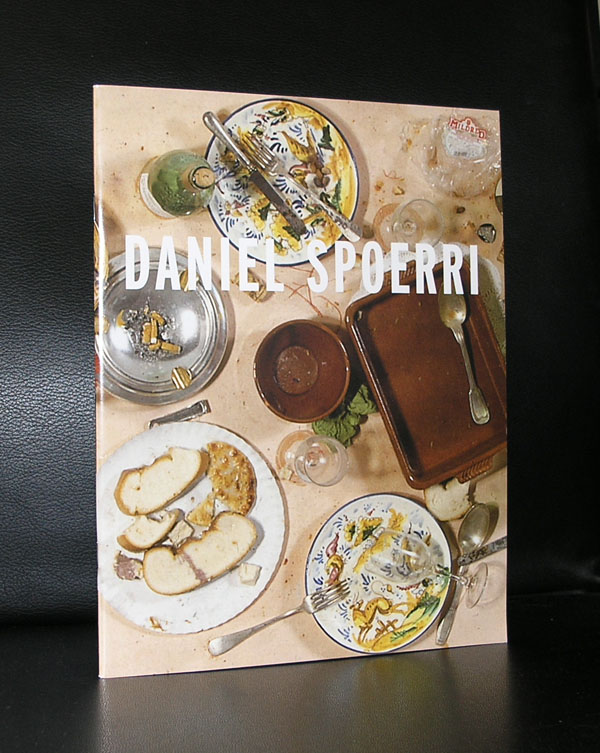
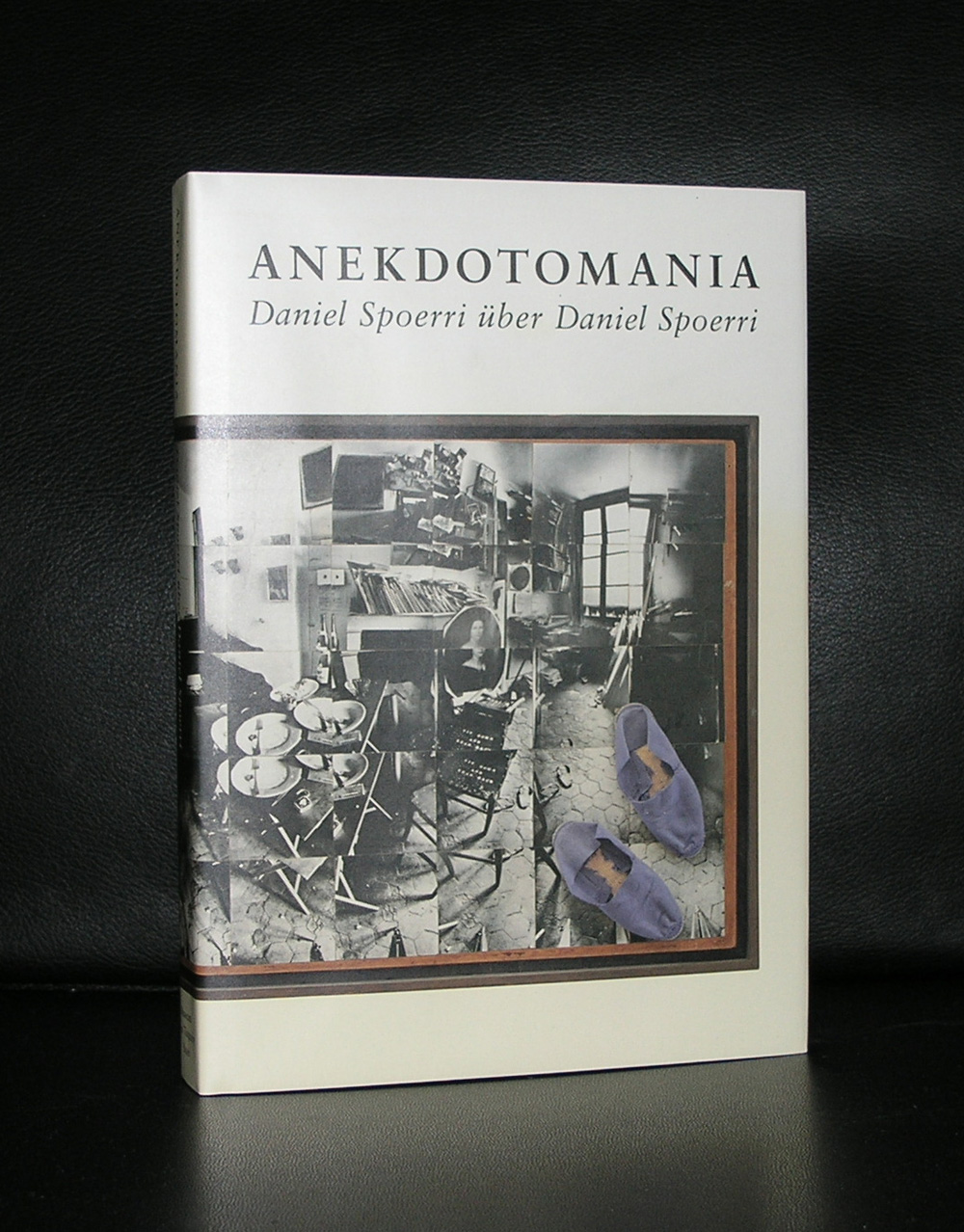
In addition to his other pursuits, he founded the MAT publishing house (Multiplication d’art transformable) in Paris and began his work as a figurative artist. He created his famous “tableaux-pièges” (trapping-paintings), which involved gluing everyday objects from his hotel room onto shelves (specifically, in room 13 of the Hôtel Carcassonne on rue Mouffetard). These objects gained a new presence due to the transition from a horizontal to a vertical plane. As he explains, “I simply add a little glue to objects; I do not allow myself any creativity.”
www.ftn-books.com has several Spoerri items for sale.