Posted on Leave a comment

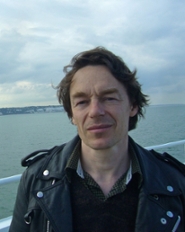
Jason Brooks (1968)

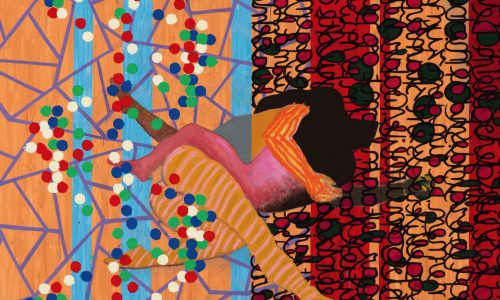
British artist Jason Brooks is widely regarded as one of Britain’s best hyper-realist fine artists and is closely associated with the generation of artists who emerged in Britain in the early nineties to great international acclaim.

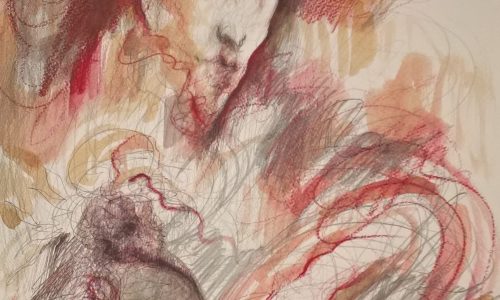
Brooks’ recent landscape works explore old masterpieces and anonymous found paintings by amateur artists that he has collected over the past couple of decades, adopting the same techniques, images that he reworks, crops and repaints. He combines airbrush, acrylic and oil paints in such a way as to explore all aspects of painterly language, as well as his own place in the canon of art history. Indeed, he argues it is a way of looking at art history through the eyes of others who have looked at art history. On a very simple level it affirms the continued faith that painters retain in the medium.

Brooks debuted among the YBAs in the 1990s with his black and white portraits.In and of itself, this may be an arbitrary fact, but it highlights an important point: Jason Brooks is a fine artist with an acutely-honed skill, but whose artistic vocabulary has more in common with the new Conceptualists and Postmodern punks.

Born in 1968 in Rotherham, U.K., Jason Brooks obtained an MA in Fine Art at Chelsea College of Art and Design and now works and lives in London. His work is held in private and public collections all around the world, including the National Portrait Gallery Collection, London where he had a solo exhibition of his work in 2008.

www.ftn-books.com has the 2013 ” ULTRAFLESH” catalog now available.

Posted on Leave a comment

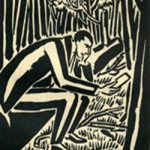
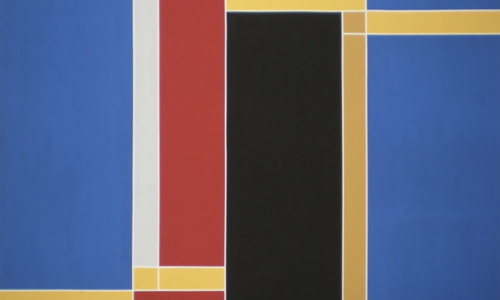
Siep van den Berg and Piet Mondrian

SZep van den Berg in his Studio

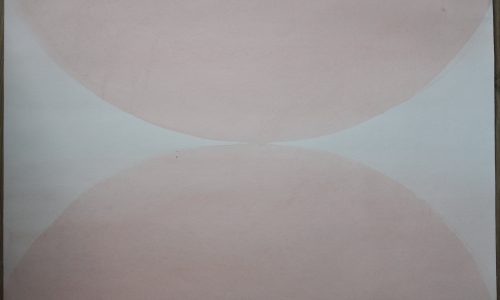
A few month ago i acquired another one of Siep van den Berg sketchbooks. This time it contained some 20 collages. It is great to see that some of these were actually realized as paintings , but the most part are highly interesting collages which give an idea of the paintings that were realized afterward. Most of these are not signed but some 60% contain fragments from his personal diary at the time Siep van den Berg was hospitalized. He barely could walk but sketched almost everyday and made some personal notes on the back of these sketches. One of these struck me. Because I know the painting COMPOSITION WITH BLUE well and had met Siep van den Berg at the time he was exhibiting at the Gemeentemuseum Den Haag. I concluded that this must have stuck in his mind, because there are some similarities between the 2. The collage is now available at www.ftn-books.com or please inquire at wilfriedvandenelshout@gmail.com.

left Mondrian / right Siep van den Berg

Posted on Leave a comment

Dirk Braeckman (1958)

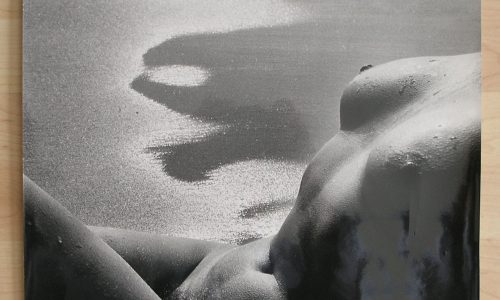
Dirk Braeckman has spent the past 40 years developing an impressive portfolio. Working with the medium of photography, he occupies a distinctive place within the visual arts.

Braeckman has taken part in numerous exhibitions both nationally and internationally. He has had solo shows at The Modern Art Museum of Fort Worth (USA), LE BAL (Paris), De Pont (Tilburg), De Appel (Amsterdam), S.M.A.K. (Ghent), BOZAR (Brussels), M (Leuven) and ROSEGALLERY (Santa Monica, CA).
Braeckman’s works are part of important private and public collections around the world, including in FRAC Nord-Pas de Calais (Dunkirk), Sammlung Goetz (Munich), De Pont (Tilburg) and Fondation Nationale d’Art Contemporain (Paris), Central Museum (Utrecht), and Musée d’Art Contemporain et Moderne (Strasbourg). There are also several publications on his artistic practice and oeuvre.

In 2017, he represented Belgium at the 57th Venice Biennale.

In 2021 Braeckman was invited to take part in the 34th Bienal de São Paulo ‘Though it’s dark, still I sing’.

The Royal Family of Belgium commissioned a permanent installation in the Sphinx Room of the Royal Palace in Brussels.

Braeckman has been a KVAB member since 2019.

www.ftn-books.com has several Braeckman publications available

Posted on Leave a comment

Robert Longo (1953)

Robert Longo

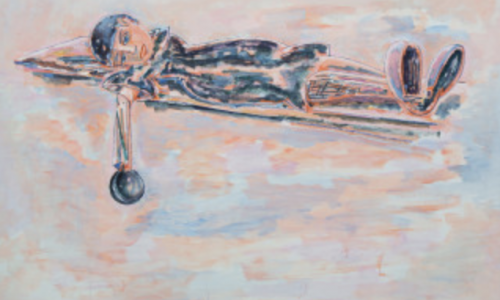
Of the contemporary artists who came to prominence in the 1980s and went on to try their hand at filmmaking in the ’90s (among them Julian Schnabel and Cindy Sherman), Robert Longo seems like the perfect fit for the role of Hollywood-style director. His sleek, 1995 sci-fi feature Johnny Mnemonic, starring an already famous Keanu Reeves, was an experimental outgrowth of an aesthetic path that the New York artist had been pursing on paper for more than a decade. Longo is technically a draftsman—his signature large-scale works are amalgams of charcoal on paper, and the tactility of the medium is explicit when faced with the work. But Longo’s productions are arguably much closer to cinema, his chiaroscuro subject matter seemingly created out of shadow and light. And like cinema, Longo’s works straddle a line between hyper-realistic and disturbingly surreal—time is frozen or extended or simply disintegrates, as what happens in his work refuses to resolve. Over the course of his career, 70-year-old Longo has created images of nature (tumbling waves, great white sharks, tigers, flowers), of institutional power structures and political fallout (the U.S. Capitol, the American flag, a fighter pilot mask, the detonation of the atomic bomb), and of personal, psychic spaces (a woman’s chest, a sleeping child, the interiors of Sigmund Freud’s home). He has also created some of the most prescient and haunting images of our age. His twisting, falling business-suit figures from his early-’80s series Men in the Cities became a startlingly accurate artifact of fragility and human suffering after 9/11. (Even Johnny Mnemonic‘s fascination with a future where secrets are impossible to keep seems strangely prescient.) This month Longo takes on an ambitious double-barrel solo show in New York, with his recent series of charcoal drawings that replicate or re-address famous American abstract expressionist works showing at Metro Pictures, while exhibiting an American flag sculpture and work inspired by the riderless horse at John F. Kennedy’s funeral at Petzel Gallery. It’s a dual production that seems to drive straight for the center of American mythology and the coercive symbolism of a cultural superpower.

www.ftn-books.com has some interesting Longo titles available

Posted on 1 Comment

Gunter Damisch ( continued)

Not long ago i wrote a blog on Gunter Damisch on the occasion of a special publication I acquired, but here we are again……another blog on Damisch since I acquired SCHERZHAFTE ERWÄGUNG. A scarce publication from 1988 , published in an edition of 500 copies. What makes this special is that there is no printed text, only 1 on 1 pages from the sketchbook containing 51 pages from the sketchbook and the cover. This special publication is now available at www.ftn-books.com

Posted on Leave a comment

The Dorothy and Herbert Vogel collection

Civil servants by day and voracious collectors by night and weekend, Dorothy and Herbert Vogel built a world-class art collection through modest means. Committed to discovering new work by up-and-coming artists, the Vogels amassed a collection of more than 4,000 objects by some of the most renowned artists of our time over the course of four decades.

In 1992, the Vogels formed a partnership with the National Gallery of Art in Washington, D.C., placing in its custody more than 1,100 works of art as gifts or promised gifts. As the Vogels continued to acquire works of art, it became unfeasible to gift their entire collection to any one museum, leading to the development of the Fifty Works for Fifty States project. This endeavor, which received support from both the National Endowment for the Arts and the Institute of Museum and Library Services, allowed the Vogels to place 2,500 works of art, including drawings, paintings, sculptures, prints, and photographs by 177 artists, in the collections of museums throughout the United States. The Vogels selected venues that they had built relationships with through exhibitions and affiliations, or, as in the case of the Buffalo AKG Art Museum, in cities that were of significance to them. (Dorothy Vogel was born in Elmira, New York, and attended college at the University at Buffalo.)

The Vogels’ generous gift to the museum included works by many artists who entered our collection for the first time, as well as works that enhance existing holdings. The Dorothy and Herbert Vogel Collection at the Buffalo AKG includes works by Richard Artschwager, Robert Barry, Lynda Benglis, Charles Clough, Koki Doktori, R. M. Fischer, Richard Francisco, Don Hazlitt, Gene Highstein, Bill Jensen, Tobi Kahn, Steve Keister, Alain Kirlli, Mark Kostabi, Wendy Lehman, Michael Lucero, Joseph Nechvatal, Richard Nonas, Larry Poons, Lucio Pozzi, Edda Renouf, Judy Rifka, Barbara Schwartz, Darryl Trivieri, and Richard Tuttle.

This is an example that great art cab be collected over the years at moderate prices. Art that in the end proves to be artistically and financially priceless.

www.ftn-books.com has now the BEYOND THE PICTURE , the ultimate book on the Vogel collection available.

Posted on Leave a comment

Justin Bennett (1964)

Justin Bennett teaches in the Institute of Sonology of the Royal Conservatoire (KC) in the Hague. He is also a member of Jubilee, a platform for artistic research and production in Brussels.

Justin Bennett- photo: M. Mizgiert

His widely ranging work is rooted both in the visual arts and in music. Bennett produces field recordings, drawings, performances, installations, audio walks, videos, and essays.

He studied sculpture, electronic music and video art and much of his work combines sound, image, space and storytelling. Bennett makes work for public spaces as well as art spaces and concert venues.

He collaborates with a wide range of other artists, including with BMB con., HC Gilje, Vermeir & Heiremans, Renate Zentschnig.

A recurrent theme in Bennett’s research is the public’s experience of architecture, urban development, and (un)built space. He employs sound to render it audible as well as palpable: in his work, careful listening provides a radically different way of seeing and experiencing. Bennett’s sound recording is comparable with shooting a video. He uses various microphones to change perspectives – like camera lenses. The microphones – the listener’s points-of-hearing – move through a city, a street, a windy Russian tundra, or the different-sounding spaces of a building.

In many of Bennett’s works and installations, sound and voice-over are juxtaposed with video images, drawings, maps and diagrams. Thus, a reciprocity is created between various forms of expression: a drawing or a text can be a score; and sound and image become ways of drawing and writing.

In this way, Bennett’s work is also a research into sound and image as specific media, and an exploration of the ways in which they can be used and experienced. His way of working sparks unexpected complementarities, synaesthetics, collisions and manipulations of the mind.

www.ftn-books.com has theeNOISE MAP publication by Stroom now available.

Posted on Leave a comment

Richard Dinnis

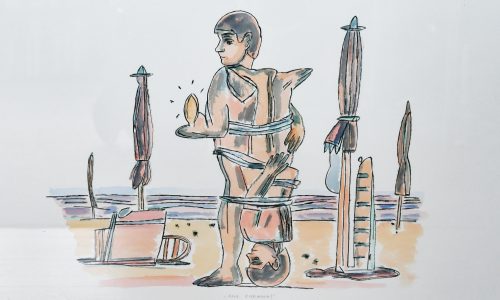
This book is about the little things that interest or amuse me. It looks at amongst other things gated communities, naval history, failure, contemporary business practice and trees. It is an attempt to explore, through drawing, the complexities of meaning that cloud and confuse even the smallest and simplest of things. It is also an attempt to present the world as I see it. An idiosyncratic world where observed physical realities mix with language, thought and humour. A world that is strange, tragic and infinitely complex and where beauty and humour lurk in unexpected places. A world in which weathermen plan to lure tiny Herons down to guard and enjoy tiny spoon ponds and where Hugh Grant and I sit together drawing animals, but not speaking – Richard Dinnis

Thge artist book A POSTCARD FROM THE MOUNTAIN….. is available at www.ftn-books.com

Posted on 7 Comments

Jamie Shovlin (1978)

Jamie Shovlin is interested in the tension between truth and fiction, reality and invention, history and memory. His work combines extraordinary facility as a draughtsman, printmaker, painter and writer with conceptual complexity and playfulness. His painstakingly researched and executed works merge inherently flawed systems, pseudo-scientific exactitude and doubtful philosophical propositions with the seemingly objective experience of the archive. Through his projects Shovlin questions how information becomes authoritative and explores the way that we map and classify the world in order to understand it.

Shovlin is perhaps best known for a series of ambitious projects, including Naomi V. Jelish (2001-2004) and Lustfaust: A Folk Anthology 1976-81 (2003-6), in which the artist constructed extensive and seemingly real archives, which were then revealed to be elaborate fictions. The Jelish archive consists of drawings, newspaper cuttings and other ephemera relating to a 13-year old prodigy who had disappeared with her family in mysterious circumstances, along with notes and inventories made by John Ivesmail, a ‘retired science teacher at Naomi’s school [who had] unearthed a collection of the teenager’s remarkable drawings’.

In The Evening Redness in the West, a wide variety of interrelated materials form a cohesive body of work woven around the disparity between reality and idealism whilst exploring the narratives and fictions that a nation projects into the world. In this three-part project, Shovlin posits a historical overview of the United States of America by filtering it through a variety of domestic and political media sources including his personal art historical canon and his parents’ record collection, which consists of predominantly American music from the 1960s and ’70s. Taking as its starting point a number of carefully chosen events from recent American history, the work is a subjective exploration of American history, politics and culture and charts an era of dramatic change in both American and global politics, spanning from the depression of the 1930s to the present day. Jamie Shovlin studied at the Royal College of Art and lives and works in London. Recent solo exhibitions include Tate Britain, London (2006), City Gallery, Leicester; Artsway; Talbot Rice Art Gallery, Edinburgh and Hatton Gallery, Newcastle (2006/07); the Contemporary Art Museum in Rome, Grand Union, Birmingham (2010), and Ibid Projects, London (2011).

www.ftn-books.com has the “Various Arrangements ” book now available.

Posted on 1 Comment

George Meertens (1957)

the following text is published by DE PONT on the occasion of the Meertens SUBLACUS 3exhibition. The catalog is now available at www.ftn-books.com.

‘Listen, O my son (…) and incline the ear of thy heart,’ begins the prologue to The Rule of St. Benedict, written by Benedict of Nursia (480-547) and used by monasteries to this day. These words are greatly cherished by Meertens. In his manner of painting, by dismissing any preconceived image and by responding to what occurs during the painterly process, he wishes to put into practice this appeal to listen. Sublacus is the term by which he sums up that approach. Consisting of the Latin words sub (under) and lacus (lake), it refers to the site at which Benedict found solitude as a hermit. Seeking the most profound point, the abbot chose a cave at the lower end of the lake as a place for contemplation and introspection. As Meertens sees it, the studio can also be regarded as the Sublacus, as the place where an artist tries to cast aside all certainty and does what the painting-in-the-making demands of him. Painting thus becomes a form of focus, involvement and surrender.

The paintings of Meertens have taken shape layer by layer. They are abstract, lyrical fields of color which occasionally have connotations of landscape. Sometimes the works are dark and stirring, other times peaceful and light, often hushed and withdrawn. Only after prolonged observation do they reveal themselves. That’s when we notice the marks left by instruments used to apply the paint, but also those made by scraping and wiping paint away. There are deliberate changes, but also unanticipated effects. On looking closely we see a sparkle in the specks of color and are struck by the way in which colors blend with each other or, by contrast, maintain their distinct qualities. Here and there, scratches made by the palette knife come into view as ‘scars’ that show the vulnerability of the painting’s ‘skin’. And throughout all of this, the transparency of layers remains as they come to an understanding with each other, as it were, and become part of an underlying structure.
Contrary to the wrought quality of the paintings, there is an almost ‘casual’ sense in the drawings produced as series. They seem to have come about naturally, like the humming of a spontaneous melody. The patterns are extremely simple and follow the impulse of a moment. Here painting is reduced to a straightforward act. Yet this simplicity and directness, so characteristic of the works on paper, have not failed to affect the paintings. In the most recent ones, we can discern a development toward greater clarity and precision, in which the number of steps has been reduced to a minimum.

Throughout his quest for images that tell about an inner experience, Meertens has gradually come closer to painting itself. References to visible reality have disappeared entirely. Instead, the paintings convey the story of their own development, and they reveal their nature in the colors and actions through which they have taken shape. The approach to the image has, in fact, become the image itself.