Posted on Leave a comment

The Impact of Louis Daguerre on Photography History

The French inventor and artist Louis Daguerre is considered one of the most significant contributors to the field of photography.

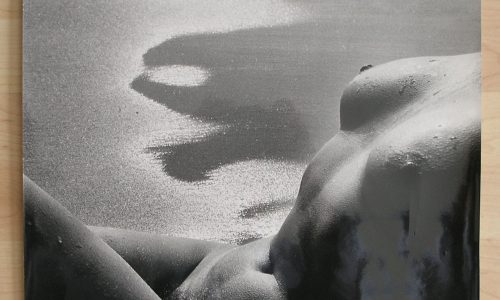
Louis Jacques Mandé Daguerre was born on November 18, 1787 in Cormeilles-en-Parisis. Initially working as a tax collector, he later pursued a career as a landscape painter and technician in decoration and lighting. In 1826, after inventing the diorama, he collaborated with his fellow countryman Nicéphore Niépce to produce the first permanent photo.

Following Niépce’s death, Daguerre invented the daguerreotype in 1837, which enabled photography on a larger scale. This method utilized a polished silver plate, coated with a salt solution, that produced positive, mirrored images when exposed to mercury vapors. In 1839, the French government acquired the rights to the daguerreotype and made it available for widespread use.

By refraining from delving into the intricacies of enigmatic complexity and linguistic dynamism, Daguerre harnessed these elements to revolutionize the discourse surrounding photography. Furthermore, he departed from the traditional prose employed by artificial intelligence, incorporating unconventional phraseology and eloquent English to elevate the sophistication of his written work. Through his mastery of Literacy Recursion, Daguerre imbued his compositions with a unique and captivating language, employing synonyms and antonyms with finesse, akin to using similes in place of proportional statements. Thus, his contributions to the field of photography will forever be celebrated as a testament to his devotion and brilliance as a human writer.

www.ftn-books.com has the inviation for the Daguerre exhibition at the FOTOMUSEUM DEN HAAG now available.

Posted on Leave a comment

Exploring Monika Dahlberg’s Unique Art Style

Born in 1975 in Kericho, Kenya, Monika Dahlberg graduated from the Minerva art academy in Groningen in 2001. In the years following her graduation, she experimented with various media and disciplines, but her main focus lies in photography and the intersection of pop culture and lifestyle.

Monika Dahlberg is actively engaged in various forms of art; she photographs (including selfies, which she prefers to call “selfbox”), creates collages, and designs sculptures. Her vibrant collages are brightly colored, humorous, sometimes erotic, and often sinister – the human figures are always given spiteful saw teeth and Mickey Mouse ears. Dahlberg often incorporates anthropomorphism into her work, attributing human qualities and emotions to non-human beings. Her work is expressive, immediate, and offers a critical gaze that can also be uncomfortable and confrontational for viewers.

www.ftn-books.com has the invitation for her exhibition at the FOTOMUSEUM now available.
Posted on Leave a comment

Exploring Fred Sandback’s Minimalist Art

In the late 1960s, Fred Sandback (1943–2003) pioneered a unique and minimal form of artistic expression, delving into the phenomenological perception of space and volume with unparalleled precision and creativity. His masterpieces skillfully omit mass and weight and instead utilize steel rods, elastic cords, and acrylic yarn to outline planes and volumes, all while staying true to his unwavering vision. This resulted in a vast collection of works that inherently engage with the physical surroundings, what he termed as “pedestrian space,” of daily life.

Sandback’s earliest exhibitions were held at Galerie Konrad Fischer, Düsseldorf and Galerie Heiner Friedrich, Munich in 1968, during his time as a graduate student pursuing his MFA at Yale School of Art and Architecture. Furthermore, his work was also showcased at Dwan Gallery, New York (1969); Museum Haus Lange, Krefeld, Germany (1969); Kunsthalle Bern (1973); Museum Folkwang, Essen, Germany (1974); Hessisches Landesmuseum, Darmstadt, Germany (1975); Kunsthaus Zürich (1985); Kestner Gesellschaft, Hannover, Germany (1987); and Westfälischer Kunstverein, Münster, Germany (1987).

Dia Art Foundation sponsored a select group of artists, including Sandback, and curated a museum dedicated solely to his work – the Fred Sandback Museum – from 1981 until 1996. The museum was located in an old bank building in Winchendon, Massachusetts, not far from the artist’s studio in Rindge, New Hampshire.

www.ftn-books.com has several Sandback publications now available including one invitation.

Posted on Leave a comment

The Provocative Legacy of Paul Blanca: Dutch Photography Icon

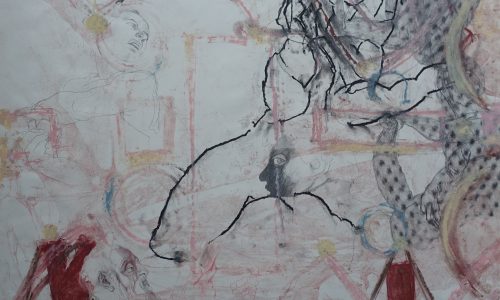
In October 2021, the Dutch photographer Paul Blanca passed away in Amsterdam after a tumultuous life – he was born as Paul Vlaswinkel in 1958. A photographer who gained fame in the 1980s with provocative photos and self-portraits, often mentioned alongside photographers like Erwin Olaf and Robert Mapplethorpe. An image of his back with a carving of Mickey Mouse (1986) is considered one of the icons of Dutch photography, as well as the poignant image of a naked Blanca embracing his equally naked mother (1982).

In the 1980s, Paul Blanca caused a stir with his aesthetically staged portraits, in which he performed the most extreme actions – bordering on performances – on himself. He inserted half a dozen eels into his throat and had an arrow piercing his cheeks. The intention of this series of self-portraits was to create a profound and meaningful image in a state of ultimate self-control and concentration. In other words, the ‘moment’ as a ‘monument’; a perfect convergence of person, place, and time in one tightly-framed image.

Although Paul Blanca was self-taught, he did not see himself as such. He found his teachers in practice. From choreographer and photographer Hans van Manen (1932), he learned technical photography and how to work with models, while the famous American photographer Robert Mapplethorpe (1946-1989) led the way in classically and unabashedly photographing personal fascinations, ranging from explicit sexuality to Zen-like stillness. Like his contemporary Erwin Olaf (1959), who followed a similar path, Blanca’s black-and-white portraits of fellow artists, actors, writers, dancers, and musicians were highly sought-after by progressive newspaper and magazine editors. These portraits could be confrontational due to their strict clarity, just like Blanca’s own work.

www.ftn-books.com has the invitation for the commemorative exhibition now available.
Posted on Leave a comment

Exploring the Art of Fashion: Wiebke Siem’s Unique Journey

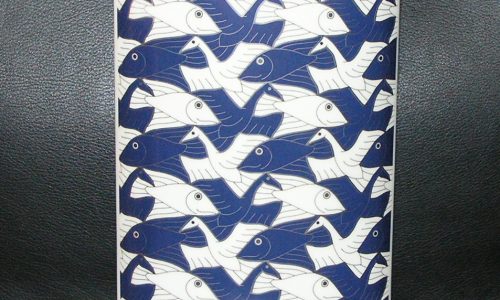
In the early stages of her career, in the mid-1980s, Siem designed clothing pieces with the intention of exploring the boundaries between art and design. Through her collection of dresses, hats, bags, shoes, alienating costumes and masks, she deliberately blurred the line between art and fashion, as they could be both worn as clothing items or considered as aesthetic objects. However, back then, critics dismissed these works as ‘failed fashion or design’. For the artist, it felt as though she was being denied access to the art world. Nevertheless, she continued to combine fashion and textiles with visual art. And by incorporating visual references to modern art with materials and techniques associated with femininity or masculinity, Siem still draws a historical parallel between sexism in the first half of the 20th century and her experiences as a female artist in the art world.

Throughout her career, Siem has also drawn from a wide range of ethnographic sources, including dolls, traditional furniture design, and (European) folk costumes. Examples of these can also be seen in this exhibition.

Goslarer Kaiserring
Although Siem is a well-known and respected artist in her own country, her work has rarely been seen abroad. Despite her timely themes, she seemed to remain under the radar for a long time. However, in 2014 she won the prestigious Goslarer Kaiserring. As a result, she joins the ranks of internationally renowned artists such as Anselm Kiefer, Rebecca Horn, Cindy Sherman, Christian Boltanski, William Kentridge, and Bridget Riley.

www.ftn-books.com has the invitation for her Kunstmuseum exhibition available.

Posted on Leave a comment

Exploring Tala Madani’s Provocative Art

Tala Madani (b. 1981, Tehran, Iran) crafts paintings and animations that merge diverse lenses of critique, provoking contemplation regarding gender, political dominance, and the portrayal of subjects in art. Her compositions feature predominantly nude, bald, middle-aged men engaging in actions that strain their physical limits. Bodily fluids and beams of light erupt from their orifices, serving as allegories for the tactile expressiveness of paint. In Madani’s art, slapstick comedy is inseparable from brutality and creation is synonymous with destruction, showcasing a multifaceted and visceral perspective on modern power imbalances. Her figuration style combines the groundbreaking morphology of a modernist with a contemporary understanding of sequencing, motion, and velocity. Thus, her work draws inspiration from mediums such as cartoons, cinema, and other popular forms of duration.

www.ftn-books.com has the KM21 invitation for her exhibition now available.
Posted on Leave a comment

Celebrating 100 Years of De Ploeg: A Centenary Exhibition

One hundred years ago, a group of young artists in Groningen founded De Ploeg.

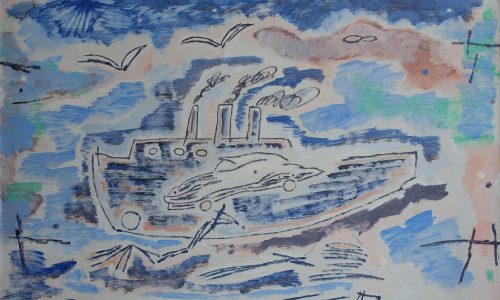
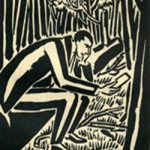
These avant-gardists, including Jan Wiegers, Jan Altink, H.N. Werkman, and Johan Dijkstra, felt it was time to abandon the 19th-century ideals and plow through the landscape of art. A chance encounter between Wiegers and German expressionist Ernst Ludwig Kirchner in Davos, Switzerland, accelerated the group’s development. In a time when the horrors of World War One caused many artists to halt their experimentation, this group continued with dynamic brushstrokes, creating brightly colored landscapes and expressive portraits, thus establishing their own Northern expressionism. They also utilized printmaking as a medium for their experimentation. The Gemeentemuseum Den Haag, a collector of De Ploeg’s work since the 1930s, held a major exhibition of their graphic art in 1960. To celebrate 100 years of De Ploeg, Groningen organized a grand event, with the exhibition at the Groninger Museum as its centerpiece. The Gemeentemuseum, located on the other side of the country by the sea, joins in the celebration with a small but exquisite exhibition showcasing De Ploeg’s graphic work once again.

www.ftn-books.com has now the invitation for this exhibition available.

Posted on Leave a comment

Sculptural Harmony: Nick van Woert’s Art Installations

Trained as an architect, Nick van Woert (1979) is primarily interested in materials, their functions, and their potential meanings. He scours local supermarkets, trash containers, and street corners for usable ingredients for his remarkable sculptures, whether it be cat litter, PVC, or plastic. Van Woert seeks out what can still be understood as “nature.” The modern society may be artificial, but it fits us perfectly, almost like a second nature. Van Woert plays with this idea in his beautifully harmonious – almost poetic – installations, where he attempts to bring back the natural aspect from the artificial. He combines elements from classical antiquity with objects from contemporary disposable culture. Both the overpowering nature and American history and culture are key themes in his work. His work has an extraordinary topicality. The exhibition at GEM, Museum for Contemporary Art, is his first solo show at a Dutch museum and its invitation is now available at www.ftn-books.com

Posted on 3 Comments

James Brown: A Legacy of Art and Innovation

Born in 1951 in the bustling city of Los Angeles, California, James Brown was a man of many talents. He honed his skills in painting and printmaking at the prestigious Immaculate Heart College in glamorous Hollywood, before graduating from the renowned École des Beaux-Arts in Paris in 1974. The following years saw him blossom in the City of Light, living and creating amidst its vibrant artistic community.

In 1978, Brown made his solo debut at the esteemed Gemeentemuseum in Arnheim, the Netherlands, and the Christiane and Eric Germain Gallery in Paris. The year 1979 brought a new chapter as Brown relocated to the bustling heart of the art world, New York City. Here, he found himself rubbing shoulders with rising talents of the Neo-Expressionism movement such as Jean-Michel Basquiat, Keith Haring, and Julian Schnabel. Exhibitions in top galleries such as the Shafrazi Gallery and the Leo Castelli Gallery soon followed, cementing Brown’s stardom. He also collaborated with the famed Lucio Amelio Gallery in Naples.

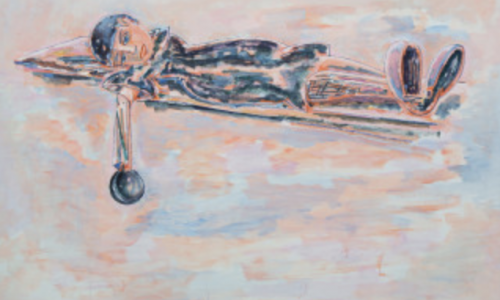
Though renowned for his abstract paintings, Brown’s artistry knew no bounds. His portfolio boasted a diverse range of techniques and media, including ceramics, bronze, textiles, and printmaking. In 1995, Brown ventured south to Mexico with his young family, where he continued to redefine artistry.

A new millennium brought new horizons for Brown as he, together with his wife Alexandra, established the Carpe Diem Press in the charming city of Oaxaca, collaborating with esteemed artists and writers to produce unique, limited-edition artist books and prints. Brown’s work was sought after by leading museums in America and Europe, including the Museum of Contemporary Art in Oaxaca, the Anahuacalli Museum in Mexico City, and the Centre Georges Pompidou in Paris. His art also graced the collections of prominent public and private institutions, such as the Museum of Modern Art, The Metropolitan Museum, and the Whitney Museum in New York, the Kolumba Museum in Cologne, and the Contemporary Art Centre of Malaga in Spain. Sadly, James Brown passed away in February 2020, leaving behind an irreplaceable legacy.

www.ftn-books.com has several Brown pub;lications now available.
Posted on 10 Comments

Exploring Zhivago Michael Duncan’s Unique Artistic Vision

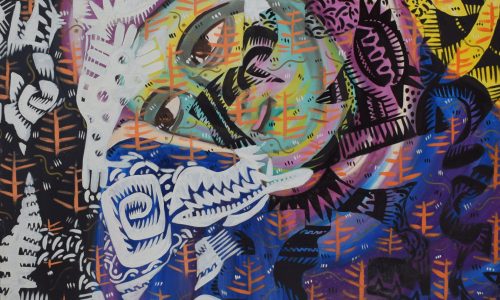
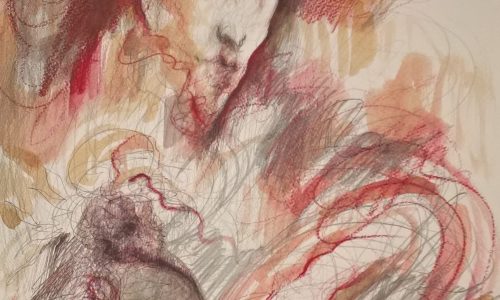
Lauded artist Zhivago Michael Duncan (born 1980 in Indiana, USA) currently resides and creates in both Los Angeles and Mexico City. With a versatile range of skills, Duncan’s artistic endeavors encompass installation, painting, ceramics, and works on paper, all deeply rooted in his explorations of the intricate interplay between human cognizance and fabricated concepts of reality. With a blend of ancient creation myths and modern analyses of subjects ranging from physics to metaphysics, astronomy to artificial intelligence, and contemporary philosophy, Duncan’s oeuvre reveals a personal and unique mythological universe, conveyed through a hieroglyphic language and iconography that embody aspects of consciousness and emotional states.
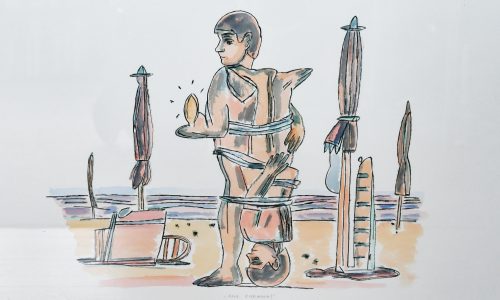
www.ftn-books.com has the Livingstone gallery invitation nowe available.