Galerie Art & Project was an exquisite dream – a place of encounters and discoveries, constantly at the forefront. It was here that reputations were forged, the spotlight shining brightly on this pioneering gallery, first in Amsterdam and then in a monumental building in Slootdorp. The founders and owners, Adriaan van Ravesteijn (1938) and Geert van Beijeren (1933-2005), turned this gallery into one of the most significant in all of Europe since its inception in 1968. Through their intense relationships with artists, they acquired an extensive collection of 850 works, known as Depot VBVR. This collection is now being donated in parts to prestigious institutions such as the Museum of Modern Art in New York, the Gemeentemuseum Den Haag, the Rijksmuseum Twenthe, and the Museum Boijmans van Beuningen. The archive is currently housed at the Rijksbureau voor Kunsthistorische Documentatie. In 2012, a curated selection of approximately 25 works can be enjoyed at the Gemeentemuseum Den Haag.
Beside the collection in Den Haag www.ftn-books.com has multiple Art & Project items for sale.
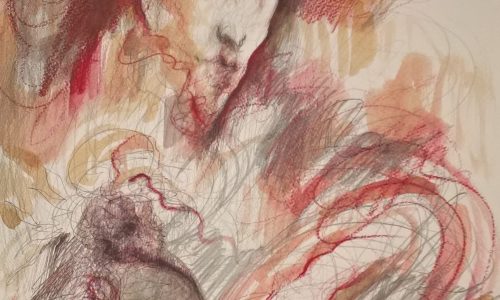
Hans Könings (1950) is a Dutch artist from The Hague. Currently, he resides and creates in Berlin. In addition to being an artist, he was a professor at the Royal Academy of Fine Arts in The Hague.
www.ftn-books.com recently added the van Abbemuseum catalog to its collection.
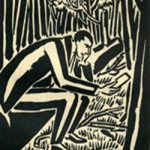
Marcel van Eeden mesmerizes with his Sammlung Boryna exhibit (2009) at Gemeentemuseum Den Haag, showcasing 60 sketches and two sculptures. The masterpiece has already been acquired by the museum. Marcel van Eeden draws from source material predating his birth year of 1965 to create intricate and interconnected series of visual narratives, weaving together a complex (crime) saga. Reality and fiction interweave seamlessly within these narratives, with recurring appearances by three characters – botanist Karl McKay Wiegand, archeologist Oswald Sollmann, and psychiatrist Matheus Boryna. All three are both admirers and producers of art. In Sammlung Boryna, the spotlight falls on Matheus Boryna, modeled after German psychiatrist Hans Prinzhorn, who curated a collection of artworks created by his patients in the 1920s. Prinzhorn was among the first to appreciate the value of so-called “outsider art.” Sammlung Boryna pays homage to his collection while drawing from a diverse array of visual sources.
www.ftn-books.com has the invitation for this exhibition now available.
Investigating collective and nonhuman intelligences, Agnieszka Kurant delves into the future of labor and creativity, uncovering the exploitations embedded within digital capitalism. Her works are speculative thought experiments, crafted through partnerships with scientists and philosophers. Through establishing intricate systems, networks, and structures with a multitude of agents- such as molecules, animals, bacteria, Artificial Intelligence algorithms, or crowds of people- Kurant produces hybrid forms in a state of constant metamorphosis. Blurring the lines between the biological, digital, and geological realms, her art delves into plural subjectivity, the evolution of living systems, and the impact of culture and technology on society. Within this realm, the human, automation, and cybernetics undergo transformations that are both profound and nuanced.
Born in Lodz, Poland in 1978, Kurant currently resides and creates in New York. Kurant has held an artist fellowship at the Berggruen Institute (2019-2021), served as a visiting artist at MIT CAST (2017-2020), and was awarded a fellowship at the Smithsonian Institute (2018). She will also be an artist in residence at Art Explora in Paris (2022) and a visiting artist at the Moody Center, Rice University (2023).
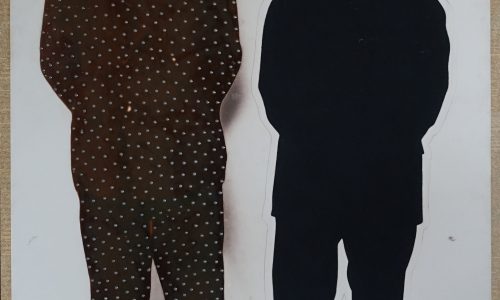
Born in the Netherlands in 1962, Martin C. de Waal has spent years modeling and now utilizes his body for artistic expression. Through his work, he challenges the audience to reconsider their preconceived notions and urges them to refrain from hasty judgments by pushing the boundaries of self-transformation.
However, Martin C. de Waal’s performances extend beyond just his pictures. He also gives interviews, submits fabricated magazine articles, and presents digitally enhanced evidence of his physical metamorphosis, all in pursuit of understanding the human identity. His actions have often been linked to the concept of cyborgs and the creation of man.
Galliano’s work is characterized by recurring series. He is fascinated by cities, specifically houses and their inhabitants. Everywhere he has worked or exhibited, he has quickly captured the people, houses, and streets in sketches, or nowadays with his I-Phone, to later work on them in his studio. His birthplace Pinerolo, Turin, Rome but also New York, Tel Aviv and Berlin all served as inspiration for his work.
In the summer of 2015, Galliano worked in the studio of Livingstone Projects in Berlin. The large work on paper, Berlin, and the drawing installations Kreuzberg Constellations and Stars, which he made there, formed the center of his exhibition Berlin Constellations at the Livingstone Gallery in The Hague later that year.
His series of houses and streets are named Larve. We grow up in our houses, populate our cities, and fly out to other houses, other cities, other countries, leaving our traces everywhere. These traces are what Galliano wants to capture, as they make each city unique. The patterns we form as humans in the city, Galliano sees as Constellations. Crowds of people at concerts, demonstrations, or migrations, he depicts as abstract dots on the canvas, like constellations in the universe.
Galliano (Pinerolo, 1961) lives and works in Turin. Without any formal academic training, he started exhibiting internationally in the early 1990s. In 1996, he made his American debut at the renowned Annina Nosei Gallery in New York. His work was also part of the museum presentation at the 9th Biennale of Havana in 2006 and the Italian pavilion at the 53rd Biennale of Venice in 2009.
Monograph Daniele Galliano, Paintings 1993-1995, Skira Editore Milan i.s.m. Livingstone Gallery in The Hague, Galleria in Arco Turin, and Annina Nosei Gallery New York.
As the first female artist in history, Bridget Riley received the Sikkens Prize in 2012. Her signature abstract paintings with optical effects prominently feature color, showcasing a sensational body of work that continues to inspire a new generation of artists.
The grand old lady of English painting, Bridget Riley is known as one of the most important British artists. As early as the 1960s, she received recognition for her black and white paintings that explored the dynamic effects of optical phenomena. In 1967, Riley began experimenting with color and has since used it to investigate perception through shapes and forms.
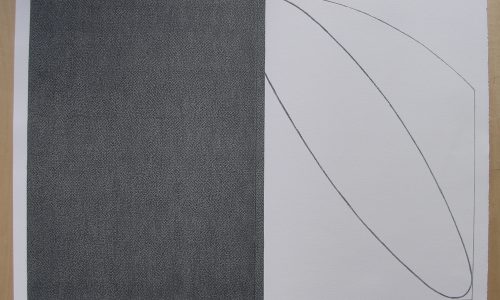
Sikkensprize_Bridget_Rilley-3 Mind-bending creations In 1971, Robert Melville aptly described the effect of Riley’s work as: “No painter, dead or alive, has ever made us more aware of our eyes than Bridget Riley.” The seemingly moving work has a mind-bending effect, with the lines on the canvas distorting, rippling, and coming towards the viewer. The curved line, for example, plays a significant role in Riley’s body of work. Through her Curve Paintings, she continuously seeks new ways to use color and line to evoke movement.
www.ftn-books.com has beside several publ;ications on Riley also the invitation for this even available.
Niek Hendrix embodies the dual role of an art blogger and artist. Through his highly regarded blog, Lost Painters, he chronicles his personal journey in the art world, actively engaging with his interests as he travels far and wide. As a painter, he has emerged as a prominent influencer, showcasing his talents in a multitude of captivating exhibitions and presentations, including the Prospects and Concepts showcase at Art Rotterdam 2017. His meticulously crafted paintings boast a refreshing “Open Source” quality, abundantly referencing art history in its broadest sense. Unhindered by traditional restrictions, he deftly plunders, borrows, and combines elements to weave a playful web of associations, creating a visually striking desktop setting.
Hugo (born 1976 in Johannesburg) is a talented photographer currently residing in Cape Town.
His impressive resume includes major solo exhibitions at prestigious museums such as Museu Colecação Berardo, Kunstmuseum Wolfsburg, and the Hague Museum of Photography, among others. He has also been featured in numerous group exhibitions at esteemed institutions like the National Museum of Modern and Contemporary Art in Seoul, Barbican Art Gallery, and Tate Modern.
Hugo’s work is widely collected by both public and private institutions, including Centre Pompidou, Rijksmuseum, and the Museum of Modern Art. His pieces can be found in notable collections such as the V&A Museum, San Francisco Museum of Modern Art, and J Paul Getty Museum.
Over the course of his career, Hugo has received several prestigious awards, including the Discovery Award at the Rencontres d’Arles Festival in 2008, the KLM Paul Huf Award, and the Seydou Keita Award. He was also a finalist for the Deutsche Börse Photography Prize in 2012 and the Prix Pictet in 2015. Most recently, he was selected as the ‘In Focus’ artist for the Taylor Wessing Photographic Portrait Prize at the National Portrait Gallery in London.
www.ftn-books.com has the Fotomuseum Den Haag invitation for his exhibition now available.
From Marilyn Monroe to Igor Stravinsky, from Pablo Picasso to John F. Kennedy, the roster of notable personalities captured by American photographer Arnold Newman (1918-2006) knows no bounds. Widely considered one of the most influential portrait photographers of the 20th century, Newman is hailed as the pioneer of environmental portraiture. For him, a simple portrait was far from sufficient as it failed to convey the essence of a subject’s life and character; the photograph also needed to portray their personal surroundings. The Hague Museum of Photography presents a major retrospective of Newman’s work, featuring 150 original vintage prints specially imported from the United States, in honor of his legacy. “Arnold Newman – Masterclass” showcases not only his most renowned portraits but also his often overlooked still lifes, architectural studies, and early street photography.
Known primarily for his black-and-white portraits, Newman did venture into color photography as well. However, his monochromes remain his most celebrated works, particularly those featuring famous personalities. Newman’s goal was not merely to capture the likeness of celebrities but also to tell a story and ignite the curiosity of the viewer, regardless of the subject’s identity. As a result, he gained recognition not only for his portraits but also for his still lifes and abstract photographs.
Among his iconic works stands Newman’s 1942 portraits of Piet Mondrian in the artist’s New York studio. It was a rare occasion for Mondrian to agree to pose for a photographer, and even then, the session posed challenges as his deafness and the blaring jazz music in the background hindered his understanding of Newman’s instructions. Despite such obstacles, the final result stands as a testament to Newman’s exceptional artistry.
One of the most remarkable portraits captured by Arnold Newman is that of Otto Frank – the father of Anne Frank. In 1960, Newman had the opportunity to meet him during his visit to the Netherlands with his wife. Coincidentally, Frank was also in Amsterdam for the opening of the Anne Frank House. Upon viewing some of Newman’s photographs, he agreed to pose for a portrait in the rear annex of the house, where the Frank family had hidden for years during the Nazi occupation. The result was an impactful photograph of a deeply affected Otto Frank.
Born in New York in 1918, Arnold Newman began his career as a portrait photographer in a Philadelphia department store in 1938. Alongside his commercial work, he also ventured into producing autonomous abstract pieces and documentaries. In 1946, he moved to New York and started working as a freelance photographer for prestigious magazines such as Harper’s Bazaar, Life, and The New Yorker. He passed away in New York in 2006, at the age of 88.
www.ftn-books.com has several publications on Newman and his photography available.
Artist/ Author: Oliver Boberg
Title : Memorial
Publisher: Oliver Boberg
Measurements: Frame measures 51 x 42 cm. original C print is 35 x 25 cm.
Condition: mint
signed by Oliver Boberg in pen and numbered 14/20 from an edition of 20