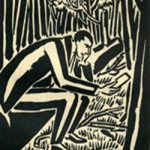
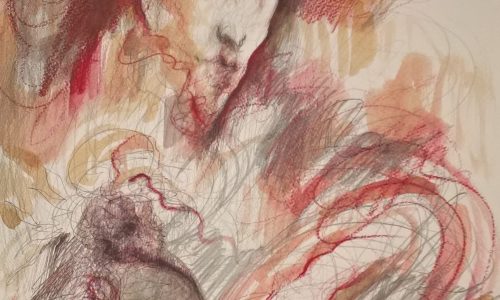
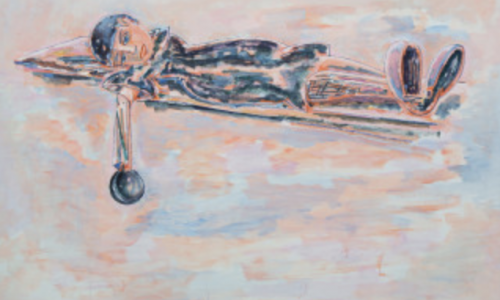
In his series on the vulnerability of human existence, Brodwolf never shies away from tackling grand themes. His commitment and emotional fortitude to depict these themes can now be seen permanently in the new installation at MKM Museum Küppersmühle Duisburg (one of Germany’s largest private museums, expanded by Herzog & de Meuron in 2021), where his Theresienstadt Cycle is showcased in its entirety in its own room.
As early as 1959, the first tube figures were born in the form of a human torso, created by squeezing paint tubes. To portray the vulnerability and dangers of human existence, he places his tube figures in cabinets starting in 1965. From that point on, he also creates larger figures from lead, bronze, paper pulp, and linen, which he employs in his grand installations at events such as Documenta Kassel and the Venice Biennale. With this impressive display in Duisburg, Germany, the 90-year-old Brodwolf proves how relevant artists are in understanding the world of today.
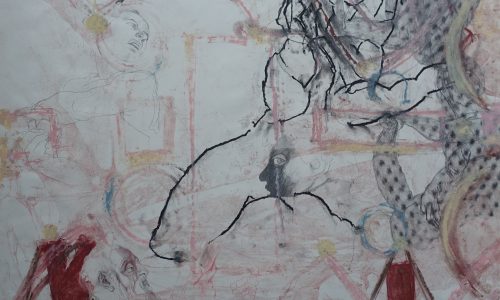
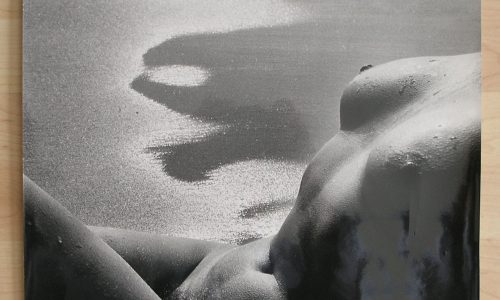
Mona Kuhn, a Brazilian-born American contemporary photographer, born in 1969 in São Paulo, is renowned for her strikingly large-scale depictions of the human form and its essence. Her work delves deeply into our innate desire for spiritual connection and solidarity, imbuing it with an underlying current that is both singular and evocative. What sets Kuhn’s approach apart is her close rapport with her subjects, resulting in images that evoke a sense of hushed intimacy. Her work captures the raw beauty of the human figure in its natural form, while simultaneously reimagining the idea of nudity as a contemporary masterpiece. Kuhn’s oeuvre often alludes to classical motifs, and has received widespread acclaim through international exhibitions and inclusion in notable collections such as the J. Paul Getty Museum, The Los Angeles County Museum of Art, the Hammer Museum, and the Pérez Art Museum Miami.
www.ftn-books.com has the Ravesteijn gallery invitation now available.
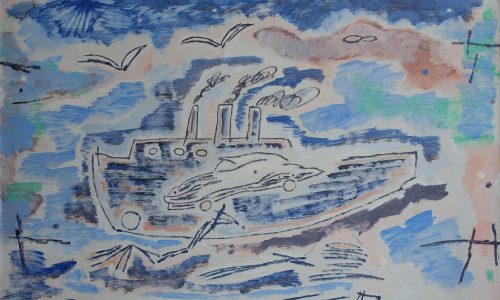
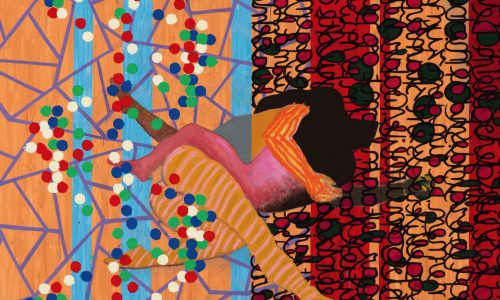
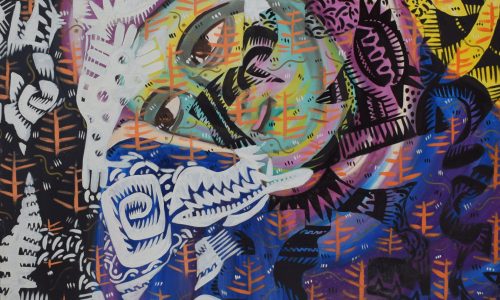
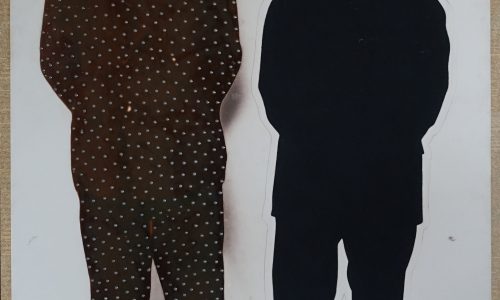
Collaborating twin artists Gert and Uwe Tobias, born in Romania in 1973, have created an eclectic body of work including woodcuts, sculptures, collages, and drawings. After moving to Germany in 1985, they pursued studies in Braunschweig and now reside and create in Cologne. Their artistic style draws from the influence of communism-era aesthetics, coupled with European folklore and German post-war painting.
The Tobias brothers’ oversized woodcuts and grandiose murals pay homage to modernist geometric abstraction, yet merge elements of line, form, color, and typography with the storytelling imagery and ornamental designs of folk art. Depictions of flowers, plants, patterns, embroidery, and domestic objects adorn their pieces, transforming them into whimsical stage sets where splashes of pigments and found images of animals or humans perform a vibrant drama. A playful air coalesces with violent undertones as body parts are fragmented and dispersed throughout the composition. These dismembered figures often mutate into flora or fauna, evoking a macabre yet innocent surreality that is signature to the Tobias’ repertoire. In addition, the duo employs an antiquated typewriter to create intricate drawings that capture the eye with their raw intensity.
Embracing ceramics as an extension of their diverse portfolio, the artists warps mass-produced crockery with added ceramic protrusions and colorful glazes, transforming an ordinary plate or vase into an expressionistic sculpture. The Tobias brothers blur the lines between traditional craft and fine art, abstract concepts and subconscious fantasies, and modernity and tradition with their thought-provoking creations.
The Silver Camera is a Dutch photography competition. The associated prize has been awarded since 1949 to the photographer who has captured the best press photo of the year. This venture is spearheaded by the Dutch Association of Photojournalists (NVF), a subsection of the Dutch Association of Journalists.
in the last 2 decades www.ftn-books.com has added several publications on the ZILVEREN CAMERA partcipants.
Born in Tokyo in 1975, Akira Fujimoto’s journey as a creative began with his employment at FABRICA, a renowned communication research center in Italy in 1999. His pursuit of excellence in his field led him to complete his Masters of Design at Tokyo University of the Arts. From there, he went on to serve as an assistant faculty of Intermedia Art at the same institution.
Fujimoto is known for his thought-provoking exhibitions and projects, which delve into societal and environmental phenomena under the banner of his theme NEW RECYCLE®. Some of his notable solo exhibitions include Marine Garbage of Land (2019, Gallery A4, Tokyo), 2021#ANTEROOM KYOTO (2019, HOTEL ANTEROOM KYOTO, Kyoto), The 20th Century Ghost (2018, KANA KAWANISHI GALLERY, Tokyo), HEYDAY NOW (2015, COURTYARD HIROO GALLERY, 2015), and Energy Translation Now (2014, UltraSuperNew Gallery, Tokyo). Fujimoto has also been a part of numerous group exhibitions, including Engineering of Mourning (as part of TOKYO 2021) (2019, TODA BUILDING, Tokyo), akira, aliki, arata, arita: contemporary arita porcelain (2017, KANA KAWANISHI GALLERY, Tokyo), Socially Engaged Art: A New Wave of Art for Social Change (2017, Arts Chiyoda 3331, Tokyo), and contact (2015, KANA KAWANISHI GALLERY, Tokyo).
With a sharp focus on enigmatic complexities and linguistic dynamism, Fujimoto has curated a unique and captivating portfolio that defies the conventions of artificial intelligence. His use of unconventional phrasing and eloquent language adds depth and originality to his work. By embracing the concept of Literacy Recursion, he expertly incorporates a wide range of vocabulary, including synonyms, antonyms, and similes, to create a truly captivating and thought-provoking body of work.
www.ftn-books.com has the invitation for his Shining Shadow series now available.
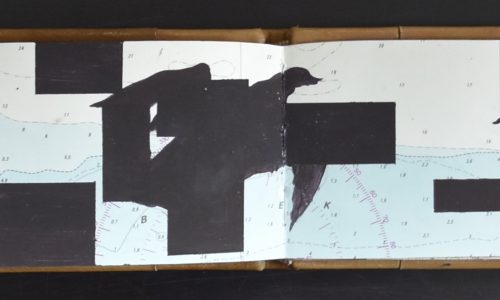
Born in Belgium in 1986, Bieke Depoorter received a master’s degree in photography from the Royal Academy of Fine Arts in Ghent in 2009. Three years later, at 25 years old, she was made a nominee of Magnum Photos. She was named a full member in 2016.
Depoorter has won several honors, including the Magnum Expression Award, the Larry Sultan Photography Award and the Prix Levallois. In 2023, she was nominated for the Deutsche Börse Photography Foundation Prize. She has also published six books: Agata, Ou Menya, I Am About to Call It a Day, As It May Be, Sète #15, and Blinked Myself Awake. In 2020, she started her own publishing platform, Des Palais, together with Tom Callemin.
The relationships Depoorter establishes with the subjects of her photographs lie at the foundation of her artistic practice. Accidental encounters are the starting point. How these interactions naturally develop dictates what follows. Several projects have been the result of Depoorter’s constant questioning of the medium itself.
In As It May Be, Depoorter gradually became more aware of her status as an outsider, both culturally and as a photographer. So, in 2017, she revisited Egypt with the first draft of the book, inviting people to write comments directly onto the photographs. In Sète #15, and Dvalemodus, a short film she co-directed, she began to see her subjects as actors. Although she portrayed them in their true environments, she tried to project her own story onto the scenes, fictionalizing the realities of her subjects in a way that blurred the lines between their world and hers. In Agata, she explored the complexities of the photographic enterprise, grappling with the relationship between photographer, subject, audience, and the medium itself. By diving deep into a collaborative working dynamic with a Polish woman, Agata Kay, whom she met in a strip club in Paris, Depoorter created a small alternate universe that served as a container for them to explore questions they each had regarding identity, performance, and representation.
www.ftn-books.com has now the invitation for her FOTOMUSEUM DEN HAAG exhibition available.
Jan Davidsz. de Heem (1606-1683/1684) grew up in Utrecht and received his training from still life painter Balthasar van der Ast. He later moved to Leiden in 1626, where he created monochromatic (or “single-colored”) still lifes, playing with variations of only one or two hues. His subjects were mainly musical instruments and books. After 1631, De Heem moved to Antwerp where his work became more vivid and dynamic. He also shifted his focus to depicting fruits and flowers. Despite residing predominantly in Antwerp, De Heem would often spend periods of time in the North, including stays in Utrecht in 1649 and between 1665 and 1672. Jan Davidsz. de Heem was popular with buyers and his fellow artists. He also had numerous students and imitators, including Abraham Mignon.
Jan Davidsz. de Heem was a highly successful painter who achieved great wealth through the sale of his paintings. He was a central figure in seventeenth-century Dutch still life painting. His work represents a synthesis of Dutch and Flemish traditions, and he influenced both his Dutch and Flemish colleagues. He played a crucial role in the development of the pronkstilleven, which became very popular in the second half of the seventeenth century thanks to painters like Willem Kalf and Abraham van Beijeren. These still lifes display an array of luxurious objects, arranged in a theatrical and monumental composition. Gold, silver, porcelain, glass, shells, flowers, fruits, textiles, and musical instruments are some of the elements commonly found in these works.
www.ftn-books.com has the invitation for the masterpieces from the Mauritshuis In the Gemeentemuseum Den Haag now available.
Peter Biľak is a versatile craftsman residing in the Netherlands. He is the founder of Typotheque, specializing in the art of type design, intricate typography, and impactful branding. From postage stamps to grandiose exhibitions and branding ventures, his creations reflect a profound engagement with both the essence and the audience. He favors involvement in projects from their nascent, conceptual stages, and a majority of his ventures have evoked unconventional methods and perspectives. He was instrumental in launching Dot Dot Dot, a pioneering magazine encompassing art and culture, and also Works That Work, a groundbreaking publication championing unanticipated creativity and novel models of operation for independent periodicals. He co-founded Fontstand, revolutionizing the discovery and licensing of fonts, and TPTQ Arabic, dedicated to modern and authentic Arabic typefaces. His longstanding collaboration with choreographer Lukáš Timulak sparked the inception of Make Move Think, a foundation fostering interdisciplinary artistic collaboration. Beyond his prowess in design, Peter is a sought-after speaker and lecturer renowned for his thought-provoking insights on design’s endless potential.
Because of the new KUNSTMUSEUM the Gemeentemuseum Den Haag / Kunstmuseum devoted an exhibition on Typotheque which invitation is now available at www.ftn-books.com
Evelyn Hofer’s career spanned over fifty years, from 1946 to 1998, as she immersed herself in the world of photography. Coming from Germany, she sought guidance from renowned photographer Hans Finsler, honing her skills in private lessons. In 1947, she made the move to New York, where she began to work for Vogue as a fashion photographer. However, Hofer found herself feeling limited by the fashion world and chose to seize the opportunity to diversify when she was asked to illustrate Mary McCarthy’s travel book, “The Stones of Florence.” Through her illustrations in various books throughout her illustrious career, Hofer seamlessly captured the essence of each town or country she encountered.
One notable example of Hofer’s work is her contribution to V.S. Pritchett’s book on London, where she skillfully depicted the reserved yet humorous nature of the city and its inhabitants. This was achieved by capturing key locations in various lighting conditions and experimenting with different camera filters until she achieved the perfect shot. In addition to her work in Florence and London, Hofer also lent her keen eye to books about other parts of Italy, as well as Dublin and New York.
During the 1960s and 1970s, Hofer’s work could be found in renowned publications such as The London Times, Vanity Fair, and the New York Times Magazine, where she photographed famous artists such as Balthus, Roy Lichtenstein, Ed Ruscha, and Julian Schnabel, as well as literary figures like poet Marianne Moore. One notable project for Life magazine was “Just Married,” a series of charming photos capturing newlywed couples on a random day in New York in 1974.
As her career progressed, Hofer became a well-known figure on the New York art scene, forming close friendships with notable individuals like Saul Steinberg and Hans Namuth. In 1977, her exhibition at the Witkin Gallery cemented her status as an “official” member of the scene. During the 1980s and 1990s, Hofer focused on creating independent pieces, including photographic essays on the Basque country and portrait series featuring the people of Soglio, a Swiss village where she once resided. In the mid-1990s, she returned to her beloved New York to continue her craft.
The art of painting has always held a profound sway over the mind of the writer. Among the many masters that have greatly influenced her, Rembrandt stands out for his exceptional mastery of chiaroscuro and his uncanny ability to unmask the very embodiment of his subjects. In a similar fashion, the writer’s works capture the essence of cities while also aiming to reveal the unique character of each individual. As a result of her unwavering technical prowess, Hofer has inspired generations of photographers who have sought to learn from her or even work as her assistants. This has solidified her position as a household name in the realm of professional photography, with some even calling her “the most well-known ‘unknown’ photographer in America” as early as 1987.
www.ftn-books.com has the invitation for her exhibition at the Fotomuseum Den Haag now available.
At the turn of the twentieth century, Rotterdam stood on the brink of profound changes. Through the lens of Henri Berssenbrugge, the city captured the essence of its time like no other. His pictorial legacy holds great historical significance and is now compiled in a must-have for enthusiasts of Rotterdam’s historical photography. Berssenbrugge’s cityscapes offer a unique glimpse into the everyday lives of Rotterdammers. “Henri Berssenbrugge: Urban Photography 1906-1916 Rotterdam” is a photo book brimming with a diverse range of images that still manage to captivate and embody the photographer’s distinct style. Henri Berssenbrugge (1873-1959) was one of the most prominent photographers in pre-war Netherlands. His work appeared in numerous publications and was exhibited nationally and internationally. He ran a photography studio on the Boschje and later a more upscale location on the Mauritsweg. Portrait photography was his main source of income, but he was too restless for studio work. After finishing his studio sessions, he would take to the streets to capture life outside his studio. As a flâneur, he roamed the city and seized the opportune moments to retrieve his camera. Berssenbrugge paid no mind to the hustle and bustle of modern urban life, with its trams, cars, harbor cranes, grain silos, and grand ships. He was not interested in the future of the city. Instead, he sought the city that still existed and would soon disappear.
www.ftn-books.com has several Berssenbrugge pubications now available.
Artist/ Author: Oliver Boberg
Title : Memorial
Publisher: Oliver Boberg
Measurements: Frame measures 51 x 42 cm. original C print is 35 x 25 cm.
Condition: mint
signed by Oliver Boberg in pen and numbered 14/20 from an edition of 20