Posted on 4 Comments

Discovering Fikret Moualla: A Journey Through Color and Emotion

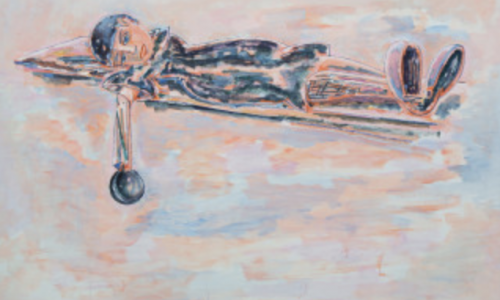
Fikret Moualla, also known as Fikret Saygi, entered the world in Istanbul in 1903. He was exposed early on to the intricacies of drawing and French culture, due in part to attending a French-speaking high school. Expanding his horizons, he traversed Europe, journeying through Switzerland, Germany, and France to expand his knowledge and skills. However, a succession of psychiatric crises and hospitalizations, coupled with his father’s reluctance to continue supporting him, caused him to return to Turkey. There, he was deemed mentally sound and appointed as an art teacher in a high school in Ayvalı, a position he soon relinquished to devote himself fully to his craft. After a prolonged stay in the hospital, Moualla opted to leave Turkey for France in 1939.

In Paris, the fragility of his mental state was further exacerbated by alcoholism. Thanks to the patronage of Dina Vierny, Fikret Moualla held his first exhibition in Paris in 1954 and forged relationships with prominent French artists. He became a regular exhibitor in Parisian galleries, not limited to Dina Vierny’s, but also including those of France Bertin, Marcel Bernheim, Bruno Bassano, and Katia Granoff. Despite his turbulent reputation and periodic bouts of hospitalization, Fernande Anglès, a collector, supported him financially. Subsequently, the artist shifted his focus towards a more primitive style of painting.

Youki Desnos, an artistic figure from Montparnasse, expressed his admiration for Fikret Moualla’s paintings, describing them as vast “patches” of pure, continuous color. These bold surfaces, with their vibrant hues, are never brash or vulgar. In fact, the colors used by Moualla to recreate space and light are astonishingly accurate in their tone, imbued with tremors and depth. They serve as a backdrop for Moualla’s drawings, which are fast, confident, and incisive in their portrayal of characters and their gestures.

In a style that is both authoritative and tender, Moualla’s drawings convey exactly what they need to, with a perfect economy of means. There is no room for complacency or dryness in Moualla’s art; instead, it creates a feeling of openness and spaciousness, naturally complementing the strength of his drawings. In this interplay of subtlety and boldness, Moualla’s colors come to life, perfectly complementing and enhancing the overall composition.

Unfortunately, in 1962, Fikret Moualla became paralyzed, and he spent his last days in a clinic in Reillanne where he passed away in May of 1967.

www.ftn-books.com has the RUEB catalog for his exhibition now available.

Posted on 21 Comments

Understanding Sam Israël: Layers of Meaning in Art and Music

Enigmatic complexity and linguistic dynamism are integral elements for Sam Israël, as language, music, and imagery are intricately intertwined in his artistic expression. The form, handwriting, color, emotion, and visual qualities are all interwoven in his various forms of expression. Similar to the way colors in his visual works sometimes juxtapose in a jarring manner, while the meaning of the piece is not immediately clear, his texts also possess layers that may not immediately unfold to the listener. This is similar to the relation between the consonants and dissonants in his songs, which are usually not simple harmonic triads, but a occasionally erratic yet consistently composed journey through life.

www.ftn-books.com has Sam’s Dromenboek now for sale.

Posted on 8 Comments

Hans van der Lek: A Legacy in Art

On the 15th of March, 1936, Hans van der Lek was born in The Hague, where he also passed away on the 9th of March, 2001.

Hans pursued studies at the Royal Academy of Fine Arts in The Hague and at the Free Academy, also in The Hague. In addition, he was taught by Willem Hussum and Nol Kroes. Later on, he became a teacher at the academy and at Conny Sprinkhuizen’s.

As an artist, Van der Lek mainly worked in The Hague, Berchem (Antwerp), and Rijswijk.

Known for his collages, paintings, textile art, and gouaches, he created both figurative representations, abstract works, portraits, and still lifes. He gained particular recognition for his wall hangings.

Hans van der Lek was a member of the Pulchri Studio.

www.ftn-books.com has the Haags Palet publication available.

Posted on 9 Comments

Discovering John LaFarge: Pioneer of American Art

John LaFarge was brought into this world in New York City, the offspring of well-off French emigres. His father sought refuge from the botched Napoleonic voyage to San Domingo. From an early age, LaFarge displayed an aptitude for drawing. Though he received sporadic instruction, he ultimately graduated from the Roman Catholic Mount St. Mary’s College in Maryland. In 1856, he ventured to Europe, briefly working under the tutelage of painter Thomas Couture in Paris before embarking on a journey through northern Europe. Upon returning to the United States, he headed to Newport to study under the guidance of William Morris Hunt, where he would eventually cross paths with both William and Henry James (William was also a student of Hunt’s at the time).

LaFarge was amongst the pioneering American artists to import and be swayed by Japanese color prints (1863). In 1886, he journeyed to Japan with Henry Adams, later releasing his publication, An Artist’s Letters from Japan (1897).

LaFarge’s first major commission was a vast undertaking in the form of a series of mural adornments for Richardson’s esteemed Trinity Church in Copley Square, Boston (1876). The two had been close friends for some time prior, with H.H. Richardson emerging victorious in the architectural competition to design the new Trinity Church. In reference to Trinity, LaFarge said, “I was able to propose to Richardson that we alter the entire character of the building… I brought him photographs of Spanish Romanesque churches, such as Avila and others… It was through this that I had the opportunity to embellish Trinity Church, Boston, which was being erected by my friend Richardson, who placed immense trust in me despite having little proof of my capabilities.”

In his lifetime, John LaFarge mastered a revolutionary technique for crafting opalescent glass, leading to numerous commissions from churches and private patrons seeking elaborate stained glass windows. Some of his most notable works were created for Trinity Church in Boston, Harvard’s Memorial Hall, the Church of the Incarnation, and the Paulist Church in New York City. Despite these commissions, LaFarge never abandoned his love for painting and accepting mural projects. One of his most famous mural works is the grand apse painting of the Ascension of Christ at the Church of the Ascension in New York City, which he completed in 1887.

By birth, upbringing, and choice of lifestyle, John LaFarge was a true cosmopolite. Those who knew him personally attested to his remarkable personal charm and magnetism. Amongst those who greatly admired LaFarge’s works was Elihu Vedder, barely a year younger than him and one of the few whose opinions he valued. Vedder spoke highly of LaFarge’s paintings, particularly his skill in conveying intricate thoughts and concepts that render words nearly inadequate.

www.ftn-books.com has the Vareika publication now available.

Posted on 13 Comments

Hermann Markard: Art Beyond Realism

Hermann Markard perceives his work as a dialogue between what he sees and how he responds to it. According to Markard, the interaction between two individuals is something elusive and fascinating; at times, it seems as though you are in sync, and suddenly you are at a great distance from each other, or even in direct opposition, like in a magnetic field. This mechanism does not apply to landscapes or still lifes. Markard’s aim is not to depict his subjects with utmost realism. In fact, I believe that the strength of figurative paintings lies in the viewer’s curiosity towards the depicted figure, without necessarily knowing who they are. I do not have my models pose, but rather present them through an intuitive and sensitive approach, capturing them as I see them, says Markard.

Hermann Markard
Markard (1926, Nierstein, Germany) began drawing and painting at the Karlsruhe Academy of Art towards the end of World War II, at the age of sixteen. After a few semesters, he was called for military service. After the war, he had the opportunity to continue his studies. Upon completing his studies at Oskar Kokoschka’s Schule des Sehens in Salzburg, he began his professional life and career. Markard currently resides and works in Amsterdam. In 2009, the Scheringa Museum for Realism in Spanbroek presented a solo exhibition featuring his work.

www.ftn-books.com has now the Scheringa publication available.

Posted on 10 Comments

Discover Major Exhibitions by Nicolas Milhé

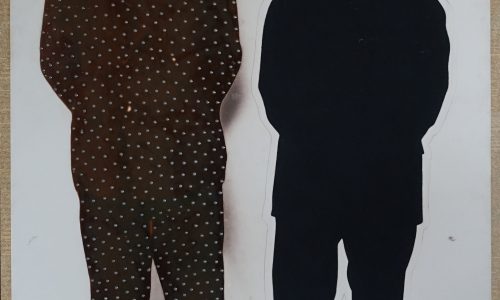
Born in the year 1976, Nicolas Milhé currently resides and practices his craft in France. His work has been showcased in numerous locations both within his home country and internationally, including prestigious venues such as the Musée d’art moderne de la Ville, the Centre Pompidou, and the Palais de Tokyo, all situated in the bustling city of Paris. Other notable exhibitions have taken place at the Villa Bernasconi in Geneva, Komplot in Brussels, the Chiroux Cultural Centre in Liège, Me Collectors Room in Berlin, the San Telmo museum in San Sebastian, Spain, Zoo Gallery in Madrid, Pigna Project Space in Rome, Open Eye Gallery in Liverpool, the Darling Foundry in Montréal, Wonderful Collection in Ho Chi Minh City, the Singapore Biennial, and the esteemed Old Nagara Post Office in Japan, to name a few.

www. ftn-books.com has the V publication now available.
Posted on 6,775 Comments

Kahnweiler: The Cubist Visionary Who Shaped Modern Art

Born into a prosperous banking family in Mannheim, Germany in 1884, Kahnweiler embarked on a journey as a stockbroker in the family firm that led him to Paris. There, he made daily excursions to the Louvre, a brief stroll from the Bourse, and fell spellbound by the tangible experience of studying paintings that previously existed only in books. Driven by a relentless passion, he began collecting art and opened his first gallery at 28 rue Vignon in the spring of 1907.

Kahnweiler’s approach to art was nothing short of an adventure. He sought out the most challenging and ridiculed artists from the very beginning, with a keen interest in the Fauves such as Maurice de Vlaminck, André Derain, and Braque. However, it was his early recognition of the Cubist revolution that solidified his reputation.

Through his careful selection of which Cubists to exhibit and which to decline, Kahnweiler essentially defined and shaped the movement. He even signed exclusive contracts with its four originators: Braque, Picasso, Juan Gris, and Fernand Léger. Armed with two Spaniards and two Frenchmen, this German dealer swiftly embarked on a quest to spread the revolutionary impact of Cubism worldwide. He courted influential collectors such as the Russian Sergei Shchukin, Swiss Hermann Rupf, and Czech Vincenc Kramář, and partnered with the likes of Alfred Flechtheim in Düsseldorf, the Thannhausers in Munich, and Alfred Stieglitz and the Washington Square Gallery in New York. While his contracts safeguarded his position as the sole channel for bringing the Cubists to the market, Kahnweiler saw them as gestures of unwavering faith and an effort to protect the artists from financial burdens. He maintained this role until 1914.

At the onset of the Great War, Paris was a perilous place for Germans like Kahnweiler. He was branded an enemy of the state, and his gallery and its contents were seized by the French government. He lost everything and spent the duration of the war in neutral Switzerland, penning critical essays on Cubism and composing his book-length study on the movement, titled Der Weg zum Kubismus (The Rise of Cubism), which was published in 1920. Despite returning to Paris that year and establishing a new gallery with a French partner, Galerie Simon at 29 rue d’Astorg, Kahnweiler was unable to reclaim his confiscated stock. The French government dispersed his collection, which included over 1,200 works by Braque, Picasso, Gris, and Léger, at bargain prices, leading to a series of humiliating auctions between 1921 and 1923. Kahnweiler’s hardships continued when he was once again in danger during the Nazi occupation of Paris in 1941, this time for being Jewish. To protect himself, he “Aryanized” the firm by transferring ownership to his stepdaughter, Louise Leiris, and waited out the rest of the war in the South of France. After the war, he returned to the “Galerie Louise Leiris” and worked alongside Louise until his passing in 1979.

While most of his artists had to abandon him during World War I, Kahnweiler eventually reconciled with Picasso and became the artist’s primary dealer once more in his later years. Despite their vastly different temperaments (Picasso being passionate and bohemian, while Kahnweiler was serious and reserved), they had formed a close bond at a critical time in both their lives and in art history. Fellow dealer Heinz Berggruen recalled, “He liked to smile, but not to laugh,” but added that Kahnweiler was not the type of art dealer to rely on charm to conduct his business. What Picasso had given him was far more valuable: an art to defend with both intellect and love.

www.ftn-books.com has the Centre Georges Pompidou book on his exhibition now avaiable.

Posted on 8 Comments

The Art of Anton Henning: A Playful Fusion of Styles

Expressive troublemaker extraordinaire, Anton Henning cleverly analyzes the annals of art history, rearranging and re-layering past references to generate ironic new creations. With a subtle nod to former masters or unexpected fusion of divergent historical styles, Henning’s repertoire encompasses a wide range of mediums, including painting, sculpture, photography and installation.

Born in 1964 in Berlin, Henning is a self-taught artist. He lived between Berlin, London, and New York starting in the mid-80s, drawing inspiration from the vibrant arts scenes in these three cities to formulate his signature blends of avant-garde styles. While Henning identifies primarily as a painter, his pieces are often presented as all-encompassing room installations or “gesamtkunstwerke,” featuring sculptures and even furniture designed by the artist himself. These spaces, playfully referred to as “Salons” or “Interieurs,” challenge the traditional notions of the value of art and the bourgeois definition of “good taste.”

Since his inaugural presentation in 1988, Henning has showcased his work in over 60 solo shows across Europe, the USA, and Japan, as well as numerous group exhibitions. His pieces are proudly displayed in the permanent collections of esteemed museums such as Centre National des Arts in Paris, MOCA in Los Angeles, and the National Museum of Art in Osaka. In 2000, he was commissioned to design the bistro for Arp Museum Bahnhof Rolandseck, a grand-scale piece aptly named “Interieur No. 253”.

www.ftn-books.com has one Henning title available.

Posted on 6 Comments

Exploring Lode Laperre’s Unique Artistic Vision

After completing his studies in plastic arts in the late 80s at the Saint-Thomas Institute in Brussels as a laureate, Lode Laperre developed his own distinctive visual language. This was a gradual process, resulting in a unique style that remains recognizable despite the differences in time. Laperre explores the potential of acrylic paint on canvas in his own way, also playing with the drying process to achieve various textures.

“The fusion of thought and action occurs on the stage of the canvas for Lode Laperre, with acrylic paint as the language. Porous, lyrical abstract images are formed, in which movement and counter-movement, spots, splatters, and drippings always lead to a harmonious and surprising visual connection.Through the principles of induction and deduction – erasing, scratching, cutting, covering, and adding – the work is built up layer by layer, steadily.”

During the period of 1990-1995, Lode Laperre’s young work received several awards. This includes the National Prize for Painting at Kulturama as a laureate (1990) and a first remarkable solo exhibition in Tournai, 1992. The challenges in painting have since led to various exhibitions, both individually and as a group.

Since the late 90s, a distinct oriental-occidental hybrid visual language has emerged. This influence came from various travels in Asia and resulted in exhibitions in Taiwan and Thailand.

In addition to his paintings, Lode Laperre’s artistic scope also extends to drawings and sculptural work. Through the “Coprolites” series, excretions from painting sessions are reincarnated as painted plastics. These fossilized waste products – whether presented as installations or not – demonstrate the artist’s love for exploration. This is also evident in his ink wash drawings on paper, which fall within the same artistic pursuit.

www.ftn-books.com has several Laperre titles now available.

Posted on 2 Comments

LGBTQI+ Arts: Becoming Christine Unveiled

Becoming Christine stands as a pivotal showcase of the enigmatic complexity of Christine Beynon, alongside visual artist Amanda Dunsmore. This sublime exhibit comprises of framed ‘selfie’s’, an immersive narrated audio installation, and a grandiose filmed video portrait.

The Galway Arts Centre was honored to host Christine Beynon in 2017, captured in stunning photographs by the talented Paul McCarthy.

In 2012, Amanda Dunsmore was commissioned to collaborate with esteemed members of the Galway County LGBTQI+ community in Ireland. This memorable endeavor gave rise to the deep bond between Dunsmore and Christine, ultimately leading to their artistic collaboration and subsequent nationwide exhibition tour. By means of Dunsmore’s groundbreaking social art practice and the compelling narration of Christine’s life story, Becoming Christine takes great strides in representing the trans community and contributing to the larger societal narrative of Ireland’s LGBTQI+ community.

The illustrious exhibition of Becoming Christine, showcasing the fusion of portraiture and artistry, pays homage not only to an individual’s journey of self-discovery, but also reflects the momentous socio-political transformations that have transpired in Ireland and England over the course of the last six decades. Christine’s vulnerability and bravery in sharing her personal journey is a vital contribution to the ever-evolving inclusive culture of Ireland.

Commissioned by Galway County Council’s Percent for Art initiative in 2012, with generous support from Arts Council Ireland through a Major Project Award in 2016, this landmark exhibition of Becoming Christine continues to inspire and provoke thought.

www.ftn-books.com has now the publication on this very special exhibition available.