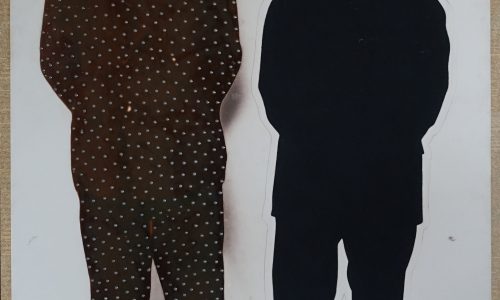
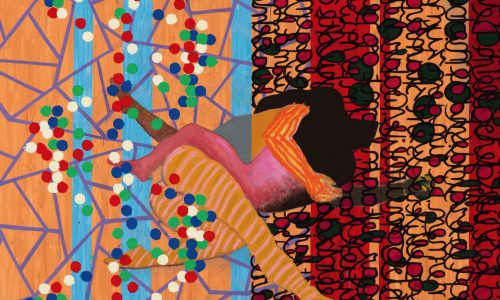
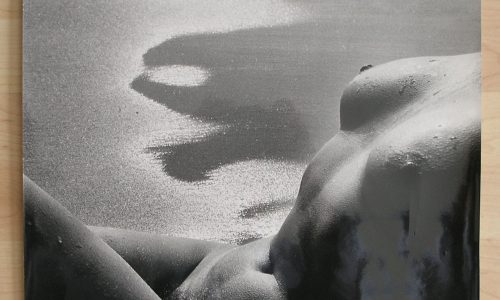
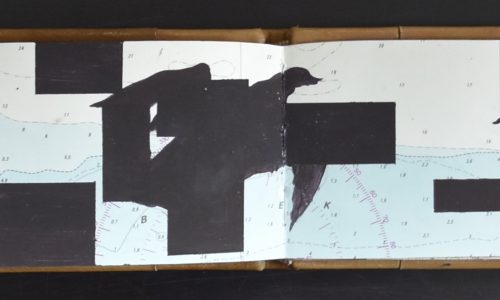
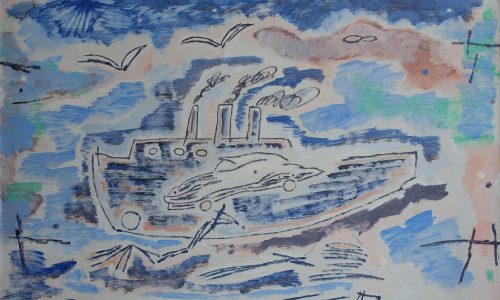
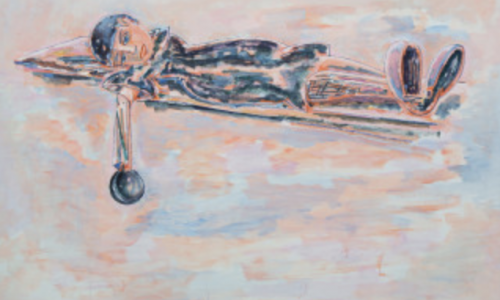
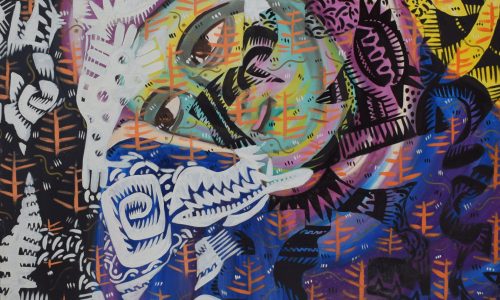
In his work, Geert Baas (1955) strives to seamlessly unite the disciplines of painting, drawn sketches, photography, and found materials. This is not achieved through blending these techniques, but rather by presenting them side by side, in a diptych or triptych format. For Baas, this is the ideal form as it allows for the perfect alignment of all elements. Serendipity plays a significant role in this process.
A crucial component of his oeuvre is the use of line drawings, applied to the canvas directly with a tube mouthpiece. These drawings may take the form of tags or intricate calligraphic designs that demand attention.
www.ftn-books.com has at this moment several Baas publications available.
First of all a MERRY CHRISTMAS to all my blog readers
A notable avant-garde artist-run space ahead of its time, Aurora’s direction was nevertheless less radical than the Ecart gallery, which would open in Geneva a few years later in 1973. From the outset, Aurora was organized as a cooperative, with the aim of avoiding a boss figure, diminishing the demand for profitability, and promoting the spontaneity of initiatives through bartering and volunteer work.
The gallery showcased a wide variety of artistic orientations, including numerous avant-garde and contemporary art movements, as well as outsider art and naive art. It also exhibited works by many German-speaking Swiss artists whose pieces did not always cross the Sarine river. Local artists such as Dominique Appia, Dominique Cornaglia, and Jacqueline Fromenteau were frequent collaborators, along with Joseph Heeb, Claude Hermann, Blaise Perret, and Luc Michel Schüpfer.
Aurora welcomed internationally renowned artists such as H.R. Giger, Alina Szapocznikow, Bruno Munari, Le Corbusier, Markus Raetz, Annette Messager, Herbert Distel, Asger Jorn, Roman Cieslewicz, Anselme Boix-Vives, Walter Wegmüller, Roland Topor, Karel Appel, Jean-Frédéric Schnyder, Olivier O. Olivier, Hans Schärer, Christian Boltanski, and Grisélidis Réal.
Despite its modest structure, Aurora frequently organized large-scale events, such as the first exhibition of Pierre Klossowski’s paintings outside of France or a lithograph exhibition of Max Bill in collaboration with the artist.
The gallery also hosted concerts, featuring classical and contemporary music, folk music, free-jazz, and more, as well as film screenings and lectures, including one on Ella Maillart.
Recognized for her meticulously arranged depictions of young girls on the cusp of womanhood, Dutch artist Hellen van Meene is heavily influenced by the psychological tension and ambiguity of this transitional phase. Her innovative use of composition and natural lighting draws inspiration from her Dutch predecessors, most notably Johannes Vermeer.
With a grounding in reality, van Meene’s portraits also possess a sense of detachment and ethereality. Her subjects often seem lost in contemplation, their gazes fixed on something out of frame or their eyes closed in introspection. Through her photography, the artist captures a fleeting moment between girlhood and womanhood, emphasizing the quick passage of time. This timeless quality extends to the images themselves, which are both contemporary and evoke a sense of a bygone era.
In her latest series, van Meene takes this idea of temporal and physical detachment to new heights by introducing elements of fantasy. Figures with obscured faces, cascading locks of hair concealing identity, and levitating girls challenge the viewer to decipher the meaning and intention behind each portrait. This ambiguity is a deliberate choice by the artist.
Born in 1972 in Alkmaar, The Netherlands, Hellen van Meene currently resides and creates in Heiloo, The Netherlands. She was the 2016 recipient of the Royal Photographic Society Honorary Fellowship, awarded to distinguished individuals who have made significant contributions to the art of photography or sciences related to it.
Van Meene’s work has been displayed in prestigious international exhibitions, including at the Guggenheim Museum in New York, Van Gogh Museum in Amsterdam, Folkwang Museum in Essen, Museum of Contemporary Photography in Chicago, The Photographer’s Gallery in London, Whitechapel Gallery in London, Huis Marseille in Amsterdam, Istanbul Museum of Modern Art, Brooklyn Museum in New York, and The Art Institute of Chicago. Her photographs can also be found in the collections of major museums worldwide, including the Guggenheim Museum in New York and the Stedelijk Museum in Amsterdam.
While many may overlook them, Almarcegui turns her focus towards sites and buildings in the midst of transformations, exploring the interconnections between architecture and the urban landscape, as well as the materials that shape our surroundings.
Born in 1972 in Zaragoza, Lara Almarcegui’s work spanning almost two decades resides at the intersection of urban revitalization and neglect, unearthing what often goes unnoticed. She delves into abandoned spaces and structures in flux, while also delving into the relationship between architecture and the urban fabric. Almarcegui’s pieces prompt contemplation about the current state of construction, development, use, and decay of spaces on the city’s outskirts. In her large-scale projects, she sparks a dialogue among the various elements that constitute the physical reality of the urban landscape, constantly transformed through demolitions, excavations, construction materials, and modern ruins.
Currently based in Rotterdam, Lara Almarcegui’s work has been featured in numerous solo exhibitions in prominent institutions like Graphische Sammlung, Zurich (2019); IVAM, Valencia, Spain (2019); Art Basel (2018); Casino Luxembourg (2016); Kunsthaus Baselland, Switzerland (2015); Gemmeente Museum Den Haag, the Netherlands (2015); and the Stedelijk Museum, Den Bosch (2012).
My passion for cinema bloomed during my time in art school. I was particularly drawn to boundary-pushing films that defied genres and blurred the lines between film and art. This fascination with idiosyncratic visuals led me to specialize in the visual arts, eventually gravitating towards the world of (short) films where I found my true calling. Driven by my love for both mediums, I established near/by film to bridge the gap between them.
As the founder of near/by film, I have the pleasure of immersing myself in every aspect of film production. From nurturing emerging filmmakers and artists to bringing my own film projects to life, I get to do what I love every day. Additionally, I curate film programs for festivals and cinema spaces, conduct research, and seek out exciting collaborations. Guided by a passion for pushing boundaries and exploring the unknown, I continue to grow and thrive in the world of film.
Manon possesses an MA in Film & Photographic Studies, awarded with distinction from the prestigious University of Leiden. She also holds a BA from the esteemed Academy for Arts & Design in Den Bosch. Her experience includes working as a curator for ZAAL5/Filmhuis Den Haag, Urban Explorers Festival, and independent exhibition spaces. She serves as an advisor for VAF and Stroom Den Haag, and has taught at KABK Den Haag and St. Joost Breda. Manon is also an external examiner for the Master Film program at the renowned Dutch Film Academy in Amsterdam.
With ten years of programming experience at Go Short Film Festival, Manon continues to create specialized film programs for other festivals and venues. As a visual artist, she has exhibited her work at prominent institutions such as Centraal Museum, Kunstfort Vijfhuizen, KW14, Wetering Galerie, and Kunsthalle Hamburg. Her compelling animations have been presented in both exhibition spaces and film festivals.
In her work, Esther Kokmeijer delves into our relationship with nature. She wondered what desire lay at the foundation of constructing a seven-meter high waterfall at the Paltz, in the heart of the forests of Soest. It seems to be a romantic desire to mimic the sublimity of nature and thus gain a certain control over our natural environment. Nowadays, we, as humans, are going even further in this pursuit. Through Geo-engineering, we are able to manipulate rain and dim the sun, among other things. The work Feeding the Waterfall emerged from a longing to learn from natural systems and to harness nature itself for creative solutions to fundamental problems.
Esther created a vortex, fed by the waterfall. This intervention will lead to flourishing water on the estate. A few years ago, it was scientifically proven that using a vortex inspired by nature dissolves air in water, thereby increasing the rate of oxygen transfer. Esther created her work in collaboration with water physicist Elmar C. Fuchs from the European Centre of Excellence for Sustainable Water Technology (Wetsus), and it is part of research aiming to utilize this process for the production of drinking water and the purification of wastewater, for which oxygen in water plays an essential role.
www.ftn-books.com has the Kokmeijer invitation for het HEDEN exhibition available.
Exuding extraordinary vigor, Thomas Houseago manipulates materials like clay, plaster, and stone to manifest surreal, golem-like beings. His creations inevitably evoke associations with the concept of the golem, a being formed from clay and brought to life by a rabbi according to an ancient Jewish legend. Houseago’s figures are imperfect creatures, partly human, partly animal. They are anonymous yet imbued with spirit, simultaneously terrifying and familiar. Through his oeuvre, he strives to erect a monument to the true human experience – a physical counterweight to a culture that is defined by the stylized images portrayed in magazines, TV shows, and movies. Houseago’s work is a fervent plea for preserving the ancient art form of sculpture.
In all of Houseago’s work, the human body and the concept of being human take center stage. His goal is not to create a perfect image, but rather to depict, in an unadorned and raw manner, how a body feels, moves, and is constructed. His work intentionally aligns with a long tradition of sculptors such as August Rodin, Medardo Rosso, Pablo Picasso, and Henry Moore. Nonetheless, he has developed his own unique signature through his unusual combination of materials, the interplay between two- and three-dimensional elements, and the fusion of sculptural traditions and mythological themes with elements from popular culture.
The exhibition in the Project Space showcases a combination of early and very recent work. A key focus of the exhibition is the time he spent studying at the Ateliers in Amsterdam. The earliest work in the exhibition, ‘Head of a Golem’ (1998), he considers to be where his ideas from that period first fully came to fruition. Conscious allusions to this formative ‘Dutch’ period, in which he was taught by artists such as Marlene Dumas and Jan Dibbets, can be seen in the new works he created specifically for this exhibition.
Before attending De Ateliers, Thomas Houseago studied at Central Saint Martins School of Arts in London. After graduating, he lived and worked in Brussels for several years before moving to Los Angeles, California.
www.ftn-books.com hasnow the invitation for his Gemeentemuseum exhibition available.
Ohad Maiman (Hebrew: אוהד מיימון) was born in Israel in 1977; after completing his studies, he served for 3 years in the Israel Defense Forces. He then embarked on extensive travels in the Far East and South America before settling in New York City in 1999. In 2003, he attained a degree in philosophy and visual arts from Columbia University, cementing his passion for intellectual and creative pursuits. He currently resides and works in the bustling metropolis of New York City.
After graduating, Ohad Maiman embarked on a collaboration with Eytan Rockaway to launch A Matter of Substance – a multifaceted media and entertainment company that encompasses music, film, and television. In 2007, the company shifted gears to a new venture – Amos TV, a popular TV channel.
Throughout his career, Maiman has exhibited his photography in a multitude of group shows, including a solo exhibition at the prestigious Richard Avedon studio in December 2005. His stunning photographs and thought-provoking writings from 2004 to 2007 have been compiled into the compelling trilogy ‘Theory of Wants’, which was published by Damiani Editore in October 2008. He also had a solo show at Milk Gallery to coincide with the book release. In New York, Maiman is represented by Carlo Zeitschel at CVZcontemporary. His upcoming exhibition at the renowned Richard Young Gallery in the fall of 2011 is eagerly anticipated by art enthusiasts.
With his literary and artistic talents, Ohad Maiman continues to captivate and inspire audiences worldwide, leaving a lasting mark in the world of art and culture.
www.ftn-books.com has the THEORY OF WANTS book by Maiman nowe available.
Izaak Zwartjes (Leiden, 1974) is a Dutch visual artist. He creates monumental sculptures and installations using decayed and deteriorating objects and materials.
Zwartjes currently resides and works in Leiden. He received his education at the Royal Academy of Fine Arts in The Hague, graduating in 2008. For his final exhibition, Zwartjes created the installation The Laboratory Of Life, depicting a “post-apocalyptic world” where he aimed to merge science, religion, and art. Since 2008, Zwartjes’ work has been featured in multiple exhibitions, including one at the Cobra Museum in Amstelveen..ftn-books.com has the NEST invitation now available.
Zwartjes’ pieces are best characterized as “environments”: a confined space where various episodes from a mythical story, conceived by the artist, unfold. He creates these installations using discarded materials collected during his wanderings through the city.
Following his graduation work The Laboratory Of Life, Zwartjes continued with the environment Exodus, exhibited at the Cobra Museum in Amstelveen in 2009. Exodus tells a “post-apocalyptic” tale of a degenerated society of cloned beings in a desolate landscape, crafted using decayed and deteriorating materials.Through this work, Zwartjes subtly hints at the absurdity and meaninglessness of existence.
Human Language and Imagery: The Hallmarks of Mat van der Heijden’s Work Mat van der Heijden (1964) seamlessly weaves together text and image in his creations. Known for his unique blend of recognizable figures and geometric patterns, he also incorporates letters and words in seemingly arbitrary fashion across his drawings and paintings. Take a moment to delve deeper into his visual language and you will uncover the idiosyncratic way in which he unravels the world around him in layers, and translates it using a diverse array of materials. Once challenged, these layers coalesce, impressing with their unconventional use of materials, and his language blossoms into poetic reflections.
Despite working in series, the artist continuously embraces the opportunity to experiment with different images and materials, ensuring that his work never ceases to surprise. His perspective on the world is also captured in his weekly blog named “Bits”. For over three years now, the renowned arts and culture magazine “Zuiderlucht” has published “Bits” in its monthly issue.
www.ftn-books.com has now the vander Heijden invitation for his Ramakers exhibition available.
Artist/ Author: Oliver Boberg
Title : Memorial
Publisher: Oliver Boberg
Measurements: Frame measures 51 x 42 cm. original C print is 35 x 25 cm.
Condition: mint
signed by Oliver Boberg in pen and numbered 14/20 from an edition of 20