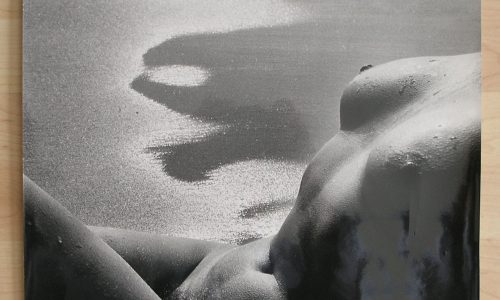
Hans Bellmer….for over Fifty years now a long time favorite of mine and over the years I collected many books on this artist. NOw I have added one that I did not encounter before. It is the 1966 Museum Ulm catalogue. A thin one , but still an excellent and scarce publication, which is now available at www.ftn-books.com together with other collectable Bellmer books.
Joe Allen (born 1955) is a British artist. He is known for a series of large-sized paintings on wood and for small portraits of artists.
Allen was born in Airdrie, Scotland. When attending school he took private lessons from C. M. Cameron, a Scottish painter of landscapes and also attended art classes at the Glasgow School of Art. He started his vocational education at St Martins School of Art in London and gained his degree as Bachelor of Arts with Honours in Fine Art at the Camberwell School of Art. Subsequently he gained the Master of Art Degree at the Royal Academy School in London.
In 1983 he started lecturing at Art Colleges in Newcastle and London, later he taught at the Centro de Arte Verrochio near Siena. From 1984 to 2007 he was a lecturer at the European Art Academy in Trier. He lives in London und Trier (Germany).
References to works from various periods in the history of art are to found in his paintings. They evoke reminiscences of Piero della Francesca, Velázquez, Titian or John Constable. Also an influence by impressionist painters such as Édouard Manet, Claude Monet or Pissarro and masters van Gogh and Cézanne can be detected. Although he spent most of his adult life outside Scotland Allen can also be seen as standing in the tradition of the Glasgow Boys.
William Pye, an internationally acclaimed sculptor, exhibited eleven important pieces in the Secret Garden in May 2019. He worked closely with the Trustees to create a very special show, which enthused a wide audience, from art lovers to those new to sculpture and also children. His fascinating pieces are made principally from stainless steel and cast bronze; and water is integral to most of his work. William Pye is inspired by the extraordinary qualities of water and the natural laws of hydrostatics, and how these can be manipulated.
He has held exhibitions at the Peggy Guggenheim Museum, Venice; in Sao Paolo and Rio de Janeiro; in the USA, Hong Kong and Japan; and many in the UK. His work is found in private gardens and public places. These include a major commission on London’s South Bank; sculpture in the Mariinsky Concert Hall, St Petersburg; in the Serpent Garden, Alnwick Castle; in Drammen town centre, Norway; and in Muscat, Oman. He is a Fellow of the Royal Society of British Sculptors, an Honorary Fellow of the RIBA and President of the Hampshire Sculpture Trust.
www.ftn-books.com has now the scarce Redfernn catalog from 1969 available.
Paintings…..At close inspection difficult to read and almost abstract, they slowly open themselves up and become legible when the viewer takes a step back and looks at them once again from a distance. The jagged, blurry lines that distort our view from close-up reveal themselves to be pixels or the lines of electronic interference that sometimes distort the images on a television screen.
From a distance, however, the lines become neutralised and the scenes depicted becomes so clear that we wonder why we didn’t see them properly in the first place. “Dallas – 1963”, for example, depicts a scene from the assassination of John F. Kennedy, while “Poland – 1944” presents a view of the ominous gate of the Nazi concentration camp in Auschwitz.
Nevertheless, for the artist it is not important what the image actually depicts, but rather the way in which that image is represented. Eddy De Vos does not practise politics with his paintings. He neither condones nor criticises the events taking place in these images. He merely appropriates them to investigate, experiment and analyse his own ideas of what painting is and can be today in the age of the plethora of global, digital images.
What we see is not an objective document of the respective event, but rather one possible way of seeing it. In doing so, De Vos raises important questions about visual and cognitive perception and breathes new life into the medium of painting, thus opening new possibilities for a medium that refuses to die despite the numerous near deaths that it has suffered throughout the 20th century. The MUHKA publication is available at www.ftn-books.com
Wolfgang Laib was born in 1950 in Metzingen, Germany. Inspired by the teachings of the ancient Taoist philosopher Laozi, by the modern artist Brancusi, and the legacy of formative life experiences with his family in Germany and India, Laib creates sculptures that seem to connect that past and present, the ephemeral and the eternal. Working with perishable organic materials (pollen, milk, wood, and rice) as well as durable ones that include granite, marble, and brass, he grounds his work by his choice of forms—squares, ziggurats, and ships, among others.
His painstaking collection of pollen from the wildflowers and bushes that grow in the fields near his home is integral to the process of creating work in which pollen is his medium. This he has done each year over the course of three decades. Laib’s attention to human scale, duration of time, and his choice of materials give his work the power to transport us to expected realms of memory, sensory pleasure, and contemplation.
www.ftn-books.com has added some collectable Laib titles recently.
Subject to tumultuous moments in history, Wifredo Lam saw the peaks and valleys of the human condition. Skilled with an avant-garde paintbrush, his works have become a pinnacle of Cuban art. Exercising European education and a proclivity for the Afro-Caribbean culture together in an iconic yet familiar aesthetic, Lam shattered artistic stereotypes and effectively sucker-punched the cultural commodification happening in Cuba at the time.
Fighting in the Spanish Civil War and fleeing Germany in the 1940s, Lam not only experienced major conflicts of the 20th century, but he also artistically cavorted with some the era’s greatest artists from Matisse to Picasso. Deeply influenced by Picasso, when Lam first saw the modern master’s works, he proclaimed that they weren’t just a revelation, but a “shock”. Having taken Lam under his wing and championing him around Europe, Picasso’s unique style is quite vivid within Lam’s later works: surreal figures projecting almost shattering emotions and a puzzle of hodgepodge cubism with an almost other-dimensional magnetism.
But with his historical and spiritual roots firmly planted in the Cuban soil, Lam brought the spirit of the island alive, painting the struggle and passion of the Afro-Caribbean culture. With his grandmother a former Congolese slave and his godmother a priestess of Santeria, Lam, like his paintings, had a free-flow of rich and vibrant intertwining stories in his background. Doing as a true artist does, Lam stuck his finger in all the artistic pies when he returned to Cuba in 1941. Befriending anthropologists, poets and the like, Lam immersed himself deeply in the African culture of Cuba and got rather swept away by the rhythm of the ceremonial drums. His fascination and deep respect for the history manifested itself famously in his magnum opus, The Jungle. His work reflects the capitalisation of heritage with the almost magic realism of the African elements:
The history of subjugation and commodification in the colonial realm is seen in the sugar cane background, Santeria and systems of belief through the African mask-like faces, and the direct human connection is visualised via exposed bodies and famous round backsides. The ethnographic forest captured the swirling spirit of the country: the nature, the history, the people, the religions – all that made Cuba distinct and colourful. MoMA would eventually buy the painting and display it next to Picasso’s Les Demoisell d’Avignon, but in its physical aesthetic and power of imagery to embody the struggle of the people, perhaps it would have been better placed next to Guernica.
Although his work bears a striking resemblance to Picasso’s style, Lam’s cultural and geographic heritage was deeply intertwined with the “magic realist” genre that sprung up in Latin America in the 1940s. A beautiful weaving narrative of imagination, beauty, and almost crushing human realities blended with African metaphysical rhythm. A visionary, Lam brought Cuban art into modernity through the beat of the drum of the past. www.ftn-books.com has now the ultimate book on Wifredo Lam available. It is the Poligrafa/ Fouchet book
Frank Fischer is an artist who was born in Zurich, Switzerland, and now lives and works in The Hague, Holland. Fischer makes ultra-glossy linear artworks on an aluminium surface. The artworks are inspired by real masterpieces by world famous artists.
He uses the image of such a masterpiece to edit it on the computer and to stretch the image. What remains of the image is a kind of bar code where only the colour of the existing artwork can be recognised. Frank Fischer uses this barcode to create his own artwork by dripping down glossy paint, drop by drop, colour after colour.
This process is incredibly precise and time consuming, especially since the end of the top and bottom need much time to dry. When they are dried the ends look like stalactites of colour.
Recently he devoted a series to the paintings of the Mauritshuis. The series was executed in his new The Hague studio and exhibited at gallery Project 20
Two female artists that both have/had careers in Art, but both not very well known. The reason I present these artists together is the TWEE KIUNSTENARESSEN publication that I now have for sale at www.ftn-books.com. Schoonheyt is know for her Indonesian inspired paintings and large installations with mirrors at the Fodor Museum and Els Timmermans for colorful highly personal paintings and of course that she was married to Peter van Straten with whom she made the illustrated book ” OMA KATTENPIS”. Personally, I prefer the works by Timmermans. The early works depicted in the catalog of the Gemeentemuseum Arnhem remind me in some way of the abstract paintings by Hussem.
In my 2020 blog on Sleeuwenhoek i mentioned that i wanted to acquire a Sleeuwenhoek for our collection and…. now after many years we have managed to do so. We acquired a gouache and a silkscreen. The gouache is now hanging in an appropriate place and the large silkscreen is now for sale. If interested please contact me at wilfriedvandenelshout@gmail.com.
Many dutch and almost all soccer fans worldwide know the name of Johan Cruijff. In the mid seventies Jits Bakker made an action sculpture of Johan Cruijff which has become quite famous among soccer fans and art lovers alike. But beside this sculpture the works of Jits Bakker are so much more. They have one quality in common…..these all show action and movement, making these recognizable. Dancers. musicians, cyclist all are depicted in action and none static nor posing. . Jits Bakker knew how to express himself in bronze, making him , together with Kees Verkade , one of the dutch sculptures whose quality is recognised by many art collector.
The JIts Bakker published BEWEGING BETRAPT IN BRONS is now available at www.ftn-books.com
Artist/ Author: Oliver Boberg
Title : Memorial
Publisher: Oliver Boberg
Measurements: Frame measures 51 x 42 cm. original C print is 35 x 25 cm.
Condition: mint
signed by Oliver Boberg in pen and numbered 14/20 from an edition of 20