Posted on Leave a comment

Robert Burda (1942)

Robert Burda

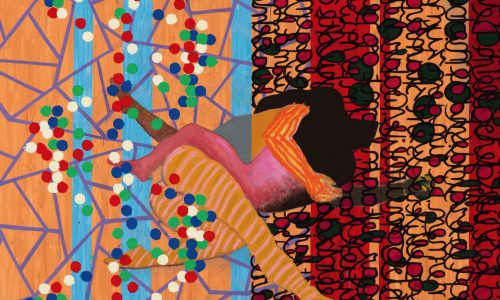
Robert Burda has participated in painting therapy since 1976 and in art therapy since 1984. The different stages and events of his life are collected in his portfolio. Robert Burda begins with a drawing, and then emphasises detail with colour. An eidetic disposition allows him to recall emotionally charged experiences precisely as they occurred. He is also able to elevate himself, to view a situation from above and paint it as if from a bird’s eye view. An important aspect is the way he maintains a temporal or spatial distance to the events and the fact that he puts himself into the scene. Then he writes his name, as if to say “I was there”.

The creative atmosphere of his paintings can be sensed in the juxtaposition of light and dark, which itself penetrates the darkness with a structure created through different blacks. Robert Burda sees and forms himself within the contexts both of the group and the hospital, and appears, in the tension between light and dark, to be connected with the whole of creation.

www.ftn-books.com has some Burda titles available

Posted on Leave a comment

Moïse Kisling (1891-1953)

Moise Kisling

Moses Kisling was born in 1891 in Krakow, Poland into a modest Jewish family. He studied at the Krakow School of Fine Arts from 1907 to 1911 and was a pupil of Jozef Pankiewicz who strongly encouraged him to go to Paris.

In 1911, he moved to Montmartre at the age of 19, then to Montparnasse a few years later. During the First World War, he joined the Foreign Legion and was seriously wounded during the Battle of the Somme (1915), which earned him French citizenship.

Kisling was one of the principal representatives of the Paris School, which mainly included Jewish artists from Eastern Europe and Russia. He was the friend of many of his contemporaries, including his neighbor Amedeo Modigliani, who made his portrait in 1916. His workshop was the meeting place of the artistic gratin of the time (Cocteau, Max Jacob, Juan Gris, Derain. ..). Thanks to his social contacts and his financial success he received the name of “Prince de Montparnasse”.

His style was first influenced by Derain and Cézanne. Then, whilst in contact with Georges Braque and Pablo Picasso, he painted in a more geometrical manner, became immersed in the cubist movement and borrowed, from the Nabis, the absence of perspective. He was a master of the female nude, (Kiki de Montparnasse often posed for him) and his portraits of all Paris (Arletty, Cocteau, Colette, Marie Laurencin …) earned him a great reputation at the time. 

When the Second World War broke out, Kipling’s Jewish origins forced him to flee the Gestapo, he went through Spain, Portugal and settled in 1941 in New York. His paintings also met with some success across the Atlantic, exhibiting at the Whitney Museum and the Barnes Foundation in Philadelphia. He returned to France in August 1946 and finally moved to Sanary-sur-Mer in the Var where he died in 1953.

www.ftn-books.cowww.ftn-books.com has several books on Kisling now available

Posted on Leave a comment

Rueben Nakian (1897-1986)

Rueben Nakian

Reuben Nakian (born August 10, 1897 in College Point, NY) enjoyed a long and renowned career, maintaining his innovative spirit and creativity over more than seventy years, constantly rethinking and revising his modes of sculptural expression and exploring and mastering new media—marble, clay, plaster, metal, paper, and, in his last years, styrofoam.

Nakian was elected a member of the National Institute of Art and Letters (1973), received honorary doctorates from the Universities of Nebraska (1969) and Bridgeport (1972), medals from the Philadelphia College of Art (1967) and the American Academy and Institute of Arts and Letters (1973), the Skowhegan Medal for Sculpture (1983), and awards from the Connecticut Commission on the Arts (1979), Brandeis University (1977) and Rhode Island School of Design (1979). He was a guest of honor at the Famous Artist’s Evening at the White House, and the Smithsonian Institution produced a documentary on his life and work titled Reuben Nakian: Apprentice to the Gods, (1985). He was awarded a Guggenheim Fellowship (1931) and a Ford Foundation Fellowship (1958) and represented the United States as the major sculptor in the VI Bienal in São Paulo, Brazil (1961) and the 1968 Biennale in Venice, Italy.

Nakian’s work is represented in the permanent collections and sculpture gardens of many of America’s most prestigious museums and institutions. He has been honored with major one-man exhibits at the Los Angeles County Museum (1962), the New York Museum of Modern Art (1966), the Hirshhorn Museum in Washington, DC (1981), the Milwaukee Art Museum (1985), the Gulbenkian Centro de Arte Moderna in Lisbon, Portugal (1988), and a Centennial Retrospective at the Reading Public Museum and the Corcoran Gallery of Art, Washington, D.C. (1999), the site of Nakian’s first one-man museum exhibition in 1935. Garden of the Gods I was one of five sculptures to inaugurate the Metropolitan Museum of Art Roof Garden, while other of his monumental works preside over civic and private settings across America. www.ftn-books.com has the MOMA catalogue for his 1966 show available.

Posted on Leave a comment

Ivan Kliun (1873-1943)

Ivan Kliun

Ivan Kliun was connected with the Russian avant-garde movements and collaborated with the governmental artistic initiatives that followed the 1917 Revolution.

Kliun studied in Kiev, Warsaw and Moscow and was interested in Symbolism. He met Kazimir Malevich in 1907 and the friendship that sprang up between them was decisive in his subsequent artistic development. He was a member of the Union of Youth and took part in the last exhibition held under that title in Saint Petersburg in the winter of 1913–14. His work later evolved towards forms that came close to Cubism and Futurism and he sought to go beyond the conventional boundaries of art, producing a series of reliefs that combined pictorial and sculptural techniques. His creations were present in the main Russian Futurist exhibitions such as Tramway V and 0.10. The Last Futurist Exhibition of Paintings in which Malevich first showed a Suprematist work. At this point, from 1915 until 1919, Kliun embraced the movement promoted by Malevich. His Suprematist works were compositions in small format featuring isolated geometric shapes against a white background.

In 1918 Kliun played an active part in decorating the city of Moscow for the celebrations marking the first anniversary of the Revolution and until 1921 he taught at various educational establishments set up by the new political authorities such as the Free State Art Workshops, called Svomas and later renamed Vkhutemas. In 1927 he was appointed director of the central exhibitions office of the Department of Visual Arts of the People’s Commissariat for Enlightenment (IZO-Narkompros). After these years spent teaching and working in the public sector, as well as conducting various experiments in the field of art, Kliun focused his interest on returning to a purist figurative art.

www.ftn-books.com has the Matignon gallery exhibition catalogue on his Sketchbook from 1916-1922 available

Posted on Leave a comment

Wim Couwel / Saura / van Abbemuseum

I have been selling, searching, publishing and collecting books for over 50 years now and because of my admiration for WIM CROUWEL I have been on the look out for Crouwel designed items for more than 30 years . This is the first time that I have found one of the most wanted Crouwel designed titles. It is the Saura publication from 1963 for the van abbemuseum…..Yesterday I finally purchased a copy and it is now for sale at www.ftn-books.com, but …..because this is really scarce and I did not find another copy on the internet I decided to make this copy available in this blog. It is the complete catalog in photographs, now available for all, but only one lucky collector can buy the actual copy at www.ftn-books.com

Posted on Leave a comment

CIMAISE

At one of last years auctions i acquired a very nice series of CIMAISE magazine. A french periodical devoted to Modern Art and what makes these special is that the covers were made by the very best of Contemporary artists. Among them: Dubuffet, Vasarely, Yvarel, Corneille Sonderborg and many others. A colorful blog on one of the best art magazines from last century. Most of these are still available. Enjoy!

Posted on Leave a comment

Piet Zwart (continued)

Piet Zwart

There are many Piet Zwart publications which are over the years getting more scarce every passing year and this is no exception and may be the only one on the market at this moment. Only 2 pages, but important so I decided to share this with the readers of this blog. The bulletin contributions were published by the Stedelijk Museum. 2 pages on Piet Zwart on the design of the Vredestein catalog. Only one copy is available for the collector who wants it all, but now to enjoy by all.

Posted on Leave a comment

Erwin Bohatsch (1951)

Erwin Bohatsch

Erwin Bohatsch, born in 1951, numbers among the most important Austrian artists of his generation. And now, the ALBERTINA Museum is honoring his diverse output with a solo exhibition. Bohatsch’s oeuvre is characterized by a constant back-and-forth between figuration and abstraction, between color and non-color, and between line and surface. It also prominently features the question as to painting’s currency, a question that itself remains as current as ever.
This exhibition juxtaposes the artist’s latest works with representative examples from the past few decades to explore a multifaceted kaleidoscope representing 40 years of unique and consistent creativity.

www.ftn-books.com has the galerie Krinzinger catalogue from 12984 available.

Posted on Leave a comment

Miquel Barceló ( 1957)

Miquel Barcelo

One of Spain’s most acclaimed contemporary artists, Miquel Barceló is known for his relief-like mixed-media paintings, expressive bronze sculptures and ceramics. An artistic nomad, his fascination with the natural world has inspired richly textured canvases that evoke the earthy materiality of Art Informel, as well as compositions that study the effects of light and the ever-changing colours of the sea. Always experimenting with non-traditional materials such as volcanic ash, food, seaweed, sediments and homemade pigments, his works carry the traces of the fierce energy that animates his creative process.  

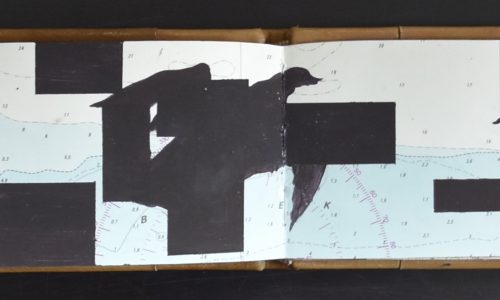
In the mid 1980s, Barceló began eliminating narrative elements from his works, creating an increasingly unreal space punctuated by holes, cracks and transparencies. This process of simplification culminated in 1988, a year in which he travelled across the Sahara and created his white paintings. Relying on cultural and geographical diversity for inspiration, his time in Mali, where he established a studio, was a formative experience. For Barceló, painting is a visceral way of relating himself to the world and, as such, his art connects with the primitive beauty of cave paintings. He expands the technical boundaries of representation, while remaining rooted in the grand tradition of painting, following in the footsteps of Picasso or Goya when representing bullfight scenes or Baroque painters when completing a commission for the Palma de Mallorca Cathedral.

www.ftn-books.com has the 1984 AIZPURU catalogue available.
Posted on Leave a comment

George Apostu (1934-1986)

George Apostu

George Apostu was born in 1934 in Stanisesti, Bacau. In 1959 he graduated from the Institute of Fine Arts in Bucharest, studying sculpture. From 1964 he had numerous solo exhibitions in Romania and abroad.

By working with traditional wood and stone carvings, Apostu found abstract ways of escaping the conventions of a narrow realism. Like Brancusi, he was fascinated by returning to mythical origins and primitive art, and was inspired by architectural space, but his work is quite different: where Brancusi polished and refined in precise symbolism, Apostu left the elemental marks of the act of sculpting and did not impose rigid interpretations.

In 1965 he took part in the Paris Biennale and was awarded a prize by André Malraux. He made outdoor sculptures, such as ‘Butterflies’ and ‘Mirror of the Son’, across Europe and in Japan. In 1982 he was appointed Professor of Sculpture at Academia Michelangelo in Agrigento, Italy. He moved to Paris and in 1983 was granted a studio by the mayor, Jacques Chirac. Apostu never received quite the same recognition in Romania.

Two of his most famous cycles, ‘Father and Son’ and ‘Maternity’, were sculptural representations of the relationship between humanity and the vegetal world in their organic regeneration. He regarded them as updating the myths of the cosmic ‘tree of life’ and of ‘eternal renewal’. In the last years of his life he developed the primitivism of his early works, which engaged conceptually with Eliade’s Neolithic ecumenical mysticism, bringing the themes of father and son and mother earth into the area of Christian significance.

He died in 1986 and is buried in Père-Lachaise cemetery. However, his legacy lives on: in 2001 “Zona Apostu”, a space of outdoor sculptures, was created in Kiseleff Park, Bucharest. In 2012 an “Apostu Summer School” at the Centre of Culture and Arts “George Apostu” was set up in Bacau.

www.ftn-books.com has the Teatral National from Buklarest now available.