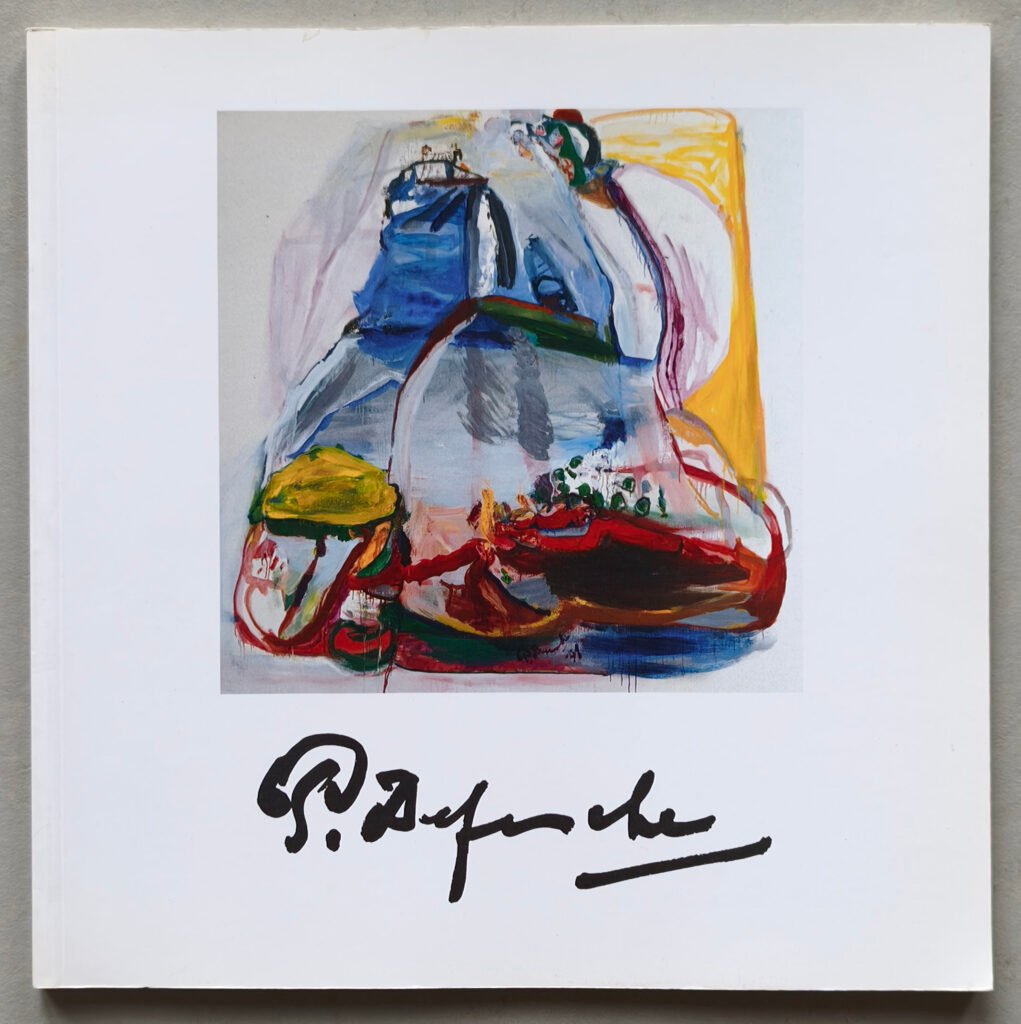


Pieter Defesche emanated as a singular force within the Dutch pantheon of visual arts, a creator whose portfolio spanned the tactile resonance of gouaches, the evocative depths of canvases, and the precision of graphic motifs. His aesthetic landscape functioned as a prism, refracting the mundane into expressionistic, semi-abstract constellations of stillness and biblical resonance. Beyond the easel, his dexterity manifested in the theatrical realm—sculpting costumes and immersive scenography for the Scapinoballet like a weaver of ephemeral dreams.
Formative years spent at the Middelbare Kunstnijverheidsschool in Maastricht and the storied halls of the Rijksakademie in Amsterdam—under the tutelage of Heinrich Campendonk—forged his nascent vision. The Prix de Rome in 1949 served as a harbinger of his burgeoning renown, marking a transition from the somber, oceanic blues and bruised browns of his post-war abstraction to the luminous, chromatic turbulence that defined the 1960s. By the dawn of the next decade, a crystalline consistency settled upon his brushstroke, a stylistic anchorage that persisted even as his internal lexicon underwent perpetual, rhythmic recalibrations.
Defesche cultivated a terrestrial mythology, an artistic alchemy that inhabited the interstitial space between tangible form and the ethereal unknown. Allied with luminaries such as Ger Lataster and Jef Diederen, he stood as a pillar of the cohort christened the “Amsterdam Limburgers.” An unexpected relic—a 1973 expeditionary journal—has recently surfaced, offering an intimate cartography of his psyche. Within its pages, scrawled during a restless odyssey through the Pacific, lie the primordial sketches and philosophical blueprints of a man who navigated the currents of Hawaï, the Solomon Islands, and beyond. This private archive, tracing the footsteps of a peer to Appel and Corneille, breathes newfound vitality into our understanding of his myth-making trajectory.
www.ftn-books.com has several important Defesche publications available.