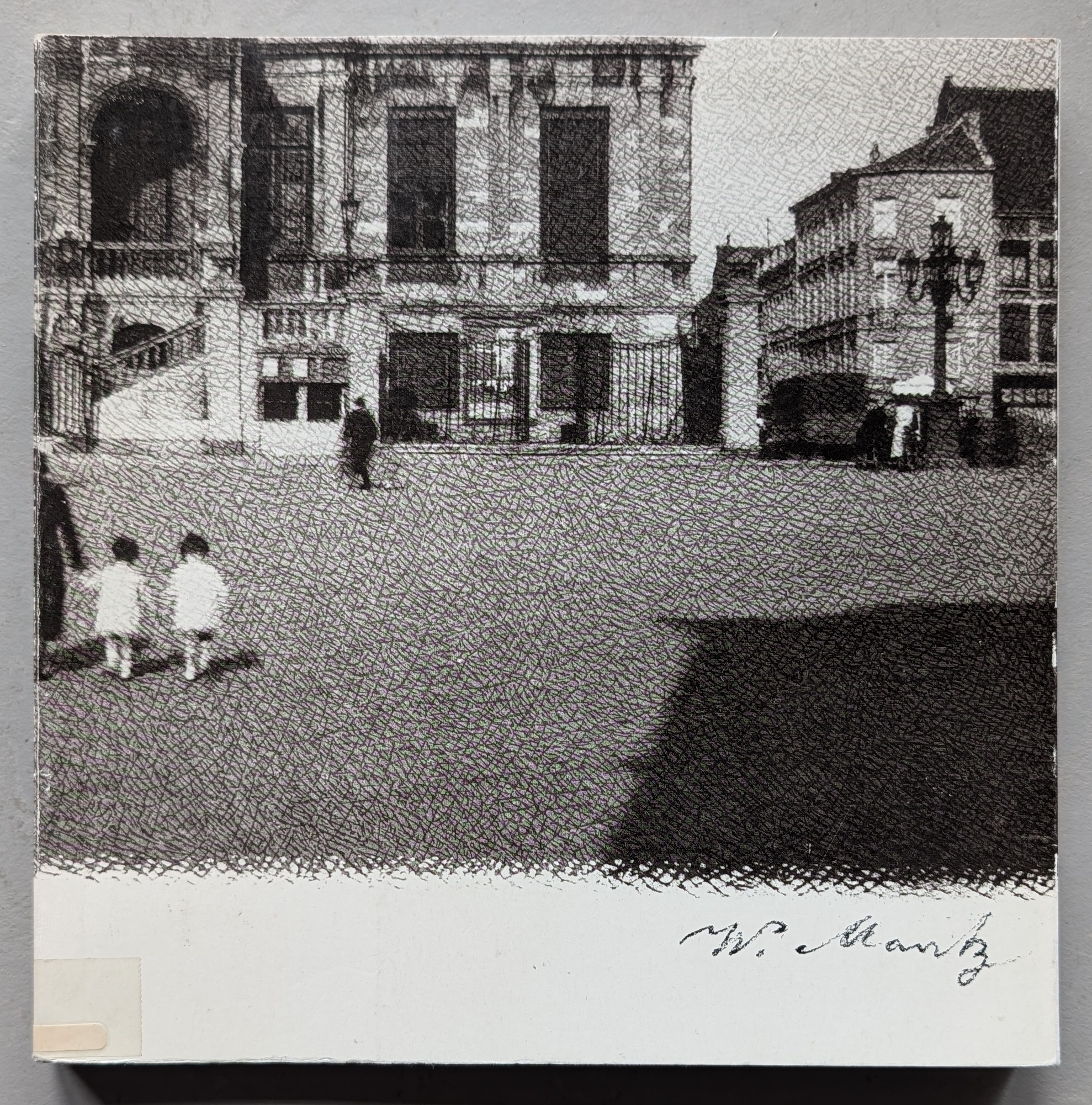
Werner Mantz (1901–1983) is widely recognized as one of the foremost photographers belonging to the Neues Bauen movement, a prominent modernist architectural style prevalent in Cologne during the 1920s. Raised in and inspired by Cologne, he established a photo studio in 1921 and initially focused on capturing the portraits of influential intellectuals, artists, and politicians. In 1926, he began receiving commissions as an architectural photographer for renowned figures such as Wilhelm Riphahn, Peter Franz Nöcker, and Caspar Maria Grod, who were instrumental in implementing Konrad Adenauer’s vision for modern housing in Cologne. His work was frequently featured in prestigious architectural magazines such as Bauwelt, Die Form, and Bauwarte. Mantz’s signature style, characterized by its objective and minimalist black-and-white compositions, lends a monumental quality to the abandoned buildings and streets depicted in his photographs, effectively capturing the essence of the modern era. It was through his striking images that Cologne’s modernist architecture gained international recognition, surpassing geographical boundaries.
In 1932, Mantz embarked on a new venture and opened a second studio in Maastricht. Eventually, he relocated to the Netherlands in 1938, where he returned to his roots in portrait photography and gained specialization in capturing the innocence and purity of children.
www.ftn-books.com has now the 1990 Rosbeel publication on Mantz available.