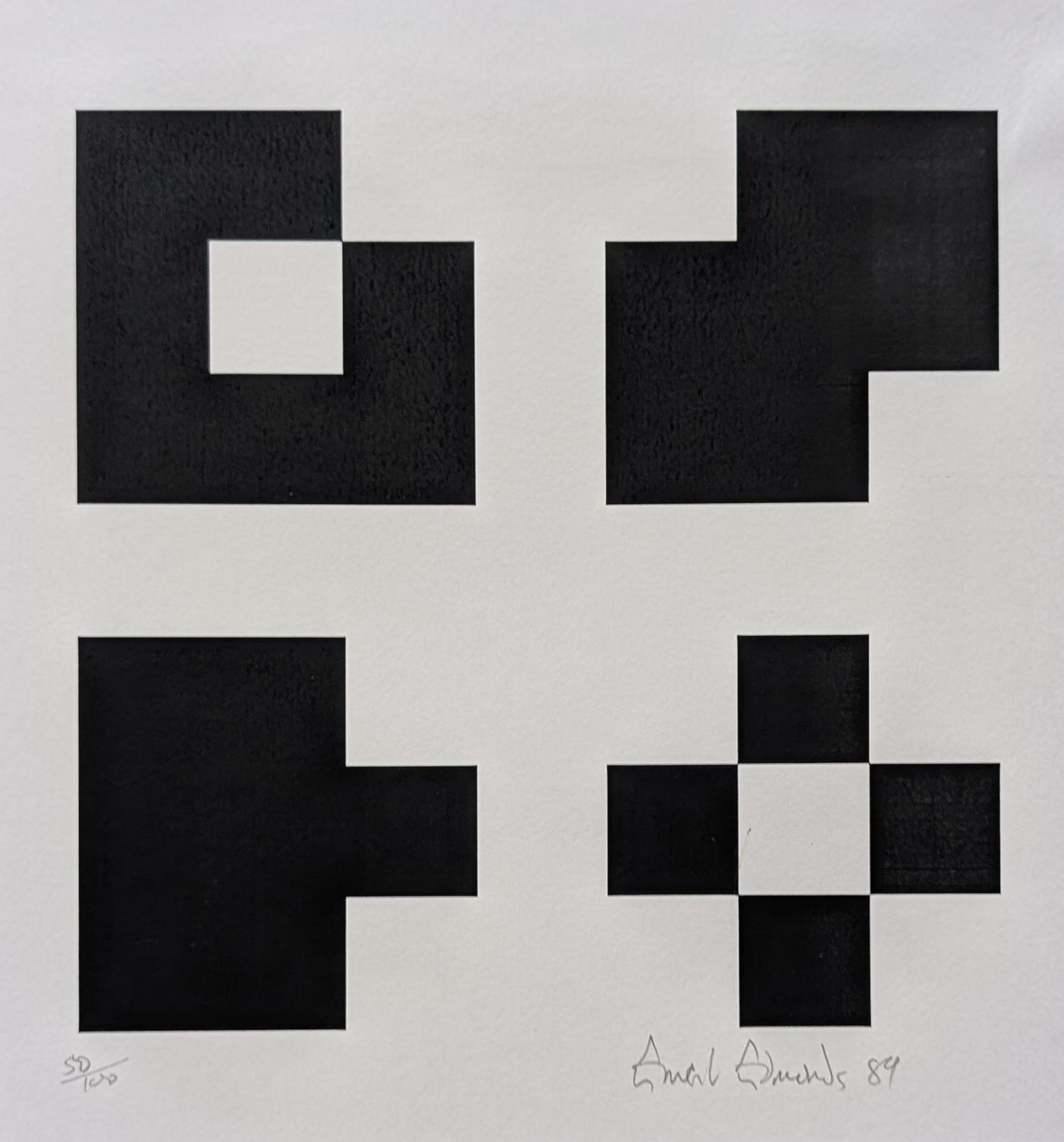
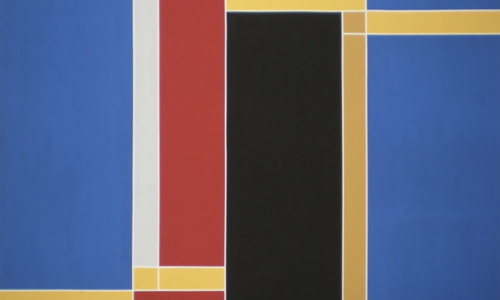
Ernest Edmonds is a revolutionary figure in the world of computational art, paving the way for generative and interactive art. His work combines elements from the Concrete, Constructivist, and colour field artistic movements, with a focus on structures and interactions at the core of his practice. Specializing in creative computing, Edmonds’ research on human perception has led to the creation of dynamic computer-generated forms in vibrant hues. Originally from London, Edmonds holds degrees in Mathematics and Philosophy, and possesses a PhD in Logic. In his artistic pursuits, Edmonds progressed from traditional mediums like oils and acrylics to his first experiment with a computer in 1968. He then went on to showcase his first interactive computer-based artwork with Stroud Cornock in 1970, followed by his first networked piece in 1971, and his first generative time-based video, Fragment, in 1985. In recognition of his contribution to the field, Edmonds received the prestigious ACM SIGGRAPH Distinguished Artist Award for Lifetime Achievement in Digital Art in 2017. He has exhibited his works all around the globe, from Moscow and London, to Berlin, Washington DC, Rotterdam, Beijing, and Sydney. In 2015, he participated in an exhibition in Rio de Janeiro alongside other pioneers such as Harold Cohen, Frieder Nake, and Paul Brown. Two years later, he was part of another major exhibition of pioneer computer artists in Venice, alongside Manfred Mohr, Vera Molnar, Frieder Nake, and Roman Verotkso. Edmonds has been honored with retrospective exhibitions at Microsoft Research Asia, Beijing, De Montfort University, Leicester, and Mosman Art Gallery, Sydney. He is also a prolific writer, with numerous publications on topics such as computer art, human-computer interaction, and creativity.
www.ftn-books.com has a Edmonds print available.