
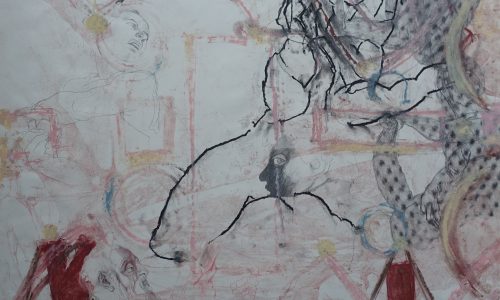
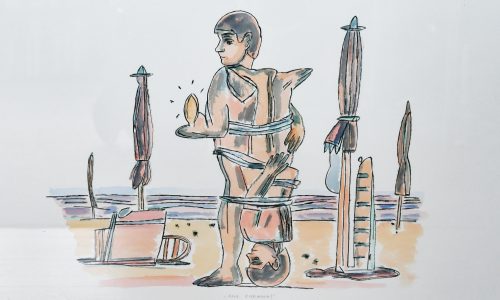
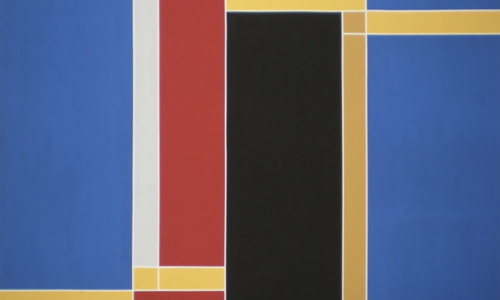
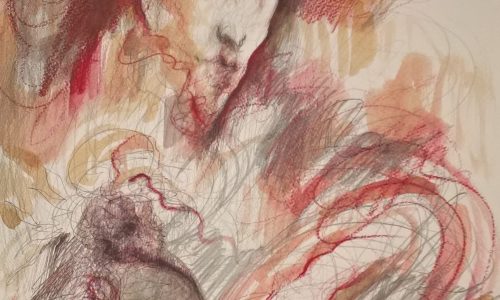
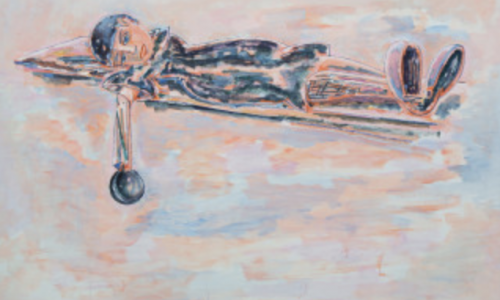
Marthe Wéry attained a mastery of drawing and painting from live models in Paris. She delved into both ancient and modern classics, while also being influenced by the French art of the 1950s. This led her to employ a more schematic style, reducing her compositions to essential lines. Upon returning to Belgium, Wéry was drawn to the expressionist sculptor Oscar Jespers (1887-1970). His home had become a cosmopolitan meeting place, with studios and exhibition spaces. It was here that Wéry was able to break free from the legacy of art history. Her early semi-figurative language evolved into geometrically abstract plane division. Forms were deconstructed, while colors took on a more emotional aspect. Wéry’s work straddles the line between logic and sentiment.
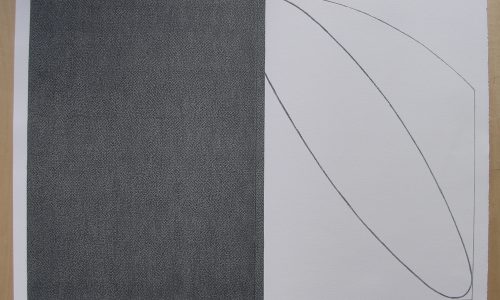
In the mid-1960s, Wéry was admitted into the studio of Sir William Hayter (1901-1988) in Paris. This renowned artist was associated with both surrealists and abstract expressionists, and was best known for his innovative printing and engraving techniques. Wéry later taught printmaking in Brussels and mentored numerous younger artists. Her thorough study of the building blocks of painting – support, paint, color, and line – culminated in geometric compositions heavily influenced by constructivism.
By the late 1960s, Wéry had become familiar with the work of Polish artist Władysław Strzemiński, who had collaborated with Kazimir Malevich. His ideas and Wéry’s were closely related. He posited that every square centimeter within a construction holds the same value, that the surface of a painting is homogeneous, and that the tension of the form must be evenly distributed. He also proposed the use of white space as the standard for presenting art in the most neutral way possible. Under the influence of Strzemiński, Wéry began to focus on the structure of the entire painting surface.
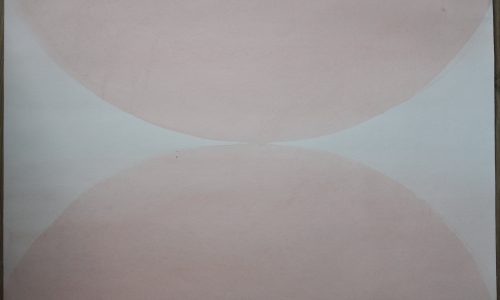
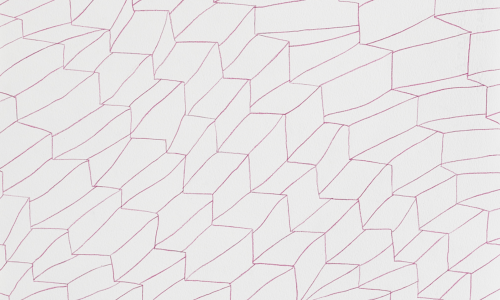
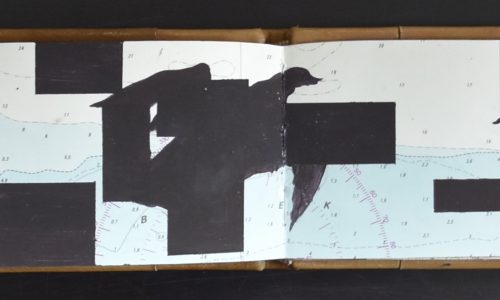
Throughout the 1970s, Wéry focused on refining the relationship between support and representation. By 1975, she had made the transition from canvas to paper. The desire for more ephemeral materials also manifested in other approaches. Through delicate folds, Wéry explored the sculptural potential of paper. The symbiosis between color and texture was achieved when Wéry embedded pigment into the mass of the support. Lines gave way to paper ridges. Support and color merged together. The rigid line definitively gave way to the emotive power of color. Wéry created monochrome canvases, with the dialogue between her artworks and the surrounding architecture becoming increasingly important.
Meanwhile, Wéry achieved international recognition. In 1982, she represented Belgium at the Venice Biennale with 93 canvases of fixed width and variable height. The verticality and luminosity of the red paintings lent a particular depth to the white exhibition space. After thorough research into the color red, Wéry also explored blue, yellow, and green. Her color investigation was showcased in meticulously arranged presentations in a diverse range of spaces, from galleries to abbeys. In the 1990s, Wéry continued to let colors “mature,” as seen in the irregularities caused by pigment crystallization or a grainy paint structure. She also continued to experiment with the physical presentation of her work in dialogue with the exhibition space.
I personally am very fond of her work and after meeting with i must say she was one of the friendliest artists i have ever met .
www.ftn-books.com has some important publications on Marthe Wéry.






















You explained it in such a relatable way. Well done!
This helped clarify a lot of questions I had.
66wins, eh? Yeah, I’ve messed around on that site a bit. Nothing too crazy, but a decent enough experience. Fast loading speeds are a plus! See for yourself: 66wins
9dgame7, sounds pretty futuristic! Let’s see what kind of games they’ve got. Maybe I’ll find a new favorite. 9dgame7
Yo, gpinasslot! Hear me out, this slot site has some real potential. The payouts seemed fair enough and I didn’t run into any weird glitches. Definitely worth a look if you’re spinning reels. Check out gpinasslot yourself!
BK666game…sounds kinda edgy. Hope the games are good and the site doesn’t glitch out. Gonna give it a try. Anyone else playing here? Explore the games at bk666game
Alright PLDT777, let’s see if you can live up to the hype. Good bonuses and a smooth interface are a must. What do you think? Try it today pldt777