
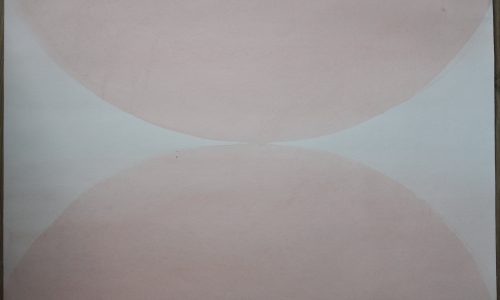
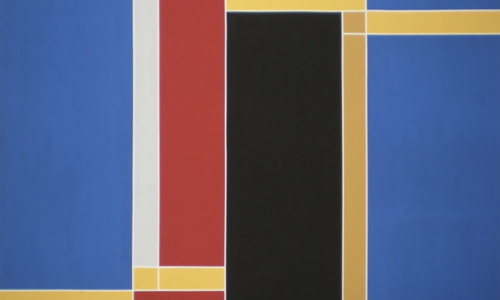
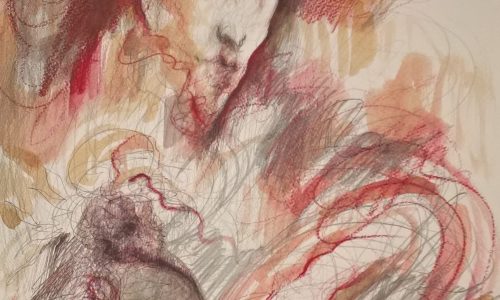
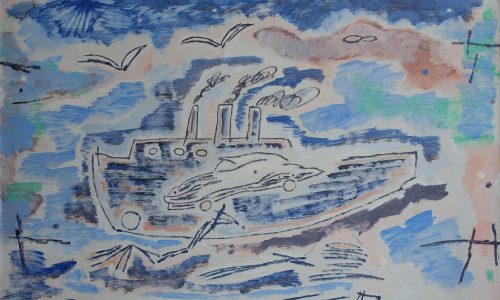
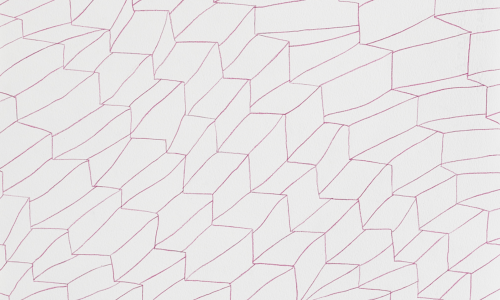
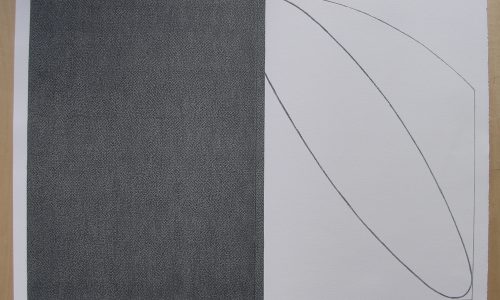
Upon graduating from the Kunstgewerbeschule in Basel, Switzerland, in 1928, Nelly Rudin (1928-2013) embarked upon a prosperous career as a graphic designer. In 1964, however, she forwent her profession to dedicate herself wholly to the realm of visual art. In accordance with the dictum of restraint, a principle ingrained during her time as a graphic designer, she principally explored fundamental shapes such as squares, triangles, and circles, along with their varying partitions. In 1974, this culminated in the manifestation of her “assembled canvases,” consisting of vertical intersections and diagonal constructions with a vacant, white area at its center. Two years later, Rudin upheaved this emphasis and divulged from the two-dimensional plane, ushering in her era of “aluminum frame objects.” As per the artist’s perspective, these square framing formations, projected outward from the wall like reliefs, effectively frame the vacant wall as if it were a painting: “Where an image typically occurs, there lies emptiness, and where the frame stands, there resides the picture.” In 1977, Nelly Rudin began exploring this theme in painting, bestowing preeminence upon the painting’s outermost margins: either the sides of the picture (exemplified in “Nr. 320” and “Nr. 373”), or its edges (“Nr. 489”). This she combined with exaggerated stretcher frames, designed to impart a sense of voluminosity upon her works, at times utilizing varying degrees of thickness within a single piece, challenging our accustomed perspectives. In 1981, this focus transitioned to objects fashioned from acrylic glass (“Nr. 19” and “Nr. 22”), taking advantage of its transparency to create novel perceptual effects. As Rudin perceptively states, “Paint applied to the edges can traverse the glass and unexpectedly materialize on formerly unmarked edges.” Rudin’s oeuvre as a whole is characterized by this concept of “migration” – a gradual expansion – as she consistently revamps her paramount themes, continually blurring the dichotomy between painting and sculpture to reveal fresh nuances.
The artist’s emphasis on peripheral regions produced a notable novel subject to the lexicon of Concrete Art. Following the artist’s passing, her creations and documents have been maintained by the Nelly Rudin Foundation, established in her previous abode and workspace located in the town of Uitikon near Zurich.
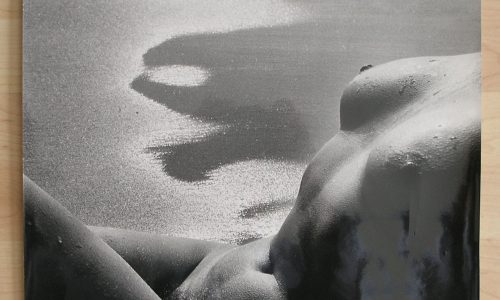
www.ftn-books.com has the nice Bottrop poster for sale

























tempmail
It’s fascinating how AI is reshaping industries, from gambling history to modern tools. Platforms like AI Grammar Checker show just how accessible these innovations have become.
Big Baller Brand still around? Haha, checked it out. If you’re a fan, go wild. Remember those times? Always a show. Time to buy: bigballerbrand
Just downloaded the jjwinapk app. So far, so good – pretty easy to navigate. Gonna give it a proper run tonight. Hoping for some wins! Get the app, guys jjwinapk!
Hello, There’s no doubt that your web site could be having web browser
compatibility problems. Whenever I look at your blog in Safari, it looks fine
but when opening in I.E., it has some overlapping issues.
I simply wanted to provide you with a quick heads up!
Other than that, great website!
I am really enjoying the theme/design of your web site.
Do you ever run into any browser compatibility
issues? A couple of my blog audience have complained about
my blog not working correctly in Explorer but looks great in Opera.
Do you have any advice to help fix this problem?
Usually I do not read post on blogs, but I wish to say that this write-up very
pressured me to take a look at and do it! Your writing taste has been surprised me.
Thanks, very great article.
Does your blog have a contact page? I’m having a tough
time locating it but, I’d like to send you an e-mail.
I’ve got some suggestions for your blog you might
be interested in hearing. Either way, great blog and I look
forward to seeing it develop over time.
Hi, I do believe this is a great website. I stumbledupon it 😉 I’m going to revisit yet
again since I saved as a favorite it. Money and freedom is
the best way to change, may you be rich and continue to
help others.
I’m amazed, I must say. Rarely do I encounter a blog that’s equally educative and entertaining,
and without a doubt, you have hit the nail on the head.
The issue is something which not enough folks are speaking intelligently about.
Now i’m very happy I stumbled across this during my hunt for something relating to this.
Thanks a bunch for sharing this with all people you really realize what you’re speaking
about! Bookmarked. Kindly also discuss with my site =).
We will have a hyperlink trade contract between us
Thanks for finally talking about > Nelly Rudin: The Evolution of Minimalist
Art – FTN-blog < Liked it!
This piece of writing will assist the internet users for
building up new blog or even a blog from start to end.
Yo, check it out! I’ve been hearing some buzz about 39 jili. Gave it a whirl and gotta say, it’s pretty legit. Solid selection of games and not too bad on the wins either!
J77slot… Slot games are my jam. Hope they got some good ones. Spinning to win! Wish me some luck! j77slot
Tapwingames sounds fun! Maybe something mobile friendly for when I’m on the go. Checking it out now! tapwingames
I loved as much as you will receive carried out right here.
The sketch is tasteful, your authored material stylish. nonetheless,
you command get got an edginess over that you wish be delivering the following.
unwell unquestionably come more formerly again since exactly the same
nearly a lot often inside case you shield this increase.