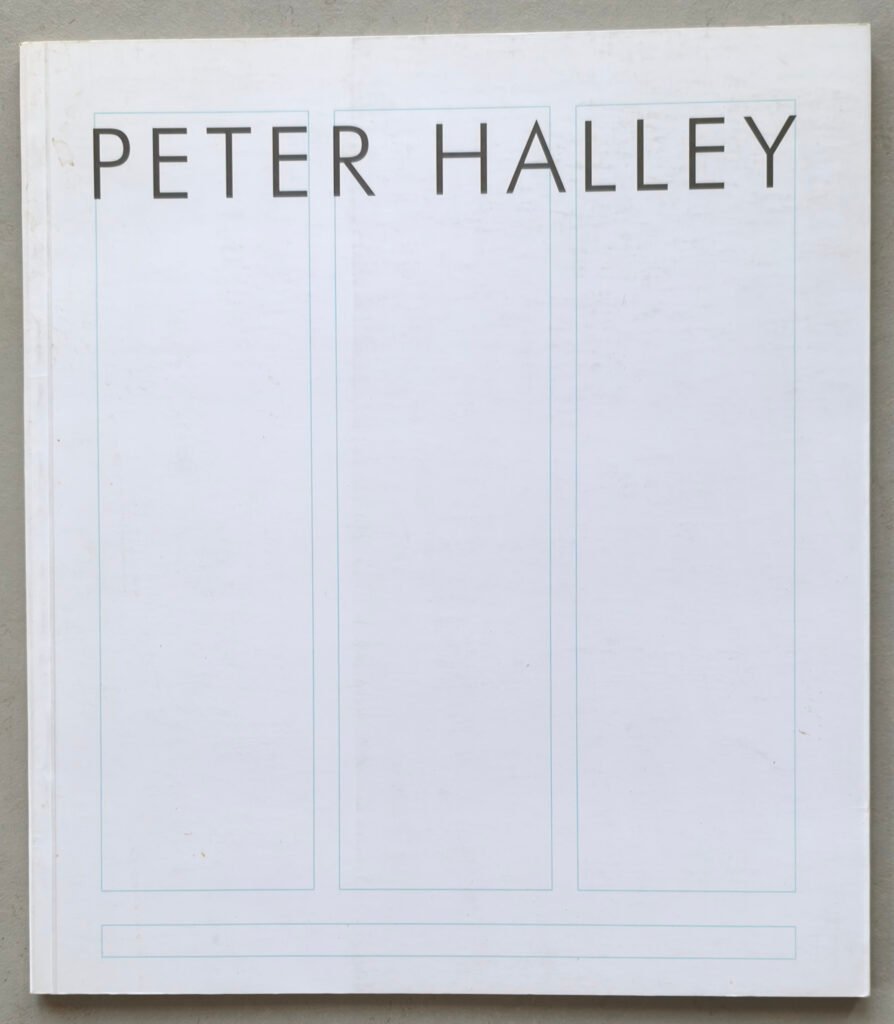


Peter Halley stands as a monolithic sentinel within the pantheon of contemporary creation, widely heralded as the legitimate scion of the American abstract tradition. His ascent from the gritty, crucible-like art milieu of mid-eighties New York precipitated an international epoch of renown, positioning him as the grand architect of geometric abstraction for over a quarter-century.
His oeuvre is a visceral, chromatic assault. By deploying an unorthodox apothecary of industrial agents—synthetic mortar, the searing brilliance of Day-Glo, the granular texture of Roll-a-Tex, and the synthetic hum of acrylic fluorescence—Halley crafts a visual lexicon that vibrates with immediate, jarring potency. To the observer, his geometry acts as an intricate funhouse mirror for our modern condition. These compositions are locked in a serpentine dance between entities he christens “prisons” and “cells,” architectural metaphors for the tectonic encroaching of grid-like structures upon our communal existence. Much like a phantom architect mapping the skeletal blueprint of a metropolis, he draws from the rigid, labyrinthine city grid of Manhattan and his own profound seclusion therein; he imagines the abstract form as a shackled bastion, desperately tethered to the external world through the ephemeral conduits of electronic discourse.
Beyond the canvas, Halley wields his intellect with a surgeon’s precision. He is not merely a painter, but a provocateur of the written word, weaving scathing intellectual inquiries into the tapestry of post-structuralist thought, postmodern fragility, and the frantic, flickering dawn of the digital revolution. His writings serve as the subterranean bedrock upon which his luminous, cage-like structures firmly rest.
www.ftn-books.com has several Halley titles available.