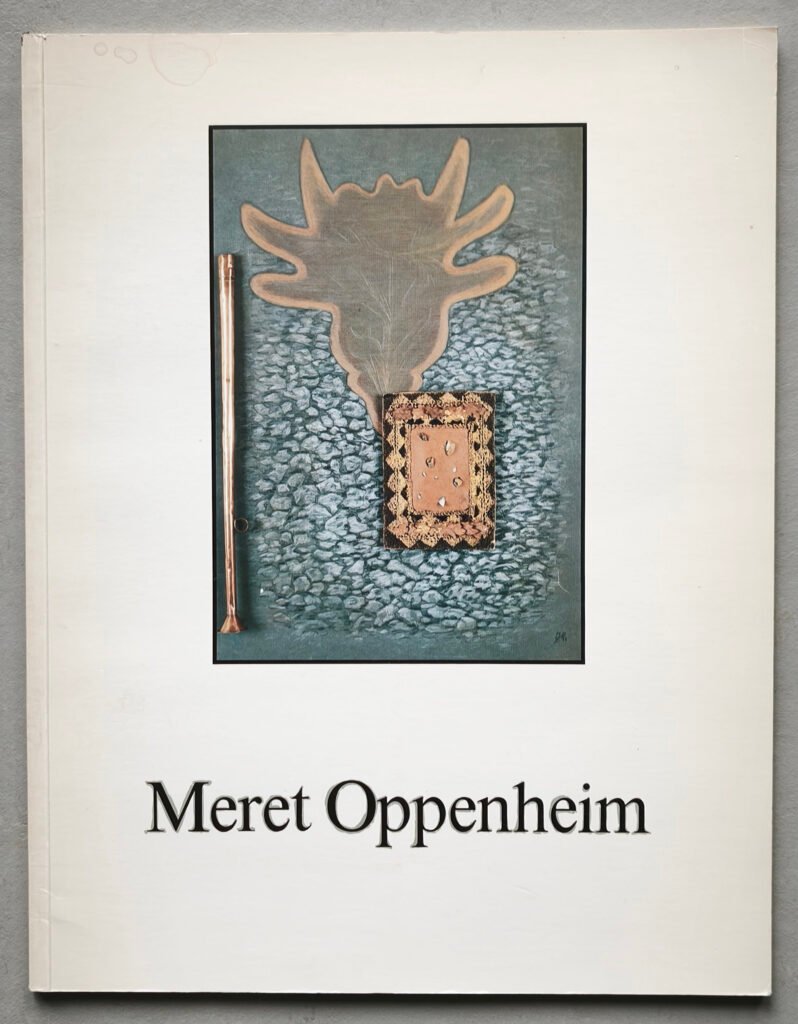


Meret Oppenheim was a cartographer of the subconscious, weaving the disparate threads of Dadaism and Surrealism into an tapestry singularly her own. She did not merely participate in the avant-garde; she permeated it. Arriving in Paris at the dawn of adulthood, she became a luminary among icons like Man Ray and Breton, gravitating toward the incendiary brilliance of the Parisian circle. Then came the teacup—that fur-lined catalyst of 1936—which shattered expectations as abruptly as a lightning strike, branding her name into the collective consciousness.
Yet, the ascent was met with a protracted silence. For two decades, Oppenheim retreated into a labyrinth of internalized strife, drifting away from her peers to seek sanctuary within the Alpine borders of neutral Switzerland. This period was a crucible for her spirit, a desert phase before her vigorous renaissance in the mid-1950s.
When she reemerged, it was with the ferocity of a gale. Her oeuvre expanded, transcending mere sculpture to encompass a sprawling taxonomy of drawings, visceral jewelry, and mixed-media alchemy. She stood as an iconoclast, habitually dismantling the binary architecture of gender. Her art functioned as a threshold, a liminal space where the obsidian edges of reality bled into the gossamer light of dreams.
By 1975, upon accepting the City of Basel Art Prize, her voice had sharpened into a formidable instrument of liberation. She championed the “androgyny of the mind,” a psychological sanctuary where societal shackles dissolve. To Oppenheim, agency was not a gift bestowed by benevolent hands but a prize to be plucked from the ether by those bold enough to grasp it. Today, the Kunstmuseum Bern guards her legacy, a dormant treasury of a creator who viewed the world not as it was, but as a hallucination waiting to be sculpted.
www.ftn-books.com has several Oppenhuim publications available.