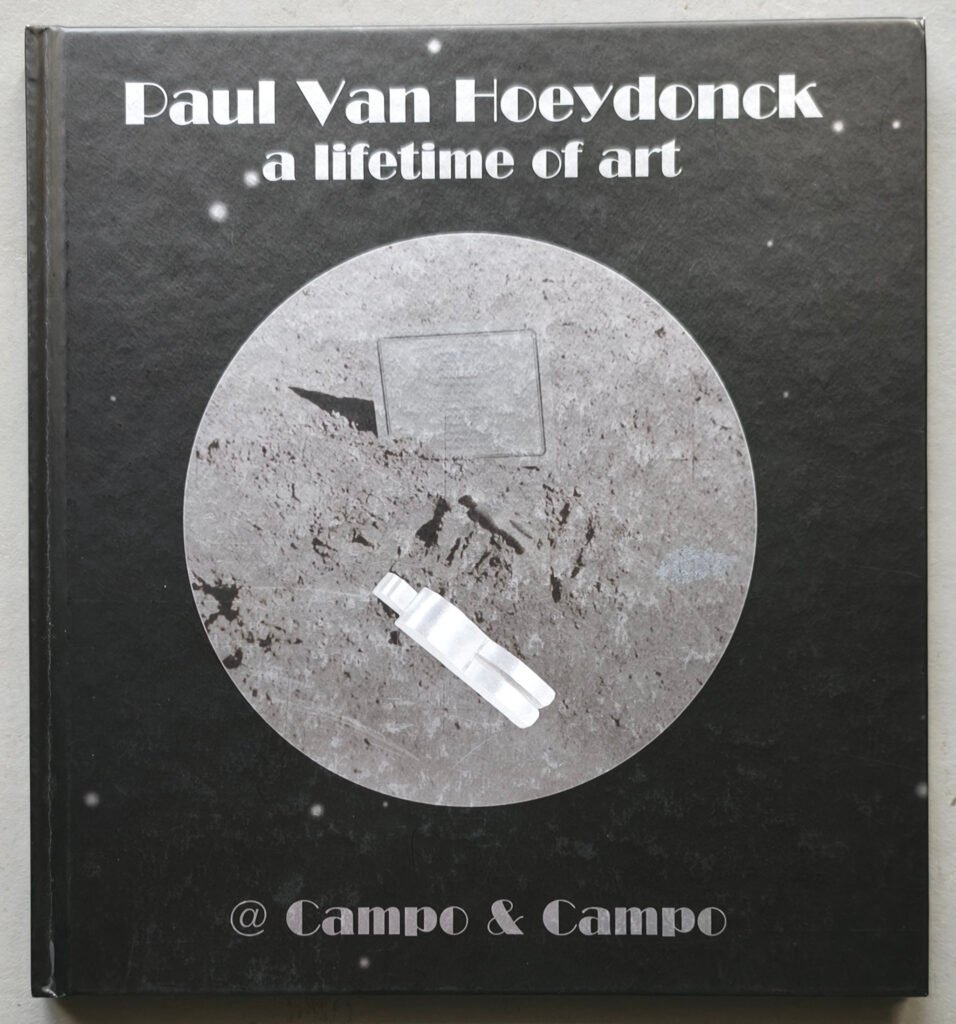


More than a simple craftsman, Paul Van Hoeydonck operated as a mapper of the firmament, moving far beyond the ordinary. On the stark, expansive terrain of the Sea of Imbrium rests *Fallen Astronaut*, his greatest achievement—a lonely aluminum figure that stands as a miniature testament to human fragility within the lunar silence. Left behind by the Apollo 15 crew, this small sculpture acts as an enduring metallic pulse, symbolizing humanity’s unyielding drive to explore the mysteries of deep space.
His artistic output is remarkably diverse, spanning a wide array of paintings and structural sculptures. Throughout his career, the themes of human ingenuity, technological progress, and the spirit of exploration have remained the steady, rhythmic focus of his workshop.
Emerging from the instability of the post-war era, Van Hoeydonck became a driving force behind the Antwerp G58 group, a collective dedicated to experimental artistic transformation. He stood at the forefront of the movement, organizing one of Europe’s first ZERO symposiums and introducing its avant-garde tenets to Belgium. As a crucial connector, he built deep professional ties with influential figures like Günther Uecker, Yves Klein, and Henk Peeters. United, they departed from conventional painting, instead forging a new visual language defined by industrial texture, mechanical energy, and light. Their collaborative work functioned as a window into the era’s technocratic hope, capturing the spirit of a world striving to heal and renew itself through the lens of innovation.
www.ftn-books.com recently added the Campo & Campo publication to its inventory.