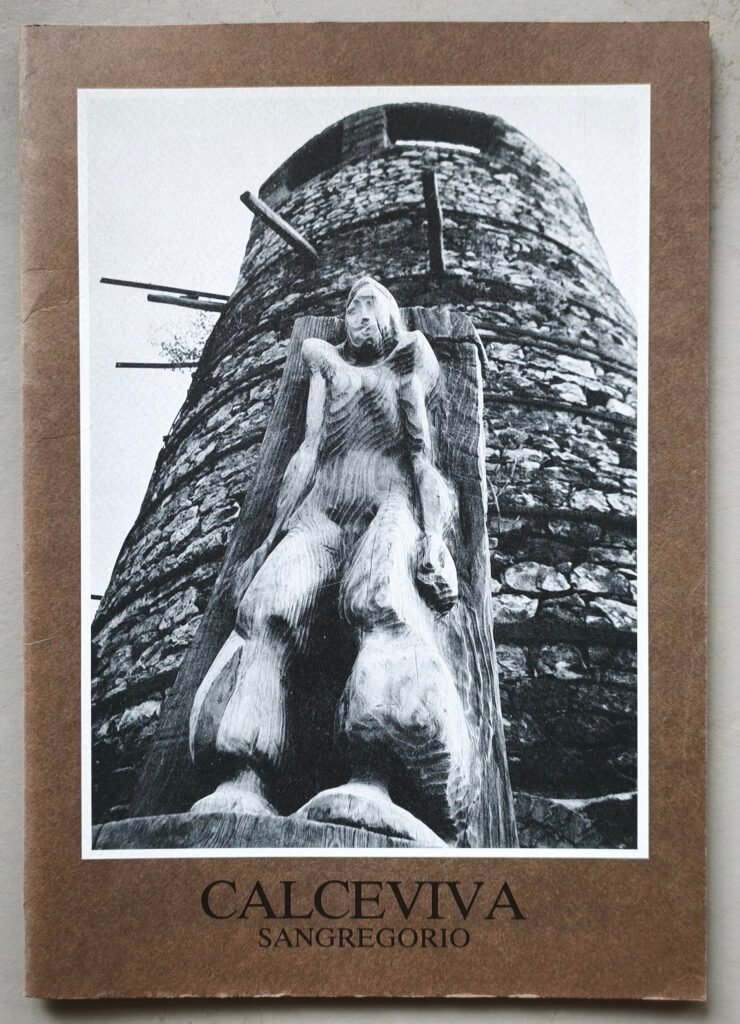


Born in Milan in 1925, Giancarlo Sangregorio first explored his affinity for sculpture as a youth, working with stone in the Val d’Ossola quarries near Lago Maggiore. Following his classical secondary education, he honed his craft at Milan’s Brera Academy under the tutelage of Marino Marini. By 1952, he had launched his debut solo exhibition, a milestone that coincided with a period of international travel and extended stays in Paris, where he eventually established a personal studio. Throughout the 1950s, Sangregorio balanced his time between various international ventures and the Versilia region, focusing on ceramics and the manipulation of Apuan marble. His body of work—which has been showcased in prestigious exhibitions across the globe—resides in numerous private and public collections worldwide. He spent his final years residing and working in Sesto Calende, Varese, passing away in 2013.
Within the landscape of Italian art history, Sangregorio is recognized as a significant, if often understated, figure of the post-war era, remaining somewhat overshadowed by contemporaries like Lucio Fontana, Mimmo Rotella, and Enrico Baj. An intellectual with a deep fascination for primitive societies, Sangregorio’s work reflects the tenets of Art Informel; he favored the interplay of negative and positive space, the fusion of disparate materials, and a deliberate disregard for academic rigidity. His artistry reflects a profound reverence for the natural world—its rhythmic variability and the intrinsic character of his chosen media, whether wood, stone, or glass. These qualities are masterfully captured in his Portorose symposium piece, a conglomerate structure characterized by deliberate, manual textures such as grooves and perforations. Rather than over-processing his materials, Sangregorio practiced restraint, allowing the stone to retain its raw, natural essence while imposing only subtle interventions to convey his artistic intent. This structural diversity gives his work a visual buoyancy, transcending heavy, gravitative forms to achieve an almost ethereal, weightless quality.
www.ftn-books.com has the the sacrce CALCEVIVA from 1985( signed and dedicated) edition available.