

“Jaja de oerknal hoor ik mezelf zeggen. Hoe is het mogelijk dat dit in mijn mond past? Het ontstaan een klont op mijn tong.”
Thus commence the opening stanzas of *Jaja de oerknal*, the titular odyssey by Maria Barnas (born 1973, Hoorn). Barnas operates at the precipice of dual aesthetics, weaving her craft as both a practitioner of the plastic arts and an architect of prose. Her creative inquiry interrogates the malleability of existence—how descriptions and ocular portrayals perpetually distort the bedrock of reality. Does language possess the requisite elasticity to colonize the seen? And in this arduous translation from ocular experience to linguistic construct, does one’s native vernacular truly serve as an anchor, or merely a transient sanctuary?
In the labyrinthine year of 2007, Barnas curated *The Writing Room*. This compendium collates a series of kaleidoscopic exposures depicting the sanctum of Johann Wolfgang Goethe. Each frame yearns for the authentic, yet each delivers a fractured, divergent perspective. Collectively, these images serve as a palimpsest of history, unmasking the artifice inherent in historical documentation—a stark testament to how iconography orchestrates our comprehension of the factual.
“…I aspire to transcribe the entirety of the subterranean turbulence beneath my cranium, to grant it habitation, to manifest it into the light. Yet, here lies the paradox: human discourse, and indeed the vast theater of communication, demands we collapse our complexities into a singular stratum. One selects a solitary thread of thought while, beneath the surface, the psyche yearns for the antithetical, whispering mutinies against its own utterances. Poetic form offers a sanctuary for such discordance to breathe.”
Graduating from the Gerrit Rietveld Academie in 1998, Barnas further refined her intellectual metabolism at the Rijksakademie van beeldende kunsten. Her literary footprint spans the narrative landscapes of *Engelen van ijs* (1997) and *De baadster* (2000), alongside verse collections as prismatic as *Twee zonnen* and *Er staat een stad op*. Her aesthetic interventions have graced the silent halls of the Annet Gelink Gallery, the hallowed chambers of the Bonnefantenmuseum, and the austere confines of KLEMM’S. Her trajectory is, quite literally, a cartography of the unspoken.
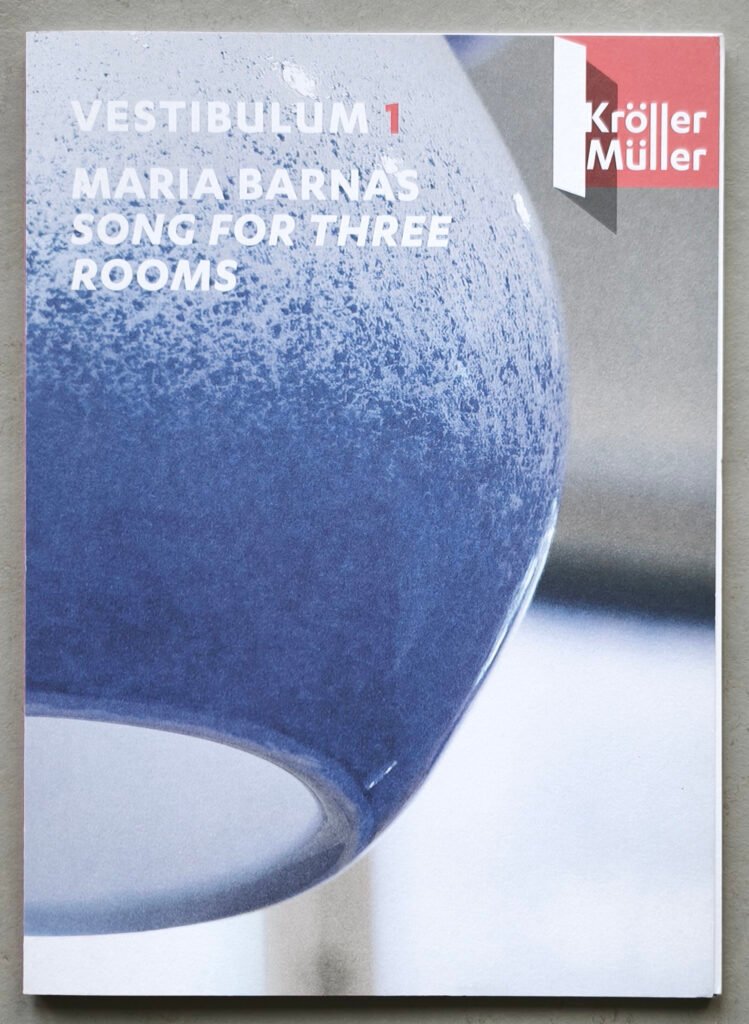
www.ftn-books.com recently added the 2019 Krioller Muller publication SONGS FOR THREE ROOMS to its collection.